
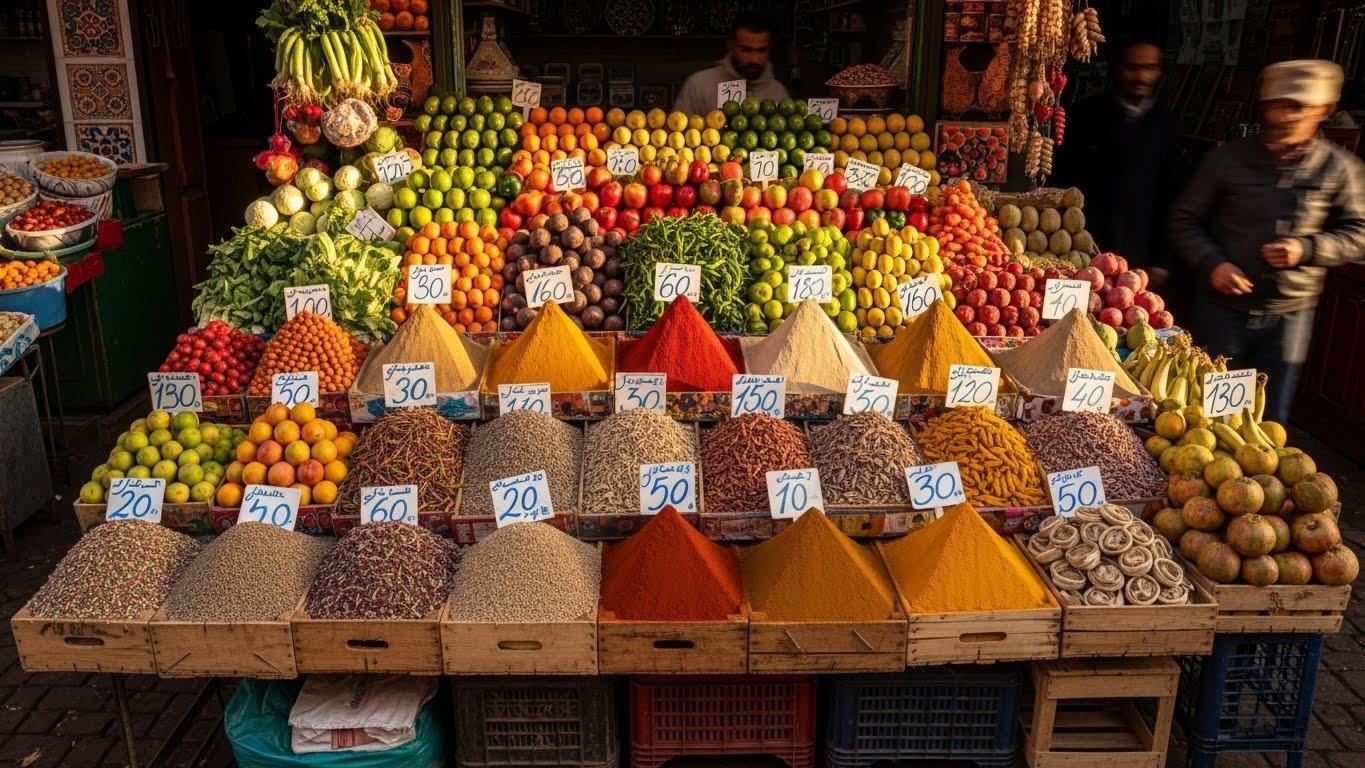
Planning a move to Agadir or just curious about how Agadir food prices compare to your current city? This comprehensive guide breaks down exactly what you’ll pay for everything from street food to supermarket groceries. Whether you’re a student budgeting carefully, a family planning expenses, or someone considering relocation, you’ll find the real numbers you need to make informed decisions.
Agadir’s unique position as both a tourist destination and growing economic hub creates interesting price dynamics. Understanding where and how to shop can dramatically impact your monthly food budget—sometimes by as much as 40-50%.
Table of Contents
Restaurant Prices in Agadir
Budget Restaurants and Local Eateries
Local restaurants in residential neighborhoods offer the best value for authentic Moroccan cuisine. Here’s what you’ll typically pay:
Popular dishes and average costs:
- Tagine (chicken, beef, or vegetable): 35-50 MAD
- Couscous with vegetables: 40-55 MAD
- Harira soup with dates and chebakia: 10-15 MAD
- Brochettes (3 skewers with bread): 30-40 MAD
- Full meal with drink: 50-70 MAD
The worker menus (menu ouvrier) found in Talborjt and Hay Mohammadi typically cost 40-50 MAD for a complete meal including soup, main dish, bread, and mint tea. These spots fill up quickly during lunch hours—a reliable sign of good food and fair pricing.
Sandwiches and quick meals:
- Bocadillo with kefta or chicken: 15-25 MAD
- Shawarma sandwich: 20-30 MAD
- Panini: 20-30 MAD
- Pizza slice: 10-15 MAD
Mid-Range Restaurants
For a more comfortable dining experience or when hosting guests, mid-range restaurants offer excellent quality at reasonable prices:
| Restaurant Type | Cost for 2 People |
|---|---|
| Moroccan restaurant (tourist areas) | 200-350 MAD |
| Fish/seafood restaurant | 300-500 MAD |
| Italian restaurant | 250-400 MAD |
| International cuisine | 280-450 MAD |
Agadir’s seafood restaurants deserve special mention. The city’s port provides fresh catches daily, and eating fish here costs significantly less than in inland cities. A grilled fish platter with salads and sides typically runs 80-120 MAD per person—exceptional value for coastal dining.
Cafés and Pastry Shops
Moroccan café culture thrives in Agadir, with countless spots for your morning coffee or afternoon break:
- Espresso/café noir: 7-12 MAD
- Café au lait/noss-noss: 10-15 MAD
- Mint tea: 8-12 MAD
- Fresh orange juice: 10-15 MAD
- Croissant: 5-8 MAD
- Moroccan pastries: 3-7 MAD each
- Full breakfast (coffee, bread, jam, cheese): 25-40 MAD
Cafés in tourist zones along the Corniche typically charge 20-30% more than neighborhood cafés in residential areas.
Fast Food Chains
International and local fast food chains provide consistent pricing across locations:
- McDonald’s Big Mac meal: 55-60 MAD
- KFC 3-piece meal: 50-58 MAD
- Pizza Hut medium pizza: 80-120 MAD
- Tacos de Lyon menu: 40-55 MAD
Delivery typically adds 10-15 MAD to your order, though many chains offer free delivery above 100 MAD.
Street Food Scene
Agadir’s street food offers incredible value for budget-conscious eaters:
- Makouda sandwich: 8-12 MAD
- Batbout with filling: 10-15 MAD
- Harcha with cheese: 8-10 MAD
- Fresh juice (mango, avocado, banana): 15-25 MAD
- Mixed fruit smoothie: 20-30 MAD
- Grilled corn: 5-10 MAD
Evening food carts near the beaches and in Talborjt serve late-night snacks at remarkably low prices. These vendors often have loyal followings among locals who appreciate both the quality and affordability.
Supermarket Prices in Agadir
Understanding supermarket pricing helps you budget accurately for home cooking. Here’s a detailed breakdown of what you’ll pay at major chains.
Fresh Produce Costs
Vegetable prices remain relatively stable throughout the year, with seasonal variations affecting certain items:
| Vegetable | Price per Kg |
|---|---|
| Tomatoes | 5-10 MAD |
| Potatoes | 4-7 MAD |
| Onions | 4-6 MAD |
| Carrots | 5-8 MAD |
| Peppers | 8-15 MAD |
| Zucchini | 6-10 MAD |
| Eggplant | 8-12 MAD |
Seasonal fruits:
- Oranges: 6-12 MAD/kg (cheapest December-March)
- Bananas: 12-16 MAD/kg
- Apples: 15-25 MAD/kg
- Strawberries: 15-30 MAD/kg (seasonal)
- Watermelon: 4-8 MAD/kg (summer)
- Grapes: 15-30 MAD/kg
Fresh herbs (parsley, cilantro, mint) cost 1-3 MAD per bunch at supermarkets, though markets offer better deals when buying in bulk.
Meat and Seafood Pricing
Quality protein forms a significant part of most Moroccan household budgets:
Poultry:
- Whole chicken: 30-38 MAD/kg
- Chicken breast: 50-65 MAD/kg
- Chicken thighs: 40-50 MAD/kg
- Turkey: 45-60 MAD/kg
Red meat:
- Beef (stewing cuts): 80-100 MAD/kg
- Beef (premium cuts): 120-160 MAD/kg
- Lamb: 90-130 MAD/kg
- Ground beef/kefta: 70-85 MAD/kg
Fresh seafood:
- Sardines: 15-25 MAD/kg
- Sea bream (dorade): 60-90 MAD/kg
- Sea bass (loup): 80-120 MAD/kg
- Shrimp: 120-200 MAD/kg
- Squid: 50-80 MAD/kg
Buying fresh fish directly from the port market early morning can save 30-40% compared to supermarket prices, especially for bulk purchases.
Dairy Products
| Product | Price Range |
|---|---|
| Milk (1L bag) | 7-9 MAD |
| Milk (1L bottle) | 9-12 MAD |
| Yogurt (pack of 4) | 8-14 MAD |
| Cheese (local, 200g) | 18-30 MAD |
| Imported cheese (200g) | 35-60 MAD |
| Butter (250g) | 20-28 MAD |
| Leben (1L) | 7-10 MAD |
Centrale Laitière and Jaouda dominate the dairy market, with consistent pricing across most supermarkets. Store brands typically cost 10-15% less for comparable quality.
Essential Staples
These foundation items make up the core of most grocery shopping:
- Khobz (traditional bread): 1.20 MAD per loaf
- Baguette: 2-3 MAD
- Whole wheat bread: 3-5 MAD
- Rice (1kg): 12-18 MAD
- Pasta (500g): 6-10 MAD
- Couscous (1kg): 15-22 MAD
- Vegetable oil (1L): 18-25 MAD
- Olive oil (1L): 60-120 MAD
- Sugar (1kg): 7-9 MAD (subsidized)
- Flour (1kg): 5-7 MAD (subsidized)
Government subsidies on flour, sugar, and cooking oil help keep basic food costs manageable for all income levels.
Major Supermarket Chains
Marjane leads in selection and competitive pricing, particularly for bulk purchases. Their hypermarkets offer everything from fresh produce to household items, with frequent promotions.
Acima positions itself as a mid-range option with convenient neighborhood locations. Prices run slightly higher than Marjane but lower than premium stores.
Carrefour Market provides consistent quality and international products, though expect to pay 10-15% more than Marjane for similar items.
Aswak Assalam focuses on halal certification and quality products, with pricing comparable to Carrefour.
Local grocery stores typically charge 5-20% more than supermarket chains but offer convenience and credit options for regular customers.
Traditional Market (Souk) Prices
Main Markets in Agadir
Souk El Had stands as Morocco’s largest covered market, operating Sunday through Thursday. This massive complex houses over 3,000 vendors selling everything from fresh produce to spices, clothing, and household goods.
The market opens early (6-7 AM) and closes around 6-7 PM. Early morning shopping guarantees the freshest products and best selection, while late afternoon sometimes yields discounts on perishables.
Central Market (Marché Central) near the city center operates daily and caters more to tourists, with accordingly higher prices. However, the quality and presentation often justify the premium for those seeking convenience.
Neighborhood markets in Talborjt, Hay Mohammadi, and Tikiouine offer the most competitive pricing, as they serve primarily local residents rather than tourists.
Souk vs Supermarket Comparison
Markets consistently beat supermarket prices on:
- Fresh vegetables (20-40% cheaper)
- Seasonal fruits (15-30% cheaper)
- Fresh herbs (40-60% cheaper)
- Spices in bulk (30-50% cheaper)
- Olives and pickles (25-40% cheaper)
Supermarkets offer better value for:
- Packaged goods (consistent quality control)
- Dairy products (refrigeration and hygiene)
- Frozen items
- Imported products
- Cleaning supplies
Smart shoppers buy fresh produce and spices at markets while purchasing packaged goods, dairy, and meat from supermarkets. This hybrid approach can reduce overall food costs by 25-35%.
Bargaining Tips and Strategies
Negotiation forms an expected part of market shopping. Here’s what works:
Successful bargaining techniques:
- Start by asking the price without showing too much interest
- Express mild concern about the price being high
- Offer 20-30% less than the asking price
- Meet somewhere in the middle (typically 10-20% discount)
- Be prepared to walk away—vendors often call you back with better offers
Items most open to negotiation:
- Non-perishable goods (spices, dried fruits, nuts)
- Bulk purchases of any item
- End-of-day produce
- Multiple items from the same vendor
Fixed-price items (minimal negotiation room):
- Government-subsidized products
- Branded packaged goods
- Eggs
- Fresh bread
Building relationships with regular vendors yields better prices over time. Many locals have “their guy” for vegetables, meat, or fish who offers loyalty discounts and first choice of quality products.
Seasonal Price Variations
Understanding seasonal patterns helps optimize your shopping budget:
Ramadan effects: Prices for dates, milk, flour, and traditional Ramadan foods increase 15-30% during the holy month. Conversely, fruits and vegetables may see discounts as fewer people eat during daylight hours.
Summer tourist season (June-September): Tourist area prices increase 20-40%, while local market prices remain relatively stable. This is when shopping in residential neighborhoods provides maximum savings.
Harvest seasons:
- Citrus fruits (December-March): Cheapest period
- Summer fruits (June-August): Melons, peaches, apricots at lowest prices
- Fall produce (September-November): Best time for grapes, apples, pomegranates
Monthly Food Budget in Agadir
For Single Person
Minimum budget (mostly cooking at home): 1,500-2,000 MAD/month
- Breakfast at home daily
- Packed lunch or cheap local restaurant
- Dinner cooked at home
- One or two café visits per week
- Minimal eating out
Comfortable budget (balanced lifestyle): 2,500-3,500 MAD/month
- Regular café visits
- Lunch out 2-3 times weekly
- Weekend restaurant meals
- Better quality groceries
- Occasional treats and snacks
Higher budget (frequent dining): 4,000-6,000 MAD/month
- Regular restaurant meals
- Premium ingredients
- Coffee shop visits
- Delivery services
- Social dining
For Couples
| Budget Level | Monthly Cost | Lifestyle |
|---|---|---|
| Budget-conscious | 3,000-4,000 MAD | Cook at home 80% of time |
| Moderate | 4,500-6,500 MAD | Mix of home cooking and dining out |
| Comfortable | 7,000-10,000 MAD | Frequent restaurant visits |
Couples shopping together at markets and cooking at home can achieve significant savings. A typical weekly grocery shop for home cooking costs 400-600 MAD, covering most meals for two people.
For Family of Four
Budget family: 5,000-7,000 MAD/month
- Bulk shopping at Marjane or markets
- Home-cooked meals primarily
- Occasional pizza or fast food
- Children’s school snacks
- Basic ingredients, seasonal produce
Average middle-class family: 8,000-12,000 MAD/month
- Mix of supermarket and market shopping
- Weekly restaurant outing
- Better quality ingredients
- More variety in meals
- Children’s preferences accommodated
Comfortable family budget: 13,000-18,000 MAD/month
- Premium ingredients
- Regular dining out
- Imported products
- Convenience foods
- More spontaneous food choices
Student Budget
Students can survive on 1,200-1,800 MAD monthly by:
- Cooking in shared apartments
- Shopping at neighborhood markets
- Eating at university cafeterias (when available)
- Taking advantage of worker menus
- Limiting restaurant visits to special occasions
Shared apartment living drastically reduces individual costs. Four students cooking together typically spend 300-450 MAD per person monthly for groceries.
Agadir vs Other Moroccan Cities
Agadir vs Casablanca
Restaurant prices: Casablanca restaurants cost 15-25% more on average, particularly in business districts like Maarif and Anfa. Budget eateries show smaller differences (5-10%), while mid-range and upscale venues demonstrate larger gaps.
Supermarket differences: Major chain prices remain similar, but Casablanca offers more international product options. Fresh produce costs nearly identical at both cities’ markets.
Overall verdict: Agadir provides 10-15% lower overall food costs, with the biggest savings in seafood and tourist-area dining.
Agadir vs Marrakech
Both cities share tourist-driven price inflation in popular areas. However:
Tourist zones: Marrakech’s Jemaa el-Fna and surrounding areas charge tourist premiums comparable to Agadir’s Corniche. Both cities require smart shopping to avoid overcharging.
Local markets: Marrakech’s massive souks offer extremely competitive prices, similar to Souk El Had. Residential area prices run nearly identical in both cities.
Restaurant scene: Mid-range Moroccan restaurants cost similarly, but Agadir’s seafood restaurants provide better value due to proximity to the port.
Best value: Essentially tied, with Agadir winning slightly for seafood lovers.
Agadir vs Rabat
Capital premium: Rabat’s status as Morocco’s capital creates 8-12% higher restaurant prices in upscale neighborhoods. Government employee concentration supports a robust mid-range dining scene.
Supermarkets: Prices align closely across major chains. Rabat offers slightly better selection of international products.
Markets: Rabat’s markets provide competitive pricing similar to Agadir’s, with excellent fish markets near the coast.
Agadir vs Tangier
Northern differences: Tangier’s proximity to Europe influences product availability and pricing. Spanish imports cost less in Tangier, while local Moroccan products show similar pricing.
Seafood: Both cities excel in fresh fish at affordable prices, though Agadir’s variety edges slightly ahead.
Overall costs: Nearly identical, with Tangier slightly cheaper for European imports and Agadir better for traditional Moroccan ingredients.
Affordability ranking: Agadir and Tangier tie for most affordable among major Moroccan cities, with Marrakech close behind. Casablanca and Rabat cost noticeably more.
Neighborhood Price Differences in Agadir
Tourist Areas (Premium Pricing)
Corniche beachfront: Restaurants along the beach promenade charge 40-60% more than equivalent establishments in residential areas. A tagine costing 35 MAD in Talborjt runs 60-80 MAD with ocean views.
Marina Agadir: The modern marina development features upscale dining with prices 50-80% above city averages. However, quality and ambiance justify the premium for special occasions.
Hotel zone: Restaurants near major hotels target tourists with inflated menus. Even simple meals cost 2-3 times local prices.
Tourist souks: Vendors near tourist sites charge 30-50% more than neighborhood markets, betting on visitor convenience and unfamiliarity with local pricing.
Local Neighborhoods (Better Value)
Talborjt: This authentic neighborhood offers the best food value in Agadir. Worker restaurants serve filling meals for 40-60 MAD, markets provide rock-bottom produce prices, and local bakeries sell fresh bread at standard rates.
Recommended spots in Talborjt:
- Restaurant Essalam for daily menus
- Café Atlas for morning coffee
- Neighborhood markets for produce
- Street food vendors near the main road
Hay Mohammadi: A large residential area with numerous budget restaurants and markets. Families find excellent shopping here, with supermarket prices matching or beating other areas.
Tikiouine: Mixed residential and commercial area offering good value. The neighborhood market operates daily with competitive pricing on all basics.
Anza: Southern neighborhood with growing infrastructure. Prices remain moderate despite development, and newer supermarkets compete aggressively for customers.
Where Locals Actually Shop
Experienced Agadir residents follow these patterns:
- Fresh produce: Souk El Had or neighborhood markets
- Meat: Trusted local butchers in residential areas
- Groceries: Marjane for bulk, Acima for convenience
- Bread: Neighborhood bakeries (ferrane)
- Fish: Port market (early morning) or established fishmongers
- Dairy: Any major supermarket (prices standardized)
The port fish market opens around 6 AM when boats return with catches. Arriving early guarantees freshness and best prices, with discounts for bulk purchases. By 10 AM, the best fish is gone.
Money-Saving Tips for Food in Agadir
Smart Shopping Strategies
Timing matters enormously:
- Shop markets before 10 AM for best selection and prices
- Return after 5 PM for end-of-day discounts on perishables
- Visit supermarkets mid-week for restocked shelves and fewer crowds
- Watch for monthly promo flyers from major chains
Bulk buying saves significantly:
- Rice, pasta, and oils cost 15-25% less in larger quantities
- Share bulk purchases with neighbors or family
- Wholesale markets (marché de gros) offer additional savings for families willing to buy in volume
Loyalty programs and apps:
- Marjane’s loyalty card provides points and exclusive discounts
- Download supermarket apps for digital coupons
- Follow chains on social media for flash sales
- Use delivery apps’ first-time user discounts strategically
Cooking vs Eating Out Analysis
Monthly cooking-at-home costs:
- Single person: 1,500-2,000 MAD
- Couple: 3,000-4,000 MAD
- Family of four: 5,000-7,000 MAD
Monthly eating-out costs:
- Single person: 4,000-6,000 MAD
- Couple: 8,000-12,000 MAD
- Family of four: 15,000-25,000 MAD
Home cooking typically costs 60-70% less than restaurant dining for equivalent meals. However, budget restaurants narrow this gap significantly—a 50 MAD restaurant meal might cost 30 MAD to prepare at home, making the convenience premium just 20 MAD.
Best of both worlds: Cook dinners at home (lowest cost meal to prepare), eat lunch at work-area restaurants (convenient, moderately priced), enjoy weekend restaurant outings (social value). This hybrid approach provides variety while maintaining budget control.
Local Insider Secrets
Follow the taxi drivers: Where taxi drivers eat lunch invariably offers excellent value and quality. These spots serve generous portions at low prices because they depend on regular local customers.
University area advantages: Neighborhoods near universities feature cheap eateries catering to students. Anyone can enjoy these budget-friendly options, not just students.
Worker cafeterias: Some businesses and government buildings operate cafeterias open to the public with subsidized pricing. Ask around to discover these hidden gems.
Port area fish deals: Befriend a fishmonger at the port market. Regular customers receive first choice of catches and better pricing, especially when buying whole fish.
Bakery timing: Many neighborhood bakeries discount day-old bread and pastries by 30-50% late in the afternoon. The quality remains excellent for home consumption.
Seasonal buying: Purchase fruits and vegetables at peak season, when prices drop 40-60%. Some families preserve excess produce through freezing or traditional preservation methods.
Avoiding Tourist Traps
Red flags for overpriced restaurants:
- Menus displayed in multiple languages only
- No visible local customers
- Aggressive touts outside
- Prices not clearly marked
- Prime tourist location with mediocre food
Smart dining habits:
- Check menu prices before sitting
- Ask locals for recommendations
- Walk two blocks away from main tourist areas for 30-40% savings
- Look for crowded restaurants (locals know quality)
- Learn basic menu Arabic/French to avoid tourist menus
Shopping caution points:
- Verify weights on scales at markets
- Count your change carefully
- Don’t accept “special tourist prices”
- Learn standard prices for common items
- Shop where you see Moroccan families, not just tourists
Recent Price Trends and Economic Context
Current Inflation Patterns
Food prices have risen across Morocco due to global economic factors, but government interventions have moderated increases on essential items. Flour, sugar, and cooking oil remain subsidized, keeping these staples affordable for all income levels.
Items seeing significant increases:
- Imported goods (20-30% higher)
- Processed foods and snacks (15-25% higher)
- Meat and poultry (12-18% higher)
- Dairy products (10-15% higher)
Relatively stable pricing:
- Government-subsidized staples
- Seasonal local produce
- Fresh bread
- Local olive oil
Economic context: Morocco’s dirham remains relatively stable, helping contain imported food inflation. The government’s subsidy program (caisse de compensation) continues supporting low-income families’ access to basic nutrition.
Seasonal Fluctuations to Expect
Ramadan price dynamics: The holy month sees substantial increases in traditional foods—dates jump 20-40%, dairy products rise 15-25%, and dried fruits increase 15-30%. Smart shoppers stock up before Ramadan begins.
Summer tourist season: June through August brings inflated prices in tourist zones. Beach restaurants may charge double off-season prices, while local neighborhoods maintain standard rates. This period offers the best time to explore residential area dining.
Harvest season advantages: Late summer through fall provides the best produce prices as local harvests flood markets. Tomatoes, peppers, and eggplants cost 40-60% less than winter imports.
Holiday variations: Aid al-Fitr and Aid al-Adha drive temporary price increases for meat (30-50% during Aid al-Adha) and festive foods. Planning ahead and early shopping minimizes these impacts.
Practical Information for Daily Life
Payment Methods Across Venues
Restaurants: Most mid-range and upscale restaurants accept cards, while budget eateries often remain cash-only. Carrying 200-300 MAD cash ensures you’re never caught short.
Supermarkets: All major chains accept cards, mobile payments, and cash. Self-checkout lanes increasingly common at larger stores.
Markets and souks: Cash exclusively. No exceptions. ATMs are plentiful near major markets.
Mobile payment growth: Cash Plus, Maroc Telecommerce, and other services gaining adoption, though cash remains king for small transactions.
Tipping Culture and Expectations
Restaurants: 10-15% for table service, with 10 MAD minimum considered appropriate. Some restaurants include service charges—check before adding extra.
Cafés: Round up to nearest 5-10 MAD or leave small change. For regular spots, slightly more generous tipping builds rapport.
Delivery: 5-10 MAD tip appreciated, especially for prompt service or difficult deliveries (upper floors, complex directions).
Market helpers: Porters and cart pushers at markets expect 5-10 MAD depending on load size and distance.
Understanding Portion Sizes
Moroccan portions tend toward generosity, especially in local restaurants:
Tagines: Typically serve 1-2 people, though smaller appetites may find them sufficient for two with bread.
Couscous: Friday couscous servings often feed 2-3 people, making sharing common.
Sharing culture: Moroccan dining emphasizes communal eating. Ordering 2-3 dishes for 3-4 people works perfectly, with everyone sampling everything.
Kids portions: Many restaurants offer half portions for children, though you may need to ask—they’re not always listed.
Alcohol Availability and Pricing
Licensed restaurants: Higher-end establishments serve alcohol with meals. Wine and beer cost 2-3 times more than similar meals without alcohol.
Purchase locations: Carrefour and Marjane dedicate sections to alcohol sales (separate entrance/area). Prices run moderate compared to European standards.
Dry restaurants: Most budget and mid-range Moroccan restaurants don’t serve alcohol, focusing instead on traditional soft drinks, juices, and mint tea. These venues typically offer better value.
Cultural sensitivity: While legal for non-Muslims and in licensed establishments, alcohol consumption remains less common in Morocco than Western countries. Respect local customs and preferences.
Sample Daily Food Costs in Real Scenarios
Budget-Conscious Day (50-70 MAD)
Breakfast (10-15 MAD):
- Coffee at home: 2 MAD
- Bread with butter and jam: 5 MAD
- Seasonal fruit: 5 MAD
Lunch (25-35 MAD):
- Worker menu at local restaurant: 30 MAD
- Includes soup, main dish, bread, mint tea
Dinner (15-20 MAD):
- Home-cooked meal using market vegetables: 12 MAD
- Bread: 2.50 MAD
- Mint tea at home: 2 MAD
Total: 50-70 MAD – Sustainable for students and budget-focused individuals
Average Moroccan Lifestyle (100-150 MAD)
Breakfast (15-25 MAD):
- Café breakfast: coffee, bread, cheese, jam: 20 MAD
Lunch (35-50 MAD):
- Restaurant tagine with drink: 45 MAD
Dinner (40-60 MAD):
- Home-cooked chicken with vegetables
- Better quality ingredients from supermarket
- Fresh fruit for dessert
Snacks/extras (10-15 MAD):
- Afternoon café stop: 12 MAD
Total: 100-150 MAD – Comfortable middle-class daily spending
Comfortable Living Day (200-300 MAD)
Breakfast (30-40 MAD):
- Nice café with full breakfast: 35 MAD
Lunch (80-120 MAD):
- Mid-range restaurant meal: 100 MAD
Dinner (70-100 MAD):
- Quality home cooking with premium ingredients or
- Casual restaurant meal
Extras (20-40 MAD):
- Afternoon coffee and pastry: 25 MAD
- Fresh juice: 15 MAD
Total: 200-300 MAD – Higher income lifestyle with dining flexibility
Real Shopping Receipt Examples
Weekly supermarket shop for couple (Marjane):
- Chicken (2kg): 70 MAD
- Vegetables (assorted): 60 MAD
- Fruits: 50 MAD
- Rice (2kg): 30 MAD
- Pasta, oil, basics: 80 MAD
- Dairy products: 60 MAD
- Cleaning supplies: 40 MAD
- Total: 390 MAD
Market shopping session (Souk El Had):
- Vegetables (3-4kg mixed): 30 MAD
- Fruits (3kg): 35 MAD
- Fresh herbs: 3 MAD
- Olives (500g): 15 MAD
- Spices: 20 MAD
- Total: 103 MAD
These real examples demonstrate the 30-40% savings markets provide for fresh produce while supermarkets offer better value for packaged goods and convenience.
Key Takeaways About Agadir Food Prices
Agadir offers excellent value for food compared to major Moroccan cities, with strategic shopping delivering substantial savings:
Budget optimization principles:
- Shop residential neighborhoods, not tourist zones (30-50% savings)
- Mix market produce with supermarket packaged goods (25-35% savings)
- Cook most dinners at home while enjoying affordable lunch restaurants
- Time purchases seasonally for fruits and vegetables
- Build relationships with regular vendors for better prices
Monthly budget expectations:
- Single person: 1,500-3,500 MAD depending on lifestyle
- Couple: 3,000-6,500 MAD
- Family of four: 5,000-12,000 MAD
Best value categories:
- Fresh seafood (coastal advantage)
- Seasonal produce (abundant and cheap)
- Local Moroccan dishes (authentic restaurants)
- Market shopping (versus tourist areas)
Agadir’s combination of tourist infrastructure and local neighborhoods creates unique opportunities. Those who learn where locals shop and eat can enjoy excellent food quality at very reasonable prices. The key lies in avoiding tourist-focused establishments and embracing the city’s authentic residential areas.
Whether relocating, visiting long-term, or comparing costs with your current city, Agadir food prices remain moderate and manageable across all budget levels. With smart shopping and strategic dining choices, you’ll eat well without financial stress.
Frequently Asked Questions
Is Agadir expensive for food? No, Agadir ranks among Morocco’s most affordable major cities for food. Tourist areas charge premium prices, but residential neighborhoods offer excellent value. Overall costs run 10-15% lower than Casablanca.
How much should I budget for food per day in Agadir? Budget travelers: 50-70 MAD. Average lifestyle: 100-150 MAD. Comfortable spending: 200-300 MAD. These figures assume a mix of home cooking and restaurant meals.
Are restaurants expensive in Agadir? It depends on location. Tourist zone restaurants charge 40-60% more than local neighborhoods. Budget eateries cost 40-60 MAD per meal, mid-range restaurants 80-150 MAD per person.
Is it cheaper to cook or eat out in Agadir? Cooking at home costs 60-70% less than restaurant dining. However, budget local restaurants narrow this gap significantly, making occasional eating out very affordable.
Where do locals shop for groceries in Agadir? Souk El Had and neighborhood markets for produce, Marjane for bulk groceries, Acima for convenience, and local butchers for meat. Smart shoppers combine venues for best overall value.
What’s the cheapest supermarket in Agadir? Marjane typically offers the lowest prices, especially for bulk purchases. Acima provides good value with convenient locations. Local grocery stores charge premiums for convenience.
How much is a typical restaurant meal in Agadir? Budget restaurants: 40-70 MAD. Mid-range: 80-150 MAD per person. Upscale dining: 200-400 MAD per person. Location dramatically affects pricing.
Do prices increase during tourist season? Yes, tourist-area restaurants and some markets increase prices 20-40% during summer (June-September). Local neighborhood prices remain relatively stable year-round.
Final Thoughts on Agadir Food Costs
Understanding Agadir food prices empowers you to make informed decisions whether you’re planning a move, extended visit, or simply comparing your current city’s costs. The good news is that Agadir remains one of Morocco’s most affordable major cities for food, offering exceptional value when you know where to look.
The secret to thriving on any budget in Agadir lies in shopping like a local. Avoid the tourist-focused Corniche restaurants and Marina establishments unless you’re celebrating something special. Instead, embrace neighborhoods like Talborjt and Hay Mohammadi where authentic Moroccan cuisine costs a fraction of tourist prices without sacrificing quality.
Your monthly food budget in Agadir can range dramatically based on lifestyle choices—from 1,500 MAD for disciplined students cooking at home to 6,000+ MAD for those who prefer dining out regularly. Most Moroccan families fall somewhere in the middle, spending 5,000-8,000 MAD monthly by combining smart market shopping with occasional restaurant treats.
The hybrid shopping approach delivers maximum savings: buy fresh produce, herbs, and spices at Souk El Had or neighborhood markets where prices beat supermarkets by 20-40%, then purchase packaged goods, dairy, and meat from Marjane or Acima where quality control and refrigeration ensure consistency. This strategy alone can reduce your food costs by 25-35% compared to shopping exclusively at one type of venue.
Remember that Agadir’s coastal location provides a significant advantage for seafood lovers. Fresh fish costs substantially less here than in inland cities, and the daily catches at the port market offer restaurant-quality seafood at home-cooking prices.
Whether you’re budgeting 50 MAD daily or 300 MAD, Agadir accommodates every spending level without compromising on food quality or variety. The key is understanding the city’s pricing landscape, knowing which neighborhoods offer the best value, and shopping strategically based on seasonal availability.
Start exploring Agadir’s authentic food scene in residential areas, build relationships with market vendors, and discover the incredible value this coastal city offers. Your wallet will thank you, and you’ll eat better than you imagined possible at these prices.
2 thoughts on “Agadir Food Prices: Complete Guide to What You’ll Actually Spend”