
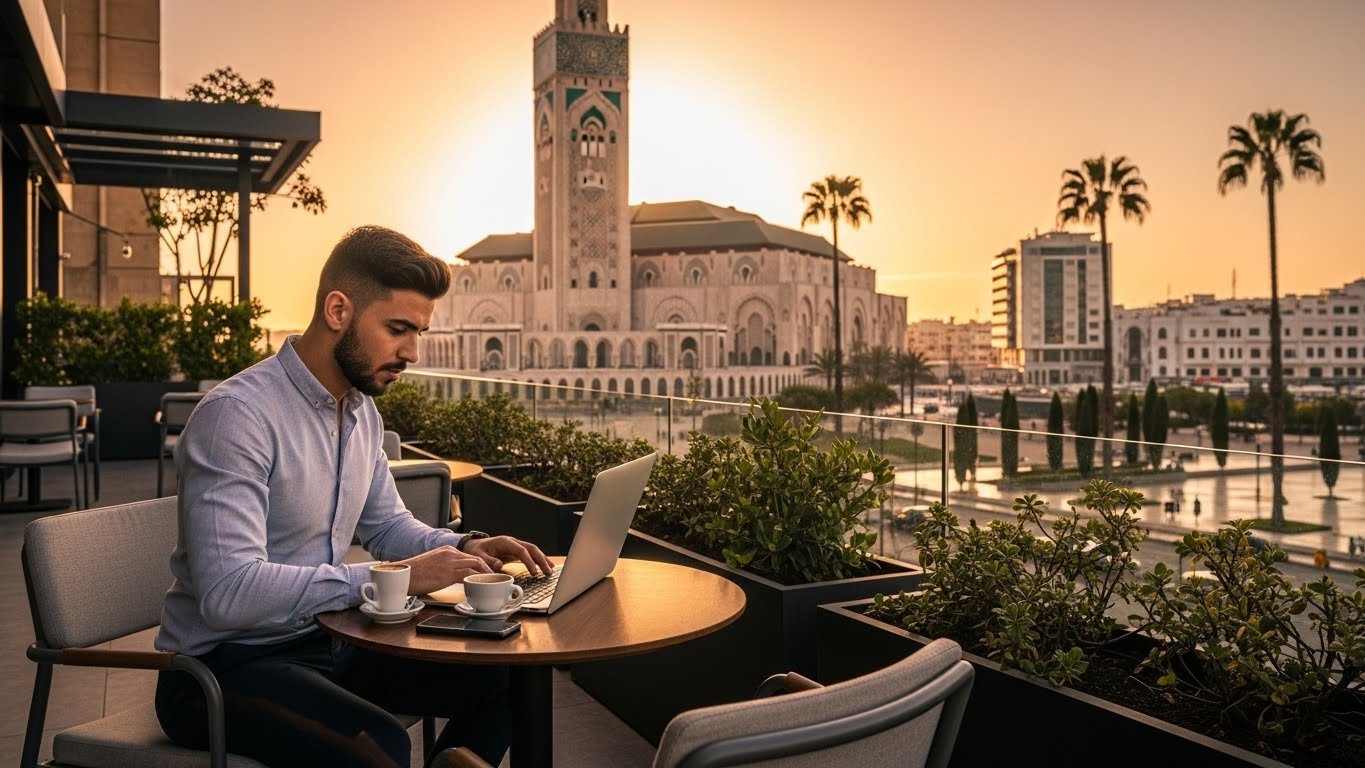
You’ve heard it a thousand times. From family, friends, even strangers at a café: “You should leave Morocco. Go to Europe. The Gulf. Anywhere but here.”
The pressure to emigrate is real. Social media feeds full of Moroccans abroad living their “best life.” Parents pushing you toward opportunities overseas. Friends who’ve already left, telling you there’s nothing here.
But here’s what nobody’s talking about: the benefits of living in Morocco that you only understand when you’re considering leaving—or worse, after you’ve already left.
This isn’t another travel blog written by an expat marveling at our tagines. This is for you—the Moroccan wrestling with the biggest decision of your life. Stay in Morocco, or chase the dream abroad?
Let’s have the honest conversation nobody’s having.
Table of Contents
The Real Cost of Emigration (That Nobody Talks About)
Before we dive into Morocco’s advantages, let’s address the elephant in the room: emigration isn’t the guaranteed upgrade everyone sells it as.
The Financial Math They Don’t Show You
Yes, salaries are higher abroad. A software developer in Paris might earn €3,500 monthly versus 12,000 MAD in Casablanca. On paper, it’s not even close.
But here’s the calculation nobody shows you:
Paris (€3,500/month):
- Rent (studio, Zone 2-3): €900-1,200
- Utilities: €150
- Transport pass: €75
- Groceries: €400
- Phone/Internet: €50
- Health insurance top-up: €100
- Remaining: €1,025-1,325
Casablanca (12,000 MAD/month):
- Rent (decent apartment): 3,500 MAD
- Utilities: 500 MAD
- Transport: 400 MAD
- Groceries: 2,500 MAD
- Phone/Internet: 300 MAD
- Remaining: 4,800 MAD (~€450)
Wait—that can’t be right. You’re earning triple the salary but saving barely double?
Here’s the reality: You need to earn at least €4,500-5,000 in Europe just to have the same savings capacity as earning 12,000 MAD in Morocco. And that’s before we talk about:
- The annual trip home (€300-600)
- Sending money to family
- Higher taxes abroad
- No family meals (saving you 2,000+ MAD monthly)
- Cost of building a life from zero
One Moroccan software engineer who returned from Lyon put it perfectly: “I was earning more but living worse. In Morocco, 15,000 MAD lets me live well. In France, €3,000 barely covered basics.”
The Emotional and Psychological Price
Money isn’t everything. But neither is the “European lifestyle” when it comes with this price tag:
Daily experiences abroad that locals don’t understand:
- The cashier who speaks slower when serving you, assuming you don’t understand
- Job applications ignored because your name is Mohamed or Fatima
- Being asked “Where are you REALLY from?”
- Your kids coming home asking why they’re “different”
- Missing your grandmother’s funeral because you couldn’t get time off
- Eating lunch alone at your desk while colleagues go out together
- The constant low-level stress of being “the other”
This isn’t exaggeration. Studies on minority stress show that immigrants face chronic psychological pressure from navigating two cultures, experiencing discrimination, and feeling like permanent outsiders.
In Morocco, you wake up as the majority. Your name is normal. Your religion is normal. Your family is 20 minutes away, not a €400 flight.
That has a value that doesn’t appear on any salary comparison chart.
What Emigrants Don’t Tell You on Social Media
Social media shows the Eiffel Tower photos. The new car. The apartment.
It doesn’t show:
- The 18-month struggle to find that apartment (discrimination in housing is real)
- The loneliness of weekend after weekend alone
- The “friends” you’ve made who you know will disappear when you need help
- The exhaustion of always being “on” in a second language
- The reality that five years later, you’re still “the Moroccan guy” at work
I spoke with Youssef, who spent seven years in Belgium before returning to Rabat:
“Everyone saw my Brussels apartment and thought I’d made it. Nobody saw me eating dinner alone six nights a week, or how I’d dread Ramadan because nobody understood why I was fasting. I was making money but I wasn’t living. I was existing.”
Morocco’s Hidden Economic Advantages
Now let’s talk about what Morocco actually offers—advantages you might be taking for granted.
Your Real Purchasing Power (If You Know Where to Look)
The benefits of living in Morocco become obvious when you break down actual purchasing power:
| Expense Category | Morocco (MAD) | France (EUR) | Your Advantage |
|---|---|---|---|
| Monthly rent (1-bed) | 3,000-4,500 | 700-1,200€ | 50-60% cheaper |
| Restaurant meal | 40-80 | 15-25€ | 60% cheaper |
| Monthly groceries | 2,000-3,000 | 300-500€ | 40% cheaper |
| Gym membership | 300-500 | 30-50€ | 30% cheaper |
| Domestic help (cleaning) | 800-1,200 | Not affordable | Morocco only |
| Fresh produce (weekly) | 150-250 | 40-60€ | 50% cheaper |
What 10,000 MAD monthly gets you in Morocco:
- Decent apartment
- Fresh food and occasional dining out
- Transportation
- Social life
- Ability to save 2,000-3,000 MAD
What the equivalent (€950) gets you in Europe:
- Maybe rent
- That’s it
But here’s the game-changer: Your ability to build wealth in Morocco is underrated.
With the same savings rate, you can:
- Buy property (starting at 400,000 MAD for studio apartments)
- Start a business (café/small shop: 100,000-300,000 MAD startup cost)
- Invest in rental properties with 20-30% down payments
Try doing any of that while renting in Paris on an entry-level salary.
Growing Sectors for Moroccans
“But there are no opportunities in Morocco” is the common refrain. Let me challenge that.
Remote work is rewriting everything. Companies worldwide are hiring Moroccans to work remotely for:
- Software development (15,000-40,000 MAD/month)
- Digital marketing (8,000-25,000 MAD/month)
- Content creation and copywriting (10,000-30,000 MAD/month)
- Virtual assistance (6,000-15,000 MAD/month)
- Graphic design (8,000-20,000 MAD/month)
You’re earning European/American rates while living with Moroccan costs. This is the arbitrage opportunity of our generation.
Local sectors actively growing:
- Tech and IT: Casablanca Finance City, tech startups, digital transformation
- Renewable energy: Morocco is leading Africa in solar and wind
- Tourism and hospitality: Constant demand for skilled professionals
- Export industries: Call centers, BPO, manufacturing for European markets
- E-commerce: Moroccan online retail is exploding
One contact working in Marrakech’s tech scene shared: “Three years ago, senior developer jobs paid 15,000 MAD. Now, companies are offering 25,000-35,000 MAD because they can’t find talent. Everyone left for Europe.”
The irony? As Moroccans emigrate, they’re leaving behind opportunities that are actually improving.
Investment Opportunities Foreigners Can’t Access
Here’s an advantage you probably don’t think about: You’re Moroccan.
That means:
1. Agricultural land ownership Foreigners legally cannot buy agricultural land in Morocco. You can. This includes:
- Olive groves
- Argan plantations
- Farmland near expanding cities (future real estate gold)
2. Insider market knowledge You understand:
- Which neighborhoods are about to develop
- How to navigate property purchases without getting scammed
- Local business customs and trust networks
- Government tender processes and opportunities
3. Access to family capital and networks
- Family land that can be developed
- Relatives who can provide interest-free startup capital
- Network of cousins, friends, and connections for business
- Ability to partner with family on investments
A Moroccan entrepreneur in Tangier explained: “My Spanish business partner wanted to buy land near the port. He couldn’t, legally. I could. We partnered—I provide access, he provides capital. Win-win.”
You’re not just a resident. You’re a citizen with rights, networks, and advantages that others would pay for.
Cultural and Social Capital (Your Invisible Wealth)
Some benefits of living in Morocco can’t be measured in dirhams, but their value is enormous.
Family Proximity and Support Systems
Your parents live 30 minutes away. Your grandmother can watch your kids tomorrow. Your brother can lend you his car when yours breaks down.
This is wealth.
Abroad, you pay for:
- Childcare: €600-1,200/month
- Emergency help: None available
- Elderly care: €2,000-4,000/month
- Emotional support: Therapy at €60-100/session
In Morocco, you have:
- Free childcare from family
- Multi-generational living options
- Automatic support system during crisis
- Daily connection and belonging
When Amina’s son got sick in Germany, she had to miss work (losing pay) to care for him because daycare wouldn’t take sick children. “In Morocco,” she said, “my mother would’ve come over in 20 minutes. Here, I had nobody.”
Family proximity isn’t just emotional—it’s economic security.
Living as the Majority (Not the Minority)
One of the most underestimated benefits of living in Morocco is this: You don’t experience racism here.
You’re not:
- The diversity hire
- The token Muslim at the office
- The one explaining Ramadan every year
- The person security follows around stores
- The name that gets CVs rejected
Your children won’t be:
- Asked if they’re terrorists
- Told they’re “pretty for a Moroccan”
- Facing casual Islamophobia at school
- Struggling with identity crises
- Torn between being Moroccan and French
Mental health experts confirm: Minority stress—the constant psychological burden of discrimination and otherness—leads to higher rates of anxiety, depression, and chronic stress.
In Morocco, you’re just… Moroccan. That psychological peace is priceless.
Social Connections and Networks
Moroccans abroad often talk about feeling lonely despite being surrounded by people.
Here’s why: Deep relationships are built over decades, not years.
In Morocco, you have:
- Friends since childhood who know your whole story
- Extended family for every celebration
- Neighbors who check on you
- Community ties in your neighborhood
- Business networks built on trust and history
Abroad, you have:
- Work colleagues who are friendly but not friends
- Acquaintances you see occasionally
- Superficial connections
- The understanding that you’re always somewhat “other”
Business insight: In Morocco, who you know matters. Your uncle’s friend who can help with paperwork. Your cousin who knows someone at the bank. Your former classmate now working in government.
These networks—dismissed as “wasta” or corruption—are actually social capital that makes things happen. Abroad, you start with zero social capital and spend years building what you already have here.
Quality of Life Factors (Beyond Money)
Let’s talk about daily life—the stuff that actually determines if you’re happy.
Climate and Natural Beauty
300+ days of sunshine isn’t just a tourism slogan. It’s a health advantage.
- No vitamin D deficiency
- No seasonal depression from grey skies October through March
- Outdoor lifestyle year-round
- Weekend beach trips (Agadir, Essaouira, Tangier)
- Mountain escapes (Atlas, Rif)
- Desert adventures (Merzouga, Zagora)
One Moroccan who lived in London for five years: “I didn’t realize how much the weather affected me until I came back. In London, I was tired all the time. Here, I wake up energized.”
Geographic diversity in one country:
- Morning surf in Taghazout
- Afternoon hike in Toubkal
- Evening in Marrakech medina
All within a few hours’ drive.
Food, Culture, and Lifestyle
The benefits of living in Morocco include things money can’t buy abroad:
Fresh, authentic Moroccan food daily:
- Friday couscous with family
- Fresh bread (khobz) from the neighborhood
- Seasonal produce from local markets
- Moroccan mint tea culture
- Authentic cuisine, not “fusion” restaurant versions
Cultural richness:
- Live chaabi music in cafés
- Gnawa festivals
- Mawazine, Timitar, Essaouira festivals
- Historic medinas and architecture
- Strong artistic and musical tradition
Slower pace of life:
- Time for afternoon tea
- Long meals with family
- Less hustle-culture stress
- Relationship-oriented vs transaction-oriented society
This isn’t just “nice to have”—it’s the foundation of well-being.
Safety and Social Cohesion
Morocco isn’t perfect, but compared to many places:
- Lower violent crime rates than major European/American cities
- Strong community watch culture (everyone knows everyone)
- Respect for elders and traditional values
- Freedom to raise children according to your values
- No constant fear of school shootings
- Ability to practice Islam openly without stigma
One parent who returned from France: “In Paris, I was terrified letting my daughter take the metro alone. Here in Rabat, she walks to school, neighbors watch out for her, I’m not constantly worried.”
Practical Advantages Moroccans Have
Beyond the obvious, you have structural advantages as a Moroccan.
Language and Cultural Fluency
You speak:
- Darija (unlocking all social and business doors)
- Arabic (official language, religious connection)
- French (business and administration)
- Maybe English or Spanish (international business)
This multilingual capability is rare globally. Europeans pay thousands for language courses in languages you already speak.
More importantly: You understand how things actually work here.
- How to navigate bureaucracy (which office, which person, what time)
- How to negotiate prices and business deals
- Social codes and customs
- How to get things done “the Moroccan way”
- Reading between the lines in conversations
Foreigners spend years learning what you already know instinctively.
Legal and Property Rights
As a Moroccan citizen, you have:
- No visa anxiety: You can’t be deported or denied re-entry
- Full property rights: Buy, sell, inherit land anywhere in Morocco
- Access to public services: Healthcare, education, government programs
- Voting rights: Participate in your country’s direction
- Inheritance protection: Moroccan law protects your family’s assets
Abroad, you’re always one visa denial away from losing everything you’ve built.
Proximity to Europe (Best of Both Worlds)
One of the smartest benefits of living in Morocco: You’re three hours from Europe.
- Flight to Madrid: 2.5 hours
- Flight to Paris: 3 hours
- Flight to Brussels: 3.5 hours
- Budget flights: 500-800 MAD round-trip
What this means:
- Weekend trips to Europe easily achievable
- Business meetings in European capitals
- Access to European healthcare if needed
- Shopping trips for specific items
- Maintaining European connections
But you return home to Moroccan cost of living, family, and culture.
“I take 4-5 trips to Europe yearly for work,” says Karim, a consultant in Casablanca. “I get my European fix, conduct business, then come home where my money actually matters and my family is. Best of both worlds.”
Morocco’s Future Trajectory (Where We’re Heading)
Still not convinced? Look at where Morocco is going, not just where it is.
Infrastructure Improvements
Major investments happening now:
Transportation:
- Al Boraq high-speed rail (Tangier-Casablanca in 2h10)
- Highway network expansion
- Casablanca tramway extensions
- New airports in Dakhla and Guelmim
Urban development:
- Mohammed VI Tech City (Rabat)
- Casablanca Marina
- Tangier Med port expansion (largest in Africa)
- Smart city projects in multiple regions
Digital infrastructure:
- Fiber optic rollout nationwide
- 5G network deployment
- Digital Morocco 2030 strategy
- Growing tech hubs
These aren’t promises—they’re active projects changing the country now.
Economic Growth Indicators
Morocco is positioning itself strategically:
- African gateway: Companies using Morocco to access African markets
- Renewable energy leader: Solar and wind power export potential
- Manufacturing hub: European companies relocating production here
- Tourism growth: 17+ million visitors annually pre-pandemic, recovering strongly
- Financial center: Casablanca Finance City attracting international firms
Expert perspective: Economists note Morocco’s stable government, strategic location, and young population create conditions for sustained growth that many African nations lack.
The Expat Effect (What It Tells You)
Here’s something interesting: While Moroccans dream of leaving, thousands of foreigners are choosing Morocco.
Why are European retirees, digital nomads, and expat families moving here?
They see:
- Quality of life at affordable cost
- Cultural richness and diversity
- Strategic location
- Growing opportunities
- Better weather than Northern Europe
- Safe environment for families
If people with other options are choosing Morocco, what does that tell you?
Maybe the problem isn’t Morocco. Maybe it’s that we’re not seeing our own country clearly.
The Honest Challenges (Because Balance Matters)
I won’t pretend Morocco is perfect. The benefits of living in Morocco are real, but so are the challenges.
Issues We Can’t Ignore
Bureaucracy is frustrating:
- Multiple office visits for simple tasks
- Inconsistent information
- Slow processes
- “Come back tomorrow” culture
Salaries are lower (though we’ve discussed why absolute salary isn’t everything)
Healthcare system has gaps:
- Public hospitals overcrowded
- Private care expensive
- Some advanced treatments unavailable
- Need for medical tourism in certain cases
Education system challenges:
- Public schools underfunded
- Private schools expensive
- Quality varies widely
Corruption exists (though knowing how the system works helps navigate it)
When Leaving Might Make Sense
Honestly? Sometimes emigration IS the right choice:
Consider leaving if:
- You need highly specialized medical care unavailable here
- Your career field literally doesn’t exist in Morocco (very niche specializations)
- You have urgent financial crisis requiring immediate high income
- Short-term strategic move (earn, learn, return with skills/capital)
The key difference: Strategic emigration with a return plan vs giving up on Morocco permanently.
One successful entrepreneur explained his approach: “I spent five years in Dubai, earned well, learned systems, built capital. Then I came home and used everything I learned to build businesses here. My Dubai years were an education, not an escape.”
Success Stories: Moroccans Who Stayed and Thrived
Salma – Remote Software Developer, Marrakech
“Everyone told me to go to France after graduation. Instead, I learned web development online, got remote contracts with US companies. I earn $3,000 monthly, live in Marrakech for $800/month, save the rest. My friends in Paris earn more nominally but save less than me. Plus, I surf in Essaouira every weekend.”
Hassan – E-commerce Entrepreneur, Casablanca
“Started selling Moroccan products online to Europe. Used my knowledge of local suppliers and Moroccan authenticity as competitive advantage. Now running 15-person operation, revenue over 2M MAD annually. Could I do this abroad? No—my advantage IS being Moroccan in Morocco.”
Nadia – Renewable Energy Project Manager, Tangier
“Morocco’s green energy sector is exploding. I returned from Spain with engineering degree, found opportunity immediately. Salary here is 60% of Spanish equivalent, but quality of life is 200% better. I bought apartment in two years—would take 10+ years in Madrid.”
Making the Decision: A Framework
So should you stay or go? Here’s how to think about it clearly.
Questions to Ask Yourself
1. What’s truly important to you?
- Financial security vs family proximity
- Career advancement vs cultural belonging
- International experience vs community roots
- Adventure vs stability
2. What’s your timeline?
- Need money NOW vs building long-term wealth
- Short-term abroad vs permanent emigration
- Strategic move vs running away
3. What’s your backup plan?
- If things don’t work abroad, can you return?
- If you stay, what’s your path to success here?
4. Who are you doing this for?
- Your own goals vs family pressure
- Social expectations vs personal values
- Instagram image vs actual life satisfaction
The Hybrid Approach (Smartest Strategy?)
Many successful Moroccans aren’t choosing between Morocco and abroad—they’re choosing both:
Option 1: Remote work from Morocco
- Earn foreign currency, live in Morocco
- Best of both worlds financially
- Maintain family/cultural connections
Option 2: Strategic temporary emigration
- Work abroad 3-5 years with clear goals
- Earn, learn, save, network
- Return to Morocco with capital and skills
- Use international experience as leverage here
Option 3: Seasonal split
- Spend winters in Morocco (Oct-May)
- Summer work/travel abroad (Jun-Sep)
- Maintain connections both places
Option 4: Build bridges
- Business importing/exporting between Morocco and abroad
- Remote consulting for European companies
- Tourism/hospitality leveraging both markets
The future isn’t either/or. It’s strategic positioning.
Actionable Steps If You Choose to Stay
If you’re considering the benefits of living in Morocco long-term, here’s how to maximize them:
Maximizing Your Morocco Advantage
1. Develop high-income remote skills:
- Web development (6-12 months to job-ready)
- Digital marketing (3-6 months)
- Graphic design (4-8 months)
- Content writing/copywriting (2-4 months)
- Virtual assistance (immediate start)
Resources: Coursera, Udemy, freeCodeCamp, YouTube tutorials (all accessible from Morocco)
2. Build multiple income streams:
- Don’t rely on one job/client
- Combine: Remote work + freelance + small business
- Example: Remote job (base income) + weekend consulting + online side business
3. Invest in assets, not consumption:
- Buy property as soon as possible (even small)
- Invest in business equipment/skills
- Build passive income sources
- Avoid lifestyle inflation
4. Leverage your networks:
- Reconnect with former classmates
- Join professional associations
- Attend industry events
- Let people know what you’re building
5. Stay learning:
- Online certifications (many free/cheap)
- Language skills (English = higher income)
- Technical skills (always in demand)
- Business knowledge (how to sell, market, manage)
Building Wealth Locally
Real estate strategy:
- Start with studio apartment (400K-600K MAD)
- Rent it out while living with family
- Use rental income + savings for second property
- Build portfolio over 10 years
Small business opportunities:
- Coffee shop/café: 150K-300K MAD startup
- Online store: 20K-50K MAD startup
- Consulting services: Minimal startup cost
- Import/export: Medium startup cost, high potential
Freelancing approach:
- Start while employed (evenings/weekends)
- Build portfolio and clients
- Transition to full-time when income stable
- Scale by hiring other Moroccans
One successful strategy: “I spent two years building remote work skills while working local job. When I had three steady clients, I quit. Now I earn 25K MAD monthly working from home in Fes. My former colleagues still earning 8K in office.”
Conclusion: Your Morocco Advantage
The benefits of living in Morocco aren’t about denying opportunities exist elsewhere. They’re about recognizing advantages you already have that others would pay for.
You speak three languages. You have family support that costs foreigners thousands monthly. You have citizenship rights and property access that expats can’t get. You have cultural belonging that immigrants spend lifetimes seeking.
Morocco isn’t perfect. But no country is. And the grass isn’t always greener abroad—it’s just different grass with different problems.
The question isn’t “Should everyone stay in Morocco?” It’s “Given YOUR goals, skills, and values, where can you build the best life?”
For some, that’s abroad. For others, it’s right here. For many, it’s a strategic combination of both.
What’s clear: Success is possible in Morocco if you approach it strategically. Remote work, entrepreneurship, and smart investing are creating opportunities our parents’ generation never had.
The biggest mistake isn’t staying or leaving. It’s making the decision based on social pressure instead of personal strategy.
Your advantages as a Moroccan are real:
- Language and cultural fluency
- Family and social networks
- Legal rights and property access
- Understanding of local systems
- Proximity to Europe
- Lower cost of living
- Cultural belonging
Sometimes the best opportunity is right where you are—you just need to see it clearly.
The question isn’t whether there are benefits of living in Morocco. The question is: Are you positioned to capture them?
What’s your experience? Are you staying, leaving, or taking the hybrid approach? Share your perspective in the comments—let’s have the real conversation about Morocco’s opportunities and challenges.