
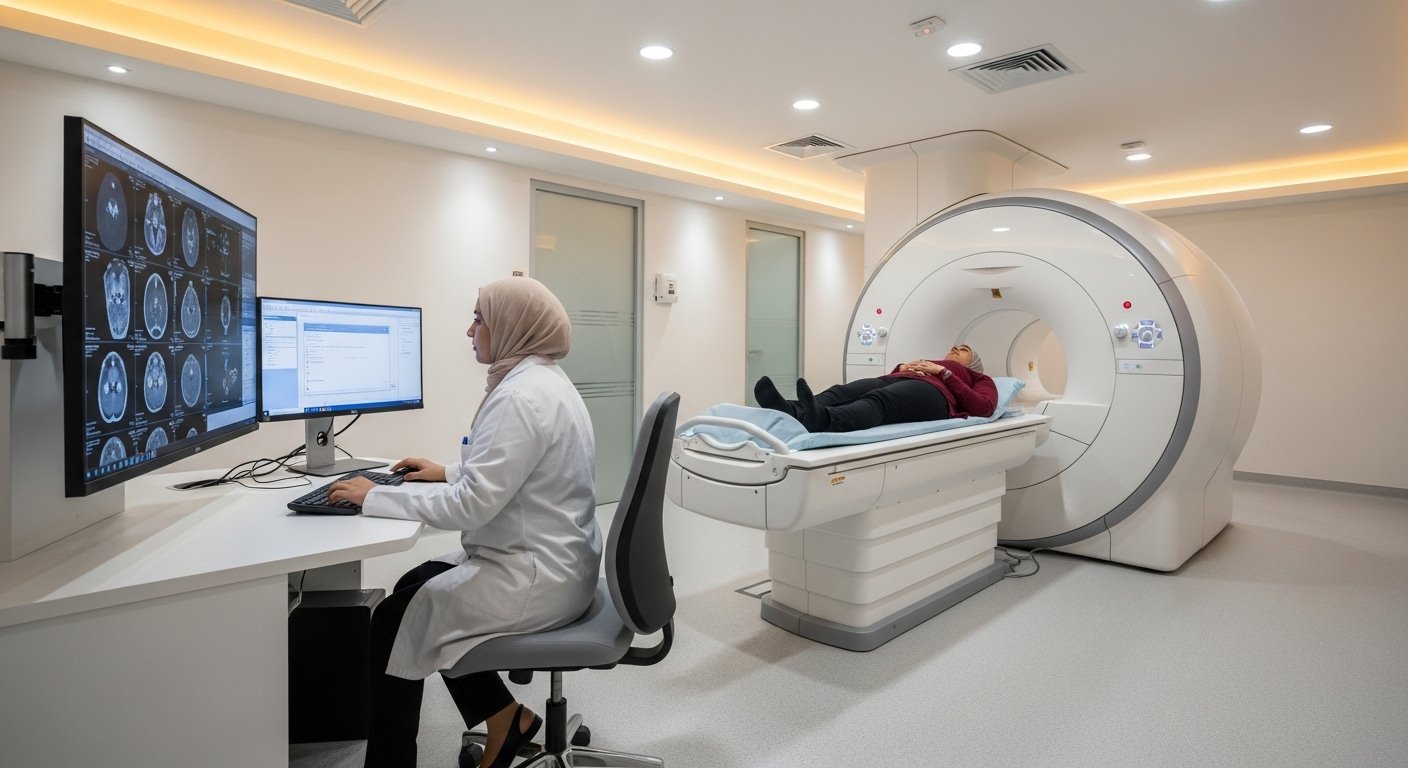
If you’re searching for MRI prices in Morocco, you’ve probably noticed the confusing range of costs across different centers. The truth is, MRI prices vary dramatically—from as low as 900 DH in public hospitals to over 3,000 DH in some private clinics.
But here’s what most guides won’t tell you: the price you see isn’t what you’ll actually pay. With proper insurance coverage, your out-of-pocket cost could be as little as 150 DH, even for scans that cost 2,000 DH upfront.
This guide shows you exactly what you’ll pay based on your insurance type, which centers offer the best value, and how to avoid hidden fees that can inflate your bill by 30% or more.
Table of Contents
MRI Price Ranges by Body Part
Understanding MRI costs starts with knowing what different scans actually cost. Here’s a breakdown of the most common MRI exams across Morocco’s public and private sectors:
Brain MRI Price
Brain MRI is one of the most requested scans in Morocco, typically ordered for headaches, dizziness, or neurological concerns.
Public hospitals: 900-1,200 DH
Private clinics: 1,500-2,200 DH
With contrast injection: Add 300-600 DH
Average wait time: 2-4 weeks (public), 3-7 days (private)
Most brain MRIs take 30-45 minutes to complete. If your doctor orders contrast enhancement, expect an additional 15 minutes and the extra cost mentioned above.
Knee MRI Cost
Knee MRI is particularly popular among athletes and people with joint pain or sports injuries.
Public hospitals: 850-1,100 DH
Private clinics: 1,200-1,800 DH
Sports injury priority slots: Available within 24-48 hours at premium private centers
According to radiologists in Casablanca, knee MRI demand has increased significantly, with most centers now offering dedicated sports medicine imaging services.
Spine MRI Price (Lumbar/Cervical)
Back pain is one of the leading reasons for MRI scans. Prices vary depending on which part of your spine needs imaging.
Public hospitals: 900-1,150 DH
Private clinics: 1,000-1,700 DH
Full spine scan: 1,800-2,500 DH
Keep in mind that “full spine” scans are rarely necessary. Most doctors order specific segments (cervical, thoracic, or lumbar) to keep costs manageable.
Other Common MRI Scans
| MRI Type | Public Hospital | Private Clinic | Typical Duration |
|---|---|---|---|
| Abdominal MRI | 1,000-1,300 DH | 1,200-2,000 DH | 30-45 min |
| Pelvic MRI | 950-1,250 DH | 1,100-1,900 DH | 25-40 min |
| Shoulder MRI | 850-1,100 DH | 1,000-1,600 DH | 20-35 min |
| Cardiac MRI | 1,500-2,000 DH | 2,000-3,000 DH | 45-60 min |
What You’ll Actually Pay After Insurance
This is where most guides fail you. They list the gross prices but don’t show you the final amount you’ll pay. Let’s fix that with real calculations based on your insurance type.
CNSS Coverage: What You Need to Know
CNSS (Caisse Nationale de Sécurité Sociale) reimburses 70-80% of the TNR (Tarification Nationale de Référence), not the actual price charged by the center.
The TNR for most MRI exams is typically 700-900 DH. This is crucial to understand because it means your reimbursement is capped, regardless of what the center charges.
Real Example Calculation:
You get a brain MRI at a private clinic in Casablanca:
- Center charges: 2,000 DH
- TNR for brain MRI: 700 DH
- CNSS reimburses: 560 DH (80% of 700 DH)
- You pay out of pocket: 1,440 DH
Documents needed for CNSS reimbursement:
- Original prescription from your doctor
- CNSS card (attestation)
- Original invoice from the imaging center
- Medical report
Important deadline: You have 60 days from the exam date to submit your claim. Miss this deadline and you lose your reimbursement.
CNOPS Coverage Breakdown
CNOPS (Caisse Nationale des Organismes de Prévoyance Sociale) offers better coverage rates, especially for public sector employees.
Coverage rates:
- Public hospitals: 100% covered (completely free)
- Private clinics: 90% covered after prior approval
Real Example Calculation:
Knee MRI at a private center in Rabat:
- Center charges: 1,500 DH
- CNOPS covers: 1,350 DH (90%)
- You pay: 150 DH
The catch: You need prior approval (accord préalable) for private sector coverage. Here’s how:
- Get your prescription from your doctor
- Log into the CNOPS online portal
- Submit the accord préalable request with your prescription
- Wait 48-72 hours for approval (24 hours for emergencies)
- Book your MRI appointment
Without prior approval, you’ll pay the full amount and face delays in reimbursement—or rejection entirely.
AMO Tadamon (RAMED) Coverage
If you’re covered under AMO Tadamon (the medical assistance program formerly known as RAMED), the situation is straightforward:
Public hospitals: 100% free
Private clinics: No coverage
The challenge with AMO Tadamon is wait times. Public hospitals can have 3-6 week backlogs for non-urgent MRIs. Medical professionals recommend booking your appointment immediately after receiving your prescription to minimize delays.
No Insurance? Here’s Your Strategy
If you’re paying entirely out of pocket, you have several options to reduce costs:
Option 1: Negotiate at private centers
Many private imaging centers offer 10-15% discounts for cash payments or if you’re willing to book during off-peak hours (usually mid-week mornings).
Option 2: Choose public hospitals
At 900-1,200 DH, public hospitals offer the most affordable option. Yes, you’ll wait longer, but you’ll save 40-60% compared to private clinics.
Option 3: Payment plans
Several major centers in Casablanca and Rabat now offer 3-month payment plans for MRI scans over 1,500 DH. Ask when booking.
Option 4: Consider complementary insurance
If you need regular imaging or have chronic health conditions, supplementary insurance can pay for itself. Plans typically cost 200-500 DH monthly but can reduce your MRI cost to nearly zero.
MRI Centers by Major Cities
Finding the right center isn’t just about price—it’s about equipment quality, wait times, and whether they directly bill your insurance. Here’s what you need to know about each major city.
Casablanca MRI Centers
Casablanca has the highest concentration of MRI facilities in Morocco, with over 25 centers offering both 1.5T and 3T machines.
Price range: 1,500-2,500 DH (private sector)
Public option: CHU Ibn Rochd – 900-1,200 DH
Equipment: Mix of 1.5T and 3T machines
Average wait: 4-7 days private, 3-4 weeks public
What to look for: Centers in Maarif and Anfa typically charge 15-20% more than those in Hay Mohammadi or Ain Sebaa, but offer faster appointments and newer equipment.
Insider tip: Mid-week appointments (Tuesday-Thursday mornings) often have better availability and some centers offer slight discounts during these periods.
Rabat MRI Centers
As the capital, Rabat has excellent medical infrastructure with competitive pricing.
Price range: 1,400-2,300 DH (private sector)
Public option: Hôpital Militaire, CHU Ibn Sina – 900-1,200 DH
Equipment: Primarily 1.5T, several 3T options
Average wait: 5-8 days private, 2-3 weeks public
Advantage: CNOPS holders get 100% free service at public hospitals with shorter wait times compared to other cities.
Tangier MRI Centers
Tangier has fewer options but competitive prices due to lower demand.
Price range: 1,200-2,000 DH (private sector)
Public option: CHU Tangier – 900-1,100 DH
Equipment: Mostly 1.5T machines
Average wait: 5-10 days private, 3-4 weeks public
Note: Limited availability of 3T machines. If your doctor specifically requires high-resolution 3T imaging, you may need to travel to Casablanca or Rabat.
Marrakech MRI Centers
Marrakech serves both local patients and medical tourists, creating a competitive market.
Price range: 1,300-2,200 DH (private sector)
Public option: CHU Mohammed VI – 900-1,200 DH
Equipment: Good mix of modern 1.5T and 3T
Average wait: 3-6 days private, 2-4 weeks public
Unique feature: Several centers offer English-speaking staff for international patients, though prices remain aligned with local rates.
Other Major Cities
Agadir: 1,200-2,000 DH (2-3 private centers, limited availability)
Kenitra: 1,100-1,800 DH (1-2 main options)
Fes: 1,200-1,900 DH (2-3 centers)
General pattern: Cities outside the Casablanca-Rabat axis typically charge 10-15% less but have fewer appointment slots and longer wait times.
Factors That Affect Your MRI Price
Understanding what drives MRI costs helps you make smarter choices and avoid overpaying for features you don’t need.
Machine Type: 1.5 Tesla vs 3 Tesla
The Tesla rating measures magnetic field strength. Higher numbers mean better image resolution—but you don’t always need the most powerful option.
1.5 Tesla (1.5T):
- Standard quality suitable for 90% of diagnostic needs
- 10-20% cheaper than 3T
- Widely available across Morocco
- Perfect for: Joint imaging, most brain scans, spine imaging
3 Tesla (3T):
- Superior image quality and detail
- Required for: Complex neurological cases, small lesion detection, research imaging
- Limited availability (mainly Casablanca, Rabat)
- 200-500 DH premium over 1.5T
Expert perspective: Dr. Karim Benjelloun, a radiologist in Casablanca with 15 years of experience, notes: “Most patients don’t need 3T imaging. It’s excellent technology, but 1.5T is perfectly adequate for standard diagnostics. Don’t let centers upsell you on 3T unless your neurologist specifically requests it.”
Contrast Injection: When It’s Necessary
Contrast agents (usually gadolinium-based) make certain tissues and abnormalities more visible on MRI.
Additional cost: 300-600 DH
Injection time: Adds 10-15 minutes
Required for: Tumor detection, vascular imaging, inflammation assessment
Important: You’ll need a recent kidney function blood test before receiving contrast. If you don’t have one, the center will charge 50-150 DH for the test.
Not all MRIs require contrast. Your doctor should indicate on the prescription whether it’s needed. If unclear, call ahead to ask—this prevents surprise charges on the day of your scan.
Location Impact on MRI Pricing
Geography significantly affects what you’ll pay:
Casablanca/Rabat: Highest prices (baseline)
Marrakech/Tangier: 10-15% lower
Smaller cities: 15-25% lower
Rural areas: Limited availability
Medical tourism opportunity: If you live near the border between regions, compare prices in neighboring cities. A 30-minute drive could save you 300-500 DH.
Urgency Fees and Express Service
Need results quickly? Expect to pay a premium.
Same-day MRI: 500-800 DH extra
Next-day service: 200-400 DH extra
Standard booking: No extra fee
Results delivery: 24-48 hours standard, same-day available at premium
When urgency fees are justified:
- Acute neurological symptoms (stroke risk, severe headaches)
- Pre-surgical evaluation with tight timelines
- Workplace injury requiring immediate diagnosis
When they’re not: Routine follow-ups, chronic pain monitoring, or general health screening can wait for standard appointments.
Radiologist Specialization
While less common, some centers employ subspecialized radiologists who command higher fees.
General radiologist: Standard pricing
Neuroradiologist: 200-300 DH premium
Musculoskeletal specialist: 150-250 DH premium
Does it matter? For complex cases—brain tumors, rare joint conditions, detailed cardiac imaging—absolutely. For straightforward diagnostics, general radiologists are perfectly capable.
Public vs Private: Making the Right Choice
The public-private decision is about more than just money. Here’s how to decide which sector serves your needs best.
Choose Public Hospitals When:
✓ You have AMO Tadamon or CNOPS
Why pay anything when you can get it free?
✓ Your condition isn’t urgent
If you can wait 2-4 weeks, save 40-60% on costs.
✓ Budget is your primary concern
At 900-1,200 DH maximum, public hospitals are unbeatable on price.
✓ You need standard diagnostic imaging
Public facilities have capable equipment for routine scans.
Choose Private Clinics When:
✓ Time is critical
Get your appointment in 3-7 days instead of weeks.
✓ You have complementary insurance
If someone else is covering the difference, use premium service.
✓ You need 3T imaging
More 3T machines available in private sector.
✓ Convenience matters
Evening appointments, better parking, more locations.
✓ You want faster results
24-48 hour turnaround vs 5-7 days in public sector.
Quality Comparison: Setting Expectations
Equipment age:
Both sectors have modern and older machines. Always ask: “What year is your MRI machine?” Anything post-2015 is acceptable; post-2020 is excellent.
Radiologist qualifications:
Public hospitals often have highly experienced radiologists, including professors who train residents. Private centers employ equally qualified specialists. Quality is comparable—it’s about individual expertise, not sector.
Image quality:
Depends entirely on machine quality and maintenance, not whether it’s public or private.
Comfort and amenities:
Private clinics generally offer better waiting areas, parking, and patient experience.
Report quality:
Both sectors produce comprehensive medical reports. Private centers may provide more detailed explanations and follow-up consultations.
How to Book Your MRI: Step-by-Step Guide
Booking an MRI in Morocco is straightforward if you know the process. Follow these steps to avoid complications.
Essential Documents Checklist
Before calling any center, gather these items:
Required:
- ✓ Valid medical prescription (ordonnance) from your doctor
- ✓ National ID card (CIN) or passport
- ✓ Insurance card (CNSS, CNOPS, or AMO attestation)
Recommended:
- ✓ Previous MRI results if you’ve had scans before
- ✓ Blood test results for kidney function (créatinine) if contrast is needed
- ✓ List of medications you’re currently taking
- ✓ Information about any metal implants or medical devices
The Booking Process
Step 1: Research and Compare (30 minutes)
Call 2-3 centers to compare:
- Total price (prix global)
- Insurance acceptance and direct billing
- Machine type (1.5T or 3T)
- Earliest available appointment
- Results turnaround time
Step 2: Ask Critical Questions
When calling, use these exact questions:
“Do you accept CNSS/CNOPS direct billing, or do I pay and claim later?”
This determines whether you need cash upfront.
“What’s the total price including all fees?”
Prevents surprise charges for CD copies, parking, or administrative fees.
“Is this a 1.5T or 3T machine, and what year is it from?”
Ensures you’re getting modern equipment.
“When will I receive results?”
Plan your follow-up doctor appointment accordingly.
“Do you offer payment plans?”
If paying out of pocket and the cost exceeds 1,500 DH.
Step 3: Book Your Appointment
Once you’ve chosen a center:
- Provide your full name and phone number
- Mention your insurance type immediately
- Ask for a confirmation number or SMS
- Confirm the address and parking availability
- Note any special preparation required
Step 4: Prepare for Your Appointment
24 hours before:
- Confirm your appointment by phone
- Review preparation instructions (fasting if abdominal MRI, full bladder if pelvic MRI)
- Remove nail polish (can interfere with monitoring equipment)
Day of appointment:
- Arrive 15 minutes early
- Wear comfortable clothing without metal (zippers, underwires, buttons)
- Leave jewelry and watches at home
- Bring all required documents
During Your MRI Scan
What to expect:
The technician will ask you about metal implants, pregnancy, and claustrophobia. Be honest—these factors affect your safety.
You’ll lie on a motorized table that slides into the MRI machine. The space is tighter than you might expect, especially if you’re using an older closed MRI system.
The scan is loud—you’ll hear banging, clicking, and humming sounds. Most centers provide earplugs or headphones.
Duration: 15-60 minutes depending on the body area and whether contrast is used.
Critical rule: Stay completely still. Even small movements can blur the images and require repeat scans.
If you receive contrast injection, you might feel a cool sensation spreading through your arm. This is normal. Rare side effects include nausea or metallic taste.
For claustrophobic patients: Tell the technician before starting. They can provide a panic button, position mirrors so you can see outside the machine, or in some cases, prescribe mild sedation (requires doctor approval).
Collecting Your Results
Timeline:
- Private centers: 24-48 hours
- Public hospitals: 5-7 days
- Urgent cases: Same day (premium fee)
What you’ll receive:
- Printed medical report from the radiologist
- CD or USB with digital images (50-100 DH at some centers)
- Original prescription returned
Important: Don’t try to interpret the results yourself. MRI reports contain technical language that requires medical expertise to understand properly. Schedule your follow-up appointment with the prescribing doctor.
Money-Saving Strategies for MRI Scans
Medical imaging is expensive, but these strategies can significantly reduce your costs.
5 Ways to Cut Your MRI Costs
1. Choose CNSS Tier 1 Affiliated Centers
CNSS has negotiated lower rates with certain “conventionné” centers. These facilities charge closer to the TNR, meaning your out-of-pocket cost is minimal.
Ask when calling: “Êtes-vous conventionné avec la CNSS?”
Potential savings: 200-500 DH
2. Book Public Hospitals for Non-Urgent Scans
If time isn’t critical and you have insurance, public hospitals offer unbeatable value.
Potential savings: 600-1,200 DH compared to private
3. Avoid Urgency Fees Unless Medically Necessary
That “express” or “same-day” service costs 500-800 DH extra. Unless your doctor specifically says it’s urgent, choose standard appointments.
Potential savings: 500-800 DH
4. Ask About Package Discounts
If you need multiple MRI scans (for example, both knee and spine), some centers offer 10-15% discounts when booking together.
Potential savings: 150-300 DH per additional scan
5. Maximize Complementary Insurance
If you have access to complementary insurance through your employer, use it. These plans often cover the gap between CNSS reimbursement and actual costs.
Potential savings: Up to 100% of out-of-pocket costs
Hidden Fees to Watch For
These charges can inflate your bill by 15-25% if you’re not careful:
CD/USB copy of images: 50-100 DH
Solution: Ask if it’s included in the base price before booking.
Printed report additional copies: 20-50 DH per copy
Solution: Request only one copy and photocopy it yourself if needed.
Parking fees: 10-30 DH at some private centers
Solution: Ask about free parking or nearby street parking.
Contrast injection billed separately: Some centers don’t include this in quoted prices
Solution: Always ask for “prix global incluant le produit de contraste si nécessaire”
Administrative fees: 50-100 DH at certain centers
Solution: Confirm the price is “all-inclusive” (tout compris)
Best Times to Book for Lower Prices
Mid-week mornings (Tuesday-Thursday, 8-11 AM):
Lower demand often means better negotiation room, especially for cash-paying patients.
End of month:
Some private centers offer 5-10% discounts to meet monthly targets.
Avoid:
- Monday mornings (highest demand)
- Holiday periods (limited slots, higher prices)
- Friday afternoons (many centers close early)
Negotiation tip: If paying cash and booking during off-peak times, ask directly: “Avez-vous une réduction pour paiement comptant?” (Do you have a cash payment discount?) Many centers will offer 5-10% off.
Common Questions About MRI in Morocco
Does MRI Use Radiation?
No. This is one of the biggest misconceptions about MRI.
MRI (Magnetic Resonance Imaging) uses powerful magnets and radio waves—no radiation whatsoever. Unlike X-rays or CT scans, you can have multiple MRIs without cumulative radiation exposure.
This makes MRI particularly safe for:
- Monitoring chronic conditions requiring repeated imaging
- Pregnant women (after first trimester, when medically necessary)
- Children and young adults
How Long Does an MRI Take?
Simple scans: 15-30 minutes
Single body area without contrast (knee, shoulder, single spine segment)
Standard scans: 30-45 minutes
Brain MRI, multiple spine segments, or single area with contrast
Complex scans: 45-60 minutes
Multiple body areas, detailed brain imaging, cardiac MRI, full spine
Add 10-15 minutes for:
- Check-in and preparation
- Contrast injection if required
- Safety screening questionnaire
Total appointment time: Plan for 30 minutes beyond the actual scan time.
Managing anxiety: If you’re worried about the confined space, bring headphones (many centers allow music), practice breathing exercises, or ask your doctor about mild sedation for severe claustrophobia.
MRI vs CT Scan: Which Is Better?
Neither is universally “better”—they serve different purposes:
MRI is superior for:
- Soft tissues (brain, muscles, ligaments, tendons)
- Spinal cord and nerve issues
- Joint problems
- Detailed organ imaging
- No radiation exposure needed
MRI cost: 900-3,000 DH
CT scan is better for:
- Bone fractures and injuries
- Lung imaging
- Emergency situations (much faster)
- Patients with metal implants who can’t have MRI
- Generally more affordable
CT scan cost: 400-1,200 DH
Your doctor’s decision is based on what they need to see. Don’t request switching from MRI to CT (or vice versa) just based on cost—you might end up needing the other scan anyway, doubling your expense.
Can I Get MRI Without a Prescription?
Legally, no. Moroccan health regulations require a valid medical prescription (ordonnance) from a licensed doctor for all MRI examinations.
Exception: Some sports medicine centers offer self-pay MRI for athletes, but:
- You’ll pay full price with no insurance coverage
- The radiologist may refuse without clinical context
- You’ll still need a doctor to interpret results
Why prescriptions matter:
- Insurance won’t reimburse without one
- Radiologists need clinical information to focus on specific areas
- Prescriptions ensure appropriate imaging for your condition
Prescription validity: Typically 3-6 months, but verify with your doctor. Some insurance companies require recent prescriptions (less than 30 days old) for reimbursement.
What If I’m Claustrophobic?
Claustrophobia affects 5-10% of MRI patients. Here’s how to manage it:
Option 1: Request an open MRI
Rare in Morocco, but a few centers in Casablanca have open-sided machines. They’re less claustrophobic but may produce slightly lower image quality.
Option 2: Mild sedation
Your prescribing doctor can prescribe anti-anxiety medication to take 30-60 minutes before your scan. Common options include low-dose benzodiazepines.
Important: You’ll need someone to drive you home if sedated.
Option 3: Coping strategies
- Ask for a mirror attachment so you can see outside the machine
- Bring music or relaxation audio (if center allows)
- Practice deep breathing exercises
- Request the shortest scan possible for your condition
- Use the panic button if you need to stop—you can take breaks
Option 4: Newer machines are better
MRI machines manufactured after 2018 are generally shorter and wider, reducing the enclosed feeling. Ask about machine age when booking.
How Long Is My Prescription Valid?
Standard validity: Most MRI prescriptions are valid for 3-6 months from the date issued.
However, insurance requirements vary:
CNSS: Accepts prescriptions up to 6 months old
CNOPS: Prefers prescriptions less than 3 months old for private sector
AMO Tadamon: Generally 6 months, but public hospitals may prioritize recent prescriptions
Best practice: Book your MRI within 30 days of receiving your prescription. This ensures:
- Insurance approval without questions
- Your symptoms are current
- Radiologist has relevant clinical context
If your prescription expires: You’ll need to see your doctor again for a new one. Don’t use expired prescriptions—insurance will reject your claim.
Can I Use MRI Results From Another Center?
Yes, absolutely. MRI results are portable and should be accepted by any doctor or facility.
What to bring to your new doctor:
- CD or USB with digital DICOM images
- Printed radiologist report
- Previous prescription (for context)
Why this matters:
- Avoids unnecessary repeat scans (saves 900-3,000 DH)
- Allows comparison to track disease progression
- Provides complete medical history
However, some doctors prefer their affiliated center’s imaging:
- They trust the specific radiologist’s expertise
- They’re familiar with that center’s equipment quality
- Some conditions require follow-up at the same machine for accurate comparison
When in doubt: Ask your doctor before booking a second MRI. They can review your previous results and determine if a new scan is actually necessary.
Red Flags: When to Avoid an MRI Center
Not all imaging centers are created equal. Watch for these warning signs:
Warning Signs of Low-Quality Centers
🚩 Won’t quote prices upfront
Reputable centers have transparent pricing. If they’re evasive about costs, expect hidden fees and billing surprises.
🚩 High-pressure booking tactics
“Special discount only if you book today” or “Last appointment this month” are sales tactics, not medical advice.
🩩 MRI machine older than 10-12 years
Technology matters. Machines from before 2012 may produce lower quality images or take longer scan times.
🚩 No radiologist on-site
Some centers send images to off-site radiologists, delaying results by days and creating communication gaps.
🚩 Unclear about insurance billing
If they can’t clearly explain how they bill CNSS or CNOPS, you’ll likely face claim rejection and payment headaches.
🚩 No online presence or reviews
In today’s digital age, established centers have websites and patient reviews. Complete absence suggests they’re either very new or have reputation issues.
🚩 Extremely low prices
If someone quotes 600 DH for a brain MRI, question the equipment quality and whether they’re properly licensed.
Questions That Protect You
Ask these before booking:
“What year was your MRI machine manufactured?”
Anything after 2015 is acceptable. 2018 or newer is ideal.
“Is your radiologist specialized in [brain/musculoskeletal/cardiac]?”
For complex cases, subspecialization matters.
“Do you bill my insurance directly, or do I pay and get reimbursed?”
Direct billing (tiers payant) is more convenient and ensures insurance acceptance.
“What’s included in the quoted price?”
Should include: scan, radiologist report, one CD copy, one printed report.
“Can I see your CNSS/CNOPS accreditation?”
They should readily show proof of insurance affiliation.
“How many MRI scans do you perform monthly?”
Higher volume usually means more experienced technicians and radiologists.
Trust Your Instincts
If something feels off—unprofessional staff, dirty facilities, evasive answers—go elsewhere. Your health and financial protection are too important to ignore red flags.
Understanding Your MRI Report
MRI reports contain technical medical language. Here’s what you need to know when you receive your results.
Key Terms Explained
T1-weighted and T2-weighted imaging:
Different pulse sequences that make tissues appear bright or dark. Radiologists compare both to identify abnormalities.
Signal intensity:
How bright or dark a tissue appears. “Hyperintense” means bright; “hypointense” means dark. These patterns help identify different tissue types and abnormalities.
Enhancement:
Areas that become brighter after contrast injection. Often indicates increased blood flow, inflammation, or tumors.
Lesion:
Any abnormal tissue area. Can be benign or malignant—your doctor interprets significance.
Unremarkable/Normal:
Good news—nothing abnormal detected.
What To Do With Your Results
1. Don’t self-diagnose online
MRI findings require medical expertise to interpret accurately. What seems alarming might be benign; what seems minor might need attention.
2. Schedule a follow-up with your prescribing doctor
Bring both the CD and printed report to your appointment. Your doctor will explain findings in plain language.
3. Ask questions
- What does this mean for my condition?
- Do I need treatment or just monitoring?
- Will I need another MRI in the future?
- Are there any restrictions on my activities?
4. Get a second opinion for serious findings
If diagnosed with tumors, complex neurological conditions, or recommendations for surgery, another radiologist’s interpretation can provide peace of mind.
5. Keep copies of everything
Store your MRI images and reports securely. They’re valuable for future medical care and comparison imaging.
Insurance Optimization: Get Every Dirham You’re Entitled To
Maximizing your insurance benefits requires understanding the system and following proper procedures.
Maximizing CNSS Reimbursement
Choose Tier 1 affiliated centers:
These “conventionné” facilities have negotiated rates closer to TNR, reducing your out-of-pocket costs by 30-50%.
Submit claims within 60 days:
This is a hard deadline. After 60 days from your exam date, CNSS rejects reimbursement claims.
Keep all original documents:
- Original invoice (facture)
- Payment receipt
- Medical report
- Prescription copy
Follow up if not reimbursed in 30 days:
Contact CNSS directly at their helpline or visit your local office to check claim status.
Know your TNR:
For MRI scans, typical TNR is 700-900 DH. CNSS reimburses 70-80% of this amount, not the price charged by the center.
CNOPS Prior Approval Process
CNOPS requires accord préalable (prior approval) for private sector MRI coverage. Here’s the streamlined process:
Step 1: Get your prescription
Your doctor must indicate the MRI type and medical justification.
Step 2: Log into CNOPS portal
Access www.cnops.org.ma with your credentials (member number and password).
Step 3: Submit request online
- Upload your prescription (scan or photo)
- Select the imaging center
- Add any supporting medical documents
Step 4: Wait for approval
- Standard requests: 48-72 hours
- Emergency cases: 24 hours
- You’ll receive SMS and email confirmation
Step 5: Book your appointment
Only book after receiving approval number. Provide this number to the imaging center.
Important: Without prior approval, you’ll pay full price and face reimbursement delays or rejection.
Is Complementary Insurance Worth It?
Complementary (or supplementary) insurance covers the gap between basic AMO coverage and actual costs.
Typical cost: 200-500 DH monthly
Coverage: 80-100% of the difference after CNSS/CNOPS reimbursement
Calculate if it’s worth it:
If you need one MRI per year:
- MRI cost: 2,000 DH
- CNSS reimburses: 560 DH
- You pay: 1,440 DH
- Complementary insurance annual cost: 2,400-6,000 DH
- Verdict: Not worth it for one MRI
If you need MRI scans regularly (chronic conditions):
- Three MRIs yearly: 6,000 DH total
- CNSS reimburses: 1,680 DH
- You’d pay: 4,320 DH
- Complementary insurance: 2,400-6,000 DH annually
- Plus coverage for other medical expenses
- Verdict: Worth considering, especially at lower premium rates
Best for: People with chronic conditions requiring regular imaging, families with multiple health needs, or anyone wanting comprehensive health protection.
Final Checklist Before Booking Your MRI
Use this checklist to ensure a smooth, cost-effective MRI experience:
Pre-Booking Checklist
✓ Valid prescription in hand – Check expiration date (should be less than 3 months old for best insurance acceptance)
✓ Confirmed insurance coverage – Called insurance to verify reimbursement rate and requirements
✓ Compared 2-3 centers – Checked prices, equipment type, wait times, and insurance acceptance
✓ Asked about machine specifications – Confirmed 1.5T or 3T and machine age (prefer post-2015)
✓ Confirmed all-inclusive price – Verified that quoted price includes contrast (if needed), CD copy, and printed report
✓ Received booking confirmation – Got confirmation number, appointment date/time, and center address
✓ Know required documents – Organized prescription, ID, insurance card, previous results
✓ Understand payment process – Clear on whether you pay upfront or insurance is billed directly
Day-of-Appointment Checklist
✓ Bring complete documentation:
- Medical prescription (original)
- National ID card or passport
- Insurance card (CNSS/CNOPS/AMO attestation)
- Previous MRI results (CD and report if available)
- Blood test for kidney function (if contrast injection needed)
✓ Arrive 15 minutes early – Time for paperwork and safety screening
✓ Wear appropriate clothing – Comfortable clothes without metal (no zippers, underwire bras, or metal buttons)
✓ Remove all metal items – Leave jewelry, watches, and accessories at home or in provided locker
✓ Prepare mentally – If claustrophobic, practice breathing exercises or take prescribed anti-anxiety medication 30-60 minutes before
✓ Ask for CD copy – Confirm you’ll receive digital images (verify if there’s a charge)
✓ Get complete receipt – Essential for insurance claim if paying out-of-pocket
✓ Confirm results timeline – Know when and how to collect your report (24-48 hours private, 5-7 days public)
Conclusion: Making Smart Choices About MRI Costs in Morocco
MRI prices in Morocco span a wide range—from 900 DH in public hospitals to over 3,000 DH at premium private centers. But as we’ve shown throughout this guide, the sticker price isn’t what matters most.
What you’ll actually pay depends on three key factors:
- Your insurance coverage – CNSS holders typically pay 1,200-1,500 DH out-of-pocket for private scans; CNOPS members can get scans for as little as 150 DH with prior approval; AMO Tadamon beneficiaries receive free service at public hospitals.
- Public vs private choice – Public hospitals offer the best value if you can wait 2-4 weeks, while private clinics deliver convenience and speed for 40-60% more.
- How well you navigate the system – Choosing affiliated centers, avoiding hidden fees, and maximizing insurance benefits can save 30-50% on your final cost.
Remember these key takeaways:
- Always call 2-3 centers to compare before booking
- Ask for “prix global” to avoid surprise charges
- Verify insurance billing procedures upfront
- Don’t overpay for 3T machines unless medically necessary
- Submit CNSS claims within 60 days
- Get CNOPS prior approval before booking private scans
The Moroccan healthcare system offers quality MRI services at both public and private facilities. With the information in this guide, you’re equipped to make informed decisions that protect both your health and your wallet.
Your next steps:
- Get your prescription from your doctor
- Use this guide to compare centers in your city
- Call your insurance to verify coverage
- Book your appointment with confidence
This guide was last updated in January 2026. MRI prices and insurance policies may change. Always verify current rates directly with imaging centers and insurance providers.
1 thought on “MRI Price in Morocco: What You’ll Actually Pay (Complete Guide)”