
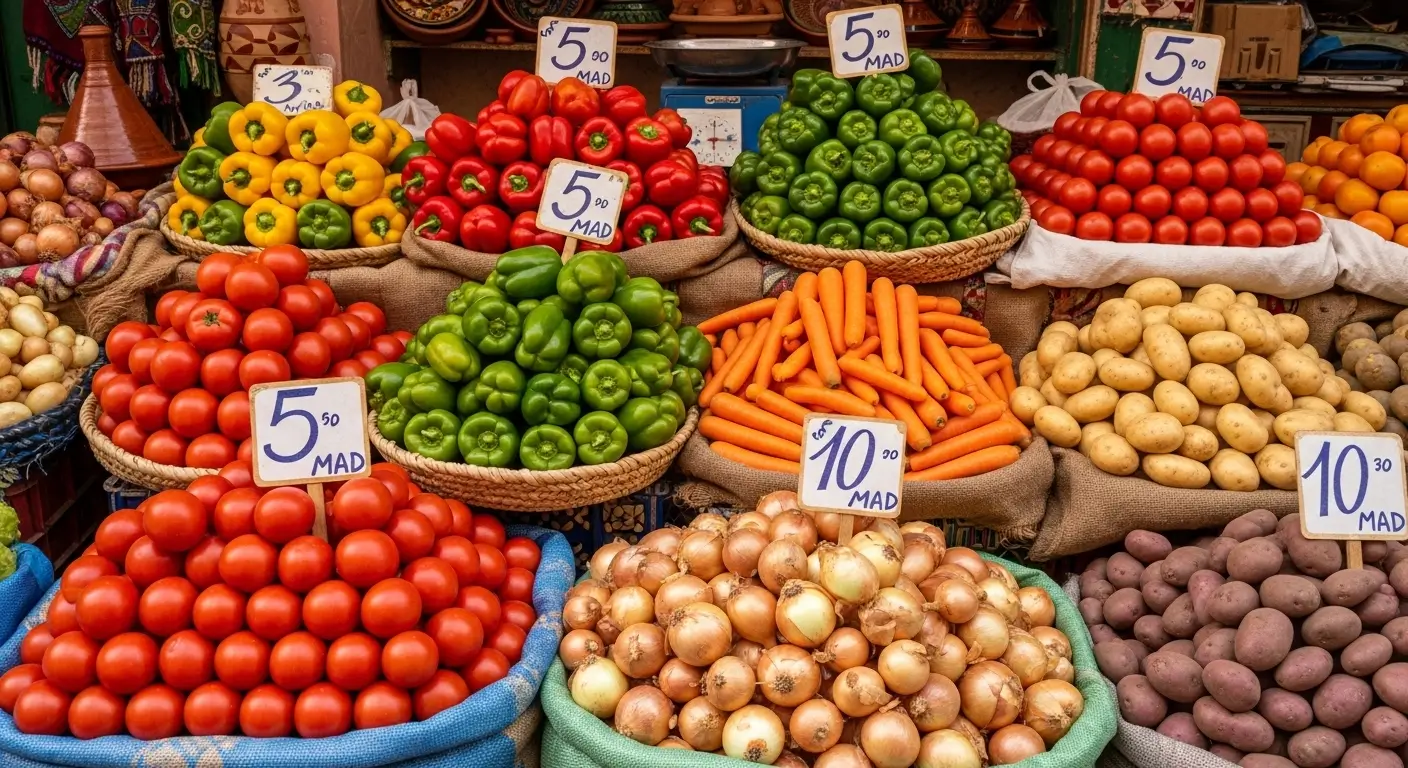
Planning to move to Marrakech? Visiting family? Or just curious how food prices in the Red City compare to where you live? You’re not alone. Thousands of Moroccans search for Marrakech food prices every month, trying to figure out if the city is affordable or surprisingly expensive.
Here’s the reality: Marrakech food prices vary dramatically depending on where you shop and which neighborhood you’re in. Tourist zones can be 200-300% more expensive than local markets just a few kilometers away. A simple café nuss nuss costs 4 MAD in a neighborhood café but 15 MAD near Jemaa el-Fna. The same kilogram of tomatoes sells for 3 MAD at Souk Bab Doukkala and 10 MAD in Medina tourist shops.
But if you know where locals shop, you can eat well on a reasonable budget. This guide breaks down exactly what you’ll pay for groceries, restaurant meals, and daily essentials in Marrakech in 2026. You’ll get real prices from Marjane, Carrefour, local souks, and neighborhood markets—plus honest comparisons with Casablanca, Rabat, and Tangier so you can budget accurately.
Table of Contents
Supermarket Prices in Marrakech (2026)
Understanding supermarket pricing in Marrakech starts with knowing which chains operate in the city and how they compare. Unlike Casablanca where you have dozens of options within minutes of each other, Marrakech’s supermarket landscape is more concentrated in specific areas.
Major Supermarket Chains Price Comparison
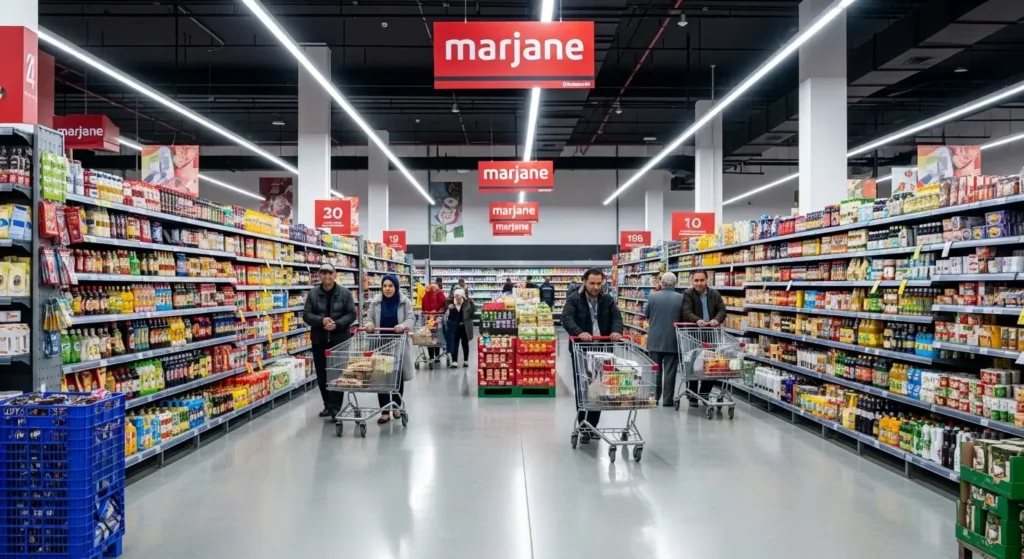
Marjane Marrakech
Marjane dominates the Marrakech supermarket scene with two major locations: Marjane Menara on Avenue Mohamed VI and the newer branch near the airport. These hypermarkets offer the widest selection of products in the city.
Price positioning: Mid-range to slightly expensive, but frequent promotions make it competitive. Marjane runs “Koul Yaoum Promotion” (every day promotions) on different categories—Mondays for dairy, Thursdays for meat, weekends for produce.
Best for: Bulk buying, household items, imported products, and weekly shopping with family. The store brands (Marjane Quality, Premier Prix) offer 20-30% savings on equivalent name brands.
Local reputation: Most Marrakchi families do their main shopping at Marjane because of variety, though they supplement with souk visits for fresh produce. Parking is easy, which matters when buying large quantities.
Carrefour Marrakech
Carrefour operates several formats in Marrakech: Carrefour Market (smaller neighborhood stores) and Carrefour hypermarket at Carré Eden shopping center and Menara Mall.
Price comparison with Marjane: Generally 5-8% more expensive on staples, but better prices on European imports and prepared foods. Their fresh produce section is smaller but higher quality.
Key difference: Carrefour Market stores in neighborhoods like Gueliz charge 10-15% more than the hypermarket locations. You pay for convenience—they’re open later and located closer to residential areas.
Best for: Quick shopping trips, better selection of French products, prepared meals, and specialty items. Their loyalty card actually offers decent discounts (unlike some competitors).
Acima Stores
Acima positions itself as the budget-friendly option with locations throughout Marrakech’s residential neighborhoods—Sidi Youssef Ben Ali, M’hamid, Route de Safi, and several in Gueliz.
Price positioning: About 10-15% cheaper than Marjane on most staples. Limited selection but covers all basics. Store layout is simpler, less fancy than Marjane or Carrefour.
Product availability: Focuses heavily on Moroccan and North African products. Don’t expect much European or Asian selection. Fresh produce quality varies by location.
Why locals love it: Neighborhood presence means you can walk there. Prices stay consistent—no promotional games. What you see is what you get.
Aswak Assalam
Aswak Assalam recently opened in Marrakech and immediately positioned itself as the premium option. Their Route de Casablanca location attracts upper-middle-class shoppers.
Premium positioning: About 15-20% more expensive than Marjane across the board. The store is immaculate, air-conditioned, and carries high-end brands.
When to shop here: When you need specific premium products not available elsewhere, hosting guests, or special occasions. Their butcher section and seafood are notably better quality.
Reality check: Most Marrakchis avoid Aswak Assalam for regular shopping due to prices. It’s become something of a status symbol to shop there regularly.
Essential Groceries Price List (Updated February 2026)
Here’s what staple foods actually cost across Marrakech’s major supermarkets. Prices collected in early February 2026:
| Item | Marjane | Carrefour | Acima | Aswak Assalam |
|---|---|---|---|---|
| Flour (1kg) – Bahri | 6.50 MAD | 6.95 MAD | 6.20 MAD | 7.20 MAD |
| Sugar (1kg) – Cosumar | 8.95 MAD | 9.10 MAD | 8.80 MAD | 9.30 MAD |
| Cooking Oil (1L) – Lesieur | 22.50 MAD | 23.00 MAD | 21.90 MAD | 23.50 MAD |
| Cooking Oil (1L) – Huilor | 19.90 MAD | 20.50 MAD | 19.50 MAD | 21.00 MAD |
| Rice (1kg) – Uncle Ben’s | 28.00 MAD | 29.50 MAD | 27.50 MAD | 30.00 MAD |
| Rice (1kg) – Local brand | 12.50 MAD | 13.00 MAD | 11.80 MAD | N/A |
| Pasta (500g) – Tria | 8.50 MAD | 9.00 MAD | 8.20 MAD | 9.20 MAD |
| Milk (1L) – Centrale | 9.50 MAD | 9.80 MAD | 9.30 MAD | 10.00 MAD |
| Eggs (12 units) | 18.00 MAD | 19.00 MAD | 17.50 MAD | 20.00 MAD |
| Bread – Khobz (piece) | 1.20 MAD | 1.20 MAD | 1.20 MAD | 1.20 MAD |
| Coffee – Café Najjar (250g) | 32.00 MAD | 34.00 MAD | 31.50 MAD | 35.00 MAD |
| Tea – Sultan (200g) | 18.50 MAD | 19.00 MAD | 18.00 MAD | 19.50 MAD |
| Tomato Paste (70g) | 2.50 MAD | 2.80 MAD | 2.30 MAD | 3.00 MAD |
| Chickpeas (500g) – dried | 9.50 MAD | 10.00 MAD | 9.00 MAD | 10.50 MAD |
| Lentils (500g) | 8.00 MAD | 8.50 MAD | 7.50 MAD | 9.00 MAD |
Key insights from this comparison:
The price gap between cheapest (Acima) and most expensive (Aswak Assalam) is roughly 15-20% on most items. For a family spending 3,000 MAD monthly on groceries, shopping exclusively at Acima instead of Aswak Assalam saves about 450-600 MAD per month.
Bread price is government-regulated at 1.20 MAD per piece regardless of where you buy it. Sugar and flour prices are also somewhat controlled, so variation is minimal.
The biggest price differences appear in non-essential items, imported products, and prepared foods—categories where government price controls don’t apply.
Fresh Produce Prices by Season
Fresh produce pricing in Marrakech fluctuates significantly with seasons. Understanding these patterns helps you save money and eat better quality food.
Winter Prices (January-March)
Winter is peak season for citrus fruits and many vegetables in Morocco. Marrakech benefits from its proximity to agricultural regions.
Vegetables in season:
- Tomatoes: 4-6 MAD/kg (supermarket), 3-4 MAD/kg (souk)
- Potatoes: 5-6 MAD/kg
- Carrots: 4-5 MAD/kg
- Turnips: 3-4 MAD/kg
- Beets: 5-6 MAD/kg
- Cauliflower: 6-8 MAD/kg
- Cabbage: 3-4 MAD/kg
Fruits in season:
- Oranges: 3-5 MAD/kg (excellent quality)
- Clementines: 5-7 MAD/kg
- Lemons: 8-10 MAD/kg
- Bananas: 12-14 MAD/kg (imported year-round)
- Apples: 15-20 MAD/kg (imported)
What to avoid: Strawberries cost 40-50 MAD/kg in winter—wait until spring when they drop to 15-20 MAD/kg. Summer fruits like watermelon and grapes are either unavailable or prohibitively expensive.
Spring Prices (April-June)
Spring brings the widest variety and generally best prices as local production peaks.
Stars of spring:
- Strawberries: 15-25 MAD/kg (April-May peak)
- Fresh peas: 10-12 MAD/kg
- Fava beans: 6-8 MAD/kg
- Artichokes: 5-8 MAD each
- Zucchini: 5-7 MAD/kg
- Green beans: 12-15 MAD/kg
Price drops: Tomatoes fall to 2-3 MAD/kg at souks when local greenhouses flood the market. This is when smart shoppers make tomato paste and freeze it.
Summer Prices (July-September)
Summer is watermelon and melon season, but many vegetables become expensive as heat reduces quality.
Summer deals:
- Watermelon: 3-4 MAD/kg (July-August)
- Melon: 5-7 MAD/kg
- Grapes: 15-20 MAD/kg (local varieties)
- Peaches: 12-18 MAD/kg
- Figs: 20-30 MAD/kg
What gets expensive:
- Tomatoes: 8-12 MAD/kg (quality suffers in heat)
- Lettuce: 3-5 MAD per head (wilts quickly)
- Herbs: Prices double as they struggle in heat
Fall Prices (October-December)
Fall transitions back to winter crops. Prices stabilize as growing conditions improve.
Fall highlights:
- Pomegranates: 10-15 MAD/kg (October-November)
- Dates: 20-40 MAD/kg depending on variety
- Sweet potatoes: 6-8 MAD/kg
- Pumpkin: 5-7 MAD/kg
- Persimmons: 15-20 MAD/kg
The smart shopping strategy: buy what’s in season, buy extra when prices are lowest, and preserve for later (freezing, canning, making paste).
Meat and Poultry Costs
Meat prices in Marrakech supermarkets tend to be higher than at dedicated butcher shops, but you gain convenience and consistent quality.
Chicken pricing:
- Whole chicken: 28-32 MAD/kg (supermarket)
- Chicken breast: 45-55 MAD/kg (supermarket)
- Chicken thighs: 35-40 MAD/kg
- Whole chicken: 25-28 MAD/kg (local butcher)
Beef pricing:
- Ground beef: 70-85 MAD/kg (supermarket)
- Beef chunks (for tajine): 85-95 MAD/kg
- Better cuts: 100-120 MAD/kg
- Local butcher beef: 10-15% cheaper but quality varies
Lamb pricing:
- Lamb meat: 90-110 MAD/kg (supermarket)
- Lamb liver: 60-70 MAD/kg
- During Eid: Prices increase 30-40%
Fish and seafood: Marrakech is landlocked, so fish prices are higher than coastal cities. Fresh fish at supermarkets: 60-100 MAD/kg depending on type. The central fish market near Bab Doukkala offers better prices (50-80 MAD/kg) but requires arriving early for best selection.
Comparison verdict: Supermarkets charge convenience premiums of 15-20% on meat. However, hygiene standards are more consistent. Local butchers offer better prices but require knowing which ones to trust. Most Marrakchis use both—supermarkets for chicken and ground beef, trusted butchers for larger purchases.
Souk and Market Prices in Marrakech
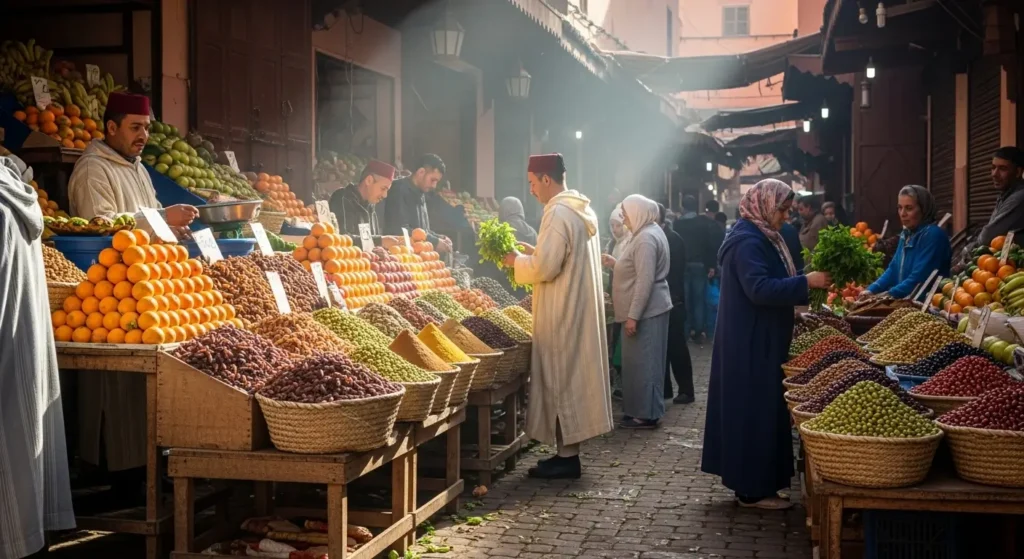
While supermarkets offer convenience, Marrakech’s souks and markets are where locals find the best prices on fresh produce. Understanding the market system is essential for budget-conscious shopping.
Where Do Locals Buy Fresh Food?
Best Markets for Fresh Produce
Souk Bab Doukkala
Located just outside Bab Doukkala gate, this is one of Marrakech’s largest and most affordable produce markets. Open daily from 7 AM to 8 PM.
Why locals love it: Prices are 30-40% lower than tourist area markets. Vendors cater to neighborhood residents, not tourists. You can find everything from seasonal vegetables to fresh herbs, with honest pricing.
Best time to visit: Early morning (7-9 AM) for best selection and freshest produce. Late afternoon (6-7 PM) for discounts as vendors want to clear inventory.
Typical prices: Tomatoes 3 MAD/kg, potatoes 4 MAD/kg, onions 3 MAD/kg, seasonal fruits at market rate minus 20-30% compared to supermarkets.
Souk Sidi Youssef Ben Ali
This working-class neighborhood hosts a massive daily market that serves local residents. Authentically local with virtually no tourists.
Advantages: Rock-bottom prices, huge variety, authentic neighborhood atmosphere. This is where budget-conscious Marrakchis shop.
Prices: Generally 10-15% cheaper than Bab Doukkala, making it the cheapest option in Marrakech. Tomatoes go for 2.50 MAD/kg, potatoes 3.50 MAD/kg.
Logistics: Located far from tourist areas, requires taxi or bus. Worth it if you’re shopping for the week and buying in quantity.
Marché Central (Gueliz)
The covered market in Gueliz near Mohammed V Avenue offers a different experience—cleaner, more organized, slightly higher prices but still much cheaper than supermarkets.
Price positioning: Mid-range between Bab Doukkala and supermarkets. Tomatoes 4 MAD/kg, potatoes 5 MAD/kg.
Why shop here: Better quality control, cleaner conditions, easier parking, more convenient if you live in Gueliz. Good compromise between price and convenience.
Bonus: Excellent butcher shops inside offering competitive meat prices with good hygiene standards.
Neighborhood Markets by Area
Every neighborhood has smaller daily or weekly markets:
- M’hamid Market: Tuesday and Saturday, good prices, local crowd
- Route de Safi Market: Daily, serves residential areas, moderate prices
- Daoudiate Market: Inside Medina, mixed tourist/local, prices vary widely
Market Shopping Tips
Best time of day to shop:
Morning (7-10 AM) gives you first pick of the freshest produce. Vendors are more willing to negotiate at this hour because they’re trying to build momentum for the day.
Late afternoon (5-7 PM) is bargain time. Vendors want to go home with empty carts. Discounts of 20-30% are common, but selection is limited to what’s left.
Avoid mid-day (11 AM-3 PM)—worst time for both selection and prices. Heat affects quality, and vendors are less flexible.
Negotiation expectations:
Here’s the truth about haggling in Marrakech markets: In actual neighborhood markets where locals shop (Bab Doukkala, Sidi Youssef Ben Ali), prices are relatively fixed. Vendors might give you slightly better prices if you buy in quantity, but aggressive haggling isn’t expected or appreciated.
The negotiation culture mainly exists in tourist areas of the Medina. In local markets, vendors post prices and that’s what you pay. Asking for a slight discount on large purchases (buying 5kg instead of 1kg) is acceptable—demanding 50% off will mark you as a tourist.
Seasonal price fluctuations:
Market prices swing wildly with seasons. In May when tomatoes flood the market, prices can drop to 2 MAD/kg at souks. By August, the same tomatoes cost 10 MAD/kg due to heat and scarcity.
Smart shoppers track seasonal patterns and buy extra when prices bottom out. Many Marrakchi families buy 20-30 kg of tomatoes in spring at peak season, make tomato paste, and freeze it for the year.
Quality vs. price considerations:
Cheapest isn’t always best. At markets, quality varies dramatically between vendors. A kilogram of tomatoes for 2 MAD might be overripe and last one day. Tomatoes at 4 MAD from a reputable vendor stay fresh for a week.
Build relationships with specific vendors. Regular customers get better prices, better quality, and first access to premium produce when it arrives.
Fresh Market Price Guide
Here’s what you’ll actually pay at local markets (Bab Doukkala and Sidi Youssef Ben Ali) as of February 2026:
Vegetables (Per Kilogram):
| Vegetable | Souk Price | Supermarket Price | Savings |
|---|---|---|---|
| Tomatoes | 3-4 MAD | 6-8 MAD | 50% |
| Potatoes | 4-5 MAD | 6-7 MAD | 35% |
| Onions | 3-4 MAD | 5-6 MAD | 40% |
| Peppers | 5-7 MAD | 10-12 MAD | 45% |
| Carrots | 4-5 MAD | 6-8 MAD | 40% |
| Zucchini | 5-6 MAD | 9-11 MAD | 45% |
| Eggplant | 6-8 MAD | 11-14 MAD | 40% |
| Cauliflower | 6-8 MAD | 12-15 MAD | 50% |
| Lettuce | 2-3 MAD/head | 4-5 MAD/head | 45% |
| Cucumbers | 4-5 MAD | 7-9 MAD | 40% |
| Green beans | 12-15 MAD | 20-25 MAD | 40% |
| Fresh peas (spring) | 10-12 MAD | 18-20 MAD | 40% |
Fruits (Per Kilogram):
| Fruit | Souk Price | Supermarket Price | Savings |
|---|---|---|---|
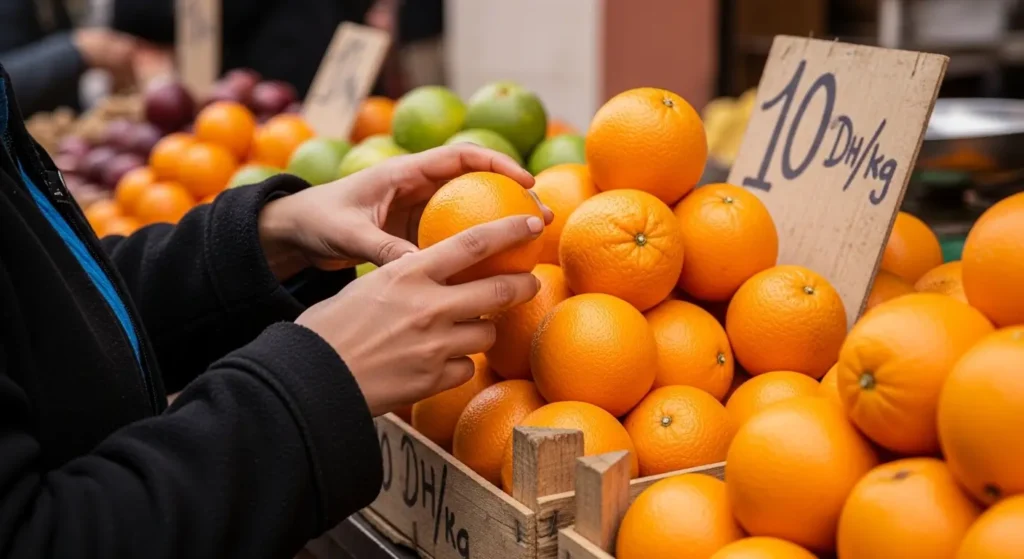
| Oranges | 3-5 MAD | 7-9 MAD | 45% |
| Apples | 12-15 MAD | 18-22 MAD | 35% |
| Bananas | 12-14 MAD | 15-17 MAD | 20% |
| Strawberries (spring) | 15-20 MAD | 30-35 MAD | 45% |
| Grapes (summer) | 15-18 MAD | 25-30 MAD | 40% |
| Watermelon (summer) | 3-4 MAD | 6-8 MAD | 50% |
| Melon | 5-7 MAD | 10-12 MAD | 45% |
| Peaches | 12-15 MAD | 20-25 MAD | 40% |
| Clementines (winter) | 5-7 MAD | 10-13 MAD | 45% |
Key observation: Savings on fresh produce at markets average 40-50% compared to supermarkets. For a family spending 800 MAD monthly on produce, switching from supermarket to souk shopping saves 320-400 MAD per month.
Bulk Buying: When Does It Make Sense?
Which items to buy in bulk:
Dry goods like rice, pasta, flour, sugar, and cooking oil offer the best bulk-buying opportunities. At souks and wholesale markets, buying 5kg or 10kg bags instead of 1kg packages saves 15-25%.
Examples:
- Rice: 1kg bags cost 13 MAD each, but a 5kg bag costs 55 MAD (11 MAD/kg—15% savings)
- Flour: 1kg costs 6.50 MAD, but 5kg costs 28 MAD (5.60 MAD/kg—14% savings)
- Sugar: Similar 12-15% savings on larger bags
Fresh produce bulk buying works seasonally. When tomatoes hit 2 MAD/kg in spring, buying 20kg for 40 MAD and processing into paste makes sense. Buying 20kg of expensive winter tomatoes at 10 MAD/kg does not.
Wholesale market access:
Marrakech has wholesale markets where restaurants and retailers shop. Regular consumers can access them, but you need to buy in significant quantities.
Derb Ghalef Wholesale Market (near industrial zone) opens early morning (4-7 AM). Prices are 20-30% below retail markets, but minimum purchases apply. You’ll need a car and must buy in boxes/crates, not individual kilograms.
Worth it for: Large families, people buying for extended family, anyone hosting big events.
Not worth it for: Singles, couples, or those without storage space.
Storage considerations:
Bulk buying requires proper storage. Marrakech’s heat and humidity create challenges:
- Flour and rice need airtight containers to prevent bugs
- Potatoes and onions need cool, dark spaces
- Fresh produce needs refrigeration or immediate processing
- Cooking oil stays fresh 6-8 months if stored properly
Many Marrakchis lack storage space, making bulk buying impractical despite savings. Calculate whether you’ll actually use everything before it spoils.
Price savings calculation:
For a family of four shopping smart with selective bulk buying on staples:
- Monthly staples cost (retail): 1,200 MAD
- Monthly staples cost (bulk): 950 MAD
- Monthly savings: 250 MAD
- Annual savings: 3,000 MAD
Bulk buying makes sense for stable, long-shelf-life items your family definitely uses. It doesn’t make sense for everything.
Restaurant and Street Food Prices for Locals
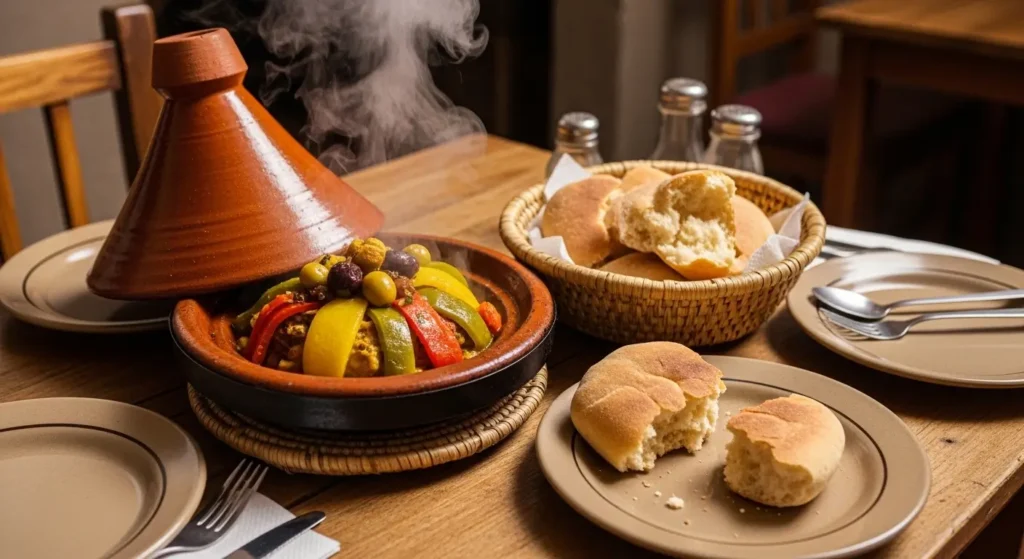
Eating out in Marrakech varies wildly based on where you eat. Tourist restaurants charge 3-5 times what local spots charge for similar food.
Local Restaurant Prices (Not Tourist Traps)
Small Neighborhood Restaurants (Gargotes)
These tiny family-run restaurants serve working-class Marrakchis. No menus, no English, no tourists—just solid Moroccan food at honest prices.
Tajine prices: 25-35 MAD for a tajine with bread. Common varieties include chicken tajine with olives, beef tajine with vegetables, or kefta (meatball) tajine. Portions are generous—one tajine can satisfy two people if you’re not extremely hungry.
Couscous on Friday: Following Moroccan tradition, gargotes serve couscous on Fridays. Expect to pay 30-40 MAD for a full plate with vegetables and meat. Some places charge 25 MAD for vegetarian couscous.
Harira and snacks: Bowl of harira costs 4-6 MAD. During Ramadan, gargotes serve harira with dates, hard-boiled eggs, and chebakia for 15-20 MAD total.
Daily menu pricing: Many gargotes offer menu du jour—soup or salad, main dish, bread, and tea for 35-45 MAD. This is the best value for a complete meal.
Popular local spots by neighborhood:
- Gueliz: Small restaurants on side streets off Avenue Mohammed V serve lunch for 30-40 MAD
- Sidi Youssef Ben Ali: Working-class area where 25 MAD gets you a full meal
- M’hamid: Local gargotes charge 30-35 MAD for tajine and bread
- Near Bab Doukkala: Several tiny spots serve workers from the souk at rock-bottom prices
These places don’t advertise online. Ask locals where they eat lunch—that’s how you find them.
Mid-Range Local Restaurants
A step up from gargotes, these restaurants have actual menus, nicer interiors, and serve families for lunch and dinner.
Full meal costs: Expect to pay 60-100 MAD per person for starter, main course, and drink. A family of four eats for 250-350 MAD.
Breakfast options: Moroccan breakfast (msemen or harcha, cheese, jam, coffee/tea) costs 25-40 MAD per person at mid-range spots.
Popular chains: Snack Amine and similar Moroccan fast-casual chains charge 40-60 MAD for sandwich meals, 60-80 MAD for plate meals like tajine or grilled chicken with fries.
Café Prices in Marrakech
Cafés are central to Moroccan social life. Prices vary enormously between tourist and local cafés.
Coffee pricing:
- Café nuss nuss (half milk, half coffee): 4-6 MAD (local café), 12-20 MAD (tourist café)
- Café cassé (espresso): 4-5 MAD (local), 10-15 MAD (tourist)
- Espresso: 6-8 MAD (local), 15-25 MAD (tourist)
- Cappuccino: 12-15 MAD (local), 25-35 MAD (tourist)
Tea:
- Thé à la menthe (mint tea): 5-7 MAD (local café), 15-30 MAD (tourist café)
Fresh juice prices:
- Orange juice: 8-12 MAD (local), 20-30 MAD (tourist areas)
- Mixed fruit juice: 15-20 MAD (local), 30-40 MAD (tourist)
Pastries and snacks:
- Croissant: 3-5 MAD (local), 8-12 MAD (tourist)
- Pain au chocolat: 4-6 MAD (local), 10-15 MAD (tourist)
- Moroccan pastries: 2-4 MAD each (local), 8-15 MAD (tourist)
The tourist vs. local café difference:
Tourist cafés cluster around Jemaa el-Fna, Medina main streets, and upscale areas. They charge 200-400% premiums for identical products. A mint tea that costs 6 MAD at a neighborhood café becomes 25 MAD when served with a view of the square.
Local cafés exist in every residential neighborhood. They’re where Marrakchis actually spend their time. Same quality, fraction of the price.
Street Food and Quick Eats
Jemaa el-Fna Food Stalls
The famous square has dozens of food stalls that set up every evening. Prices here present an interesting dynamic:
Actual local prices vs. tourist prices: Locals eating at Jemaa el-Fna pay 30-40 MAD for a full plate of grilled meats, salads, and bread. Tourists often get charged 80-150 MAD for the same thing.
How? Vendors assess customers and adjust prices. Speaking Darija and knowing what things should cost gets you local pricing. Looking confused and asking prices in English or French signals tourist status and inflated pricing.
What locals order: Grilled kefta, merguez, and chicken skewers. A filling meal runs 35-45 MAD if you order confidently in Darija.
Best value items: Harira soup (8-10 MAD), snails (15-20 MAD for a bowl), boiled eggs and cumin (5 MAD).
Tourist trap warning: Avoid the stalls that aggressively call out to tourists. Their prices are 2-3x normal. The busy stalls with local families are where you want to eat.
Popular Street Food
Bocadillo prices: Sandwich shops throughout Marrakech sell bocadillos (Moroccan sandwiches) for 12-25 MAD depending on filling. Kefta or merguez bocadillo costs 15-20 MAD. Vegetarian (chips, egg, vegetables) runs 10-12 MAD.
Brochettes and grilled meats: Street vendors sell chicken or kefta skewers for 5-8 MAD each. Four skewers with bread make a meal for 25-35 MAD.
Maakouda and fried snacks: Potato cakes (maakouda) cost 1-2 MAD each. Fried sardines or calamari run 15-25 MAD for a portion. These make cheap, filling snacks.
Sfenj and breakfast items: Sfenj (Moroccan donuts) cost 1-2 MAD each. Beghrir (1000-hole pancake) with honey and butter runs 8-12 MAD. Msemen costs 2-4 MAD per piece plain, 6-10 MAD with filling.
Fast Food and Chain Restaurants
McDonald’s typical meal cost: Big Mac meal (burger, fries, drink) costs 55-60 MAD. Quarter Pounder meal runs 65-70 MAD. McChicken meal about 50 MAD. Eating at McDonald’s in Marrakech costs roughly the same as Casablanca or Rabat.
Local chains pricing:
- Pizza Hut: Medium pizza 80-120 MAD, large pizza 120-160 MAD
- Tacos de Lyon: Tacos 35-55 MAD depending on size
- Subway: 6-inch sandwich 35-45 MAD, footlong 55-70 MAD
Comparison with other Moroccan cities: Fast food chains maintain consistent pricing nationwide. A Big Mac costs the same in Marrakech, Casablanca, and Tangier. Local restaurants and street food show bigger price variations between cities.
Neighborhood-by-Neighborhood Price Differences
Where you shop in Marrakech matters as much as what you buy. Price variations between neighborhoods can reach 100-200% for identical items.
Where to Shop in Marrakech: Price Map
Gueliz (New City)
Supermarket options: Marjane, Carrefour Market, Acima, smaller Carrefour City stores. Best supermarket coverage in Marrakech.
Market prices: Marché Central offers good produce at reasonable prices (20-30% above Bab Doukkala, 40-50% below tourist Medina).
Restaurant costs: Mid-range. Local restaurants charge 40-60 MAD for meals. Tourist-oriented spots charge 80-150 MAD.
Overall affordability: Moderate. Convenient for residents but not the cheapest area. You pay slightly more for better infrastructure, cleaner streets, easier parking.
Best for: People who prioritize convenience over absolute lowest prices. Easy access to everything.
Medina (Old City)
Tourist zone vs. residential areas: Massive disparity. Main tourist streets (Rue Riad Zitoun, Souk Semmarine) charge tourist prices—oranges cost 10 MAD/kg, cafés charge 20 MAD for mint tea.
Residential parts of the Medina (far from Jemaa el-Fna) have small shops with local pricing. A neighborhood hanout charges 6 MAD for milk, 3 MAD for bread—normal prices.
Where locals actually shop: Bab Doukkala market, small neighborhood souks, local hanouts that don’t see tourists. These places price for residents, not visitors.
Hidden affordable spots: Deep inside the Medina, away from tourist routes, small restaurants serve tajine for 25-30 MAD. Local bakeries sell khobz at normal prices. You need local knowledge to find them.
Hivernage
Premium pricing area: This upscale neighborhood near Menara Gardens caters to wealthy residents and hotel guests. Everything costs more.
Where to find deals: Honestly, don’t shop in Hivernage for groceries. The small shops charge premium prices. Residents drive to Marjane or Gueliz for actual shopping.
Restaurant pricing: Tourist-heavy restaurants charge 150-300 MAD per person. A few local spots exist on the edges but they’re exceptions.
Sidi Youssef Ben Ali
Working-class neighborhood pricing: This is where budget-conscious Marrakchis find the best deals. Everything costs less than central areas.
Best value supermarkets: Acima stores here price competitively. The daily market offers rock-bottom produce prices—often 40-50% below Gueliz.
Local market options: Massive daily market with the city’s cheapest fresh produce. Worth the trip if you’re buying for the week.
Drawback: Far from city center, requires transportation. Not convenient for quick shopping trips.
M’hamid and Other Residential Areas
Neighborhood markets: Each residential area has small markets 2-3 times weekly. Prices fall between Gueliz and Sidi Youssef Ben Ali—affordable but not absolute cheapest.
Price advantages: Lower rent means lower prices. A hanout in M’hamid charges 5-10% less than equivalent shop in Gueliz.
Shopping convenience: Good for daily needs. For big weekly shopping, residents still drive to Marjane or major markets.
Tourist Areas vs. Local Areas: Price Reality
Here’s the same basket of goods in different Marrakech neighborhoods:
| Item | Jemaa el-Fna / Tourist Medina | Gueliz | Sidi Youssef Ben Ali | Difference |
|---|---|---|---|---|
| 1kg tomatoes | 10-12 MAD | 6-8 MAD | 3-4 MAD | 300% |
| Mint tea | 20-30 MAD | 6-8 MAD | 5-6 MAD | 500% |
| Bocadillo | 35-50 MAD | 18-25 MAD | 12-18 MAD | 300% |
| Orange juice | 25-35 MAD | 12-15 MAD | 8-10 MAD | 350% |
| Tajine meal | 80-120 MAD | 40-60 MAD | 25-35 MAD | 400% |
| Café cassé | 15-20 MAD | 5-7 MAD | 4-5 MAD | 400% |
The takeaway: Tourist areas charge 200-500% premiums on everyday items. Knowing where locals shop saves massive amounts of money. A Moroccan paying tourist prices in Marrakech would spend 3-4 times their normal food budget.
Monthly Food Budget in Marrakech
Understanding your monthly food costs in Marrakech depends on household size, lifestyle, and shopping habits. Here are realistic budgets based on different scenarios.
How Much Do You Need Per Month?
Single Person Budget
Minimal budget (eating at home, shopping smart): 1,200-1,500 MAD/month
This assumes:
- Shopping at Acima or Bab Doukkala market for produce
- Cooking all meals at home
- Basic staples only, minimal variety
- No restaurants or cafés
- No imported or premium products
Breakdown:
- Staples (flour, rice, pasta, oil, eggs, dairy): 400 MAD
- Fresh produce (vegetables, fruits): 300 MAD
- Meat/chicken: 300 MAD
- Bread: 75 MAD (2-3 pieces daily)
- Coffee, tea, condiments: 125 MAD
Moderate budget (some eating out, more variety): 2,000-2,500 MAD/month
This assumes:
- Mix of supermarket and market shopping
- Eating out 2-3 times per week (local restaurants)
- More variety in diet
- Occasional imported products
- Cafés 3-4 times weekly
Breakdown:
- Groceries: 1,200 MAD
- Restaurants: 400 MAD (4 meals × 50 MAD × 4 weeks)
- Cafés: 200 MAD
- Treats/snacks: 200 MAD
Comfortable budget (frequent dining out, premium products): 3,000-4,000 MAD/month
This assumes:
- Shopping at Marjane or Carrefour without worrying about prices
- Eating out 4-6 times weekly
- Regular café visits
- Imported products, premium brands
- Occasional nice restaurants
Couple Without Children
Basic groceries only: 2,500-3,000 MAD/month
Two people eating at home, shopping smart at markets and Acima. Similar to two minimal single budgets but with bulk-buying advantages.
Mixed cooking/eating out: 4,000-5,000 MAD/month
This is the typical Marrakech couple lifestyle:
- Home cooking 4-5 days weekly
- Eating out on weekends
- Regular café visits
- Mix of market and supermarket shopping
Breakdown:
- Groceries: 2,500 MAD
- Restaurants: 1,000 MAD
- Cafés/snacks: 500 MAD
- Miscellaneous: 500 MAD
Comfortable lifestyle: 6,000-8,000 MAD/month
Shopping at Carrefour/Marjane, frequent restaurant visits, importing specialty items, regular entertainment dining.
Family of Four Budget
Children’s specific needs: Kids increase food costs through school lunches, snacks, specific preferences, and generally eating more as they grow.
Realistic monthly total – Minimal: 4,000-5,000 MAD
This requires:
- Bulk shopping at wholesale markets
- Cooking everything from scratch
- Limited meat (2-3 times weekly)
- Seasonal produce only
- No restaurants
- Preparing school lunches at home
Realistic monthly total – Moderate: 6,000-8,000 MAD
Most Marrakech families with two kids fall in this range:
- Mix of market and supermarket shopping
- Meat 4-5 times weekly
- Occasional restaurants (once or twice monthly)
- Some school lunches purchased
- Weekend treats
Breakdown:
- Staples and groceries: 3,500 MAD
- Fresh produce: 1,000 MAD
- Meat/chicken/fish: 1,500 MAD
- Bread: 200 MAD
- School lunches/snacks: 800 MAD
- Restaurants/treats: 500 MAD
Realistic monthly total – Comfortable: 9,000-12,000 MAD
Shopping without price concerns, regular restaurant visits, premium products, variety in diet.
Sample Weekly Shopping Lists with Costs
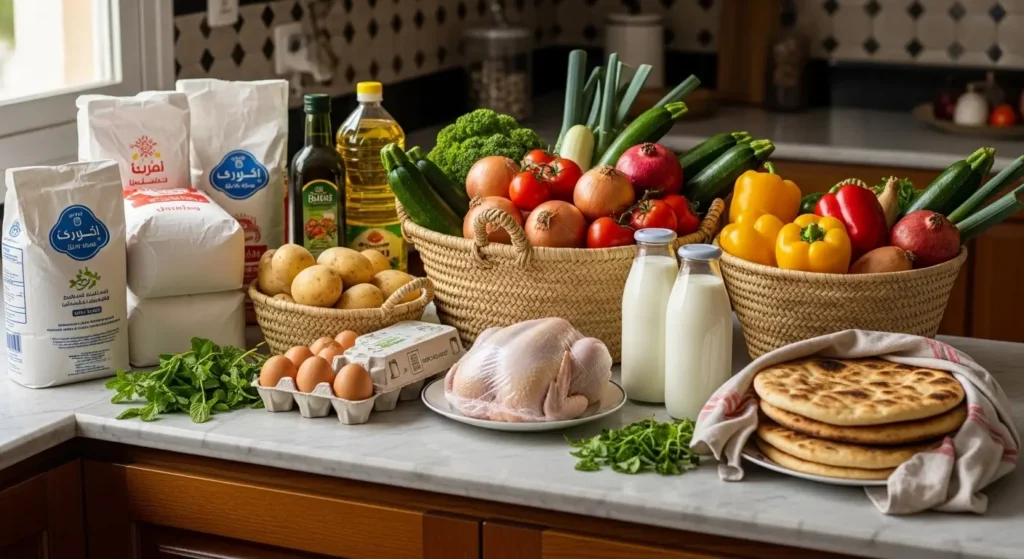
Weekly groceries for family of four (shopping at Acima + Bab Doukkala market):
| Category | Items | Source | Cost |
|---|---|---|---|
| Staples | 2kg flour, 1kg sugar, 1L oil, 1kg rice | Acima | 65 MAD |
| Dairy/Eggs | 3L milk, 12 eggs, 200g cheese | Acima | 55 MAD |
| Vegetables | 3kg tomatoes, 3kg potatoes, 2kg onions, 1kg carrots, 1kg zucchini, peppers, lettuce | Bab Doukkala | 45 MAD |
| Fruits | 2kg oranges, 2kg apples, 2kg bananas | Bab Doukkala | 50 MAD |
| Meat | 2kg chicken, 1kg ground beef | Butcher | 150 MAD |
| Bread | 14 khobz (2 daily) | Local bakery | 17 MAD |
| Extras | Coffee, tea, tomato paste, spices | Acima | 35 MAD |
| Total | 417 MAD |
This sample week totals about 1,670 MAD monthly on groceries for a family of four eating well. Add 500-800 MAD for school lunches, snacks, and occasional restaurants to reach realistic 2,200-2,500 MAD total.
Cost-Saving Strategies in Marrakech
Shopping at the right markets:
- Bab Doukkala for produce saves 40% vs. supermarkets
- Sidi Youssef Ben Ali market for absolute lowest prices
- Marché Central for balance of quality and price
- Wholesale markets for bulk staples
Seasonal buying advantages:
- Tomatoes in May: 2 MAD/kg vs. 10 MAD/kg in August
- Strawberries in April: 15 MAD/kg vs. 40 MAD/kg in winter
- Watermelon in July: 3 MAD/kg vs. impossible to find in winter
- Make tomato paste, freeze berries, preserve when prices drop
Bulk purchasing tips:
- Rice, flour, sugar, oil save 15-20% in 5kg bags
- Coordinate with family members to share bulk purchases
- Ensure proper storage before bulk buying
- Calculate actual savings vs. spoilage risk
Store loyalty programs:
- Marjane Carte WOW offers regular promotions and points
- Carrefour loyalty card provides discounts and special pricing
- Acima doesn’t have programs but maintains lower everyday prices
Best days to shop for deals:
- Thursday-Friday: Marjane meat promotions
- Monday: Dairy promotions at most supermarkets
- Late afternoon at markets: 20-30% discounts to clear inventory
- After Ramadan: Many stores run promotions to move excess stock
Marrakech vs. Other Moroccan Cities: Price Comparison
Understanding how Marrakech food prices compare to other Moroccan cities helps you gauge whether you’re getting fair value and plan relocations or visits.
Is Marrakech More Expensive Than Casablanca?
Overall verdict: Yes, but not dramatically. Marrakech food prices run about 5-10% higher than Casablanca on average, with significant variations by category.
Why the difference exists:
- Tourism inflates some Marrakech prices
- Casablanca has more retail competition
- Both cities import similar amounts (neither is agricultural center)
- Marrakech’s smaller size means less economies of scale
| Category | Marrakech | Casablanca | Difference |
|---|---|---|---|
| Supermarket staples | 100 (baseline) | 95 | +5% |
| Fresh produce (markets) | 100 | 90 | +10% |
| Restaurant meals (local) | 100 | 85 | +15% |
| Street food | 100 | 90 | +10% |
| Imported products | 100 | 98 | +2% |
Specific examples:
- Khobz: 1.20 MAD both cities (government regulated)
- Cooking oil (1L): 22 MAD Marrakech, 21 MAD Casablanca
- Chicken (1kg): 28 MAD Marrakech, 26 MAD Casablanca
- Tomatoes (market): 4 MAD/kg Marrakech, 3.50 MAD/kg Casablanca
- Local restaurant tajine: 30 MAD Marrakech, 25 MAD Casablanca
Monthly budget impact: A family spending 6,000 MAD on food in Casablanca would spend approximately 6,300-6,600 MAD in Marrakech for identical lifestyle.
Marrakech vs. Rabat Prices
Rabat and Marrakech have surprisingly similar food prices overall, but with different strengths.
Key differences:
- Rabat fish prices are much lower (coastal city)
- Marrakech has better produce prices (closer to agricultural regions)
- Rabat imported goods cost slightly less (port proximity)
- Restaurant prices nearly identical
Overall comparison: Effectively tied, with Rabat slightly cheaper (3-5%) when including all categories.
What costs less in Rabat:
- Fresh fish: 40% cheaper
- Imported products: 5-8% cheaper
- Some vegetables: 5% cheaper
What costs less in Marrakech:
- Seasonal fruits: 10% cheaper
- Some local produce: 5-8% cheaper
Marrakech vs. Tangier Prices
Tangier food prices run 8-12% lower than Marrakech for most categories.
Why Tangier is cheaper:
- Direct port access reduces import costs
- More competition from European imports
- Lower tourism impact on daily prices
- Spanish influence creates different market dynamics
Categories where Tangier wins:
- Fish and seafood: 40-50% cheaper
- Imported European products: 15-20% cheaper
- Vegetables: 10% cheaper
- Restaurants: 12% cheaper
Exception: Some Moroccan specialty items cost slightly more in Tangier due to distance from source regions.
Marrakech vs. Fes, Agadir, and Other Cities
Fes: Nearly identical to Marrakech (within 2-3%). Both are inland tourist cities with similar dynamics.
Agadir: Fish obviously much cheaper (coastal), but other categories similar or slightly higher than Marrakech. Tourism inflates Agadir restaurant prices significantly.
Meknes: About 10-12% cheaper than Marrakech. Less tourism, strong agricultural surroundings, smaller city means lower overhead.
Oujda: Cheapest major Moroccan city for food (15-20% below Marrakech). Remote location, less tourism, lower overall costs.
Quick Comparison Table
| City | Overall Food Prices vs. Marrakech |
|---|---|
| Casablanca | -5% to -8% |
| Rabat | -3% to -5% |
| Tangier | -8% to -12% |
| Fes | Similar (±2%) |
| Agadir | Similar (±3%) |
| Meknes | -10% to -12% |
| Oujda | -15% to -20% |
Why Price Differences Exist Between Cities
Tourism impact on Marrakech:
Tourism is double-edged. Tourist zones inflate prices dramatically, but tourism also brings infrastructure, retail competition, and variety. The net effect raises average food prices 5-10% above comparable non-tourist cities.
Supply chain factors:
Cities with ports (Tangier, Casablanca, Agadir) get cheaper imports. Inland cities like Marrakech and Fes pay transport premiums on imported goods.
Local production vs. imports:
Marrakech sits near agricultural regions (Haouz plains) giving it advantages on local produce. But it lacks coast access, making fish and imports expensive. Each city’s prices reflect its geographic advantages and disadvantages.
Regional agricultural advantages:
Cities near agricultural production centers benefit from fresh, cheap produce. Meknes benefits from Saïss plains. Agadir from Souss-Massa region. Marrakech from Haouz. This explains why produce prices vary more between cities than manufactured goods.
Competition and market size:
Larger cities (Casablanca, Rabat) have more supermarkets, more markets, more competition—driving prices down. Smaller cities have less competition, allowing higher prices.
Special Considerations and Price Trends
Ramadan Price Changes in Marrakech
Which items increase:
During Ramadan, specific food categories see dramatic price increases:
- Dates: +30-50% (high demand for breaking fast)
- Eggs: +20-30% (used extensively in Ramadan cooking)
- Milk and dairy: +15-25%
- Flour: +10-15% (increased baking for Ramadan pastries)
- Chicken: +20-25%
- Fresh herbs (mint, parsley): +40-60%
What stays stable:
- Sugar (government controlled)
- Bread (government regulated at 1.20 MAD)
- Cooking oil (relatively stable)
Planning ahead strategies:
Smart Marrakchis stock up before Ramadan:
- Buy 10-20 kg flour in Shaaban (month before Ramadan)
- Purchase dates early (before prices jump)
- Stock freezer with chicken bought at normal prices
- Buy long-shelf-life items in advance
Best places to shop during Ramadan:
Avoid supermarkets in the last week before Ramadan and first week of Ramadan—prices peak and crowds are insane. Local markets stay relatively reasonable but get extremely busy.
Morning shopping (8-11 AM) finds better prices and selection than afternoon when vendors know demand will spike before iftar.
Actual price increase percentages:
Overall food spending increases 25-40% during Ramadan due to:
- Higher prices: +15-20% on common items
- Increased consumption: +10-15% more food purchased
- Special items: Buying dates, nuts, special pastries adds 5-10%
A family normally spending 6,000 MAD monthly should budget 7,500-8,500 MAD for Ramadan month.
Inflation and Recent Price Trends (2024-2026)
Which categories increased most:
From 2024 to 2026, food inflation in Morocco has been significant:
- Cooking oil: +25-30% (global supply issues)
- Chicken: +20-25% (feed costs increased)
- Pasta: +18-22% (wheat price increases)
- Rice: +15-20% (import costs)
- Fresh produce: +10-15% (fuel and input costs)
Government price controls:
The Moroccan government maintains price controls on essential items:
- Bread: Still 1.20 MAD (frozen since 2020)
- Sugar: Regulated, limiting increases
- Flour: Subsidized, preventing extreme price jumps
Without these controls, food inflation would be higher.
What to expect going forward:
Trends suggest continued moderate inflation (8-12% annually on food) barring major global disruptions. Meat and imported goods likely to increase faster than local produce.
Historical price tracking:
Looking back three years:
- 2023: Cooking oil 18 MAD/L → 2026: 22.50 MAD/L (+25%)
- 2023: Eggs 15 MAD/dozen → 2026: 18 MAD/dozen (+20%)
- 2023: Chicken 23 MAD/kg → 2026: 28 MAD/kg (+22%)
- 2023: Milk 8 MAD/L → 2026: 9.50 MAD/L (+19%)
Monthly food budgets that worked in 2023 need 20-25% increases by 2026 to maintain same lifestyle.
Import vs. Local Products: Price Gap
When to buy local:
Local Moroccan products offer better value in these categories:
- Fresh produce (vegetables, fruits)
- Chicken and eggs
- Dairy from Moroccan brands
- Moroccan pasta and rice brands
- Local bread and pastries
Price gap: Local products cost 30-50% less than imports for comparable quality.
When imports make sense:
Some categories justify import premiums:
- Specialty cheeses (local cheese selection is limited)
- Specific ethnic ingredients (Asian, Latin American)
- Premium coffee brands
- Certain cereals and processed foods
- Specialty baking ingredients
Quality considerations:
Quality varies. Some Moroccan products equal or exceed imports (dairy, produce), while others lag behind (processed foods, specialty items).
Price differences by category:
| Category | Local Product Price | Import Product Price | Premium |
|---|---|---|---|
| Pasta (500g) | 8.50 MAD | 15-25 MAD | 75-200% |
| Rice (1kg) | 12 MAD | 28-35 MAD | 130-190% |
| Cheese (200g) | 18 MAD | 35-60 MAD | 95-230% |
| Coffee (250g) | 32 MAD | 55-120 MAD | 70-275% |
| Cereal (375g) | 25 MAD | 45-65 MAD | 80-160% |
For most Moroccan households, buying local products saves significant money without sacrificing quality where it matters.
Common Mistakes When Shopping in Marrakech
Don’t Shop Like a Tourist
Avoiding tourist trap markets:
Tourist zones exist to separate visitors from their money. Main Medina souks, Jemaa el-Fna area shops, and streets near major riads charge tourist prices automatically.
How to avoid: Shop where you see local families shopping. If you hear multiple foreign languages, you’re in tourist territory. Move to residential neighborhoods.
Language barriers impact on pricing:
Speaking Darija gets you local prices. Speaking French gets you intermediate prices. Speaking English gets you tourist prices. This isn’t always conscious discrimination—vendors simply adjust to what they think customers will pay.
Learn basic Darija numbers and phrases: “Bsh7al?” (how much?), “Ghali bezzaf” (too expensive), “3tini…” (give me…). This signals local status.
Tourist-local price discrimination:
It’s real and extensive. Same orange juice: 10 MAD for locals, 30 MAD for tourists. Same bocadillo: 15 MAD vs. 45 MAD. Same taxi ride: 20 MAD vs. 100 MAD.
Combat this by: knowing actual prices beforehand, speaking Darija, shopping with locals, walking away from inflated prices, showing you know the fair price.
Myths About Marrakech Food Prices
Myth #1: “Marrakech Is Always More Expensive”
Truth: Depends completely on where you shop.
Shopping like a tourist in Marrakech is indeed expensive—2-3x normal costs. Shopping like a local (Acima, Bab Doukkala market, neighborhood restaurants) results in prices only 5-10% above Casablanca or Rabat.
The “Marrakech is expensive” reputation comes from tourists paying tourist prices, not from actual local cost of living.
Myth #2: “Souks Are Always Cheaper Than Supermarkets”
Reality: Only for fresh produce.
For vegetables and fruits, souks beat supermarkets by 40-50%. But for packaged goods (oil, rice, pasta, canned goods), supermarkets often price lower due to bulk purchasing power and supply chain efficiency.
Best strategy: Produce from souks, packaged goods from supermarkets, meat from trusted butchers.
Myth #3: “You Must Negotiate Everywhere”
Where negotiation works:
- Tourist souk shops (crafts, clothing, souvenirs)
- Some Medina market stalls in tourist areas
- Large one-time purchases
Where it doesn’t:
- Supermarkets (fixed prices)
- Local neighborhood markets (prices are posted)
- Bakeries, butchers, regular shops
- Restaurants and cafés
Trying to negotiate at Marjane or local market makes you look confused, not savvy. Most daily shopping in Marrakech happens at fixed prices.
Myth #4: “Tourist Areas Have Better Quality”
Quality vs. price analysis:
Tourist areas don’t have better quality—they have better presentation and ambiance. The tomatoes at a fancy Medina shop are the same tomatoes from Bab Doukkala market, marked up 200%.
Sometimes tourist restaurants genuinely offer higher quality (better cuts of meat, imported ingredients), but often you’re paying for location, décor, and multilingual menus, not better food.
Local restaurants where Marrakchis eat daily serve excellent quality at fair prices. Judge quality by local customer volume, not tourist presence.
Shopping Mistakes That Cost You Money
Wrong timing (days/hours):
- Shopping Friday afternoons when markets are picked over
- Buying produce on Sunday when selection is limited
- Missing Marjane Thursday meat promotions
- Shopping mid-day at markets when prices are highest
Wrong neighborhoods:
- Buying groceries in Hivernage or tourist Medina
- Not traveling to Sidi Youssef Ben Ali for big shopping trips
- Shopping exclusively in Gueliz when better prices exist nearby
Not comparing prices:
- Assuming all supermarkets charge the same
- Not checking different souks for best produce prices
- Loyalty to one store instead of shopping strategically
Impulse buying in tourist zones:
- Grabbing water near Jemaa el-Fna (5 MAD vs. 2 MAD elsewhere)
- Buying snacks in Medina tourist shops
- Emergency shopping in high-price areas
Not asking locals for recommendations:
- Marrakchis know which butcher has best prices
- They know which market days offer best deals
- They know which hanout doesn’t overcharge
- Ask neighbors, colleagues, or friends where they shop
Practical Shopping Guide for Marrakech
Best Supermarkets by Neighborhood
Gueliz:
- Marjane (Avenue Mohamed VI) – Best for bulk shopping, widest selection
- Carrefour Market (multiple locations) – Convenient but pricier
- Acima (Avenue Mohammed V area) – Good prices, local focus
Hivernage:
- Small Carrefour City – Emergency shopping only, expensive
- Better to drive 10 minutes to Gueliz Marjane
Route de Casablanca:
- Aswak Assalam – Premium pricing, excellent quality
- Marjane – Standard pricing
Sidi Youssef Ben Ali:
- Acima – Best prices in Marrakech
- Small local supermarkets – Very competitive
M’hamid:
- Local supermarkets and hanouts – Fair prices
- Worth visiting Marjane for big monthly shopping
Best Souks and Markets by Category
Fresh produce:
- Souk Sidi Youssef Ben Ali – Cheapest
- Bab Doukkala – Best balance price/quality/convenience
- Marché Central Gueliz – Higher prices but cleaner
Meat and poultry:
- Butchers inside Marché Central – Good quality, fair prices
- Neighborhood butchers (ask locals for recommendations)
- Supermarket meat sections – Convenient but pricier
Spices and dried goods:
- Rahba Kedima (Medina) – Wide selection, moderate prices if you negotiate
- Bab Doukkala area – Local prices
- Atchane (spice market) – Tourist prices, avoid
Dairy products: Supermarkets generally better than markets for dairy due to refrigeration and turnover.
Apps and Tools for Price Comparison
Jumia Food / Glovo / Careem: Delivery apps showing supermarket prices. Useful for comparing without visiting stores, though delivery fees apply.
Marjane App: Shows current promotions and prices. Helpful for planning shopping trips.
Carrefour Morocco App: Similar functionality to Marjane.
Local Facebook Groups:
- “Marrakech Buy/Sell”
- “Expats in Marrakech” (mixed tourists/residents)
- Neighborhood-specific groups where people share deals
WhatsApp Groups: Some neighborhoods organize group buys at wholesale markets. Ask neighbors about joining.
Transportation Costs to Consider
Getting to/from markets:
If you don’t have a car:
- Taxi to Marjane: 20-30 MAD each way
- Taxi to Bab Doukkala: 15-25 MAD
- Taxi to Sidi Youssef Ben Ali: 30-40 MAD
- City bus: 4 MAD per trip
Delivery options and costs:
Supermarket delivery:
- Marjane delivery: 20-30 MAD (minimum purchase applies)
- Carrefour delivery: 25-35 MAD
- Apps (Glovo, Careem): 15-30 MAD depending on distance
Is it worth traveling to cheaper areas?
Math example: Family saves 300 MAD shopping at Sidi Youssef Ben Ali vs. local Gueliz supermarket. Round-trip taxi costs 60 MAD. Net savings: 240 MAD.
Worth it for big weekly/monthly shopping. Not worth it for picking up milk and eggs.
If you have a car, absolutely worth driving to cheaper areas. If relying on taxis, calculate based on purchase size.
Frequently Asked Questions
Is Marrakech expensive for food compared to other Moroccan cities?
Marrakech food prices are moderately higher than most Moroccan cities—about 5-10% more expensive than Casablanca and 8-12% higher than Tangier. However, this average masks huge variations. Tourist areas are extremely expensive (200-300% premiums), while local markets and residential neighborhoods offer reasonable prices comparable to other cities.
The key is shopping where locals shop: Acima supermarkets, Bab Doukkala market, and neighborhood restaurants keep costs reasonable. Shop like a tourist and yes, Marrakech is expensive. Shop like a local and it’s manageable.
What’s a realistic monthly food budget for a family in Marrakech?
A family of four needs 6,000-8,000 MAD monthly for a moderate lifestyle including home cooking, market shopping, and occasional restaurant meals. This breaks down to 3,500 MAD groceries, 1,000 MAD fresh produce, 1,500 MAD meat/chicken, 200 MAD bread, 800 MAD school lunches, and 500 MAD restaurants/treats.
Budget-conscious families can manage on 4,000-5,000 MAD by bulk shopping, cooking everything from scratch, and avoiding restaurants. Comfortable families spending freely might reach 9,000-12,000 MAD monthly.
Where do locals shop for groceries in Marrakech?
Most Marrakchis use a combination: Marjane or Acima for staples and packaged goods (oil, rice, pasta, canned goods), Bab Doukkala or neighborhood souks for fresh produce, and trusted local butchers for meat. This hybrid approach maximizes savings and quality.
Working-class families prioritize the Sidi Youssef Ben Ali market for rock-bottom prices. Middle-class families balance convenience and cost at Marché Central Gueliz. Wealthy families shop at Aswak Assalam or Carrefour without worrying about prices.
Are supermarkets or souks cheaper in Marrakech?
For fresh produce, souks are 40-50% cheaper than supermarkets. A kilogram of tomatoes costs 3-4 MAD at Bab Doukkala vs. 6-8 MAD at Marjane.
For packaged goods, supermarkets often beat souks due to bulk purchasing and promotions. Cooking oil, rice, pasta, and canned goods cost less at Acima or Marjane than small shops.
Optimal strategy: produce from souks, everything else from supermarkets.
How much does eating out cost in Marrakech?
Local neighborhood restaurants charge 30-40 MAD for a filling tajine with bread. Small gargotes serve meals for 25-35 MAD. Mid-range local restaurants cost 60-100 MAD per person for a complete meal.
Tourist restaurants charge 80-150 MAD minimum per person for basic meals, with upscale places reaching 200-400 MAD. Avoid tourist areas and you’ll eat well for 30-50 MAD per meal.
Do food prices increase during Ramadan in Marrakech?
Yes, significantly. Common Ramadan foods increase 15-50%: dates (+30-50%), eggs (+20-30%), milk (+15-25%), chicken (+20-25%), fresh herbs (+40-60%). Overall food spending increases 25-40% during Ramadan due to higher prices and increased consumption.
Smart shoppers stock up on non-perishables before Ramadan begins and shop early in the day when prices are slightly better.
What’s the cheapest neighborhood to buy food in Marrakech?
Sidi Youssef Ben Ali offers the lowest food prices in Marrakech. The daily market prices are 40-50% below tourist areas and 10-15% below Gueliz. Local Acima stores maintain very competitive pricing.
The tradeoff: it’s far from central Marrakech, requiring transportation. For big weekly shopping, the savings justify the trip. For daily needs, shop locally.
How do I avoid paying tourist prices in Marrakech?
Speak Darija even if just basic phrases, shop in residential neighborhoods (Sidi Youssef Ben Ali, M’hamid, residential Gueliz), avoid the Medina tourist zone and Jemaa el-Fna area for daily shopping, know actual prices before shopping, and walk away from inflated prices.
Shop where you see local families shopping, not where you see groups of tourists. If everyone around you is speaking English or French, you’re in tourist territory.
What’s the difference between Marrakech and Casablanca food prices?
Marrakech runs about 5-10% higher than Casablanca overall. Specific differences: restaurant meals 15% more expensive in Marrakech, fresh produce 10% higher, supermarket staples 5% higher, imported products roughly equal.
For a family spending 6,000 MAD on food in Casablanca, the same lifestyle costs 6,300-6,600 MAD in Marrakech. The difference is noticeable but not dramatic.
Can you live cheaply in Marrakech?
Yes, with smart shopping. A single person can eat well on 1,200-1,500 MAD monthly by shopping at Acima and Bab Doukkala market, cooking at home, and avoiding tourist areas. A couple manages on 2,500-3,000 MAD. Families need 4,000-5,000 MAD minimum.
The key is shopping like locals: markets for produce, supermarkets for staples, local restaurants when eating out, and completely avoiding tourist zones for daily needs.
Conclusion
Marrakech food prices don’t have to break your budget—if you know where to shop. The key difference between paying tourist prices and local prices is simply knowing which neighborhoods, markets, and supermarkets offer the best value.
A single person can eat well on 1,500-2,000 MAD per month by shopping at local markets and supermarkets like Marjane or Acima. Couples typically spend 4,000-5,000 MAD for a mixed lifestyle of cooking and occasional dining out. Families of four need 6,000-8,000 MAD monthly for a moderate lifestyle with home cooking, market shopping, and weekend treats.
Compared to Casablanca, Marrakech is roughly 5-10% more expensive overall, but strategic shopping eliminates most of that difference. The real price gap exists between tourist areas (200-300% premiums) and local neighborhoods, not between Marrakech and other Moroccan cities.
Action steps to save money on food in Marrakech:
- Shop at Souk Sidi Youssef Ben Ali or Bab Doukkala for fresh produce—save 40-50% vs. supermarkets
- Buy staples during Marjane or Carrefour promotions—Thursday for meat, Monday for dairy
- Completely avoid tourist areas (Medina, Jemaa el-Fna) for regular shopping
- Buy seasonal fruits and vegetables when prices are lowest
- Use Acima for everyday groceries—consistently 10-15% cheaper than competitors
- Join local Facebook groups or WhatsApp communities for deal sharing
- Learn basic Darija phrases to signal local status and get fair pricing
- Plan big shopping trips to cheaper neighborhoods rather than paying convenience premiums
The most expensive mistake is shopping like a tourist in your own city. Know the local spots, understand seasonal patterns, and shop strategically. The difference between budget-straining and comfortable food costs in Marrakech isn’t your income—it’s your shopping knowledge.
Bookmark this guide and check back regularly—we update prices quarterly to reflect market changes and inflation trends. Share with friends moving to Marrakech or visiting family. The more Moroccans know about fair Marrakech food prices, the harder it becomes for anyone to overcharge.
1 thought on “Marrakech Food Prices: Complete Cost Guide for Moroccans”