
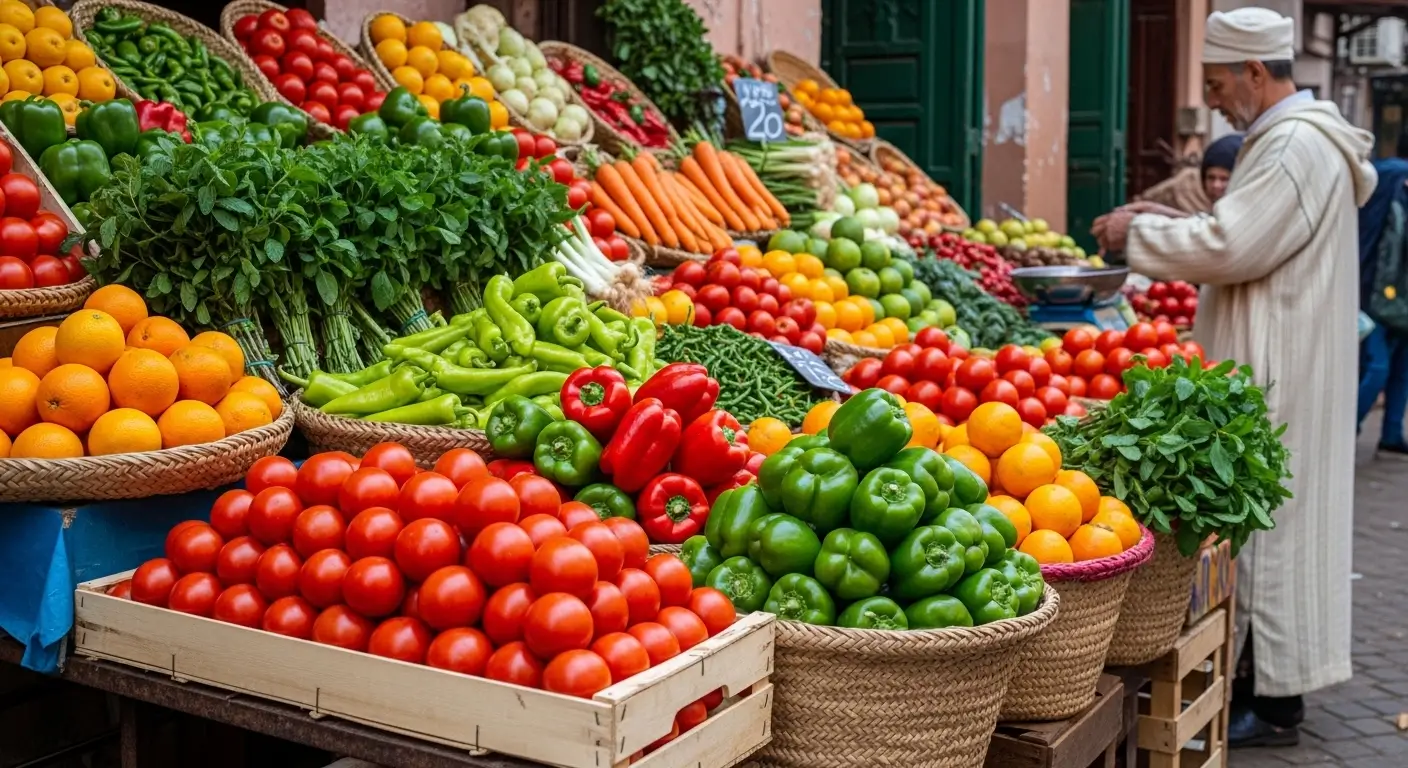
Casablanca Food Prices have been on a rollercoaster throughout this year, with meat prices up 4%, fish and seafood jumping 6%, and vegetables climbing nearly 5%. Whether you’re a family trying to stretch your monthly budget or a single professional planning your grocery shopping, understanding current food costs in Morocco’s economic capital is essential for smart financial planning.
This comprehensive guide breaks down exactly what you’ll pay for groceries across Casablanca’s markets, supermarkets, and neighborhoods. You’ll discover where to find the best deals, which items are worth buying in bulk, when seasonal produce hits rock-bottom prices, and how to cut your monthly food expenses by 20-30% without sacrificing quality. We’ve compiled real prices from Derb Ghallef, Marché Central, Marjane, Carrefour, and neighborhood hanouts to give you the most accurate picture of food costs today.
Whether you shop at traditional souks or modern supermarkets, this guide will help you make informed decisions and keep more dirhams in your pocket.
Table of Contents
Current Food Prices in Casablanca
Understanding what you’ll actually pay at the market or supermarket is the foundation of smart grocery budgeting. Here’s a comprehensive breakdown of current food prices across Casablanca.
Fresh Produce Prices
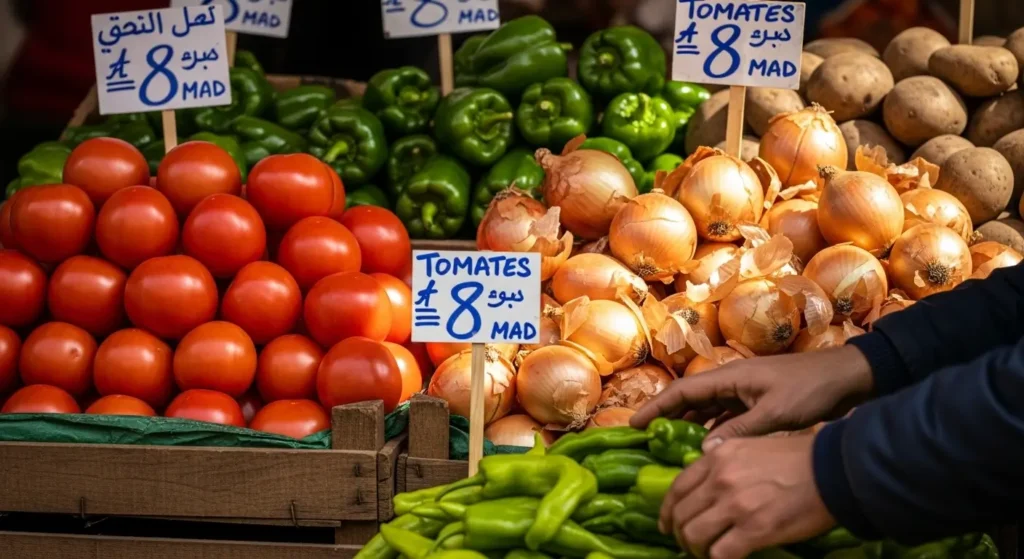
Fresh vegetables and fruits show the biggest price variation between souks and supermarkets. Shopping at traditional markets can save you 30-40% on produce compared to modern retail stores.
Vegetables (Price per Kilogram)
Tomatoes range from 4-7 MAD at souks to 8-12 MAD at supermarkets. Winter isn’t tomato season, so these prices reflect the higher cost of off-season produce. Potatoes cost 5-8 MAD at traditional markets and 9-13 MAD at Carrefour or Marjane. Onions run 6-9 MAD at souks versus 10-14 MAD at supermarkets—a staple where the savings really add up over time.
Carrots are available for 5-8 MAD per kilogram at markets, increasing to 9-12 MAD at retail chains. Zucchini prices sit at 8-12 MAD in souks and 14-18 MAD in supermarkets. Peppers command 10-15 MAD at traditional vendors, rising to 16-22 MAD in modern stores. A head of lettuce costs just 3-5 MAD at the souk compared to 6-9 MAD at the supermarket.
Fresh herbs like cilantro and parsley represent one of the best bargains at traditional markets. You’ll pay only 1-2 MAD per generous bunch at the souk, while supermarkets charge premium prices for smaller, plastic-wrapped portions.
Fruits (Price per Kilogram)
Oranges are in season during winter months, making them incredibly affordable at 4-8 MAD per kilogram. This is the time to stock up on citrus for fresh juice and vitamin C. Apples vary significantly based on origin—local varieties cost 12-18 MAD per kilogram, while imported European apples can reach 20-30 MAD.
Bananas maintain relatively stable pricing at 12-16 MAD per kilogram throughout the year. Strawberries are seasonal treasures in spring, priced at 15-25 MAD depending on quality and time of season. Watermelon becomes a summer staple at just 3-6 MAD per kilogram, offering refreshing hydration at bargain prices.
Grapes range from 18-28 MAD per kilogram when in season during late summer and fall. Dates, a Moroccan specialty, vary widely by variety and quality, from 25 MAD for standard dates to 60 MAD or more for premium Medjool dates.
Meat, Poultry & Fish Prices
Protein sources have seen the most significant price increases this year, with meat up 4% and fish climbing 6% compared to the previous year.
Meat (Price per Kilogram)
Beef shoulder or chuck cuts cost 75-95 MAD per kilogram, representing the most economical beef option for stews and ground meat. Premium cuts like tenderloin or ribeye command 110-140 MAD per kilogram. Lamb prices range from 90-120 MAD depending on the cut and quality.
Whole chicken remains one of the best protein values at 28-35 MAD per kilogram. Chicken breast costs more at 45-55 MAD per kilogram due to higher demand. Ground beef for kefta runs 70-85 MAD per kilogram. Liver offers budget-friendly protein at 35-50 MAD per kilogram.
Quality varies significantly between butchers. Building a relationship with a trusted butcher in your neighborhood often leads to better cuts and more consistent pricing than supermarket meat counters.
Fish & Seafood (Price per Kilogram)
Sardines represent Morocco’s most affordable fish option when in season, costing just 15-25 MAD per kilogram. These small, oily fish are nutritional powerhouses rich in omega-3 fatty acids. Sea bream costs 50-80 MAD per kilogram, while sole commands premium prices at 80-120 MAD.
Squid ranges from 60-90 MAD per kilogram, and shrimp prices sit at 120-180 MAD depending on size and freshness. Anchovies cost 20-35 MAD per kilogram when available fresh.
Coastal Casablanca enjoys better fish prices than inland Moroccan cities. The best deals come from buying whole fish directly from fishermen at Marché Central or the port area early in the morning.
Pantry Staples & Grains
These essential items form the backbone of Moroccan cooking and offer the best value when purchased in bulk.
Essential Staples (Prices)
Flour costs 4-6 MAD per kilogram and benefits from government subsidies keeping prices stable. Couscous, Morocco’s national dish foundation, runs 12-18 MAD per kilogram for quality brands. Rice prices range from 12-20 MAD per kilogram depending on variety—standard white rice versus basmati or jasmine.
Pasta costs 6-12 MAD for 500-gram packages. Semolina for homemade couscous or breads costs 8-12 MAD per kilogram. Dried legumes offer excellent protein value—lentils cost 15-22 MAD per kilogram, chickpeas run 18-25 MAD, and white beans range from 20-28 MAD.
Sugar maintains stable pricing at 7-9 MAD per kilogram due to price controls. Salt is incredibly cheap at 2-4 MAD per kilogram. These staples last months when stored properly, making bulk purchases particularly economical.
Oils, Dairy & Eggs
Cooking Oils (Prices)
Vegetable oil costs 18-24 MAD per liter and serves as the most economical cooking fat. Olive oil varies dramatically by quality—basic local olive oil runs 45-80 MAD per liter, while premium extra virgin varieties can reach 80-150 MAD. Sunflower oil costs 20-26 MAD per liter.
Argan oil, Morocco’s liquid gold, commands 80-150 MAD for just 250 milliliters. While expensive, small amounts provide enormous flavor and health benefits, making it worthwhile for special dishes.
Dairy Products (Prices)
Fresh milk costs 8-11 MAD per liter with prices controlled by government regulation. Yogurt four-packs run 8-12 MAD. Local cheese costs 80-120 MAD per kilogram, significantly cheaper than imported European cheeses that can exceed 200 MAD per kilogram.
Butter prices sit at 18-28 MAD for 250-gram packages. Lben, the traditional fermented milk drink, costs just 6-9 MAD per liter. Fresh jben cheese runs 15-25 MAD for 500 grams—perfect for breakfast or snacking.
Eggs (Prices)
Large eggs cost 45-60 MAD for a 30-count tray, working out to 18-24 MAD per dozen. Eggs remain one of the most economical protein sources, costing approximately 1.50-2 MAD per egg. Free-range or organic eggs command premium prices but may not offer significantly better nutrition or taste.
Bread & Bakery Items
Khobz, the traditional round Moroccan bread, costs just 1.20-2 MAD per loaf thanks to government subsidies. This makes bread one of the most affordable foods in Morocco. French-style baguettes cost 1.50-3 MAD each.
Traditional breakfast items like msemen (layered flatbread) cost 1-2 MAD per piece from street vendors, while harcha (semolina griddle bread) runs 1.50-3 MAD. These remain incredibly economical breakfast options compared to packaged cereals or pastries.
Moroccan Cooking Essentials
Preserved lemons, essential for authentic tajines, cost 25-40 MAD per kilogram. Harissa paste in tubes runs 8-15 MAD and lasts for months in the refrigerator. Ras el hanout, Morocco’s signature spice blend, costs 15-30 MAD for 100 grams from quality spice vendors.
Cumin runs 8-12 MAD per 100 grams. Saffron represents the most expensive spice at 25-50 MAD per single gram, but tiny amounts transform dishes. Black olives cost 30-50 MAD per kilogram at markets, offering tremendous flavor value for salads and cooking.
Where to Shop: Souks vs. Supermarkets Price Comparison
Choosing where to shop has the single biggest impact on your grocery budget. Understanding the strengths of each shopping venue allows you to maximize savings while maintaining quality and convenience.
Traditional Markets (Souks) – Best for Fresh Produce
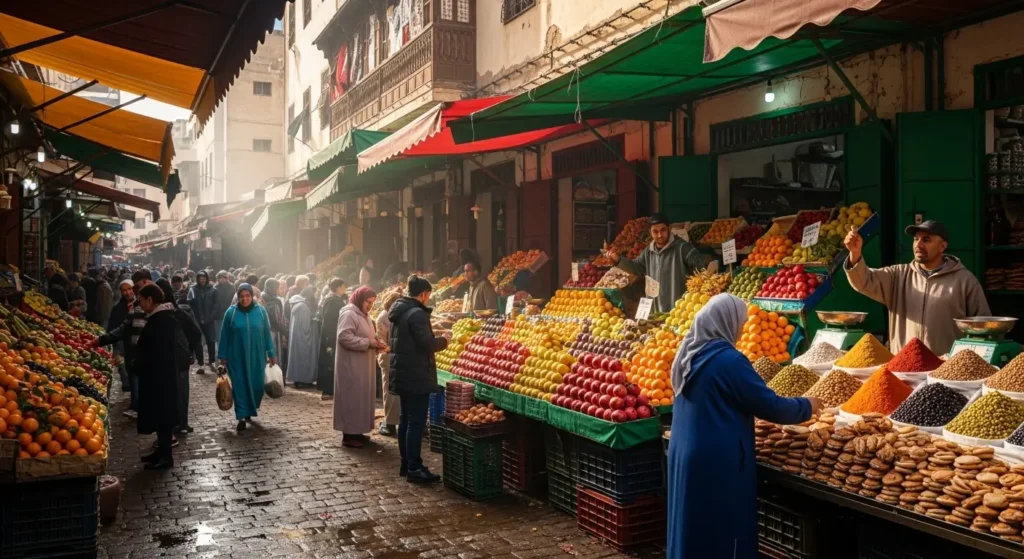
Casablanca’s traditional markets remain the backbone of local food shopping, offering unbeatable prices on fresh produce, competitive meat and fish prices, and the authentic market experience that connects shoppers with local food culture.
Top Souks in Casablanca
Derb Ghallef Market stands as Casablanca’s largest and most diverse traditional market. The sheer number of vendors creates intense competition that keeps prices low. Fresh produce arrives daily from surrounding agricultural regions, and you’ll find the widest selection of vegetables, fruits, herbs, and spices anywhere in the city.
Marché Central occupies the heart of downtown Casablanca and offers premium quality at slightly elevated prices. The fish selection here is exceptional, with vendors displaying pristine catches from the Atlantic. The atmosphere is more refined than neighborhood markets, attracting both locals and tourists seeking quality ingredients.
Hay Mohammadi Market serves working-class neighborhoods and delivers some of the city’s best values. Prices here run 20-25% below downtown markets without sacrificing quality. This market excels for bulk buying and feeding large families on tight budgets.
Souk Jdid in Derb Sultan specializes in spices, dried goods, and pantry staples. Vendors here sell everything from bulk rice and flour to rare spice blends and traditional Moroccan ingredients. The prices on dried goods beat supermarkets by 30-40%.
Marché aux Fleurs, despite its name suggesting flowers, offers excellent fresh herbs and seasonal vegetables. The prices are competitive, and the turnover is high, ensuring freshness.
Average Savings at Souks
Vegetables cost 30-40% less at traditional markets compared to supermarkets. A kilogram of tomatoes that costs 12 MAD at Carrefour runs just 6-7 MAD at Derb Ghallef. Over a month of grocery shopping, these savings compound significantly.
Fruits offer 25-35% savings at souks. Local apples at 12 MAD per kilogram in the market jump to 18-20 MAD on supermarket shelves. Fresh herbs show the most dramatic difference—50-60% cheaper at traditional markets where bunches of cilantro or parsley cost 1-2 MAD instead of 5-8 MAD for tiny packaged portions.
Fish bought whole at market stalls costs 20-30% less than supermarket fish counters. Cleaning and filleting yourself takes a few extra minutes but delivers substantial savings, especially for families buying fish weekly.
Best Shopping Times
Early morning between 7-9 AM offers the freshest selection at souks. Vendors display their best produce first thing, and popular items sell out by midday. The atmosphere is energetic, and serious shoppers arrive early to claim the best ingredients.
Late afternoon from 5-7 PM presents the best negotiation opportunities. Vendors want to clear remaining inventory before closing, making them more willing to negotiate on price or throw in extra produce to close sales. Fruits and vegetables are still perfectly fine for immediate consumption, though they won’t last as long in your refrigerator.
Avoid the mid-morning rush between 10 AM and noon when markets become crowded and chaotic. Parking becomes impossible, vendors are less patient, and the best produce has already been picked over by early shoppers.
Supermarkets – Convenience & Variety
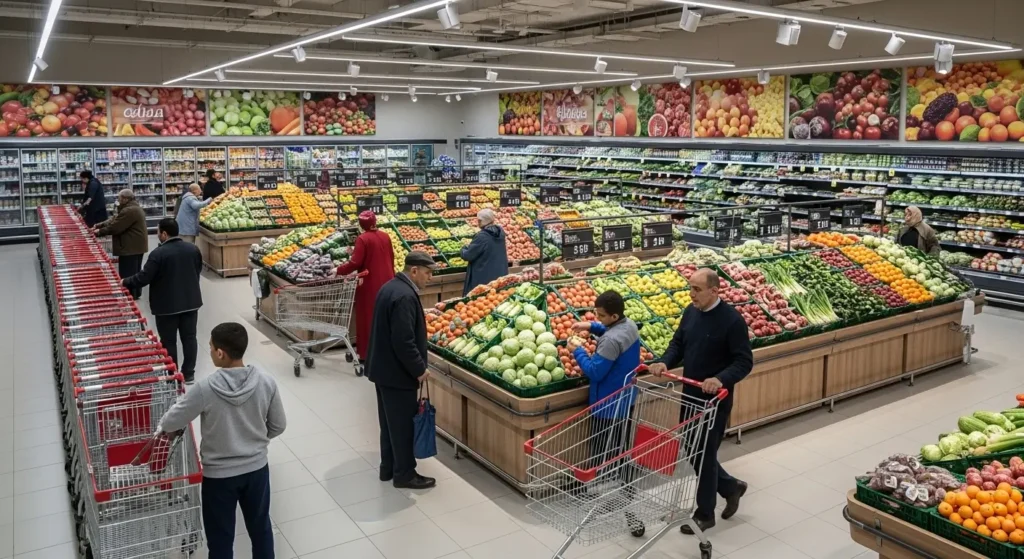
Modern supermarkets offer advantages that traditional markets can’t match—air conditioning, wide aisles, consistent pricing, extended hours, one-stop shopping, and promotions that sometimes beat market prices.
Major Supermarket Chains Price Comparison
Marjane operates large-format hypermarkets on the outskirts of residential areas. These stores stock the widest selection of international products, making them ideal for expats or Moroccans seeking imported ingredients. Marjane excels at competitive pricing on packaged goods and runs frequent promotions on bulk items.
Fresh produce costs 10-15% more than souks, but the quality is consistent and everything is pre-washed and displayed beautifully. For busy professionals who value time over maximum savings, this premium is worthwhile.
Carrefour balances price and quality effectively across their Casablanca locations. Their private-label Carrefour brand products offer excellent value—often 30-40% cheaper than national brands with identical or superior quality. The loyalty program provides additional discounts and personalized promotions based on shopping habits.
Regular sales cycles make Carrefour competitive even on fresh produce during promotional periods. Checking the weekly flyer before shopping can reveal deals that beat market prices.
Acima operates smaller-format neighborhood stores that prioritize convenience over selection. Prices run 15-20% higher than larger chains, but the locations are accessible for quick shopping trips. These stores work well for filling gaps between major shopping trips rather than primary grocery shopping.
BIM and Atacadão represent the discount chain segment, offering budget-friendly options on packaged goods. Fresh produce quality is limited, but prices on staples like pasta, rice, canned goods, and cleaning supplies beat major supermarkets by 5-10%. Smart shoppers combine discount chains for dry goods with market shopping for fresh ingredients.
Neighborhood Hanouts – Quick Shopping
Traditional corner stores called hanouts dot every Casablanca neighborhood, offering convenience that comes with a 10-20% price premium over souks and supermarkets. These small shops excel for last-minute needs—eggs for breakfast, milk for tea, bread for dinner—when making a full shopping trip isn’t practical.
Operating hours typically run from 7 AM to 11 PM daily, with some staying open even later. The owners know their regular customers by name and often extend informal credit to trusted neighbors. Building relationships with your local hanout owner creates flexibility that supermarkets can’t match.
Monthly Food Budget Guide for Casablanca Families
Creating a realistic food budget starts with understanding typical costs for different household sizes and dietary preferences. These estimates assume shopping at a mix of souks for fresh produce and supermarkets for packaged goods.
Budget for Single Person (Living Alone)
A minimum food budget for a single person runs 1,200-1,500 MAD per month. This covers basic Moroccan staples—bread, vegetables, rice, chicken, eggs, dairy, and fruit. Meals are simple but nutritious, with limited variety or convenience items.
A comfortable budget of 1,800-2,400 MAD monthly allows for better meat cuts, more frequent fish, occasional dining out, and some imported or specialty items. This budget supports a varied diet without excessive restriction.
Singles preferring Western-style diets with more processed foods, imported cheeses, breakfast cereals, and convenience items should budget 2,500-3,200 MAD monthly. Cooking for one person makes home cooking less economical due to portion sizes, so some individuals find eating out competitive with grocery costs.
A sample weekly shopping list for a single person includes 80-120 MAD for vegetables, 60-80 MAD for fruits, 100-150 MAD for chicken or meat, 60-80 MAD for dairy and eggs, 40-60 MAD for grains and staples, and 15-25 MAD for bread. Weekly totals run 355-515 MAD, or roughly 1,420-2,060 MAD monthly.
Budget for Couple (Two Adults)
Couples can feed themselves on a minimum budget of 2,200-2,800 MAD monthly by cooking at home, shopping strategically, and focusing on affordable Moroccan staples. This allows for varied meals without luxuries.
A comfortable budget of 3,200-4,000 MAD provides flexibility for better ingredients, occasional restaurants, imported items, and entertaining. Couples at this budget level eat very well without financial stress about food costs.
Premium budgets of 4,500-6,000 MAD monthly support high-quality organic ingredients, regular dining out, imported specialty items, and wine or other beverages. This represents comfortable middle-class food spending in Casablanca.
Budget for Family of Four (2 Adults + 2 Children)
Families of four operating on tight budgets manage with 3,500-4,200 MAD monthly by careful shopping, minimal waste, seasonal eating, and simple home-cooked meals. This requires discipline but provides adequate nutrition.
A comfortable family budget of 5,000-6,500 MAD allows for varied proteins, fresh produce year-round, occasional treats for children, and periodic restaurant meals. Most middle-class Casablanca families operate in this range.
Generous budgets of 7,000-9,000 MAD monthly eliminate most food-related stress, support premium ingredients, accommodate dietary preferences, include regular dining out, and allow for entertaining guests. Upper-middle-class families typically spend at this level.
A realistic monthly shopping breakdown for a family of four includes 400-600 MAD for vegetables, 350-500 MAD for fruits, 800-1,200 MAD for meat and poultry, 200-350 MAD for fish, 350-500 MAD for dairy and eggs, 250-350 MAD for grains and pasta, 120-180 MAD for bread, 80-120 MAD for cooking oil, and 100-150 MAD for spices and condiments. These categories total 2,650-3,950 MAD for food alone, before household items or cleaning supplies.
Budget for Large Family (6+ Members)
Large families require minimum budgets of 5,500-7,000 MAD monthly, relying heavily on bulk purchases, economical proteins like eggs and legumes, seasonal produce, and traditional Moroccan dishes that stretch ingredients efficiently.
Comfortable budgets for large families run 8,000-11,000 MAD monthly, allowing for adequate protein, fresh produce, and occasional variety without constant penny-pinching. Bulk shopping at places like Marjane and Metro becomes essential at this household size.
Price Trends: What’s Getting More Expensive this year?
Understanding price movements helps shoppers anticipate costs and adjust purchasing strategies accordingly. This year food price landscape in Morocco has been unusual, with mixed signals across categories.
Items with Significant Price Increases
Fish and seafood prices jumped 6% this year, making this category the year’s biggest loser for budget-conscious shoppers. Several factors drove increases—fuel costs for fishing boats rose with global oil prices, seasonal catch variations reduced supply for popular species, and growing middle-class demand increased competition for limited catches.
Meat prices increased 4% across beef and lamb categories. International feed costs rose, impacting local livestock operations. Import prices for beef cuts climbed with unfavorable dirham exchange rates against the euro. Demand remained strong even as prices increased, suggesting meat consumption is relatively price-inelastic in Moroccan households.
Cooking oils fluctuated 3-5% based on global commodity markets. International sunflower and soybean oil prices affect local markets even though Morocco produces olive oil domestically. The ongoing global agricultural volatility keeps cooking oil prices uncertain month-to-month.
Vegetables rose 4.7% overall, though this masks significant seasonal variations. Winter vegetables like tomatoes and peppers showed the steepest increases when out of season. Summer vegetables remained affordable, reinforcing the importance of seasonal shopping.
Imported fruits climbed 5-8% due to exchange rate pressures. The Moroccan dirham weakened slightly against the euro this year, making French apples, Spanish grapes, and other imported produce more expensive. This trend favors buying local Moroccan fruits whenever possible.
Items Holding Steady or Decreasing
Grains and cereals remained remarkably stable thanks to government subsidies on flour, semolina, and bread. Morocco’s agricultural policy prioritizes keeping basic staples affordable, insulating consumers from global wheat price volatility. This stability makes grain-based meals increasingly attractive for budget-conscious families.
Bread prices barely budged, with subsidized khobz staying under 2 MAD per loaf throughout this year. This represents one of Morocco’s most successful food security policies, ensuring everyone can afford basic nutrition regardless of income level.
Milk benefits from controlled pricing that keeps liter costs at 8-11 MAD despite rising production costs. The government works with dairy cooperatives to maintain stable prices while ensuring farmers remain viable.
Eggs showed seasonal fluctuations but stayed generally stable on an annual basis. Tray prices of 45-60 MAD for 30 eggs remained consistent, making eggs increasingly valuable as other proteins became more expensive.
Seasonal local fruits like oranges and dates remained affordable when in season. Morocco’s strong citrus and date production means domestic supply keeps these items accessible even as imported fruits became pricier.
Morocco’s Inflation/Deflation Context
Morocco experienced unusual economic volatility this year, starting the year with 2% inflation before shifting to rare deflation of 0.1% by the fourth quarter. This deflation—a general decrease in prices across the economy—marked an uncommon event in Moroccan economic history.
The deflation reflected several factors including reduced global energy prices, good domestic agricultural harvests for some crops, and tightening monetary policy. However, this overall deflationary environment didn’t apply uniformly across all food categories.
While general prices fell slightly, specific food categories like meat, fish, and vegetables bucked the trend with notable increases. This divergence created a split experience—middle-class families with diversified diets felt price pressures on proteins and fresh produce, while lower-income families relying heavily on grains and subsidized items saw their purchasing power improve slightly.
The key lesson for shoppers is that overall inflation numbers don’t tell the complete story. Actual impact depends entirely on what specific foods your household consumes. Families eating traditional Moroccan diets heavy in grains, legumes, and seasonal vegetables fared better than those preferring Western diets with more meat, fish, and year-round produce variety.
How to Save Money on Groceries in Casablanca
Smart shopping strategies can reduce grocery costs by 20-40% without sacrificing nutrition or meal quality. These tactics require slightly more effort but deliver substantial savings over time.
Shop Seasonal Produce for Maximum Savings
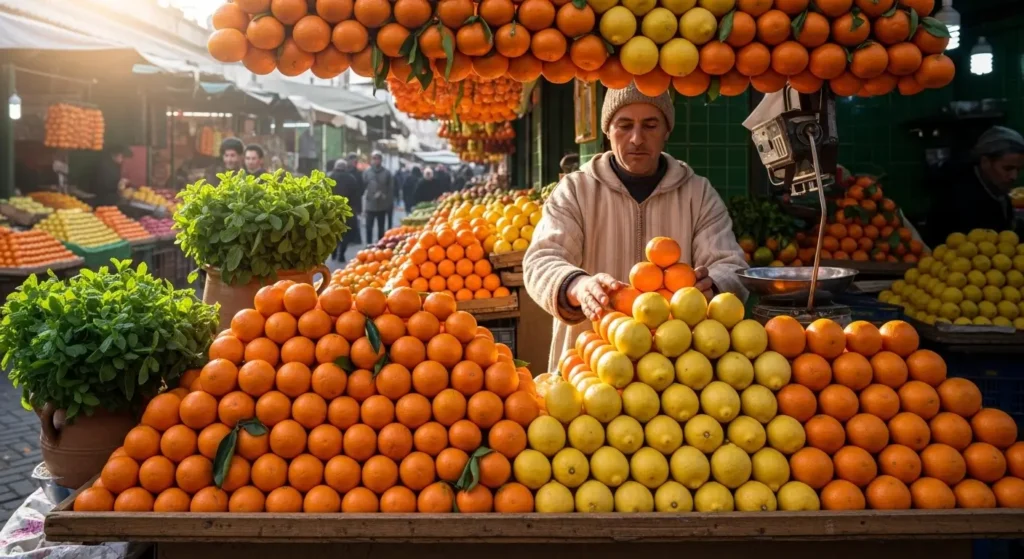
Seasonal eating represents the single most impactful money-saving strategy for fresh produce. Fruits and vegetables in peak season cost 40-60% less than the same items out of season.
Winter (December-February)
Winter brings incredible citrus deals with oranges, mandarins, and lemons flooding markets at 4-8 MAD per kilogram. This is the time to drink fresh orange juice daily and preserve lemons for year-round cooking. Carrots, turnips, and cabbage thrive in cool weather and cost just 5-8 MAD per kilogram.
Avoid tomatoes, zucchini, and peppers during winter unless absolutely necessary. These summer vegetables cost three times their in-season prices when grown in greenhouses during cold months. A kilogram of tomatoes that costs 4 MAD in summer reaches 12-15 MAD in January.
Winter savings opportunities include buying cases of oranges for juicing, preserving lemons in salt and lemon juice for year-round use, and embracing root vegetable stews and tajines that showcase seasonal abundance.
Spring (March-May)
Spring brings strawberries to market at 15-25 MAD per kilogram depending on timing. Early-season strawberries command premiums, but late spring prices drop as supply peaks. Artichokes, peas, and fava beans appear in abundance, celebrating the agricultural renewal.
Lettuce, herbs, and leafy greens flourish in spring’s moderate temperatures. This is prime salad season when fresh greens cost 40% less than summer or winter. Asparagus appears briefly in markets for those willing to pay premium prices for this delicacy.
Spring shopping strategies include buying flats of strawberries for preserves or freezing, stocking up on fava beans to dry for winter soups, and planting herb gardens to reduce year-round herb costs.
Summer (June-August)
Summer delivers peak savings on tomatoes, peppers, zucchini, and eggplant. These vegetables cost just 3-6 MAD per kilogram at the height of summer abundance. Smart shoppers buy in bulk for preserving—making tomato sauce, roasting and freezing peppers, and pickling vegetables for winter use.
Watermelon and melon provide refreshing hydration at bargain prices of 3-6 MAD per kilogram. Peaches, apricots, and other stone fruits have brief seasons with excellent pricing when perfectly ripe.
Summer represents the best time for preservation projects. Making and freezing tomato sauce, roasting peppers for freezing, sun-drying tomatoes, and creating pickled vegetables locks in summer prices for winter consumption, creating year-round savings.
Fall (September-November)
Fall harvest season brings grapes, figs, pomegranates, and the first date harvests. Grape prices drop to 15-20 MAD per kilogram as vineyards empty their harvest. Figs appear briefly and command attention for their short availability window.
Dates begin arriving from southern Morocco and desert regions, with early-season dates priced higher before mid-season abundance drives prices down 30-40%. Pomegranates offer antioxidant-rich juice and seeds at their annual low prices.
Squashes and pumpkins appear in markets, offering economical options for hearty fall soups and tajines. This transitional season provides the broadest variety of fruits and vegetables simultaneously available, making fall an ideal time for dietary diversity.
Buy in Bulk (But Smart)
Bulk purchasing delivers 15-25% savings on appropriate items but requires careful selection to avoid waste. Not everything benefits from bulk buying.
Best bulk purchases include rice in 10-25 kilogram sacks, saving 20% over small packages. Flour stores well in airtight containers and costs significantly less per kilogram in large bags. Sugar keeps indefinitely and shows substantial savings in 5-kilogram bags versus small packages.
Cooking oil in 5-liter containers costs 15-20% less per liter than single-liter bottles. Dried legumes like chickpeas, lentils, and beans store for years and offer bulk savings of 25%. These items pay back their storage space many times over.
Storage requires airtight containers to prevent moisture absorption and pest problems. Large glass jars, food-grade plastic containers with sealing lids, or professional storage bins keep bulk items fresh for months. Proper storage transforms bulk buying from a risk into guaranteed savings.
Avoid bulk buying fresh produce unless you have specific preservation plans. A 10-kilogram bag of tomatoes seems economical until half spoils before consumption. Similarly, dairy products have short shelf lives making bulk purchases risky unless you have a large family consuming quickly.
Master Souk Negotiation Tactics
Negotiation in traditional markets isn’t about aggressive haggling—it’s about building relationships and understanding market dynamics to get fair prices.
Start by asking prices without showing excessive interest in specific items. Vendors quote higher to customers who seem committed to buying. Casual price inquiries reveal more realistic baselines. Browse multiple stalls selling the same items to understand the price range before committing.
Buy multiple items from the same vendor to create leverage for better overall pricing. A vendor makes more profit selling you five different vegetables than one, creating motivation for modest discounts. Bundle purchases naturally lead to “customer pricing” without awkward haggling.
Shop late in the day when vendors want to clear remaining stock rather than transport it home. Perishable items like fresh herbs, ripe fruits, and fish lose value overnight. Vendors prefer selling at small discounts to disposal, especially to regular customers who’ll return.
Build relationships with regular vendors rather than shopping randomly each visit. Vendors remember good customers and offer better quality, fairer prices, and small extras. This relationship approach works better than one-time aggressive negotiation.
Don’t be afraid to walk away when prices seem unreasonable. Vendors often reconsider when they see customers leaving without buying. This tactic works especially well when you’ve established that you’re a knowledgeable shopper who understands fair market pricing.
Average negotiation savings run 10-20% off initial asking prices for regular shoppers with established vendor relationships. One-time aggressive haggling rarely achieves better results and damages potential long-term relationships.
Choose Local Over Imported
Moroccan agriculture produces excellent quality at significantly lower prices than imported alternatives. Choosing local isn’t just patriotic—it’s economically smart.
Local apples from the Middle Atlas cost 12-18 MAD per kilogram compared to imported French apples at 25-35 MAD. The quality is comparable, and local apples often taste better due to shorter transport times and harvest at peak ripeness.
Moroccan olive oil at 45-80 MAD per liter delivers exceptional quality compared to imported Italian or Spanish oils at 100-200 MAD per liter. Morocco produces world-class olive oil that wins international competitions. There’s no quality justification for paying double for imported alternatives.
Local cheese costs 80-120 MAD per kilogram versus imported European cheeses at 150-250 MAD. While specific European cheese varieties have unique flavors, Moroccan cheese works perfectly for cooking and daily consumption at half the price.
Average savings from choosing local alternatives reach 40-60% across most categories. These savings compound significantly over months and years of shopping. Supporting local agriculture also strengthens Morocco’s food security and rural economy.
Plan Meals Around Weekly Promotions
Supermarket promotions can deliver savings comparable to souk shopping when timed correctly. Major chains rotate featured items weekly, creating opportunities for strategic stockpiling.
Check Marjane and Carrefour weekly flyers online or in-store before shopping trips. These flyers highlight loss-leaders—items priced below cost to attract customers. Building meal plans around these promotions maximizes savings.
Download supermarket apps for exclusive mobile-only deals and personalized promotions based on purchase history. Apps often offer additional 5-10% discounts on selected items beyond printed flyer deals.
Stock up on non-perishables during “3 for 2” promotions or bulk discounts. Pasta, rice, canned tomatoes, cooking oil, and cleaning supplies benefit from promotional stockpiling. One well-timed shopping trip during monthly mega-sales can cover non-perishable needs for months.
Time major shopping trips with monthly mega-sales typically occurring at month-end. Supermarkets clear inventory before new shipments, creating deep discounts on approaching expiration dates and slow-moving items.
Average savings from promotion-based shopping reach 20-30% on purchased items. Combining promotional shopping for packaged goods with souk shopping for fresh produce creates the optimal budget strategy.
Cook Traditional Moroccan Meals
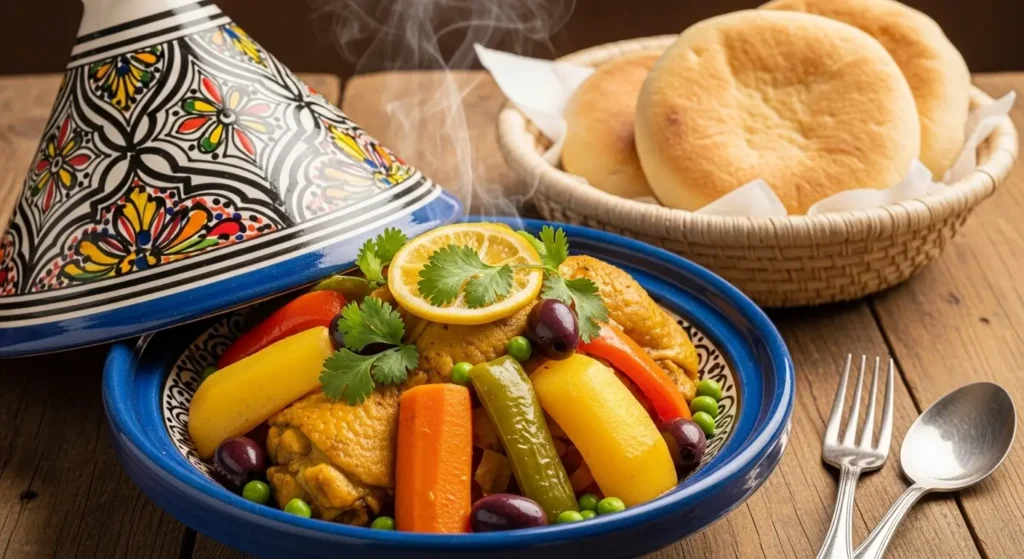
Traditional Moroccan cuisine evolved over centuries to maximize flavor while minimizing cost. These dishes use inexpensive ingredients efficiently and create satisfying meals at a fraction of Western-style food costs.
Traditional dishes rely heavily on affordable vegetables, legumes, and grains, using meat as flavoring rather than centerpiece. This approach delivers excellent nutrition at minimal cost while creating distinctive Moroccan flavors.
Lentil soup or harira costs just 15-20 MAD per serving when made at home. A large pot feeds a family for days and improves in flavor as it sits. The ingredients—lentils, tomatoes, onions, herbs, and spices—cost a fraction of equivalent protein-based meals.
Vegetable couscous runs 25-30 MAD per person and creates an abundant, satisfying meal. The vegetables cost little, especially when seasonal, and the couscous base is extremely economical. A 4-MAD steamer-full of vegetables feeds six people easily.
Bissara, the traditional fava bean soup, might be Morocco’s most economical meal at just 10-15 MAD per serving. Dried fava beans cost very little, and the soup requires only olive oil, cumin, and paprika for flavoring. It’s nutritionally complete, delicious, and incredibly cheap.
Zaalouk, the eggplant and tomato salad, costs 12-18 MAD per generous serving. Summer vegetables at peak prices make this dish nearly free while providing concentrated nutrition and flavor.
Chicken tajine with vegetables runs 35-45 MAD per person—substantial but still economical compared to Western alternatives. The vegetables extend the chicken, and the slow-cooking method tenderizes affordable chicken parts.
Traditional Moroccan meals average 20-40 MAD per person compared to Western-style meals at 50-80 MAD per person. The 40-50% savings apply to every meal, compounding to 800-1,200 MAD monthly savings for a family of four.
Beyond cost, traditional cooking reduces reliance on processed foods, creates stronger family connections through shared meals, and maintains cultural food traditions worth preserving.
Reduce Food Waste
Moroccan households waste an estimated 15-25% of purchased food through spoilage, over-purchasing, and poor storage. Eliminating waste equals immediate savings without changing shopping habits.
Store vegetables properly by separating ethylene-producing fruits like apples and tomatoes from ethylene-sensitive vegetables like lettuce and broccoli. This simple separation extends vegetable freshness by days.
Freeze excess bread immediately rather than letting it go stale. Moroccan bread freezes excellently and refreshes in minutes by sprinkling with water and warming in the oven. Frozen bread eliminates daily bakery trips and reduces waste.
Herbs wilt quickly in refrigerators. Freeze chopped herbs in ice cube trays with water or olive oil for instant flavor additions to soups and tajines. Dried herbs work well too—hang bunches upside-down until crispy, then crumble into jars.
Use vegetable scraps for stock. Onion skins, carrot peels, celery ends, and herb stems create flavorful broth when simmered with water. This free stock base improves countless dishes while eliminating waste.
Plan meals before shopping trips to avoid impulse purchases that languish unused. A simple weekly meal plan ensures every purchase has a purpose, dramatically reducing waste from forgotten ingredients.
Average households waste 300-600 MAD monthly through food spoilage and over-purchasing. Cutting waste in half saves 150-300 MAD monthly with zero additional effort beyond better planning and storage.
Neighborhood Shopping Guide: Where to Find the Best Prices
Casablanca’s food prices vary 20-35% between neighborhoods, making location selection crucial for budget optimization. Understanding neighborhood price dynamics helps shoppers find the best deals.
Downtown Casablanca (Centre-Ville)
Marché Central anchors downtown food shopping with premium quality at corresponding premium prices. This beautiful market charges 15-20% above city averages, justified by exceptional freshness, prime location, and tourist appeal.
The fish selection at Marché Central ranks among Casablanca’s finest. Vendors display pristine catches with artistry, and the quality justifies the price premium for special occasions. However, daily shopping here strains budgets unnecessarily.
Downtown also hosts numerous upscale supermarkets catering to business districts and affluent residents. These stores offer convenience but charge accordingly—budget shoppers should avoid regular downtown grocery shopping.
Derb Sultan
Souk Jdid in Derb Sultan offers excellent mid-range prices with particular strength in spices, dried goods, and bulk staples. Prices run 10-15% below city averages while maintaining good quality.
This neighborhood’s working-class character keeps prices competitive. Vendors cater to local families watching budgets carefully, creating an atmosphere focused on value over presentation.
The spice market section of Souk Jdid delivers the best bulk spice prices in Casablanca. Buying ras el hanout, cumin, paprika, and other essentials in larger quantities saves 30-40% compared to supermarket spice aisles.
Hay Mohammadi
Hay Mohammadi’s neighborhood markets provide outstanding value with prices 20-25% below downtown levels. The quality remains comparable—these aren’t inferior products, just less expensive due to lower overhead and local customer base.
Fresh produce moves quickly through Hay Mohammadi markets, ensuring freshness despite lower prices. Meat vendors offer competitive quality, and fish options are adequate though not as extensive as coastal markets.
Families willing to travel to Hay Mohammadi for major shopping trips can save 400-600 MAD monthly compared to shopping in premium neighborhoods. The savings justify the extra travel time for budget-conscious households.
Maarif
Maarif concentrates multiple supermarket chains including Marjane, Carrefour, and Acima locations within easy reach. This neighborhood excels for one-stop shopping and international products but charges supermarket premiums.
Prices follow standard supermarket patterns—10-15% above souks for fresh produce but competitive on packaged goods, especially during promotions. Maarif suits professionals prioritizing convenience over maximum savings.
The neighborhood’s affluent character supports premium grocery stores and specialty shops carrying imported items, organic produce, and gourmet ingredients at corresponding high prices.
Ain Chock
Ain Chock offers good neighborhood souks with prices 15-20% below central areas. The markets serve local residents rather than tourists, keeping prices grounded in what working families can afford.
Fresh produce quality is excellent in Ain Chock markets with high turnover ensuring freshness. The neighborhood has grown substantially, supporting larger markets with wider selection than smaller neighborhoods.
Several supermarkets complement the traditional markets, providing full-service shopping options. The combination makes Ain Chock convenient for mixed shopping strategies.
Sidi Moumen
Sidi Moumen delivers Casablanca’s lowest food prices, running 25-35% below downtown markets. This working-class neighborhood’s markets prioritize affordability above all else, making them ideal for large families and strict budgets.
The trade-offs include less variety than central markets, less convenient access requiring transportation for most shoppers, and simpler presentation—products are fresh and good quality but displayed practically rather than artfully.
Families feeding six or more people find Sidi Moumen’s prices transformative for monthly budgets. The savings of 800-1,200 MAD monthly versus shopping in expensive neighborhoods justify the extra effort.
Bulk buying opportunities abound in Sidi Moumen where vendors cater to large families buying weekly supplies. Negotiating is expected and savings compound when buying multiple items.
Anfa & California
Anfa and California represent Casablanca’s premium neighborhoods with corresponding food prices 20-30% above city averages. These areas support high-end Carrefour locations, specialty organic stores, and gourmet shops.
The imported goods selection is exceptional—European cheeses, international produce, specialty ingredients, and organic options unavailable elsewhere. However, even basic staples cost more in these neighborhoods.
Budget-conscious shoppers should avoid regular grocery shopping in Anfa and California. These stores serve affluent residents willing to pay premiums for convenience, quality perception, and selection rather than value-oriented families.
Casablanca vs. Other Moroccan Cities: Food Price Comparison
Casablanca’s position as Morocco’s economic capital creates unique price dynamics compared to other major cities. Understanding these differences provides context for Casablanca residents and helps those considering relocation.
How Casablanca Compares
Casablanca vs. Rabat
Overall food costs in Casablanca run 5-8% higher than Rabat, Morocco’s political capital. The difference isn’t dramatic but becomes noticeable over monthly budgets.
Fresh produce prices are remarkably similar between these neighboring cities, both benefiting from the same agricultural hinterland. Transport costs and market competition create minimal variation.
Meat shows slight advantages for Rabat shoppers, running 3-5% cheaper on average. This reflects Rabat’s smaller population creating less demand pressure on limited supply.
Supermarket goods are nearly identical in pricing between Casablanca and Rabat. National chains maintain consistent pricing across locations, and both cities support enough competition to keep prices similar.
Casablanca vs. Marrakech
Overall prices between Casablanca and Marrakech are very similar, with Marrakech’s tourist economy complicating direct comparisons.
Tourist areas in Marrakech command 20-30% price premiums in markets near Jemaa el-Fnaa and other tourist attractions. Vendors charge what tourists will pay, creating parallel price structures.
Local Marrakech markets serving residents offer prices comparable to Casablanca, sometimes running 5-10% higher due to distance from the coast and agricultural regions.
Fish costs less in coastal Casablanca by 15-20% compared to interior Marrakech where fish arrives less fresh and travels farther, increasing costs.
Casablanca vs. Tangier
Overall prices are similar between Casablanca and Tangier, both being major coastal cities with similar economic profiles.
Fish prices sometimes favor Tangier slightly due to its fishing port and proximity to Mediterranean catches. The difference is marginal—5-10% at most—and varies by season.
Imported goods sometimes cost less in Tangier due to port proximity reducing transportation costs. European products entering through Tangier port show modest savings.
Produce costs are comparable between the cities, both drawing from northern agricultural regions with similar transport costs and market dynamics.
Casablanca vs. Fes
Overall, Casablanca runs 10-12% more expensive than Fes, creating noticeable budget differences for families.
Fresh produce costs less in Fes due to proximity to agricultural regions of the Saïss plain. Vegetables and fruits arrive fresher and cheaper with minimal transportation costs.
Meat prices favor Fes by 8-10%, reflecting lower overall cost of living and strong local livestock markets serving the region.
Packaged goods show similar pricing between the cities as national brands and chains maintain consistent pricing. The cost difference concentrates in fresh foods rather than manufactured products.
Casablanca vs. Agadir
Overall, Agadir offers 5-10% lower food costs than Casablanca, making it one of Morocco’s more affordable major cities for groceries.
Fish and seafood cost significantly less in Agadir—20-30% cheaper than Casablanca. Agadir’s massive fishing industry and port create abundant local supply at rock-bottom prices.
Produce also runs cheaper in Agadir due to the Souss agricultural region’s massive production. Tomatoes, citrus, and other crops cost less at the source than after transport to Casablanca.
Tourism effect in Agadir creates price inflation in resort areas that balances out advantages in local markets. Tourists pay premiums while residents shop affordably.
Why Casablanca Costs More
Casablanca’s higher prices reflect several structural factors beyond simple market manipulation.
As Morocco’s largest city with over 4 million metropolitan residents, operating costs are higher across the board. Rent, labor, transportation, and overhead all cost more in the economic capital, and vendors pass these costs to consumers.
The economic hub status attracts premium pricing strategies. Vendors know Casablanca residents have higher average incomes, creating willingness to pay more for convenience and quality.
Higher wages in Casablanca compared to other Moroccan cities mean vendor costs are genuinely higher. Employees expect better pay in expensive cities, driving up operational expenses that get reflected in food prices.
Greater demand from dense population creates competition for limited fresh produce, meat, and fish arriving daily. Supply and demand dynamics favor sellers when millions of people need to eat daily.
More imported and international products are available in Casablanca than smaller cities. The presence of expensive imported goods raises average prices even though budget options exist alongside premium products.
Restaurant Dining vs. Home Cooking Costs
Understanding the cost differential between eating out and cooking at home helps families allocate restaurant budgets appropriately while maintaining overall food spending targets.
Typical Restaurant Prices in Casablanca
Budget Eateries (Popular Restaurants)
Harira soup costs 8-12 MAD per bowl at neighborhood restaurants and street vendors. This traditional soup provides substantial nutrition and warmth, especially popular during Ramadan and winter months.
Sandwiches or bocadillos run 12-20 MAD depending on fillings. Simple cheese or vegetable sandwiches cost less while meat and chicken options command higher prices.
Tajines cost 35-50 MAD at budget restaurants, offering complete meals with bread included. These prices represent excellent value for substantial portions of Morocco’s national dish.
Couscous plates run 40-60 MAD at popular restaurants, typically served Fridays as traditional couscous day. The generous portions often provide leftovers for another meal.
Grilled meat plates cost 45-70 MAD depending on meat type and quantity. Chicken costs less than beef or lamb, and portion sizes vary significantly between establishments.
Average meals at budget eateries run 40-60 MAD per person including a drink, making them affordable for occasional dining out without budget stress.
Mid-Range Restaurants
Starters like salads, soups, or appetizer plates cost 25-45 MAD. These portions are often shareable, reducing per-person costs for couples or families.
Main courses run 60-100 MAD with better quality ingredients, larger portions, and more refined preparation than budget options. The ambiance and service justify the premium for special occasions.
Desserts cost 25-40 MAD for traditional Moroccan sweets, fruit plates, or simple desserts. Western-style desserts sometimes command higher prices.
Drinks including sodas, fresh juices, or Moroccan tea run 15-25 MAD. Some mid-range restaurants charge more for fresh-squeezed juices or specialty beverages.
Average meals at mid-range restaurants total 100-150 MAD per person, suitable for weekly or bi-weekly dining out for middle-class families.
High-End Dining
Starters at fine dining establishments cost 60-120 MAD for sophisticated preparations and premium ingredients. Portion sizes may be smaller with emphasis on quality and presentation.
Main courses run 150-300 MAD featuring high-quality proteins, complex preparations, and refined execution. These prices compare favorably to European fine dining while delivering excellent value.
Desserts cost 50-80 MAD for elaborate preparations or imported ingredients. Pastry chefs create restaurant signatures worth the premium for special celebrations.
Wine and beverages run 80-200 MAD depending on selection. Moroccan wines offer good value while imported bottles command significant premiums.
Average meals at high-end restaurants total 300-500+ MAD per person, reserved for special occasions, business dining, or affluent diners prioritizing experience over economy.
Street Food & Quick Service
Msemen or harcha from street vendors cost just 5-10 MAD, providing quick breakfast or snack options at bargain prices. Quality varies but the best vendors develop loyal followings.
Fresh orange juice runs 6-10 MAD for generous glasses squeezed on the spot. This represents exceptional value for fresh vitamins and natural sweetness.
Grilled corn costs 5-8 MAD for ears grilled over charcoal and flavored with salt, cumin, or spicy sauce. A seasonal treat during corn harvest months.
Snail soup, a Casablanca specialty, costs 10-15 MAD per bowl. This distinctive street food divides opinions but has dedicated enthusiasts.
Fried fish sandwiches run 15-25 MAD near the port and fish markets. Fresh-caught fish fried to order and stuffed into bread creates satisfying meals at modest prices.
Cost Comparison: Eating Out vs. Cooking at Home
Direct comparison reveals the significant savings from home cooking while acknowledging the time and effort investment required.
Chicken tajine at a restaurant costs 45-60 MAD per person. Making the same dish at home requires chicken at 12 MAD per serving, vegetables at 8 MAD, spices and oil at 5 MAD, and bread at 2 MAD—totaling approximately 27 MAD per person. Home cooking saves 40-55% while often producing superior results with better ingredients.
Monthly impact for a family of four is substantial. Eating restaurant meals three times weekly costs 2,400-3,600 MAD monthly (assuming 200-300 MAD per family meal out). Home cooking with occasional restaurant dining runs 800-1,200 MAD monthly for equivalent restaurant-quality home meals. The potential savings reach 1,600-2,400 MAD monthly.
These savings must be weighed against time costs. Cooking requires shopping, preparation, cooking, and cleanup time that restaurant dining eliminates. For busy professionals, the time saved might justify the expense. For families with flexible schedules, home cooking delivers both savings and quality control.
When Eating Out Makes Sense
Special occasions and celebrations justify restaurant spending as memorable experiences beyond mere nutrition. Birthdays, anniversaries, graduations, and achievements deserve celebration in restaurants offering ambiance home kitchens can’t match.
Lunch near work represents a time versus money calculation. Professionals working far from home may find buying lunch (30-50 MAD) comparable to packing lunches when considering groceries, preparation time, and transport containers.
Exploring Casablanca’s food scene provides social and cultural value beyond nutrition. Trying new restaurants, cuisines, and dishes enriches life in ways pure cost analysis misses.
Cooking for one person creates economies of scale problems. Single portions of many dishes cost nearly as much as multiple servings in groceries, and leftovers become repetitive. Singles sometimes find eating out competitive with solo home cooking.
Common Grocery Shopping Mistakes to Avoid
Understanding and avoiding these common errors helps shoppers maximize their food budgets without feeling deprived.
Shopping Without a List
Impulse purchases increase spending by 20-30% compared to planned shopping trips. Walking through markets or supermarkets without predetermined needs leads to buying appealing items that don’t fit meal plans.
The solution involves planning weekly meals before shopping and creating detailed shopping lists based on those meals. List discipline requires purchasing only listed items unless genuine necessities arise.
Average waste from unplanned purchases runs 400-600 MAD monthly for typical families. That money buys items that seemed good at the time but spoil unused or duplicate existing pantry stock.
Not Checking Unit Prices
Larger packages aren’t always cheaper per kilogram or liter. Manufacturers and retailers know consumers assume bigger equals better value, sometimes pricing larger packages identically or higher per unit while appearing cheaper on shelf tags.
The solution requires calculating price per kilogram or liter before purchasing. Most supermarkets display unit pricing on shelf labels, but markets require mental math or phone calculators.
For example, 500 grams of pasta at 8 MAD equals 16 MAD per kilogram. A 1-kilogram package at 12 MAD represents better value. Taking five seconds to calculate saves money on every purchase.
Buying Everything at Supermarkets
Overpaying 30-40% on fresh produce by defaulting to supermarket convenience instead of market shopping wastes substantial money weekly. The convenience premium might justify occasional purchases but becomes expensive as a habit.
The solution involves buying produce, herbs, and often fish at souks while purchasing packaged goods, dairy, and household items at supermarkets. This split strategy captures each venue’s strengths.
Monthly savings from strategic venue selection reach 300-500 MAD for average families. The time investment is minimal—one weekly market visit for fresh items plus supermarket shopping for shelf-stable goods.
Ignoring Seasonal Availability
Paying premium prices for out-of-season produce wastes money on inferior quality. Winter tomatoes cost three times summer prices while tasting watery and bland. The expense and quality both argue against off-season purchases.
The solution requires adjusting meal plans based on seasonal availability. Embrace what’s abundant and cheap rather than forcing year-round consistency in meals.
Winter tomatoes illustrate the problem perfectly—12-15 MAD per kilogram in January versus 4-5 MAD in July. Buying just 2 kilograms weekly in winter versus summer costs an extra 16-20 MAD weekly or 80 MAD monthly unnecessarily.
Always Buying Pre-Cut/Prepared Items
Convenience fees of 40-60% markup for pre-cut vegetables, pre-marinated meats, and ready-to-cook items add up quickly. Supermarkets profit handsomely from minimal labor that shoppers can easily do themselves.
The solution involves buying whole vegetables and meats, then prepping at home. Ten minutes of chopping vegetables on Sunday provides week-long convenience at market prices instead of premium costs.
Pre-cut vegetables cost about 25 MAD per kilogram versus 8 MAD for whole vegetables plus 10 minutes of knife work. The savings scale with purchase volume—families buying vegetables daily waste hundreds of dirhams monthly on convenience they can create themselves.
Not Comparing Brands
Branded products cost 25-50% more than store brands for often identical products manufactured in the same facilities. Brand loyalty wastes money when private labels offer equal or superior quality.
The solution involves trying store brands like Carrefour or Marjane house brands. Most private labels match or exceed national brand quality while costing significantly less.
Quality is often identical because many store brands are manufactured by the same companies producing name brands. The packaging differs but the product inside is the same, making the premium for brands pure marketing expense.
Shopping When Hungry
Hunger increases impulse purchases by 40% according to shopping studies. Empty stomachs make everything look appealing, leading to carts filled with unnecessary items and budget-busting checkout totals.
The solution is simple—eat before grocery shopping. A snack or meal before shopping provides rational decision-making instead of hunger-driven impulses.
Studies consistently show hungry shoppers spend 10-15% more than satiated shoppers buying the same items. That’s 150-300 MAD monthly wasted on hunger-influenced impulse purchases.
Forgetting Reusable Bags
Plastic bag fees of 1-2 MAD per bag seem trivial but compound over time. A weekly shopping trip requiring 5-6 bags costs 5-12 MAD, reaching 150-250 MAD annually.
The solution involves keeping reusable bags in the car, purse, or by the door so they’re available when shopping. Most Moroccan cities now charge for plastic bags, making reusables economically smart beyond environmental benefits.
Annual savings of 150-250 MAD might seem modest but represent free money for simply remembering to bring bags. The environmental benefit adds value beyond personal economics.
Food Price Myths & Facts
Separating fact from fiction helps shoppers make evidence-based decisions rather than following conventional wisdom that may be outdated or incorrect.
Myth: Supermarkets Are Always More Expensive
Reality challenges this assumption. While fresh produce costs more at supermarkets, they often beat souk prices on packaged goods, dairy, and household supplies. Promotional pricing can make certain items cheaper than markets.
Supermarkets achieve economies of scale on manufactured goods that small market vendors can’t match. Bulk purchasing power and direct manufacturer relationships create genuine savings supermarkets pass to consumers during promotions.
Smart shoppers recognize each venue’s strengths—markets for fresh produce, supermarkets for packaged goods—and shop accordingly rather than assuming one is always better.
Myth: Organic = Better Value
Reality reveals organic products in Morocco cost 50-100% more but aren’t always certified or meaningfully different from conventional produce. Save money by buying seasonal local produce instead of paying organic premiums.
Morocco lacks rigorous organic certification standards compared to Europe or North America. Products labeled “bio” or “organic” may not meet international standards, making the premium questionable.
Seasonal local produce grown by small farmers often uses minimal pesticides without organic certification. Buying from known vendors at markets provides similar benefits without the organic markup.
Myth: Frozen Food Is Lower Quality
Reality shows frozen vegetables and fish are often fresher than “fresh” items sitting for days. Frozen products are processed at peak ripeness, locking in nutrients and flavor at 20-30% lower cost.
Modern freezing technology preserves food better than days of refrigerated transport and display. Frozen fish caught and frozen at sea is fresher than “fresh” fish that’s been out of water for 3-4 days.
Budget shoppers should embrace frozen vegetables for soups, stews, and cooked dishes where texture differences from fresh are negligible while savings are substantial.
Myth: You Must Haggle at Every Souk
Reality demonstrates that regular customers with established vendor relationships often get better prices without haggling. Building rapport over time instead of aggressive negotiation every visit creates sustainable advantages.
Vendors remember good customers and naturally offer better prices, quality, and service. The relationship approach delivers superior long-term results compared to one-time aggressive negotiation.
Haggling creates adversarial dynamics while relationship-building creates partnerships where both parties benefit. The cultural shift from transaction to relationship changes the entire market experience.
Myth: Imported Means Better Quality
Reality proves Moroccan olive oil, produce, and dairy are often superior to imports at half the price. Morocco has excellent agricultural products—buy local and save while supporting domestic agriculture.
Moroccan olive oil wins international competitions regularly. There’s no quality justification for paying double for Italian or Spanish imports when Moroccan oil is world-class.
Local produce travels shorter distances and can be harvested riper than imports that must survive long transport. Freshness often favors local over imported despite perception otherwise.
Myth: Big Shops Are More Economical
Reality shows monthly mega-shopping trips lead to more waste than smaller frequent trips. Fresh items spoil before consumption, and impulse purchases increase with longer shopping carts.
Smaller, frequent trips for fresh items reduce spoilage by 15-20% overall. Buying only what’s needed for a few days ensures consumption before spoiling.
The psychological impact of large shopping trips also increases impulse purchases. Longer time in stores creates more opportunities for non-essential purchases to enter carts.
Myth: All Markets Have the Same Prices
Reality demonstrates prices vary 20-35% between neighborhoods. Shopping in Hay Mohammadi versus Maarif means significant savings, especially for large families buying weekly supplies.
The neighborhood price differential reflects operating costs, customer demographics, and competition levels. Working-class neighborhoods have lower rents and cost-conscious customers, driving prices down.
Families willing to travel to budget-friendly neighborhoods for major shopping trips save enough to justify the extra effort—400-800 MAD monthly for larger households.
Frequently Asked Questions (FAQ)
What is the average monthly food budget in Casablanca?
For a family of four, expect to spend 4,000-6,500 MAD monthly on groceries when shopping at a mix of souks and supermarkets. This range covers comfortable eating with varied proteins, fresh produce, and occasional treats. Tight budgets manage with 3,500-4,200 MAD through careful planning, seasonal shopping, and traditional Moroccan dishes. Premium budgets of 7,000-9,000 MAD support organic options, imported items, and regular dining out.
A single person typically needs 1,500-2,400 MAD monthly depending on dietary preferences. Minimum budgets of 1,200-1,500 MAD cover basic nutrition with simple meals, while 2,500-3,200 MAD allows for Western-style diets with more processed foods and convenience items.
Couples require 2,200-2,800 MAD monthly at minimum, scaling to 3,200-4,000 MAD for comfortable eating with variety and flexibility. These estimates assume primarily home cooking with strategic shopping across souks and supermarkets.
Are food prices in Casablanca higher than other Moroccan cities?
Yes, Casablanca runs 5-12% more expensive than most Moroccan cities except Marrakech tourist areas. Fes offers notably cheaper groceries with 10-12% lower costs overall, particularly on fresh produce and meat. Agadir provides 5-10% savings especially on fish and produce from the Souss agricultural region.
Rabat and Tangier have similar pricing to Casablanca, all being major coastal cities with comparable economic profiles. Rabat runs slightly cheaper at 5-8% below Casablanca, while Tangier shows near-identical prices.
Marrakech presents complex comparisons—tourist areas charge 20-30% premiums while local markets serving residents offer prices comparable to Casablanca. The tourist economy creates parallel pricing structures that affect averages.
Casablanca’s higher costs reflect its position as Morocco’s economic capital with higher operating costs, wages, and demand from a dense population of over 4 million.
Where can I find the cheapest groceries in Casablanca?
Hay Mohammadi and Sidi Moumen neighborhoods offer the lowest prices, delivering 20-35% savings compared to downtown markets. These working-class areas have competitive vendors serving budget-conscious local families, keeping prices grounded in affordability.
Sidi Moumen provides the absolute cheapest groceries in Casablanca but requires transportation for most shoppers and offers less variety than central markets. The savings of 800-1,200 MAD monthly for large families justify the extra effort.
For best overall value, combine souk shopping for produce with discount supermarkets like BIM or Atacadão for packaged goods. This split strategy captures each venue’s competitive advantages while avoiding their weaknesses.
Derb Ghallef Market offers excellent variety and competitive prices more centrally located than Sidi Moumen. Hay Mohammadi provides good middle ground between extreme budget shopping and convenience.
Is it cheaper to shop at souks or supermarkets?
Souks are 30-40% cheaper for fresh produce, fruits, and herbs. A kilogram of tomatoes costing 12 MAD at Carrefour runs just 6-7 MAD at Derb Ghallef. Herbs show the most dramatic difference—1-2 MAD bunches at markets versus 5-8 MAD for tiny packages at supermarkets.
Supermarkets offer better prices on packaged goods, dairy, and household items through economies of scale and bulk purchasing power. Store brands like Carrefour or Marjane house labels deliver 30-40% savings versus name brands.
The smartest strategy combines both venues—buy fresh items at souks and packaged goods at supermarkets. This approach captures each venue’s strengths while avoiding weaknesses, typically saving 300-500 MAD monthly for average families.
Supermarket promotions occasionally beat market prices even on produce. Checking weekly flyers for loss-leaders allows strategic purchasing during sales while defaulting to markets for regular fresh shopping.
What are the best days to shop at Casablanca markets?
Shop early morning between 7-9 AM for the freshest selection at souks. Vendors display their best produce first thing, and popular items sell out by midday. The atmosphere is energetic with serious shoppers claiming premium ingredients.
Late afternoon from 5-7 PM offers the best negotiation opportunities as vendors clear remaining stock before closing. Produce and fish remain perfectly fine for immediate consumption though they won’t last as long in refrigerators.
Friday mornings are particularly good for meat shopping as many Moroccans purchase for Friday couscous, creating competitive pricing. Fish markets also offer excellent selection on Fridays.
Avoid mid-morning rush hours from 10 AM-12 PM when markets become crowded and chaotic. Vendors are less patient, parking becomes impossible, and the best produce has been picked over by early shoppers.
How much does a typical Moroccan meal cost to prepare at home?
Traditional Moroccan dishes cost 15-40 MAD per person when cooking at home, making them some of the world’s most economical cuisines. Harira soup runs about 15-20 MAD per serving with lentils, tomatoes, herbs, and spices creating nutritionally complete meals.
Chicken tajine costs 35-45 MAD per person including vegetables, spices, and bread. The slow-cooking method tenderizes affordable chicken parts while vegetables extend the protein economically.
Vegetable couscous runs around 25-30 MAD per person. The couscous base is extremely cheap, and seasonal vegetables cost minimal amounts while creating abundant, satisfying meals.
Bissara (fava bean soup) might be Morocco’s most economical meal at just 10-15 MAD per serving. Dried fava beans cost very little, requiring only olive oil and spices for flavoring while providing complete protein.
Western-style meals cost 50-80 MAD per person on average, making traditional cooking 40-50% cheaper while often providing superior nutrition and flavor.
Are food prices in Casablanca increasing or decreasing this year?
Mixed trends characterize this year—meat prices rose 4%, fish jumped 6%, and vegetables increased 4.7%. However, Morocco experienced rare deflation of 0.1% in late this year, meaning some categories stabilized while others increased.
Protein sources became more expensive across the board. International feed costs, fuel prices for fishing, and strong demand drove increases in meat and fish categories.
Grains remain subsidized and stable, with bread, flour, and semolina showing minimal price changes. This government policy protects basic nutrition accessibility regardless of income level.
Overall, families eating traditional Moroccan diets heavy in grains, legumes, and seasonal vegetables experienced improved purchasing power. Those preferring Western diets with more meat, fish, and year-round produce felt price pressure more acutely.
The key lesson is that overall inflation numbers don’t tell complete stories—actual impact depends on specific consumption patterns of individual households.
Can I save money buying in bulk in Casablanca?
Yes, bulk buying saves 15-25% on appropriate staples like rice, flour, cooking oil, and dried legumes. A 25-kilogram sack of rice costs 20% less per kilogram than buying in small packages repeatedly.
However, only buy bulk for items you’ll actually use before spoilage. Storage and waste can negate savings on perishables or items consumed slowly.
Best bulk purchases include rice in large sacks, flour in 5-10 kilogram bags, sugar in 5-kilogram bags, cooking oil in 5-liter containers, and dried legumes in multi-kilogram quantities. These items store for months or years without degradation.
Avoid bulk buying fresh produce unless you have specific preservation plans like making tomato sauce or freezing vegetables. Dairy products have short shelf lives making bulk purchases risky unless large families consume quickly.
Proper storage in airtight containers prevents moisture absorption and pest problems, transforming bulk buying from a risk into guaranteed savings.
What’s the cheapest source of protein in Casablanca?
Eggs represent the most economical protein at 1.50-2 MAD per egg, providing complete protein with all essential amino acids. A breakfast of two eggs costs just 3-4 MAD while delivering 12-14 grams of protein.
Dried legumes including chickpeas, lentils, and beans cost 15-25 MAD per kilogram and provide excellent protein when combined with grains. Traditional Moroccan dishes like harira optimize these economical protein sources.
Whole chicken at 28-35 MAD per kilogram offers substantial value, especially when used in dishes like tajines where vegetables extend the protein. Chicken provides more economical protein than beef or lamb.
Sardines when in season cost just 15-25 MAD per kilogram, delivering omega-3 rich protein at bargain prices. These small fish provide exceptional nutrition relative to cost.
These economical proteins allow families to meet nutritional needs without excessive budgets, especially when featured in traditional recipes designed to maximize their value.
Do Casablanca food prices vary by neighborhood?
Absolutely. Premium neighborhoods like Anfa and California charge 20-30% more than city averages, while working-class areas like Hay Mohammadi and Sidi Moumen offer 20-35% savings.
Downtown Marché Central commands premium prices at 15-20% above average, justified by exceptional quality and prime location but straining regular shopping budgets.
Mid-range neighborhoods like Derb Sultan and Ain Chock offer good value at 10-20% below central areas while maintaining quality and reasonable selection.
The price variation reflects operating costs, customer demographics, and competition levels. Affluent neighborhoods have higher rents and less price-sensitive customers, driving prices up. Working-class areas have lower overhead and budget-conscious shoppers, keeping prices competitive.
Families willing to travel to budget-friendly neighborhoods for major shopping trips save enough to justify the effort—400-800 MAD monthly for larger households.
How can I reduce my grocery bill in Casablanca?
Shop seasonal produce to save 40-60% on fruits and vegetables compared to out-of-season purchases. Winter oranges at 4-6 MAD per kilogram versus summer tomatoes at 4-5 MAD represent the best values.
Buy from souks instead of supermarkets for fresh items, saving 30-40% on produce, herbs, and often fish. Reserve supermarket shopping for packaged goods where they’re competitive.
Cook traditional Moroccan meals that cost 40-50% less than Western foods while providing superior nutrition and flavor. Dishes like harira, vegetable couscous, and tajines maximize affordable ingredients.
Plan meals to reduce waste, potentially saving 15-25% of food budgets. The average household wastes 300-600 MAD monthly through spoilage and poor planning.
Buy in bulk for non-perishables, saving 15-25% on staples like rice, flour, and cooking oil. Proper storage in airtight containers prevents spoilage and maximizes savings.
These strategies combined can cut grocery costs 25-40% without sacrificing nutrition or meal quality—just requiring slightly more effort and planning.
What foods are cheapest when shopping seasonally in Casablanca?
Winter brings incredible citrus deals with oranges, mandarins, and lemons at 3-6 MAD per kilogram. Root vegetables like carrots also thrive, costing 5-8 MAD per kilogram. Avoid tomatoes and summer vegetables costing three times their in-season prices.
Summer delivers peak savings on tomatoes, peppers, and zucchini at just 3-8 MAD per kilogram. Watermelon provides refreshing hydration at 3-6 MAD per kilogram. This is the season for preservation projects.
Spring showcases strawberries at 8-15 MAD per kilogram, peas, fava beans, and lettuce all at seasonal lows. Artichokes appear for those who enjoy this distinctive vegetable.
Fall harvest brings grapes at 10-25 MAD per kilogram, dates as low as 25 MAD per kilogram for standard varieties, and figs during their brief season. Pomegranates offer antioxidants at annual low prices.
Seasonal shopping saves 40-60% on featured items compared to buying the same foods out of season, making it the single most impactful budget strategy.
Final Tips: Smart Shopping Strategy for Casablanca
Your Weekly Shopping Routine
Sunday morning provides the ideal time for weekly souk visits, capturing fresh produce and herbs at 30-40% savings versus supermarkets. Early arrival between 7-9 AM ensures the best selection before popular items sell out.
Wednesday evening suits supermarket shopping when weekly promotions refresh. Check flyers online or in-store to identify loss-leaders and stock up on sale items. This timing creates a rhythm where fresh items are purchased twice weekly while shelf-stable goods are bought during promotions.
Friday afternoon works well for weekend meat or fish purchases at markets where late-day negotiations create savings opportunities. Vendors prefer selling remaining inventory at small discounts rather than transporting home.
As needed, use neighborhood hanouts only for emergency items between major shopping trips. The 10-20% convenience premium makes sense for forgotten items but becomes expensive as a shopping habit.
Monthly Planning Checklist
Review last month’s spending to identify waste patterns and opportunities for improvement. Track where money went and what spoiled unused to refine future shopping.
Plan weekly menus around seasonal ingredients, creating shopping lists based on actual meal plans rather than wandering markets hoping for inspiration. This discipline reduces impulse purchases dramatically.
Stock up on non-perishables during monthly supermarket mega-sales typically occurring at month-end. One well-timed promotional shopping trip can cover non-perishable needs for months.
Buy bulk items like rice, flour, and oil once monthly at wholesale prices rather than repeatedly purchasing small quantities at retail premiums. The upfront cost is higher but per-unit savings compound over time.
Set realistic budgets and track actual expenses against targets. Awareness of spending patterns creates accountability that naturally reduces waste and impulse purchases.
Long-Term Savings Strategies
Build relationships with regular vendors for loyal customer discounts. Consistent patronage creates partnerships where vendors provide better quality, fairer prices, and small extras without formal negotiation.
Learn to preserve seasonal produce through freezing, pickling, and sun-drying. Summer tomato sauce made in bulk locks in peak-season prices for winter consumption. Roasted peppers freeze excellently for year-round use.
Master 20-30 budget-friendly Moroccan recipes that showcase economical ingredients. Proficiency with traditional cooking creates delicious meals at minimal cost while maintaining cultural connections.
Track prices in a notebook to identify genuine deals versus marketing tricks. Understanding baseline prices for frequently purchased items reveals when promotions offer real value.
Consider joining food buying cooperatives in your neighborhood where collective purchasing power creates bulk discounts for all members. These cooperatives function particularly well for dry goods and non-perishables.
When to Splurge vs. Save
Splurge on quality olive oil where small amounts create big flavor impacts in dishes. Premium extra virgin olive oil at 100-150 MAD per liter seems expensive until divided across dozens of meals where tablespoons transform simple dishes.
Premium spices like saffron last long and transform dishes, justifying their cost. A single gram costing 40 MAD seasons 20-30 meals, working out to minimal per-dish costs for maximum impact.
Organic chicken or grass-fed meat for occasional special meals celebrates important occasions while maintaining budget discipline most of the time. Reserve premium proteins for weekly highlights rather than daily consumption.
Specialty items for celebrations deserve their premium prices as memorable experiences beyond mere nutrition. Birthday cakes, holiday treats, and festive ingredients create joy worth the expense.
Always save on seasonal produce by buying what’s abundant rather than forcing year-round consistency. Winter oranges and summer tomatoes at their cheapest represent genuine value.
Store brand packaged goods deliver identical quality to national brands at 30-40% savings. There’s no justification for paying premiums when the products inside are the same.
Grains and legumes bought in bulk provide maximum savings on foundational ingredients. These staples support countless meals at minimal per-serving costs.
Frozen vegetables offer quality and savings for cooked applications where fresh texture advantages disappear. Embrace freezers for vegetables destined for soups, stews, and tajines.
Conclusion
Food costs in Casablanca require smart, strategic shopping rather than simply accepting whatever prices vendors quote. By combining the authenticity and value of traditional souks with the convenience and promotions of modern supermarkets, understanding seasonal rhythms, and embracing Moroccan cooking traditions, families maintain excellent nutrition while keeping budgets under control.
The key is flexibility—adapting to what’s available and affordable rather than demanding year-round consistency. Planning prevents waste while relationships with trusted vendors create sustainable advantages over time. Traditional Moroccan cuisine evolved precisely to maximize flavor while minimizing cost, making it the perfect foundation for budget-conscious cooking.
Start implementing these strategies this week and track your savings. Most families report reducing grocery costs by 20-30% within the first month while actually improving the quality and variety of their meals. The effort investment is minimal—slightly more planning, strategic venue selection, and seasonal awareness—but the financial returns compound month after month.
Casablanca offers extraordinary food diversity from Atlantic fish to Atlas produce, traditional souks to modern supermarkets, street food to fine dining. Smart shoppers navigate this abundance strategically, enjoying Morocco’s culinary richness without budget stress. The information and strategies in this guide provide the foundation for a lifetime of intelligent, economical food shopping in Morocco’s economic capital.