
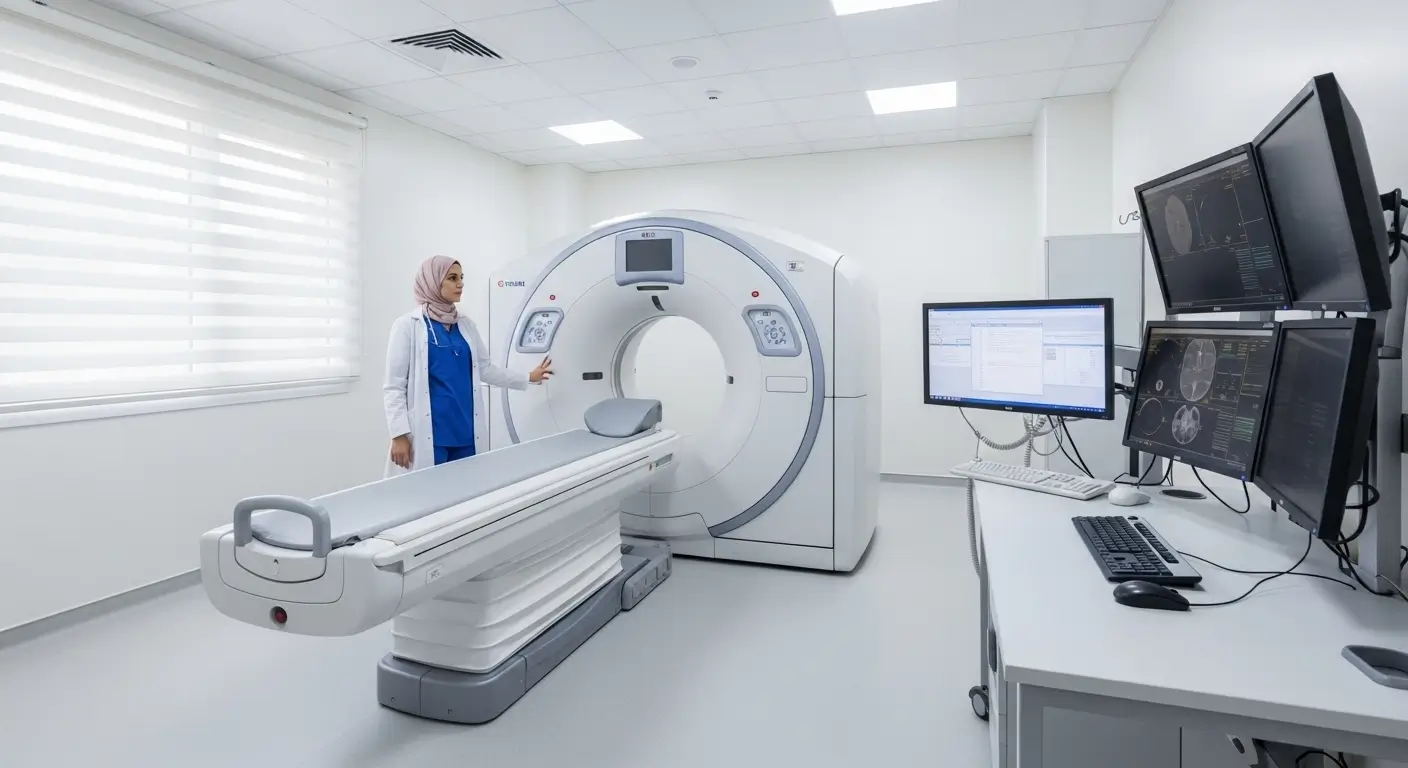
If you’re searching for CT scan prices in Morocco, here’s what you need to know right away: CT scans typically cost between 700 and 1,800 DH, depending on your location, the type of scan, and whether you choose a public hospital or private clinic.
The price variation is significant. A basic head CT scan at a public hospital in Fès might cost 700 DH, while an abdominal scan with contrast injection at a premium clinic in Casablanca could reach 1,800 DH or more.
This guide breaks down everything about CT scan pricing in Morocco—from city-by-city costs and insurance coverage to choosing the right medical center and saving money on your scan.
Table of Contents
CT Scan Prices in Morocco: Quick Overview
Understanding CT scan costs starts with knowing what influences the final price you’ll pay.
Standard Price Ranges:
- Basic CT scan (no contrast): 700-1,500 DH
- CT scan with contrast injection: 1,000-1,800 DH
- Emergency after-hours scans: Add 200-400 DH
- Contrast material alone: 300-500 DH extra
Public vs Private Sector Pricing
The choice between public and private facilities creates the biggest price difference:
Public Hospitals (CHU):
- Cost: 600-900 DH
- Wait time: 2-4 weeks for appointment
- Equipment: Standard but functional
- Best for: Budget-conscious patients with flexible timing
Private Clinics:
- Cost: 900-1,800 DH
- Wait time: 1-5 days for appointment
- Equipment: Often newer, higher-resolution scanners
- Best for: Those needing faster results or more convenience
Medical imaging specialists note that equipment quality matters more than facility prestige. A well-maintained 128-slice CT scanner at a modest clinic produces excellent diagnostic images comparable to fancier facilities.
CT Scan Prices by City
Location significantly impacts what you’ll pay. Major urban centers charge premium prices due to higher operational costs and demand.
| City | Price Range | Average Cost | Notes |
|---|---|---|---|
| Casablanca | 1,000-1,800 DH | 1,400 DH | Highest prices, most centers available |
| Rabat | 900-1,600 DH | 1,250 DH | Good balance of quality and cost |
| Marrakech | 800-1,400 DH | 1,100 DH | Growing medical tourism sector |
| Fès | 700-1,200 DH | 950 DH | 20-25% cheaper than Casablanca |
| Meknès | 700-1,200 DH | 900 DH | Similar to Fès pricing |
| Agadir | 750-1,300 DH | 1,000 DH | Tourist-friendly facilities |
| Tangier | 750-1,300 DH | 1,000 DH | Competitive pricing |
| Other Cities | 700-1,100 DH | 850 DH | Best value options |
Why Casablanca Costs More
The economic capital’s higher prices reflect several factors: premium real estate costs, concentration of advanced medical equipment, higher staff salaries, and greater demand from both local and international patients. However, you’re also more likely to find the latest 256-slice CT scanners and faster appointment availability.
Finding Value in Smaller Cities
Cities like Fès, Meknès, and Oujda offer 20-30% savings without compromising diagnostic quality. Many radiologists practicing in these cities trained at the same institutions as their Casablanca counterparts. If your medical situation isn’t urgent, traveling to a smaller city for your scan can save you 300-500 DH.
CT Scan Prices by Body Part
Different scan types carry different price tags based on the body area examined and complexity.
Brain/Head CT Scan
Price: 800-1,400 DH (without contrast) | 1,100-1,700 DH (with contrast)
The most commonly requested CT scan. Used to detect strokes, tumors, bleeding, or injuries. Generally takes 10-15 minutes. Contrast injection is sometimes necessary to visualize blood vessels or tumors more clearly.
Chest CT Scan
Price: 900-1,600 DH (without contrast) | 1,200-1,900 DH (with contrast)
Examines lungs, heart, and chest structures. Often ordered for pneumonia, lung nodules, or chest trauma. Contrast helps differentiate between normal tissue and abnormalities.
Abdominal CT Scan
Price: 1,000-1,700 DH (without contrast) | 1,300-2,000 DH (with contrast)
Evaluates stomach, liver, kidneys, pancreas, and intestines. Usually requires contrast injection for optimal imaging. Often the most expensive scan due to the large area covered and need for contrast material.
Spine CT Scan
Price: 800-1,500 DH
Examines cervical (neck), thoracic (mid-back), or lumbar (lower back) spine. Price varies by spine section examined. Multiple sections increase the cost proportionally.
Extremities CT Scan
Price: 700-1,200 DH
Covers arms, legs, hands, or feet. Generally the most affordable CT scan option. Rarely requires contrast injection. Often used for complex fractures or joint problems.
Understanding Scan Duration
Most CT scans take 10-30 minutes including preparation. The actual scanning time is often just 5-10 minutes. More complex scans requiring contrast injection take longer due to IV placement and waiting for contrast circulation.
Insurance Coverage & Reimbursement
Understanding insurance reimbursement prevents unpleasant financial surprises. Morocco’s insurance system operates on a fixed tariff model that often doesn’t match actual clinic prices.
CNSS Coverage (Private Sector Employees)
The National Social Security Fund reimburses 80% of the TNR (Tarification Nationale de Référence), not your actual clinic bill.
How it works:
- TNR for standard CT scan: Approximately 500-700 DH
- CNSS reimburses: 400-560 DH (80% of TNR)
- If your clinic charges: 1,200 DH
- Your out-of-pocket cost: 640-800 DH
Important requirements:
- Use a conventionné center (contracted with CNSS)
- Submit original prescription and payment receipt
- File claim within 6 months
- Keep your insurance contributions current
CNOPS Coverage (Civil Servants)
The National Fund for Social Security Organizations follows similar rules to CNSS:
- Reimburses 80% of TNR
- Requires conventionné facilities
- Generally faster processing (2-3 weeks vs 4-6 weeks for CNSS)
- Same documentation requirements
Healthcare professionals advise confirming your center’s conventionné status before booking. Non-contracted facilities may offer no reimbursement at all, leaving you with the full cost.
AMO Tadamon Coverage
For those enrolled in Morocco’s solidarity health insurance:
- Free CT scans at public hospitals
- Must use designated public facilities
- Longer wait times (3-6 weeks typical)
- No out-of-pocket costs for covered services
Maximizing Your Insurance Reimbursement
Follow these steps to get the best reimbursement:
- Verify center status – Call and confirm they accept your insurance
- Ask about TNR rates – Know the gap between TNR and actual price
- Calculate out-of-pocket – Do the math before booking
- Keep all documents – Original prescription, facture, medical report
- File promptly – Don’t wait months to submit your claim
- Follow up – Track your claim status after 2-3 weeks
Required Documents for Reimbursement
Prepare these before your appointment to streamline reimbursement:
- Original medical prescription (not a photocopy)
- Official payment receipt (facture) from the medical center
- Complete medical report and CD/USB with images
- Valid insurance card (CNSS/CNOPS)
- Completed reimbursement form (available from your insurance office)
- Copy of national ID card (CIN)
Missing even one document can delay reimbursement by weeks or result in claim rejection.
What Affects CT Scan Pricing in Morocco
Several factors explain why prices vary so dramatically across facilities.
Equipment Technology
128-slice CT scanner:
- Standard in most modern centers
- Good image quality for routine diagnostics
- Standard pricing tier
- Adequate for 95% of clinical needs
256-slice CT scanner:
- Found in premium facilities
- Exceptional image detail
- Faster scan times
- Adds 15-20% to base price
- Beneficial for cardiac imaging and complex cases
Radiologists emphasize that newer doesn’t always mean necessary. A well-calibrated 128-slice scanner produces excellent diagnostic images for most conditions. The 256-slice advantage matters primarily for specific cardiac or vascular studies.
Contrast Injection Requirements
Contrast material (iodine-based dye) helps visualize blood vessels, organs, and abnormalities more clearly.
Additional costs:
- Contrast material: 200-350 DH
- Injection procedure: 100-150 DH
- Total addition: 300-500 DH
When contrast is necessary:
- Abdominal and pelvic scans (usually required)
- Vascular studies (always required)
- Cancer staging (frequently required)
- Brain tumors or infections (often required)
Your doctor determines contrast necessity based on diagnostic goals. Don’t skip recommended contrast to save money—it could mean repeating the scan later.
Facility Type and Location
University Teaching Hospitals:
- Price: 700-1,000 DH
- Modern equipment for training purposes
- Excellent value for quality
- Longer administrative processes
Private Specialty Clinics:
- Price: 1,200-1,800 DH
- Focused on imaging services
- Faster appointments and results
- Premium pricing for convenience
General Private Hospitals:
- Price: 1,000-1,500 DH
- Middle ground option
- Comprehensive medical services
- Moderate wait times
Neighborhood Matters:
- City center locations: 15-25% premium
- Suburban centers: More affordable
- Industrial areas: Often lowest prices
Urgency and Timing
Scheduled appointments:
- Standard pricing
- Book 3-7 days in advance
- Best value option
Same-day urgent:
- Add 200-300 DH
- Limited availability
- For pressing medical concerns
Emergency after-hours:
- Add 300-500 DH
- Nights, weekends, holidays
- Immediate medical necessity only
Time-of-day pricing:
- Morning slots: Most popular, sometimes premium
- Afternoon slots: Standard pricing
- Evening hours: May carry surcharge
Medical professionals recommend booking the earliest available scheduled appointment rather than paying emergency premiums unless medically urgent.
How to Get a CT Scan in Morocco: Step-by-Step
Navigate the process smoothly with this practical guide.
Step 1: Obtain Medical Prescription
You cannot book a CT scan without a valid prescription. This legal requirement protects patients from unnecessary radiation exposure.
Your prescription must include:
- Type of CT scan needed (head, chest, abdomen, etc.)
- Clinical indication (reason for scan)
- Whether contrast is required
- Doctor’s signature and stamp
- Date (valid for 3 months typically)
Visit your general practitioner or specialist to get your prescription. They’ll explain why the scan is necessary and what they’re looking for.
Step 2: Research and Choose Your Center
Don’t book with the first center you find. Smart comparison can save 300-500 DH.
Compare these factors:
- Price – Call 3-5 centers for quotes
- Insurance acceptance – Verify conventionné status
- Equipment quality – Ask about scanner type
- Wait time – How soon can you get scanned?
- Results timeline – Same day or 48 hours?
- Location – Travel time and convenience
Questions to ask when calling:
- “What’s your price for [specific scan type]?”
- “Do you accept CNSS/CNOPS insurance?”
- “What type of CT scanner do you have?”
- “When is your next available appointment?”
- “When will I receive my results?”
- “Does the price include the CD and radiologist report?”
Step 3: Book Your Appointment
Once you’ve chosen your center, confirm all details:
Information to provide:
- Full name and date of birth
- Contact phone number
- Insurance type (if applicable)
- Scan type from your prescription
- Any allergies (especially to iodine/contrast)
- Current medications
Confirm before hanging up:
- Total cost (with contrast if needed)
- Appointment date and time
- Fasting requirements
- Documents to bring
- Parking or access information
Get the appointment confirmation in writing via SMS or WhatsApp if possible.
Step 4: Prepare for Your Scan
Preparation varies by scan type, but follow these general guidelines:
Fasting requirements:
- Scans with contrast: Fast 4-6 hours (water allowed)
- Abdominal scans: Fast 6 hours
- Head/extremity scans: Usually no fasting needed
What to wear:
- Comfortable, loose-fitting clothing
- No metal zippers, buttons, or underwire bras
- Remove all jewelry before arriving
- Consider wearing clothes you can easily change out of
What to avoid:
- Heavy meals before appointment
- Wearing makeup or hair products (for head scans)
- Bringing valuables (leave at home)
Medication guidance:
- Take regular medications unless instructed otherwise
- Bring medication list for reference
- Inform staff about diabetes medications if fasting
Step 5: During the Scan
Knowing what to expect reduces anxiety.
Arrival (15 minutes before):
- Check in at reception
- Present documents
- Complete consent forms
- Make payment (or confirm insurance coverage)
Preparation (10-15 minutes):
- Change into gown if required
- Remove metal objects
- IV placement if contrast needed
- Brief safety questions
The scan itself (10-30 minutes):
- Lie on motorized table
- Positioned for optimal imaging
- Must remain completely still
- May receive breathing instructions
- Table moves through circular scanner opening
- Painless procedure (slight warmth if contrast used)
If contrast is used:
- Feel warm, flushed sensation
- Metallic taste in mouth
- Possible brief nausea
- All normal reactions lasting 1-2 minutes
After the scan:
- Remove IV line
- Drink plenty of water (helps flush contrast)
- Return to normal activities immediately
- No recovery time needed
Step 6: Getting Your Results
Most centers follow this timeline:
Immediate:
- Digital images on CD or USB (usually included in price)
- Can view images but need radiologist interpretation
24-48 hours:
- Written radiologist report
- Detailed findings and recommendations
- Pick up in person or request email delivery
Same-day results:
- Available at premium centers
- Extra cost: 100-200 DH
- For urgent cases or when traveling
Bring results to your doctor:
- Schedule follow-up appointment
- Doctor explains findings in context
- Discusses treatment plan if needed
Medical imaging specialists emphasize that only your prescribing doctor should interpret results and recommend treatment. Don’t attempt self-diagnosis from the images or report.
Money-Saving Tips for CT Scans
Reduce your out-of-pocket costs with these proven strategies.
1. Choose Public Hospitals for Maximum Savings
Potential savings: 400-900 DH
Public hospitals (CHU) charge 600-900 DH versus 1,200-1,800 DH at private clinics. The trade-off is longer wait times.
Best for:
- Non-urgent diagnostic needs
- Patients with flexible schedules
- Those without private insurance
- AMO Tadamon beneficiaries (free service)
2. Compare Prices Across Multiple Centers
Potential savings: 200-500 DH
Prices for identical scans vary significantly even within the same city. Spend 30 minutes calling centers to compare.
Comparison checklist:
- Base scan price
- Contrast injection cost (if applicable)
- CD/USB copy (usually included)
- Report delivery time
- Insurance acceptance
3. Use Conventionné Centers
Potential savings: Maximizes insurance reimbursement
Non-contracted centers may not be reimbursed at all by your insurance, even if they claim to “accept” it. Verify conventionné status before booking.
How to check:
- Ask the center directly
- Call your insurance provider
- Check CNSS/CNOPS website lists
- Request written confirmation
4. Ask About Package Deals
Potential savings: 150-300 DH per additional scan
If you need multiple scans (e.g., chest and abdomen), some centers offer package pricing.
When to negotiate:
- Multiple body areas in one session
- Follow-up scans scheduled in advance
- Family members needing scans
5. Book During Regular Business Hours
Potential savings: 200-500 DH
Avoid emergency fees by scheduling during normal hours unless medically urgent.
Standard hours typically:
- Monday-Friday: 8am-6pm
- Saturday: 8am-2pm (some centers)
- Lowest rates: Weekday mornings
6. Calculate Insurance Coverage First
Prevents surprise costs
Know exactly what you’ll pay before arriving:
Formula:
- Center’s price: 1,200 DH
- Insurance reimburses: 400 DH (80% of 500 DH TNR)
- Your actual cost: 800 DH
Prepare the correct amount to avoid disappointment.
7. Consider Smaller Cities
Potential savings: 250-600 DH
If you have family or can travel, getting scanned in cities like Fès, Meknès, or Oujda costs 20-30% less.
Makes sense when:
- Non-urgent scan
- You’re traveling anyway
- Family can accompany you
- Total savings exceed travel costs
8. Negotiate at Private Clinics (Cash Payment)
Potential savings: 100-200 DH
Some private centers offer modest discounts for immediate cash payment, especially if you’re not using insurance.
Politely ask:
- “Do you have any cash payment discount?”
- “What’s your best price for self-pay patients?”
- “Can you match [competitor’s] price?”
Not all centers negotiate, but it doesn’t hurt to ask professionally.
9. Choose University Hospital Teaching Centers
Potential savings: 300-500 DH
CHU hospitals affiliated with medical schools offer excellent equipment at public hospital prices.
Top options:
- CHU Ibn Rochd (Casablanca)
- CHU Ibn Sina (Rabat)
- CHU Hassan II (Fès)
Students may observe (you can decline), but attending radiologists supervise all procedures.
10. Verify What’s Included in the Price
Prevents hidden fees
Some centers charge separately for items others include:
Should be included:
- CD or USB with images
- Radiologist interpretation
- Written report
- Basic contrast injection (if needed)
May cost extra:
- Paper film copies (obsolete, decline)
- Expedited results
- Second CD copy
- Report translation
Confirm inclusions when booking to avoid surprise charges.
Best CT Scan Centers in Morocco
Choose reputable facilities with quality equipment and fair pricing.
Casablanca Top Centers
Centre de Radiologie Mers Sultan
- Price range: 1,200-1,600 DH
- Equipment: Modern 128-slice CT scanner
- Insurance: CNSS and CNOPS conventionné
- Wait time: 3-5 days for appointments
- Results: 24-48 hours
- Strengths: Central location, experienced radiologists, English-speaking staff available
Polyclinique les Iris
- Price range: 1,400-1,800 DH
- Equipment: Advanced 256-slice CT scanner
- Insurance: All major insurance accepted
- Wait time: 1-2 days
- Results: Same-day service available (+150 DH)
- Strengths: Premium facility, latest technology, faster appointments
CHU Ibn Rochd
- Price range: 600-900 DH
- Equipment: Standard CT scanners
- Insurance: Free for AMO Tadamon beneficiaries
- Wait time: 2-4 weeks
- Results: 48-72 hours
- Strengths: Most affordable option, teaching hospital quality
Rabat Top Centers
Centre d’Imagerie Médicale Agdal
- Price range: 1,100-1,500 DH
- Equipment: Modern imaging technology
- Insurance: CNSS/CNOPS conventionné
- Wait time: 2-4 days
- Results: 24-48 hours
- Strengths: Well-established, good reputation, convenient parking
Clinique Cheikh Zaïd
- Price range: 1,300-1,700 DH
- Equipment: Latest generation CT scanners
- Insurance: All insurance types accepted
- Wait time: 1-3 days
- Results: 24 hours standard
- Strengths: Comprehensive medical center, multiple specialists available
CHU Ibn Sina
- Price range: 600-900 DH
- Equipment: University hospital standard
- Insurance: Public hospital rates, AMO Tadamon free
- Wait time: 2-3 weeks
- Results: 3-5 days
- Strengths: Budget option with academic quality
Marrakech Top Centers
Centre de Radiologie Guéliz
- Price range: 900-1,300 DH
- Equipment: Modern 128-slice scanner
- Insurance: CNSS/CNOPS accepted
- Wait time: 3-5 days
- Results: 24-48 hours
- Strengths: Tourist-friendly, multilingual staff, central location
Polyclinique du Sud
- Price range: 1,100-1,500 DH
- Equipment: Contemporary imaging equipment
- Insurance: Major insurance providers
- Wait time: 2-4 days
- Results: 24 hours
- Strengths: Modern facility, good patient reviews
Other Major Cities
Fès – CHU Hassan II
- Price range: 600-900 DH
- Type: Public university hospital
- Strengths: Excellent value, teaching hospital standards, long history
Agadir – Polyclinique du Sud
- Price range: 800-1,200 DH
- Strengths: Tourist-oriented, international standards, faster service
Tangier – Clinique Al Madina
- Price range: 900-1,400 DH
- Strengths: Modern facility, multi-language support, convenient location
Meknès – Centre de Radiologie Hamria
- Price range: 750-1,200 DH
- Strengths: Competitive pricing, good local reputation
How to Choose the Right Center for You
Consider these factors beyond price:
Equipment quality matters:
- Ask about scanner type (128-slice minimum recommended)
- Newer equipment provides clearer images
- Modern scanners reduce radiation exposure
Radiologist qualifications:
- Board-certified in diagnostic radiology
- Years of experience
- Subspecialty training for complex cases
Patient experience indicators:
- Clean, well-maintained facility
- Professional, courteous staff
- Clear communication about process and costs
- Comfortable waiting area
Practical considerations:
- Distance from home or work
- Parking availability
- Public transport access
- Appointment flexibility
Red flags to watch for:
- Reluctance to discuss pricing upfront
- No clear insurance policy
- Very old equipment (ask year of installation)
- Unprofessional environment
- Pressure to book immediately
Healthcare specialists recommend visiting or calling the center before booking if you have concerns about quality or professionalism.
Frequently Asked Questions
Do I need a prescription for a CT scan in Morocco?
Yes, a medical prescription is legally required for all CT scans in Morocco. You cannot book or receive a scan without a valid prescription from a licensed physician. This requirement protects patients from unnecessary radiation exposure and ensures scans are medically justified. Your prescription should specify the scan type, body area, and clinical indication.
How long does a CT scan take?
The actual scanning takes 10-30 minutes depending on the body area examined. Including check-in, preparation, changing clothes, IV placement (if contrast used), and post-scan instructions, plan for 45 minutes to 1 hour total at the facility. Complex scans requiring contrast injection take longer due to the time needed for the contrast material to circulate through your body.
Is a CT scan covered by insurance in Morocco?
Yes, CNSS and CNOPS cover 80% of the TNR (National Reference Tariff), which is typically 500-700 DH for standard CT scans. This means you receive approximately 400-560 DH reimbursement regardless of what the clinic charges. AMO Tadamon provides free CT scans at public hospitals. Your out-of-pocket cost depends on the difference between the clinic’s price and your insurance reimbursement.
Can I eat before a CT scan?
Fasting requirements depend on your scan type. If contrast injection is needed, fast for 4-6 hours before your appointment (water is usually allowed). Abdominal scans typically require 6 hours of fasting even without contrast. Head, chest, or extremity scans without contrast usually don’t require fasting. Always follow the specific instructions your medical center provides when booking.
When will I get my CT scan results?
Most centers provide the CD or USB with digital images immediately after your scan. The radiologist’s written interpretation typically takes 24-48 hours. Some premium facilities offer same-day radiologist reports for an additional 100-200 DH fee. Public hospitals may take 48-72 hours or longer. Never attempt to interpret your own results—bring them to your prescribing doctor for professional medical interpretation.
Is the contrast injection painful?
The IV needle insertion feels like any standard injection—a brief pinch. The contrast injection itself is painless, but you’ll likely experience a warm, flushed sensation throughout your body, a metallic taste in your mouth, and possibly brief nausea. These sensations are completely normal and typically last only 1-2 minutes. Serious allergic reactions are rare. Inform staff immediately if you feel severe discomfort, difficulty breathing, or unusual symptoms.
What’s the difference between a CT scan and an MRI?
CT scans use X-rays and are faster (10-30 minutes), better for examining bones, chest, and detecting bleeding. MRI uses powerful magnets and takes longer (30-90 minutes), providing superior soft tissue detail for brain, spinal cord, joints, and ligaments. CT scans are generally less expensive in Morocco (700-1,800 DH vs 1,500-3,500 DH for MRI). Your doctor chooses based on what they need to visualize.
How do I choose a good CT scan center?
Evaluate centers based on: modern equipment (minimum 128-slice scanner), board-certified radiologists, insurance acceptance status, reasonable wait times (3-5 days for non-urgent), clean and professional facility, transparent pricing, and positive patient reviews. Don’t choose based solely on the lowest price—equipment quality and radiologist expertise directly affect diagnostic accuracy. Ask about the scanner’s age and type when calling.
Can I get same-day CT scan results?
Some private centers offer expedited radiologist reports for 100-200 DH additional fee. Standard turnaround is 24-48 hours. Public hospitals typically take 48-72 hours or longer. The CD with images is usually available immediately, but you need the radiologist’s written interpretation for your doctor. Only request expedited service if you have an imminent doctor’s appointment or urgent medical situation.
What if my insurance claim is rejected?
Verify that your center was conventionné (contracted) with your insurance, you submitted all required documents (original prescription, facture, medical report), your prescription was valid, and you filed within the allowed timeframe (typically 6 months). Common rejection reasons include using non-contracted facilities, missing documents, or filing too late. You can appeal rejections through your insurance provider’s dispute process with complete documentation.
Is it safe to have multiple CT scans?
CT scans involve radiation exposure. While individual scans carry minimal risk, cumulative radiation from multiple scans increases potential long-term risks. Discuss with your doctor whether each scan is medically necessary. Space scans out when possible. Modern CT scanners use lower radiation doses than older equipment. For many conditions, alternative imaging like ultrasound or MRI might be appropriate and involves no radiation exposure.
Can pregnant women get CT scans?
CT scans are generally avoided during pregnancy, especially in the first trimester, due to radiation exposure to the developing fetus. Always inform your doctor and the radiology center if you are pregnant, might be pregnant, or are breastfeeding. In urgent situations where CT is medically necessary, special precautions minimize fetal exposure. Safer alternatives like ultrasound or MRI are typically preferred during pregnancy.
Do children pay the same price for CT scans?
Generally yes, though some centers offer modest discounts (10-15%) for children. Pediatric CT scans may require specialized centers with equipment and protocols designed for children, which use lower radiation doses. Not all radiology centers perform pediatric scans. Ask specifically about pediatric services when calling. Children often need sedation for certain scans to remain still, which adds 300-500 DH to the total cost.
What should I bring to my CT scan appointment?
Bring your original medical prescription (photocopies not accepted), insurance card (CNSS/CNOPS/AMO Tadamon), national ID card (CIN), payment method (cash or credit card), any previous medical imaging results, list of current medications, and comfortable, loose-fitting clothing without metal. If you have allergies, especially to iodine or contrast material, bring documentation. Arrive 15 minutes early to complete administrative procedures.
What happens if I’m claustrophobic?
CT scanners are much more open than MRI machines. The circular opening (gantry) is wide and short, and you’re not fully enclosed. Most claustrophobic patients tolerate CT scans well. The table moves through the scanner in just seconds. You remain visible to technicians throughout. If severely claustrophobic, inform the center when booking—they may offer mild sedation or anxiety medication (additional cost 200-300 DH). Staff can also talk you through the procedure to reduce anxiety.
Conclusion
CT scan prices in Morocco range from 700 to 1,800 DH depending on your location, facility choice, and scan type. Understanding this pricing landscape helps you make informed decisions about where to get scanned.
Key takeaways:
- Compare prices at 3-5 centers before booking
- Verify your insurance coverage and conventionné status
- Public hospitals save 400-900 DH but have longer wait times
- Contrast injection adds 300-500 DH to base prices
- Average out-of-pocket cost: 500-1,200 DH after insurance reimbursement
Smart planning reduces costs without compromising quality. Choose facilities with modern equipment (minimum 128-slice scanners), experienced radiologists, and clear pricing policies. Don’t sacrifice diagnostic quality to save 100-200 DH—accurate imaging directly affects your treatment outcomes.
Keep all documentation for insurance reimbursement: original prescription, payment receipt, and medical report. File claims promptly, within your insurance provider’s deadline.
Whether you need a routine head CT or a complex abdominal scan with contrast, this guide equips you to navigate Morocco’s medical imaging system confidently and cost-effectively. Make your choice based on the right balance of cost, quality, convenience, and medical necessity for your situation.
2 thoughts on “CT Scan Price in Morocco: Complete Guide & Cost Breakdown”