
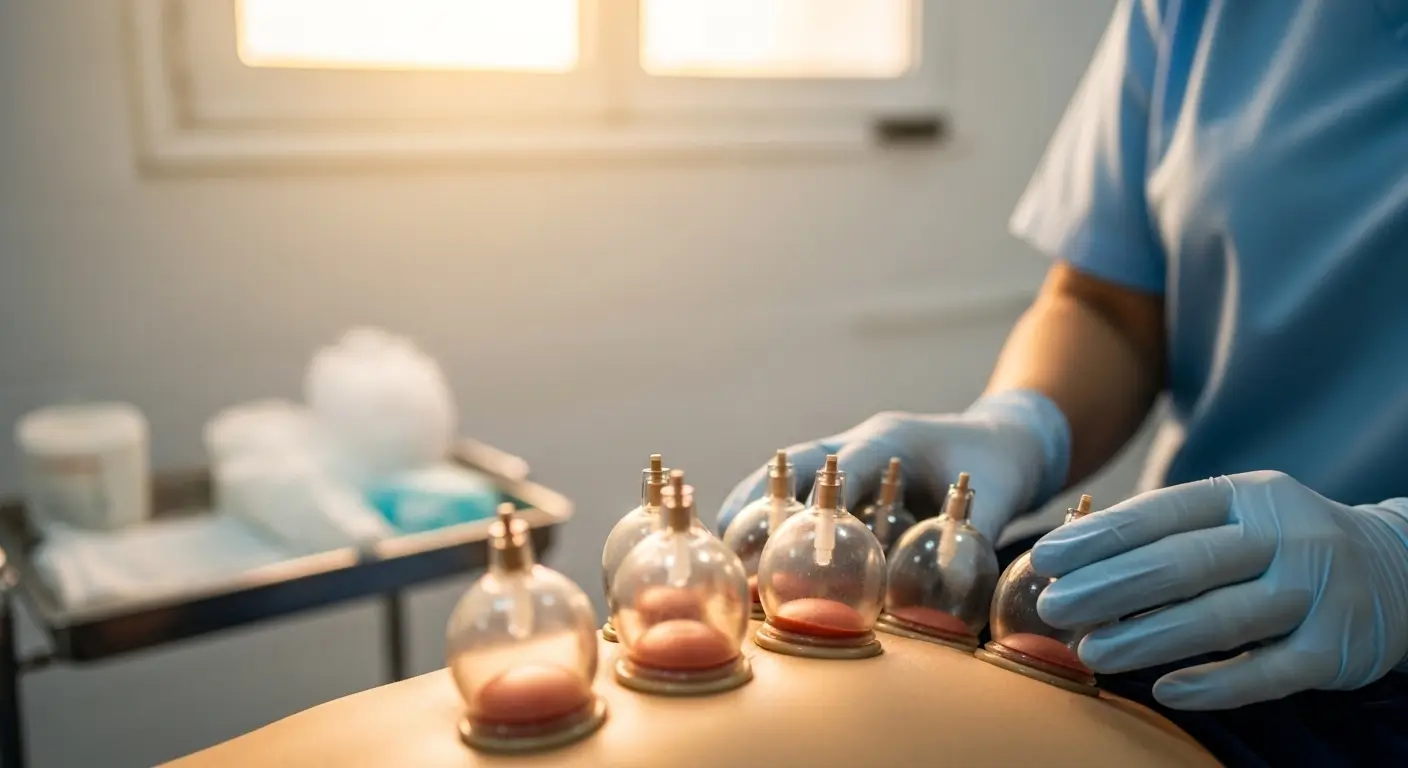
Looking for hijama services in Morocco but confused about pricing? You’re not alone. Hijama Price in Morocco vary dramatically across cities, practitioners, and service types—from 150 MAD in neighborhood clinics to 500+ MAD in premium wellness centers. Without clear information, you risk overpaying or choosing low-quality services that compromise your health.
This complete guide breaks down exactly what hijama costs across Morocco. We’ve researched prices in major cities, compared different provider types, and identified what affects pricing so you can make an informed decision.
By the end of this article, you’ll know the fair price range for hijama in your city, understand what’s included in different price points, and discover how to find quality services that fit your budget. Let’s dive in.
Table of Contents
How Much Does Hijama Cost in Morocco? (Quick Answer)
If you’re in a hurry, here’s what you need to know about hijama pricing in Morocco:
- Average price range: 150-400 MAD per session
- Most common price: 200-250 MAD
- Budget options: 150-180 MAD
- Premium services: 350-500+ MAD
The price you’ll pay depends on several factors: your practitioner’s experience, the city you’re in, the clinic type, and what’s included in your session. A basic neighborhood clinic in a smaller city might charge 150 MAD, while a medical center in Casablanca with a qualified healthcare professional could charge 400 MAD.
Both can offer quality service—the key is understanding what you’re paying for and ensuring proper hygiene standards regardless of price.
Hijama Price in Morocco by Cities
Hijama costs vary significantly depending on where you live in Morocco. Here’s a detailed breakdown of what you can expect in major cities and smaller towns.
Casablanca Hijama Prices
Average range: 200-450 MAD
Casablanca has the highest hijama prices in Morocco, reflecting the city’s higher cost of living and abundance of premium wellness centers.
- Budget options (Hay Mohammadi, Sbata): 180-250 MAD
- Mid-range (city center, Maarif): 250-350 MAD
- Premium (Ain Diab, California): 350-450 MAD
Upscale neighborhoods can charge 30-40% more than working-class areas for the same service. The difference often reflects rent and overhead costs rather than practitioner skill. For a comprehensive directory of verified practitioners in Casablanca, visit our Hijama in Casablanca guide.
Rabat Hijama Costs
Average range: 180-400 MAD
As Morocco’s capital, Rabat offers diverse hijama options at slightly lower prices than Casablanca.
- Medina and older neighborhoods: 150-220 MAD
- Agdal and modern districts: 250-350 MAD
- Premium medical centers: 350-400 MAD
Some government hospital staff offer hijama services privately, sometimes at more competitive rates. Ask at your local health center for recommendations.
Marrakech Hijama Pricing
Average range: 150-350 MAD
Marrakech presents an interesting pricing landscape. Tourist areas charge premium rates, while local neighborhoods offer excellent value.
- Medina and traditional areas: 150-200 MAD
- Gueliz (new city): 220-300 MAD
- Tourist-oriented clinics: 300-350 MAD
Pro tip: Avoid clinics near major hotels or riads that cater primarily to tourists. You’ll pay 40-50% more for the same service available in residential neighborhoods.
Tangier Hijama Costs
Average range: 170-380 MAD
Tangier’s proximity to Europe influences its pricing, with some practitioners charging slightly higher rates.
- Old medina: 150-220 MAD
- City center: 200-300 MAD
- Modern clinics: 300-380 MAD
To find trusted hijama practitioners in Tangier with verified reviews and detailed pricing, check our Hijama in Tangier directory.
Other Major Cities
Fes: 150-320 MAD
- Traditional medina practitioners: 150-200 MAD
- Modern ville nouvelle clinics: 220-320 MAD
Agadir: 180-400 MAD
- Local neighborhoods: 180-250 MAD
- Tourist areas: 300-400 MAD
Meknes: 140-300 MAD
- Generally more affordable than Fes
- Good value for quality service
Oujda: 130-280 MAD
- Among Morocco’s most affordable cities for hijama
- Strong traditional medicine presence
Tetouan: 150-320 MAD
- Prices similar to Tangier
- Many experienced practitioners
Small Towns and Rural Areas
Average range: 120-250 MAD
Smaller towns and rural areas offer the most affordable hijama prices in Morocco:
- Traditional practitioners dominate these markets
- Prices typically 120-200 MAD for standard sessions
- Availability may be limited—ask at local pharmacies or mosques
- Travel to larger cities might be necessary for specialized needs
The lower prices don’t necessarily mean lower quality. Many rural practitioners have decades of experience and strong community reputations.
What Affects Hijama Prices in Morocco?
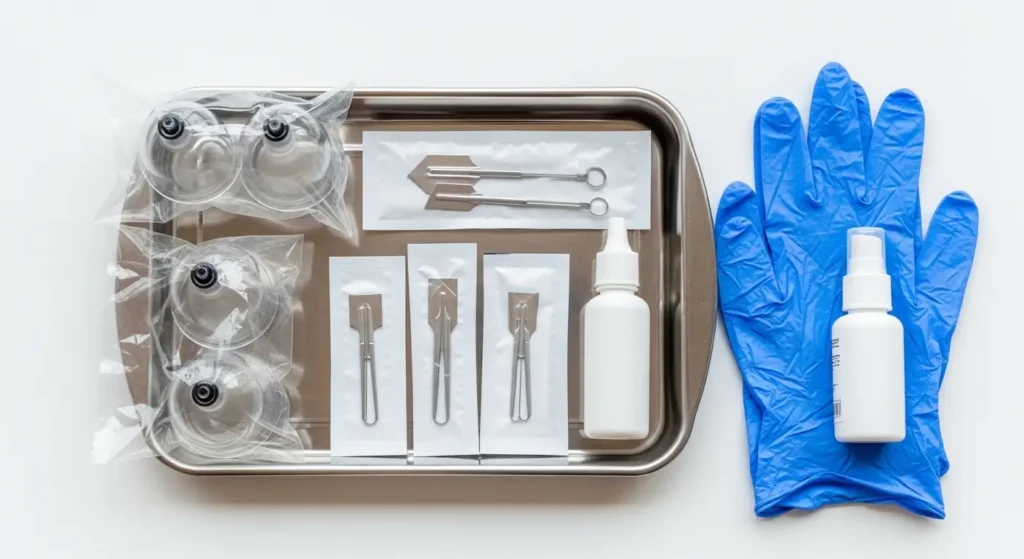
Understanding why prices vary helps you evaluate whether you’re getting good value. Here are the main factors that determine hijama costs.
Practitioner Qualifications and Experience
Not all hijama practitioners have the same background, and this significantly impacts pricing:
Traditional practitioners (150-250 MAD):
- Learned through apprenticeship or family tradition
- May have decades of hands-on experience
- Strong community reputation
- No formal medical credentials
Medical professionals (250-500 MAD):
- Nurses, doctors, or healthcare workers
- Formal medical training plus hijama certification
- Better equipped to handle medical complications
- Work in licensed medical facilities
Years of experience matter: A practitioner with 20+ years of experience often charges 50-100 MAD more than newcomers, regardless of their background. This premium is usually worth it.
Clinic Type and Location
Where your hijama takes place dramatically affects the price:
Home-based services (150-200 MAD):
- Practitioner operates from their residence
- Minimal overhead costs
- More informal setting
- Personalized attention
Neighborhood clinics (180-280 MAD):
- Small, dedicated treatment spaces
- Licensed facilities (usually)
- Middle-ground between home and medical center
- Most common option for Moroccans
Medical centers (250-400 MAD):
- Professional healthcare facilities
- Multiple healthcare services offered
- Higher hygiene standards
- Medical supervision available
Premium wellness centers (350-500+ MAD):
- Spa-like environment
- Luxury amenities
- Located in upscale neighborhoods
- Comprehensive wellness approach
Location premium: The same practitioner operating in Ain Diab (Casablanca) versus Hay Mohammadi might charge 30-40% more simply due to rent and client expectations.
Number of Cupping Points
The number of cupping points directly impacts both the session length and price:
- Standard session (5-10 points): Base price (150-250 MAD)
- Extended session (10-15 points): +50-100 MAD
- Full body session (15-20 points): +100-150 MAD
Most people need 8-12 cupping points for general wellness. Your practitioner should recommend the appropriate number based on your health consultation—be wary of anyone pushing for excessive points without clear medical reasoning.
Equipment and Hygiene Standards
This is where you should never compromise to save money:
Disposable equipment:
- Single-use cups and blades are non-negotiable
- Adds 20-30 MAD to practitioner’s costs per session
- Essential for infection prevention
Sterilization procedures:
- Proper autoclave equipment
- Disinfection protocols
- Clean treatment environment
- Increases operational costs but ensures safety
Modern vs. traditional methods:
- Vacuum pumps (modern): More precise control
- Fire cupping (traditional): Classic method, requires more skill
- Neither is inherently better—both work when done correctly
Practitioners who cut corners on hygiene to offer rock-bottom prices (below 120 MAD) are not worth the risk.
Additional Services Included
Some practitioners bundle extra services into their pricing:
- Initial consultation: Should always be included
- Post-treatment advice: Dietary and lifestyle recommendations
- Follow-up sessions: Some include one free check-in
- Herbal oils or ointments: Applied after cupping
- Dietary recommendations: Written guidance for recovery
These extras can justify a 50-100 MAD price difference between seemingly similar services.
Hijama Price Breakdown: What’s Included?
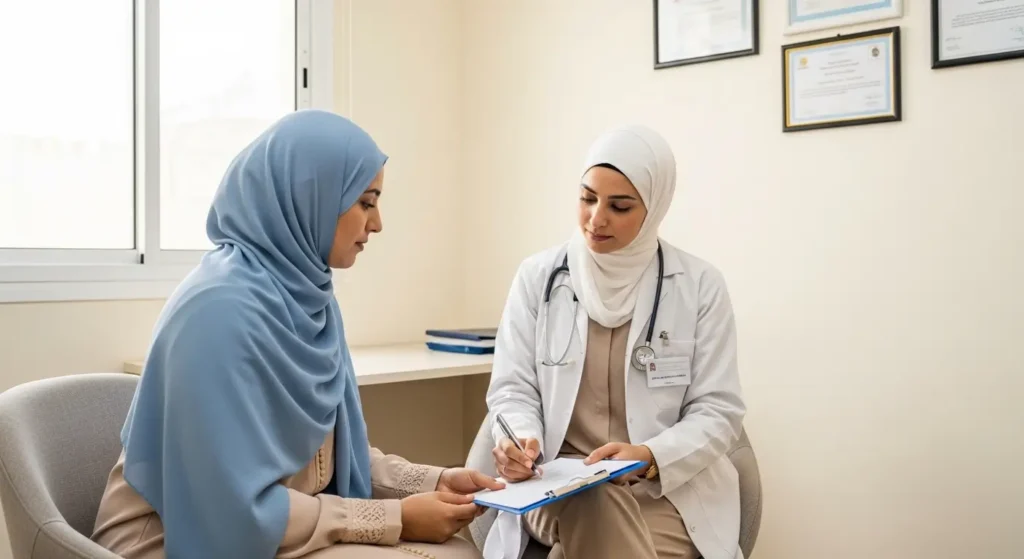
Let’s break down exactly what you get at different price points so you can evaluate value properly.
Basic Hijama Session (150-200 MAD)
A basic session covers the essentials:
- 5-10 cupping points on targeted areas
- 30-45 minute total session time
- Brief health screening and consultation
- Disposable cups and sterile blades
- Basic post-treatment care instructions
- Simple, clean treatment space
Best for: Healthy individuals seeking routine hijama for Sunnah practice or general wellness.
Not included: Extended consultation, premium location, follow-up appointments, specialized oils or treatments.
Standard Hijama Session (200-300 MAD)
The sweet spot for most Moroccans—best value for quality:
- 10-15 cupping points based on your needs
- Comprehensive initial health assessment
- Discussion of medical history and conditions
- Sterile, single-use equipment (verified)
- 45-60 minute dedicated session
- Detailed post-treatment guidance
- Clean, licensed facility with proper sanitation
- Sometimes includes herbal oil application
Best for: Most people seeking therapeutic or preventive hijama with professional standards.
The difference: More time, attention, and professional environment compared to basic sessions.
Premium Hijama Session (300-500+ MAD)
Top-tier service with all the extras:
- Comprehensive pre-treatment health consultation
- Customized treatment plan based on your specific health needs
- Medical professional with advanced training
- High-end clinic with spa-like environment
- Premium hygiene and safety protocols
- Extended session (60-90 minutes)
- Follow-up appointment included in price
- Application of specialized herbal treatments or therapeutic oils
- Written treatment plan and health recommendations
- Sometimes includes complementary therapies
Best for: People with specific health conditions requiring medical supervision, or those who value premium environment and comprehensive care.
Worth it? If you have chronic health issues, the medical oversight justifies the cost. For routine wellness, the 200-300 MAD range usually provides excellent service without the luxury premium.
How Much Does Home Service Hijama Cost?
Many practitioners offer mobile hijama services, coming to your home for treatment. Here’s what to expect price-wise.
Mobile Hijama Pricing
Home service hijama includes the base session cost plus a travel fee:
Typical total cost: 250-450 MAD
Travel fees by distance:
- Within 5km: +30-50 MAD
- 5-10km: +50-80 MAD
- 10-20km: +80-150 MAD
- Beyond 20km: Negotiable, often 150+ MAD
Example calculation:
- Base hijama session: 200 MAD
- Travel fee (8km): +60 MAD
- Total: 260 MAD
Some practitioners have minimum fees or won’t travel beyond certain distances. Always confirm the total price including travel before booking.
When Home Service Makes Sense
Home hijama is worth the extra cost in these situations:
Elderly or mobility issues:
- Difficult or impossible to travel to clinics
- Comfort and convenience in familiar environment
- No transportation hassles
Privacy concerns:
- Some people prefer complete privacy
- Especially relevant for female patients
- Home environment feels more comfortable
Family group sessions:
- Multiple family members getting hijama same day
- Divide travel fee among several people
- Becomes cost-effective with 2-3+ people
Post-surgery or illness recovery:
- Limited mobility or energy
- Doctor-recommended rest at home
- Avoid exposure to clinic environments
Safety Considerations for Home Service
Ensure your home practitioner maintains the same standards as clinic-based services:
✓ Verify credentials and experience before inviting them to your home ✓ Check reviews and references from previous clients ✓ Confirm they bring disposable equipment for each appointment ✓ Ensure proper sterilization of any reusable instruments ✓ Prepare a clean, appropriate space with good lighting ✓ Have another adult present especially for first-time appointments
Never compromise on safety even in the convenience of home service.
Hijama Package Deals and Discounts in Morocco
Many practitioners offer discounts when you commit to multiple sessions. Here’s how to evaluate these offers.
Multi-Session Packages
Package deals can save you 10-20% on total costs:
3-session package:
- Regular price: 200 MAD × 3 = 600 MAD
- Package price: 510-540 MAD
- Savings: 10-15%
5-session package:
- Regular price: 200 MAD × 5 = 1,000 MAD
- Package price: 800-850 MAD
- Savings: 15-20%
10-session package:
- Regular price: 200 MAD × 10 = 2,000 MAD
- Package price: 1,600-1,700 MAD
- Savings: 15-20%
Important considerations:
- Only buy packages after trying one session first
- Confirm expiration dates (usually 6-12 months)
- Ask about refund policies if you need to cancel
- Ensure the practitioner will be available for all sessions
- Get written documentation of your package purchase
Family and Group Rates
Booking multiple people for the same appointment time often gets discounts:
- 2 people: 5-10% discount each
- 3+ people: 10-15% discount each
- Requirements: Usually same-day, same-location appointments
Example:
- Individual session: 220 MAD each
- Two people (10% discount): 198 MAD each = 396 MAD total
- Savings: 44 MAD
This works especially well for home service appointments where the travel fee is shared among multiple family members.
Special Promotions
Watch for these common discount opportunities:
Ramadan specials:
- Some practitioners offer 10-15% discounts during Ramadan
- Others raise prices due to high demand
- Ask ahead to know which applies
Sunnah days promotions:
- 17th, 19th, 21st of Islamic lunar months
- Some offer discounts to encourage Sunnah practice
- Others charge premiums due to demand
First-time client discounts:
- Many practitioners offer 10-20% off first session
- Way to try their service with lower commitment
- Ask when booking your first appointment
Referral bonuses:
- Bring a friend, both get 10-15% discount
- Some offer free session after referring 5-10 people
- Helps practitioners build clientele
Student and Senior Discounts
Age-based discounts are less common but worth asking about:
Student discounts (with valid student ID):
- 10-15% off when available
- More common at medical centers than traditional practitioners
- Usually requires booking during off-peak hours
Senior discounts (age 60+):
- Occasionally available, especially at community clinics
- 10% off is typical when offered
- Ask directly—not always advertised
Does Insurance Cover Hijama in Morocco?
Unfortunately, insurance coverage for hijama in Morocco is limited. Here’s what you need to know.
National Insurance Programs
CNSS (Caisse Nationale de Sécurité Sociale):
- Does NOT cover hijama
- Considered alternative/traditional medicine
- Not included in standard reimbursement lists
CNOPS (Caisse Nationale des Organismes de Prévoyance Sociale):
- Does NOT cover hijama
- Only covers conventional medical treatments
- No reimbursement for cupping therapy
AMO (Assurance Maladie Obligatoire):
- Does NOT include hijama coverage
- Focuses on essential healthcare services
- Traditional medicine not in scope
Private Insurance
Most private insurance plans in Morocco:
- Exclude hijama and traditional therapies
- Consider it complementary/alternative medicine
- Not part of standard coverage packages
Rare exceptions:
- Some comprehensive employer health plans might include alternative medicine allowances
- Usually very limited (200-500 MAD annually)
- Check your specific policy documents
Payment Expectations
Plan to pay out-of-pocket for hijama services:
Accepted payment methods:
- Cash: Universally accepted, often preferred
- Bank transfer: Some clinics accept mobile banking
- Checks: Occasionally accepted for package deals
- Credit/debit cards: Rare, mainly at premium centers
Payment timing:
- Full payment expected at time of service
- Package deals: Upfront payment with slight discount
- No payment plans or installment options typically available
Get receipts:
- Always request an itemized receipt
- Useful for personal health records
- Some employers reimburse alternative medicine (rare but check)
The out-of-pocket nature of hijama means shopping for good value is especially important.
How to Find Quality Hijama at a Fair Price
Finding the right balance between cost and quality requires knowing what to look for—and what to avoid.
Red Flags for Overpricing
Watch out for these signs you might be paying too much:
🚩 Prices above 500 MAD without clear justification
- What makes it worth 2-3× standard prices?
- Luxury location shouldn’t double treatment costs
🚩 Vague pricing (“it depends on your case”)
- Legitimate practitioners give clear price ranges
- Custom pricing shouldn’t vary by more than 50-100 MAD
🚩 Pressure to buy expensive packages upfront
- Ethical practitioners let you try one session first
- Hard-sell tactics suggest profit over patient care
🚩 No itemized breakdown of services
- Should clearly explain what you’re paying for
- Hidden fees or surprise charges are unacceptable
🚩 Claims of “special training” or “secret methods” justifying high prices
- Be skeptical of mystical justifications for premium pricing
- Focus on verifiable credentials and experience
Warning Signs of Low-Quality Services
Cheap isn’t always a good deal. Avoid these red flags:
🚫 Prices below 120 MAD (too cheap = corners cut)
- Even basic, ethical service costs 140-150 MAD minimum
- Extremely low prices mean compromised safety somewhere
🚫 No visible sterilization procedures
- You should see sealed disposable equipment opened in front of you
- Autoclave or sterilization equipment should be visible
🚫 Reusable cups without proper cleaning
- Disposable is best; if reusable, must be thoroughly sterilized
- Ask directly about their cup sterilization process
🚫 Unlicensed or unverified practitioners
- Can’t or won’t provide credentials
- No verifiable references or reviews
- Operates in non-medical, questionable locations
🚫 Unsanitary conditions
- Dirty environment, improper hand washing
- No clean towels or surfaces
- Visible contamination or poor hygiene
🚫 No consultation or health screening
- Skipping health assessment is dangerous
- Indicates practitioner doesn’t understand medical contraindications
- Red flag for overall care quality
Questions to Ask Before Booking
Call or visit potential practitioners and ask these critical questions:
1. What’s your experience and training?
- “How long have you practiced hijama?”
- “Where did you receive training?”
- “Do you have medical credentials or certifications?”
2. What exactly is included in the price?
- “Does this include the initial consultation?”
- “How many cupping points are included?”
- “Are there any additional fees I should know about?”
3. What sterilization procedures do you follow?
- “Do you use disposable cups and blades?”
- “Can I see your sterilization equipment?”
- “How do you prevent cross-contamination?”
4. Is there a consultation first?
- “Will you review my health history?”
- “Do you check for contraindications?”
- “How long is the consultation?”
5. What’s your cancellation policy?
- “How much notice do you need for cancellations?”
- “Is there a cancellation fee?”
- “Can I reschedule if needed?”
6. Do you have reviews or references?
- “Can you share client testimonials?”
- “Do you have online reviews I can check?”
- “Can you provide references from current patients?”
A quality practitioner will answer these questions confidently and openly. Hesitation or defensiveness is a warning sign.
Where to Find Reliable Practitioners
Start your search in these trusted places:
✓ Medical centers and licensed clinics
- Higher baseline standards
- Regulated and inspected
- Professional accountability
✓ Recommendations from mosques
- Imams often know reputable practitioners
- Community vetted
- Religious practitioners usually follow Sunnah guidelines
✓ Healthcare professional referrals
- Ask your doctor or nurse
- Many healthcare workers provide hijama privately
- Medical background ensures safety
✓ Online reviews (Google, Facebook)
- Check recent reviews (last 6-12 months)
- Look for consistent positive feedback
- Watch for repeated complaints
✓ Community forums and groups
- Local Facebook groups for your city
- Moroccan health forums
- Expatriate community recommendations
✓ Traditional medicine associations
- Professional organizations for traditional practitioners
- Members usually follow ethical guidelines
- Can provide referrals
Pro tip: Get 2-3 recommendations and visit for consultations before deciding. The right practitioner is worth the extra research time.
Hijama Price Comparison Table
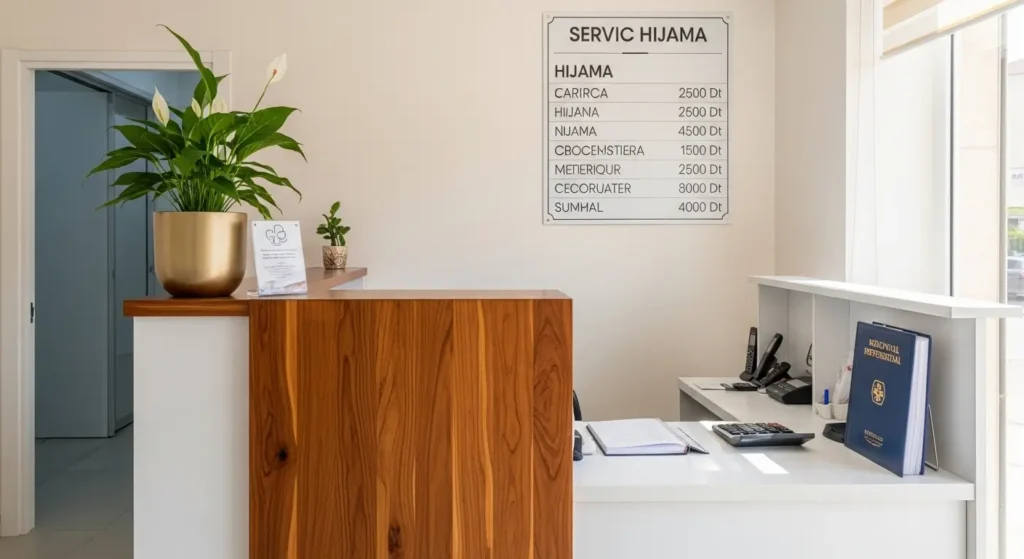
Here’s a quick reference comparing different provider types, so you can evaluate your options at a glance:
| Provider Type | Average Price | Number of Points | Session Length | What’s Included |
|---|---|---|---|---|
| Home Practitioner | 150-200 MAD | 5-10 | 30-40 min | Basic service, disposable equipment, brief consultation |
| Neighborhood Clinic | 180-280 MAD | 8-12 | 45 min | Consultation, treatment, post-care advice, clean facility |
| Medical Center | 250-400 MAD | 10-15 | 60 min | Full health assessment, medical supervision, sterile environment |
| Premium Wellness Center | 350-500+ MAD | 10-20 | 60-90 min | Comprehensive service, follow-up included, therapeutic extras |
| Home Service | 250-450 MAD | 8-12 | 45 min | Base service + travel fee, convenience of home treatment |
How to use this table:
- Identify your budget range
- Match it with the provider type
- Verify what’s included matches your needs
- Compare specific providers within that category
- Prioritize safety and hygiene over slight price differences
Remember: The “best” option depends on your health needs, budget, and preferences—not just the lowest price.
When Should You Pay More for Hijama?
Sometimes spending extra money is the smart choice. Here’s when to invest in higher-priced services.
Medical Conditions Requiring Experienced Practitioners
If you have any of these conditions, prioritize experience and medical supervision over price:
Chronic diseases:
- Diabetes
- Hypertension (high blood pressure)
- Heart conditions
- Kidney disease
Blood disorders:
- Anemia
- Clotting disorders
- History of excessive bleeding
Skin conditions:
- Eczema or psoriasis
- Active infections
- Thin or fragile skin
Post-surgical situations:
- Recent surgery (within 6 months)
- Healing incisions
- Ongoing recovery
Elderly patients:
- More fragile health
- Multiple medications
- Slower healing
Why it matters: Inexperienced practitioners may not recognize contraindications or complications. The 100-200 MAD you save could cost you much more in medical problems. Choose practitioners with medical backgrounds or extensive experience with your specific condition.
When Budget Options Are Acceptable
You can safely opt for lower-cost providers in these circumstances:
✓ General wellness and prevention
- No chronic health issues
- Routine Sunnah practice
- Preventive care
✓ Young, healthy individuals
- Ages 18-50 without health problems
- No medications
- Good overall health
✓ Experienced with hijama before
- Previous successful sessions
- Know what to expect
- Aware of how your body responds
✓ Trusted community recommendations
- Well-known local practitioner
- Strong reputation in your neighborhood
- Multiple personal references
Key principle: Budget options work fine for routine wellness in healthy people. But still verify basic hygiene standards and practitioner experience—never compromise on safety fundamentals.
Safety Considerations Worth the Cost
These safety elements justify higher prices and should never be negotiated away:
Non-negotiable safety standards:
- Disposable equipment (cups and blades)
- Adds 20-30 MAD per session to costs
- Prevents infection transmission
- Worth every dirham
- Proper sterilization procedures
- Professional-grade sterilization equipment
- Documented protocols
- Regular equipment maintenance
- Licensed facility
- Subject to health inspections
- Accountable to authorities
- Maintains minimum standards
- Medical supervision for health conditions
- Practitioner with healthcare background
- Can handle complications
- Knows when to refer to doctors
- Clean, hygienic environment
- Proper ventilation
- Clean surfaces and towels
- Hand-washing facilities
Bottom line: Never compromise on safety to save 50-100 MAD. An infection, complication, or disease transmission will cost you thousands in treatment—and potentially your health.
The cheapest safe option is always better than the cheapest option.
Islamic Hijama Timing and Pricing
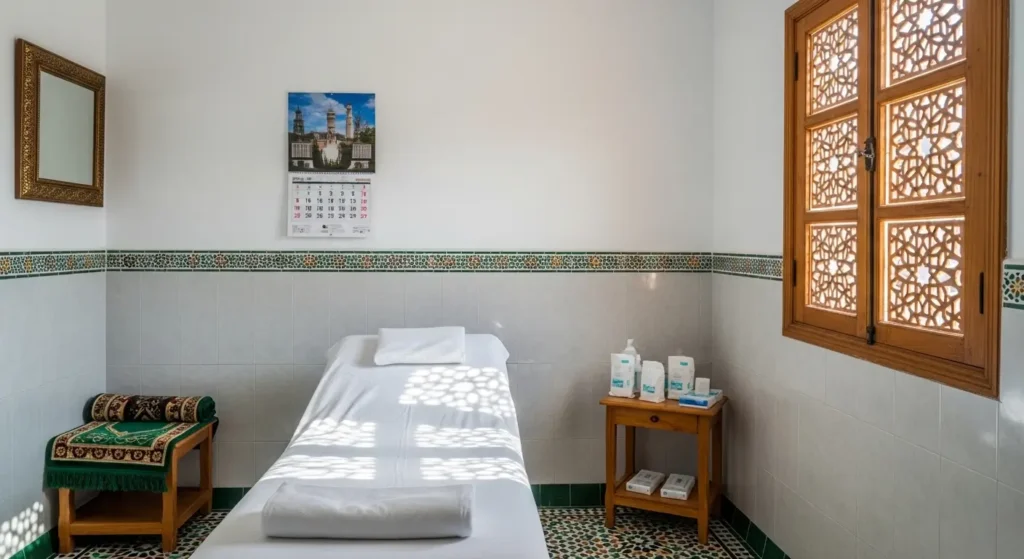
For those following Islamic hijama traditions, timing affects both availability and sometimes pricing.
Recommended Sunnah Days
According to Islamic tradition, certain days are recommended for hijama:
17th, 19th, and 21st of the Islamic lunar month are considered the most beneficial days for hijama based on hadith recommendations.
How this affects pricing:
- Higher demand on these specific days
- Some practitioners charge 10-20% more due to limited appointment availability
- Other practitioners keep standard prices as a service to the community
- Always ask ahead if Sunnah day pricing differs
Example pricing difference:
- Regular day: 200 MAD
- Sunnah day (if premium charged): 220-240 MAD
Practitioner approaches vary:
- Religious practitioners often maintain standard pricing to encourage Sunnah practice
- Commercial clinics more likely to use demand-based pricing
- Ask about their Sunnah day policy when booking
Booking During Peak Times
Certain times see much higher demand for hijama services:
Ramadan:
- Extremely high demand throughout the month
- Book 1-2 weeks in advance minimum
- Some practitioners fully booked for entire month
- Prices generally stable, but availability limited
Thursday evenings and Fridays:
- Popular for working people
- Fill up quickly during Sunnah weeks
- May need to book several days ahead
Early morning appointments:
- Fajr to sunrise popular for Sunnah practice
- Often better availability
- Some practitioners offer small discounts (10-15%) for early slots
End of Islamic months (days 15-21):
- Peak time due to Sunnah days
- Plan ahead for preferred time slots
Off-Peak Advantages
Booking during less popular times can provide benefits:
Weekday mornings (Monday-Wednesday, 9am-2pm):
- Better appointment availability
- More practitioner attention (less rushed)
- Easier to get same-week appointments
Islamic calendar days 1-15:
- Lower overall demand
- More flexible scheduling
- Some practitioners offer 10-15% off-peak discounts
Off-season months:
- Summer months (July-August) often slower
- More negotiable on package deals
- Better availability for consultations
Advantages of off-peak timing:
- More one-on-one time with practitioner
- Less rushed treatment
- Easier to reschedule if needed
- Potentially lower prices or flexible packages
If your hijama is for general wellness rather than specific Sunnah days, off-peak times offer excellent value and service quality.
Common Mistakes When Choosing Hijama Services
Avoid these costly errors that many people make when selecting a hijama provider.
Mistake #1: Choosing Based on Price Alone
The problem: Focusing only on finding the cheapest option without evaluating quality.
Why it’s dangerous:
- Rock-bottom prices (under 120 MAD) usually mean cut corners
- Most commonly sacrificed: sterilization and disposable equipment
- Risk of infections, disease transmission, and complications
- Medical treatment for problems costs far more than saving 50 MAD
The solution:
- Set a minimum price threshold (150 MAD+) for safety
- Focus on value (quality per dirham) not just lowest price
- Sweet spot for most people: 200-300 MAD
- This range provides quality without overpaying for luxury
Mistake #2: Not Verifying Credentials
The problem: Assuming any practitioner offering hijama is qualified and experienced.
What happens:
- No verification of training or experience
- Unknown track record with complications
- Could be completely new to practice
- No accountability if problems arise
The solution:
- Always ask about training and years of experience
- Request to see certifications or credentials
- Check online reviews from previous patients
- Ask for references you can contact
- Verify medical license if they claim healthcare background
- Don’t be shy—your health is worth these questions
Mistake #3: Skipping the Consultation
The problem: Accepting treatment without proper health screening.
Why this matters:
- Hijama has contraindications (times it shouldn’t be done)
- Your medications might affect treatment
- Underlying conditions need consideration
- Proper consultation prevents complications
Warning signs a practitioner skips this:
- Starts treatment immediately without questions
- Doesn’t ask about medical history
- No discussion of medications
- Doesn’t check blood pressure or current health
What proper consultation includes:
- Health history review
- Current medications discussion
- Blood pressure check
- Contraindication screening
- Customized treatment plan
- Questions about your goals
Red flag: Any practitioner who skips health screening doesn’t understand proper hijama practice. Find someone else.
Mistake #4: Not Asking About What’s Included
The problem: Assuming all services at a given price include the same things.
Common surprises:
- “That’ll be extra for the consultation” (+50-100 MAD)
- “Additional cupping points cost more” (+30-50 MAD each)
- “Follow-up is a separate appointment” (+full session fee)
- “Herbal oil application is extra” (+30-80 MAD)
The solution: Get clear pricing before your appointment:
- “What exactly does the 200 MAD include?”
- “Is the consultation part of this price?”
- “How many cupping points are included?”
- “Are there any additional fees?”
- “Is follow-up included or extra?”
Request a complete price breakdown in writing for package deals.
Mistake #5: Ignoring Hygiene Standards
The problem: Not paying attention to cleanliness and sterilization practices.
This is the most dangerous mistake:
- Can lead to hepatitis transmission
- Bacterial infections at cupping sites
- Blood-borne disease transmission
- Skin infections and complications
What to observe: ❌ Bad signs:
- Reusable cups without visible sterilization
- Practitioner doesn’t wash hands properly
- Dirty environment or surfaces
- Non-disposable blades or needles
- No gloves worn during procedure
✓ Good signs:
- Sealed disposable cups opened in front of you
- New, individually wrapped sterile blades
- Practitioner washes hands thoroughly
- Gloves worn throughout treatment
- Clean towels and surfaces
- Visible sterilization equipment
Remember: This isn’t negotiable at any price point. A 150 MAD practitioner with excellent hygiene is infinitely better than a 400 MAD one with questionable practices.
If anything feels unsanitary, leave before treatment begins. Your health is worth more than any deposit or inconvenience.
Myths About Hijama Pricing in Morocco
Let’s clear up common misconceptions about hijama costs that might lead you to poor decisions.
Myth: Expensive Always Means Better
What people think: “The 500 MAD clinic must be better than the 200 MAD one.”
The reality:
- Premium pricing often reflects location rent and décor, not skill
- A practitioner in Ain Diab pays 3× the rent of one in Hay Mohammadi
- Luxury environment doesn’t correlate with treatment quality
- Many experienced practitioners prefer modest neighborhood clinics
The truth: You can get excellent hijama service at 250-300 MAD. Evaluate based on:
- Practitioner’s experience and credentials (not their neighborhood)
- Hygiene standards (not fancy furniture)
- Client reviews and reputation (not interior design)
- Your comfort with the practitioner (not luxury amenities)
When premium pricing is justified: Medical centers with specialist doctors, comprehensive health screenings, or treatment of complex conditions. Not for routine wellness hijama.
Myth: Traditional Practitioners Are Always Cheaper
What people think: “Traditional/home practitioners cost less than clinics.”
The reality:
- Experienced traditional practitioners with strong reputations can charge 300-400 MAD
- Their decades of experience command premium prices
- High demand means they can be selective about pricing
- Some medical clinics offer competitive rates to attract clients
The truth: Price varies more by practitioner reputation and demand than by setting. An experienced home practitioner with 30 years of practice and strong community reputation might charge more than a newer medical clinic trying to build clientele.
What matters: Experience, skill, and safety—not whether they work from home or a clinic.
Myth: You Need Multiple Sessions Immediately
What people think: “I should buy a 10-session package right away.”
The reality:
- One session is often sufficient initially for assessment
- Your body’s response varies individually
- You might not need frequent treatments
- Some conditions improve with just 1-2 sessions
The pressure tactic: Unethical practitioners push expensive packages before you’ve tried even one session. This is about their profit, not your health.
The smart approach:
- Try a single session first
- Assess how your body responds
- Determine with practitioner if additional sessions needed
- Only then consider packages (if ongoing treatment recommended)
- Never feel pressured to commit upfront
When packages make sense: After successful first session, if ongoing treatment recommended for chronic condition, and you trust the practitioner.
Myth: Home Service Is Always More Expensive
What people think: “Having them come to me costs more than going to a clinic.”
The reality: Home service total cost can actually be less than premium clinic + transport, especially for groups.
Do the math:
Scenario 1: Premium clinic visit
- Clinic session: 400 MAD
- Taxi round trip: 50 MAD
- Total: 450 MAD
Scenario 2: Home service
- Base session: 200 MAD
- Travel fee: 60 MAD
- Total: 260 MAD
Scenario 3: Family group home service
- 3 family members × 200 MAD = 600 MAD
- Travel fee: 60 MAD (shared)
- Total: 660 MAD (220 MAD per person)
- Clinic alternative: 3 × 250 MAD = 750 MAD
The truth: Compare total cost including your time and transport. For groups or those far from quality clinics, home service often provides better value.
Myth: Insurance Will Eventually Cover It
What people think: “Insurance companies will start covering hijama soon.”
The reality:
- Hijama is classified as alternative/traditional medicine in Morocco
- Not part of essential healthcare coverage
- No indication of policy changes
- Moroccan insurance focuses on conventional medical treatments
Why this matters:
- Plan for out-of-pocket expenses permanently
- Don’t delay needed treatment hoping for future coverage
- Budget hijama as personal wellness expense
- Some employers offer wellness allowances (rare)—check your specific benefits
The truth: Budget hijama as an uncovered health expense. Waiting for insurance coverage means missing out on potential benefits indefinitely.
Frequently Asked Questions About Hijama Prices
What is the average price of hijama in Morocco?
The average hijama session in Morocco costs between 200-300 MAD. Budget-friendly options start around 150 MAD, while premium services at medical centers can reach 500 MAD or more. The most common price you’ll encounter is 200-250 MAD for a standard session at a neighborhood clinic or experienced practitioner.
Prices vary based on your city, the practitioner’s experience, the number of cupping points, and what additional services are included (consultation, follow-up, herbal treatments).
Why do hijama prices vary so much?
Hijama prices vary dramatically due to several factors:
Practitioner qualifications: Medical professionals (nurses, doctors) charge 250-500 MAD, while traditional practitioners charge 150-250 MAD.
Location: Major cities like Casablanca (200-450 MAD) cost more than smaller towns like Oujda (130-280 MAD). Even within cities, upscale neighborhoods charge 30-40% premiums.
Clinic type: Home practitioners (150-200 MAD) versus premium wellness centers (350-500+ MAD) offer different environments and services.
What’s included: Some prices cover just the basic treatment, while others include comprehensive consultations, follow-ups, and therapeutic extras.
Equipment quality: Practitioners using all-disposable equipment and modern vacuum pumps have higher costs than those using minimal equipment.
The variation reflects different business models and target markets—not necessarily quality differences.
How much does hijama cost in Casablanca vs. smaller cities?
Casablanca (Morocco’s most expensive city for hijama):
- Range: 200-450 MAD
- Average: 300-350 MAD
- Premium areas (Ain Diab): Up to 500+ MAD
Smaller cities comparison:
Meknes: 140-300 MAD (30-40% less than Casablanca) Oujda: 130-280 MAD (35-45% less than Casablanca) Tetouan: 150-320 MAD (25-35% less than Casablanca)
Why the difference?
- Rent and overhead costs much higher in Casablanca
- Higher average income means higher price tolerance
- More luxury wellness centers in major cities
- Smaller cities have more traditional, low-overhead practitioners
Quality difference? Not necessarily. Many smaller city practitioners have excellent experience and reputations. You’re paying more for location, not always better service.
Is 150 MAD too cheap for hijama?
150 MAD is on the lower end but not necessarily too cheap if certain conditions are met:
✓ When 150 MAD is acceptable:
- Experienced neighborhood practitioner with good reputation
- Small town or rural area (lower operating costs)
- Home-based service with minimal overhead
- Community-oriented practitioner not focused on profit
- Uses disposable equipment and maintains hygiene
- Multiple positive reviews from people you trust
❌ When 150 MAD is concerning:
- In major city like Casablanca (should be 180+ MAD minimum)
- From unknown practitioner with no references
- Unclear about what’s included
- No visible hygiene standards
- Reusable equipment without proper sterilization
Prices below 120 MAD are red flags everywhere. Operating costs (disposable cups, blades, rent, time) make anything under 120 MAD unsustainable without cutting corners—usually on safety.
Bottom line: 150 MAD can be a good deal from a trusted practitioner in smaller cities. But investigate carefully before committing.
What’s included in a 250 MAD hijama session?
A typical 250 MAD session represents mid-range quality and should include:
Before treatment:
- 10-15 minute health consultation
- Review of medical history
- Discussion of medications
- Blood pressure check (sometimes)
- Explanation of procedure
During treatment:
- 10-12 cupping points on appropriate areas
- 45-60 minutes total session time
- Sterile, disposable cups (opened in front of you)
- New, individually sealed sterile blades
- Gloves worn by practitioner
- Clean treatment environment
After treatment:
- Post-treatment care instructions
- Dietary recommendations
- Activity restrictions (if any)
- When to schedule follow-up (if needed)
- Contact information for questions
Location:
- Clean, licensed facility
- Proper lighting and ventilation
- Private treatment room
At this price point, you should receive professional service with proper hygiene standards in a clean environment. If any of these elements are missing, the 250 MAD price isn’t justified.
Do hijama practitioners offer payment plans?
No, payment plans are very rare for hijama in Morocco. Most practitioners require full payment at time of service.
Why payment plans aren’t offered:
- Hijama is relatively affordable (150-400 MAD) compared to major medical procedures
- Administrative burden of tracking payments
- Cash flow needs of small practitioners
- Cultural expectation of immediate payment for services
Your payment options:
Single sessions: Pay in full at appointment (150-400 MAD)
Package deals: Pay upfront for discount:
- 3 sessions: Usually 10-15% discount
- 5 sessions: Usually 15-20% discount
- Full payment required when purchasing package
Family/group sessions: All participants pay on appointment day
The closest thing to “payment plans”:
- Buying packages over time (pay for 3 sessions, then later buy 3 more)
- Some practitioners let regular clients pay every 2-3 sessions
- These are informal arrangements, not structured payment plans
If cost is a barrier:
- Look for more affordable practitioners (150-180 MAD range)
- Wait and save for full payment
- Ask about community programs offering subsidized hijama
- Check with charitable organizations or mosques during Ramadan
How often should I get hijama and what will it cost?
Frequency recommendations vary by purpose:
General wellness and Sunnah practice:
- Every 1-3 months
- Annual cost: 800-1,200 MAD (4 sessions at 200-300 MAD each)
Chronic conditions (with practitioner guidance):
- Every 2-4 weeks initially, then monthly maintenance
- Annual cost: 2,400-6,000 MAD (12-24 sessions)
Acute issues or specific health goals:
- 2-3 sessions close together, then reassess
- Initial cost: 600-900 MAD
Seasonal practice:
- Once per season (4 times yearly)
- Annual cost: 800-1,200 MAD
Islamic tradition (Sunnah days only):
- 17th, 19th, or 21st of lunar months (12-36 times yearly)
- Annual cost: 2,400-10,800 MAD (depends on frequency)
Cost-saving strategies for regular practice:
- Buy 5-session packages (save 15-20%): 1,000 MAD → 800-850 MAD
- Find reliable practitioner at 150-200 MAD range
- Combine with family members for group discounts
- Schedule during off-peak times for potential discounts
Important: Let results guide frequency. More isn’t always better. Work with your practitioner to find optimal timing for your needs.
Are there free or very low-cost hijama options?
While rare, some low-cost or free hijama opportunities exist in Morocco:
Free or heavily subsidized hijama:
✓ Charitable organizations:
- Some Islamic charitable associations offer free hijama
- Usually during Ramadan or Islamic holidays
- Check with local mosques for information
- Quality varies—verify practitioner credentials
✓ Community health programs:
- Occasional free health fairs include hijama
- Government or NGO-sponsored initiatives
- More common in smaller towns and rural areas
- Announce through mosques and community centers
✓ Training programs:
- Medical or nursing schools teaching hijama
- Supervised students provide services at reduced cost
- Usually 50-70% of normal prices (75-150 MAD)
- Good option if you’re comfortable with student practitioners
✓ Mosque programs:
- Some larger mosques organize community hijama days
- Small fee (50-100 MAD) or donation-based
- Supports religious practitioners serving the community
- Ask your local mosque administrators
Low-cost options (120-150 MAD):
- Established practitioners in small towns
- Home practitioners in rural areas
- Community-oriented traditional practitioners
- Practitioners building their reputation (newer to area)
How to find these opportunities:
- Ask at your local mosque
- Check community bulletin boards
- Join local Islamic community groups on Facebook
- Contact local branches of charitable organizations
- Ask at pharmacies in your neighborhood
Important caveat: Free or very cheap doesn’t mean good. Always verify:
- Practitioner’s experience and training
- Hygiene standards (especially disposable equipment)
- References from others who’ve used the service
- Your comfort level with the provider
Never compromise safety for free or cheap service.
Should I tip my hijama practitioner?
Tipping is not expected or required for hijama services in Morocco. Hijama is a healthcare service, not a service industry job where tipping is customary.
Why tipping isn’t expected:
- You’re paying a professional fee for healthcare service
- Practitioners set prices covering their expertise and costs
- Healthcare services generally don’t involve tipping in Morocco
- The session fee is the full compensation
When you might consider tipping:
✓ Exceptional care beyond normal service:
- Practitioner went significantly above and beyond
- Extra time spent addressing your concerns
- Exceptional bedside manner and attention
- Follow-up care without charging extra
✓ Home service practitioners:
- Traveled long distance to reach you
- Showed up in difficult weather
- Extremely flexible with timing
- Small appreciation gesture (20-50 MAD)
✓ Building ongoing relationship:
- Regular practitioner you see frequently
- Want to show appreciation for consistent quality care
- Occasional small gratuity (30-50 MAD) on special occasions
Appropriate tip amounts (if you choose to tip):
- 20-30 MAD: Small appreciation gesture
- 50 MAD: Above-and-beyond service
- More than 50 MAD: Unnecessary
Important perspective:
- Most Moroccan practitioners don’t expect tips
- Quality practitioners won’t be offended if you don’t tip
- Your loyalty and referrals are often more valuable
- Paying on time and treating them respectfully matters more
Best ways to show appreciation:
- Refer friends and family
- Leave positive online reviews
- Return for future sessions
- Recommend them in your community
- Pay promptly without haggling
If you want to tip and can afford it, it’s a kind gesture. But it’s never expected or required.
Can I negotiate hijama prices?
Limited negotiation is sometimes possible, but expectations should be realistic.
Where negotiation might work:
✓ Home-based traditional practitioners:
- More flexibility than established clinics
- May offer 5-10% discount for cash payment
- More negotiable for multi-session packages
- Willing to work with regular community members
✓ Package deals:
- “If I commit to 5 sessions, can you do 800 MAD instead of 850?”
- Most practitioners expect some negotiation on packages
- 10-15% total discount is reasonable to request
✓ Group bookings:
- “I’m bringing three family members, can you give us a group rate?”
- 10% per person is fair to request
- Practitioner saves marketing and booking time
✓ Cash payment:
- “I’ll pay cash today, can you discount 5-10%?”
- Saves practitioner banking fees and delays
- More effective with individual practitioners than clinics
Where negotiation won’t work:
❌ Medical centers and established clinics:
- Fixed pricing structures
- Can’t make exceptions for individual patients
- Staff may not have authority to discount
❌ Premium wellness centers:
- Set pricing reflects their positioning
- Discounting undermines brand
- May offer package deals but not individual session negotiation
❌ During peak demand (Ramadan, Sunnah days):
- Fully booked, no incentive to discount
- May actually charge premiums
- Better to book off-peak if price matters
How to negotiate respectfully:
- Build relationship first: Regular patients get better deals
- Be polite: “Is there any flexibility on price?” not “This is too expensive”
- Offer something: Cash payment, referrals, package commitment
- Accept no gracefully: Don’t push if they decline
- Focus on value: “Can you include follow-up for this price?”
Realistic expectations:
- 5-10% discount possible with traditional practitioners
- 10-15% on multi-session packages
- Group rates of 10% per person
- Cash discounts of 5%
Don’t expect: 25-50% discounts—if someone offers this, question whether they were overpricing originally or cutting corners to reach that price.
Alternative to negotiating: Find a practitioner in your price range rather than trying to heavily negotiate someone too expensive. A practitioner you can comfortably afford will provide better service than one you’ve haggled down.
Final Tips: Getting the Best Value Hijama in Morocco
As you search for hijama services, keep these practical guidelines in mind for the best combination of quality, safety, and value:
✓ Start with mid-range providers (200-300 MAD) for the best value-to-quality ratio. This range typically provides experienced practitioners with proper hygiene standards without luxury premiums.
✓ Prioritize hygiene and credentials over rock-bottom prices. Saving 50-100 MAD isn’t worth risking infections or complications. Disposable equipment and proper sterilization are non-negotiable.
✓ Read reviews and ask for recommendations from trusted sources. Personal referrals from people you know often lead to better practitioners than online searches alone.
✓ Book during off-peak times (weekday mornings, days 1-15 of Islamic months) for better availability and possible discounts. You’ll also get more practitioner attention when they’re not rushed.
✓ Ask all pricing questions upfront before your session. Know exactly what’s included, what costs extra, and the total price. Get it in writing for package deals.
✓ Try a single session first before committing to packages. Your body’s response and comfort with the practitioner matter more than bulk discounts. Only buy packages after successful initial experience.
✓ Don’t compromise on safety to save money. The difference between 150 MAD and 250 MAD is minimal compared to medical treatment costs if something goes wrong. Choose safe over cheap.
✓ Verify what’s included before comparing prices between providers. A 200 MAD session with consultation and follow-up offers better value than 180 MAD for treatment alone.
✓ Choose a practitioner you feel comfortable with. Trust and communication matter in healthcare. A slightly more expensive practitioner you trust completely is worth more than saving 30 MAD with someone who makes you uncomfortable.
✓ Remember: hijama is a health service, not a commodity. Quality and safety matter more than finding the absolute lowest price. Focus on value (what you get for your money) rather than just cost.
Your health is an investment, not an expense. A good hijama practitioner provides therapeutic benefits that justify reasonable pricing. Find someone who meets your needs, treats you professionally, maintains high standards, and charges fairly—then build a relationship with them for ongoing care.
Conclusion
Understanding hijama prices in Morocco empowers you to make informed decisions about your health and budget. The typical range of 150-400 MAD offers options for everyone, from budget-conscious individuals to those seeking premium medical supervision.
The key isn’t finding the cheapest option—it’s finding the best value: a qualified, hygienic practitioner who charges fairly and provides quality care. For most Moroccans, the sweet spot is 200-300 MAD at a neighborhood clinic or experienced traditional practitioner with good reviews and proper standards.
Remember these essential principles:
- Safety first: Never compromise on hygiene and disposable equipment
- Verify credentials: Check experience, training, and references
- Know what’s included: Get clear pricing before your appointment
- Try before committing: Single session before package deals
- Trust your instincts: Comfort with your practitioner matters
Whether you’re practicing hijama for Sunnah, therapeutic benefits, or general wellness, Morocco offers accessible options at various price points. Use the city-specific pricing, comparison tables, and evaluation criteria in this guide to find the right practitioner for your needs.
Find a Hijama Specialist
Ready to book your hijama session? Start by:
- Asking for recommendations at your local mosque
- Checking online reviews for practitioners in your city
- Visiting 2-3 options for consultations before deciding
- Verifying hygiene standards and credentials
- Confirming total pricing and what’s included
The right practitioner is worth the research time—your health and satisfaction depend on making an informed choice.
Related Articles You Might Find Helpful
- Hijama Benefits: What This Ancient Therapy Can Do For You
- Hijama Aftercare: Complete Guide to Recovery and Results
- How to Prepare for Your First Hijama Session
- Hijama and Islamic Medicine: Understanding the Sunnah Practice
- Common Hijama Side Effects and How to Manage Them
May you find a qualified, trustworthy practitioner who provides excellent care at a fair price. Your journey to better health through hijama starts with making an informed, confident choice.