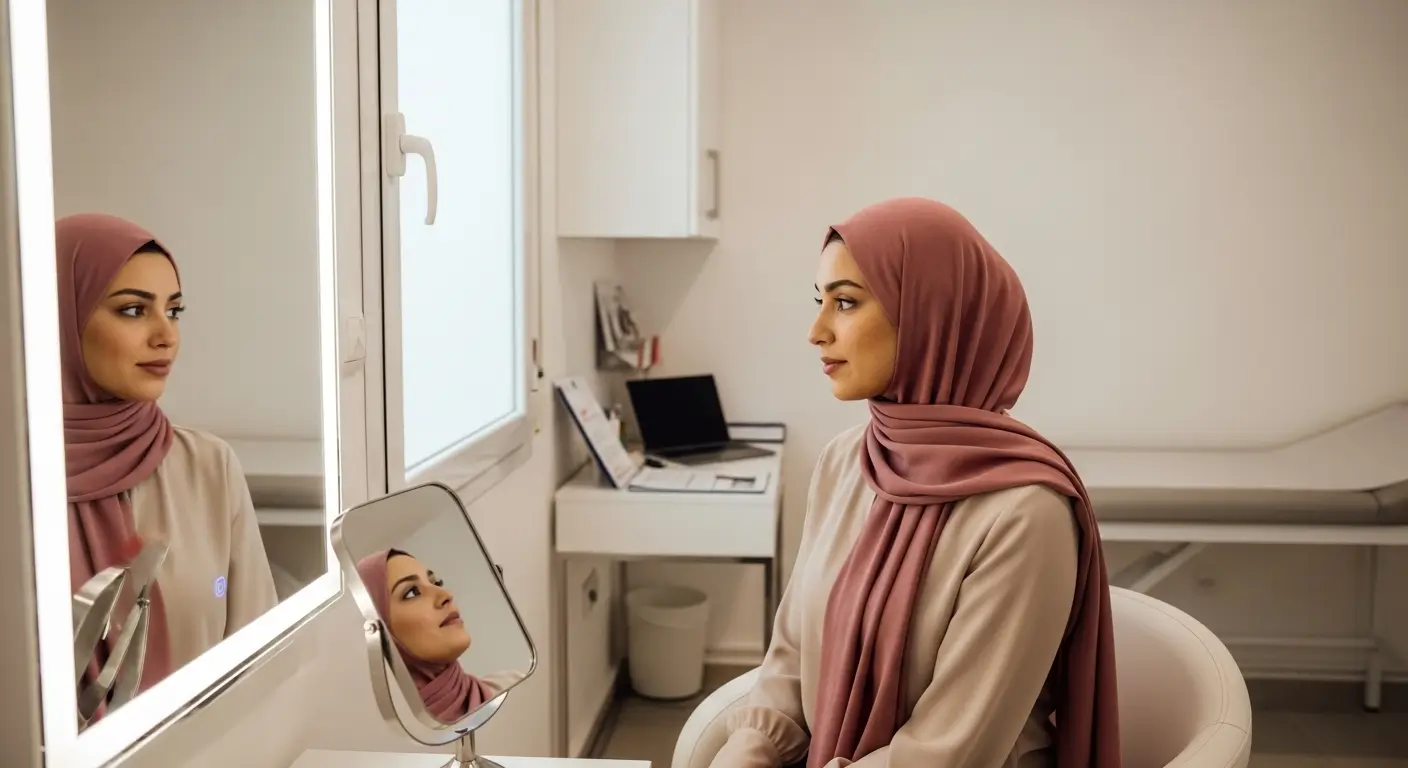
If you are searching for nose plastic surgery cost in Morocco, you are not alone. Rhinoplasty — commonly called a nose job — is one of the most requested plastic surgery procedures in the country. Whether your goal is cosmetic (reshape the nose, correct a hump, refine the tip) or functional (fix a deviated septum and improve breathing), one of the first questions on your mind is always: how much will this actually cost me?
The short answer: rhinoplasty in Morocco costs a fraction of what the same procedure would cost in France, Spain, or Belgium — without sacrificing quality. But pricing varies widely depending on the surgeon, clinic, city, and type of procedure.
This guide breaks down everything you need to know before booking your consultation.
Table of Contents
1. Rhinoplasty Price Ranges in Morocco by Procedure Type
Nose plastic surgery cost in Morocco is not a single fixed number. The price you pay depends heavily on the type of procedure. Here is a clear breakdown of each option.
Surgical Rhinoplasty (Full Procedure)
This is the standard nose reshaping operation performed under anesthesia in a clinic or hospital.
| Level | Who It’s For | Price Range (MAD) |
|---|---|---|
| Entry-level | Less experienced surgeons, smaller clinics | 18,000 – 22,000 |
| Mid-range | Board-certified surgeon, private clinic | 22,000 – 28,000 |
| Premium | Top-tier specialist, accredited facility | 28,000 – 35,000+ |
What the quoted price must always include:
- Surgeon’s fee
- Anesthesiologist’s fee
- Operating room (OR) fee
- One night of post-operative hospitalization
Important: Always ask your clinic for a written, itemized quote. Some clinics advertise a low base price and add these fees separately.
Open vs. Closed Rhinoplasty: The Price Difference
The surgical technique chosen affects both complexity and cost.
| Technique | How It Works | Typical Price Impact |
|---|---|---|
| Closed (endonasal) | All incisions inside the nostrils — no visible scar | Base price |
| Open rhinoplasty | Small incision under the nose tip for greater access | 10–20% higher fee |
Which is right for you?
- Closed rhinoplasty suits minor reshaping needs and patients wanting minimal recovery time.
- Open rhinoplasty is preferred for complex cases: major reshaping, thick skin, or significant tip work.
- Your surgeon will recommend the technique based on your anatomy — not the other way around.
Medical (Non-Surgical) Rhinoplasty
No surgery, no anesthesia, no hospital stay. Hyaluronic acid filler is injected to reshape the nose in under 30 minutes.
- Cost per session: 3,000 – 8,000 MAD
- Duration of results: 12 to 18 months, then filler gradually dissolves
- Downtime: None — you can return to work the same day
Best suited for:
- Smoothing a dorsal hump (making it less visible)
- Correcting mild asymmetry
- Lifting a drooping nasal tip
Not suitable for:
- Reducing nose size — filler adds volume, it cannot remove it
- Patients needing structural correction
Revision Rhinoplasty
A corrective procedure performed when a previous rhinoplasty did not deliver the expected result — whether done in Morocco or abroad.
- Cost: Typically 25–45% higher than a primary rhinoplasty
- Minimum wait time: At least 12 months after the original procedure before revision is possible (the nose must fully heal first)
- Why it costs more: Greater surgical complexity, scar tissue, and longer operating time
The most effective way to avoid revision rhinoplasty cost is choosing the right surgeon the first time.
Combined Procedures
Combining rhinoplasty with another procedure in the same operating session can be more cost-efficient than having two separate surgeries.
| Combination | What It Addresses | Price Range (MAD) |
|---|---|---|
| Rhinoplasty + Septoplasty | Cosmetic reshaping + breathing correction | 20,000 – 38,000 |
| Rhinoplasty + Mentoplasty (chin implant) | Nasal + chin harmony | 30,000 – 50,000 |
Why combining saves money: You pay for anesthesia and the operating room only once instead of twice.
2. What Makes the Nose Plastic Surgery Cost in Morocco Go Up or Down
Two patients walking into different clinics on the same day can receive quotes that differ by 15,000 MAD. Here is exactly why.
Surgeon Experience and Specialization
- A plastic surgeon with 10 or more years of rhinoplasty-specific experience charges more — and for good reason.
- Surgeons who completed fellowship training in France, the USA, or the UAE often command higher fees.
- Volume matters: a surgeon performing 100+ rhinoplasties per year has a more refined technique than one doing 20.
- Red flag: Any quote under 12,000 MAD from an unverified practitioner should be treated with extreme caution.
Clinic or Hospital Tier
| Clinic Type | Cost Level | What You Get |
|---|---|---|
| Public hospital (CHU) | Lowest | Long waiting lists; limited cosmetic options |
| Standard private clinic | Mid-range | Adequate safety standards, basic follow-up |
| Accredited private clinic | Highest | Ministry of Health authorization, better infrastructure, more thorough post-op care |
Type of Anesthesia
- Local anesthesia + sedation: Used for minor or non-surgical procedures — lower cost.
- General anesthesia: Required for full rhinoplasty. The anesthesiologist fee ranges from 3,000 to 6,000 MAD.
- Always confirm in writing whether the anesthesiologist fee is bundled into the total quote or billed separately.
Complexity of Your Case
Certain factors increase surgical difficulty — and therefore cost:
- Thick skin (requires longer operating time and more precise technique)
- A deviated septum being corrected at the same time
- Ethnic nasal characteristics (prominent dorsum, wider base) that require specialized technique — verify that the surgeon’s portfolio includes patients with a similar profile
- History of nasal trauma or a previously broken nose
Your Location Within Morocco
| City | Price Level | Note |
|---|---|---|
| Casablanca | Highest | Premium clinic concentration, highest overhead |
| Rabat | Slightly lower | Strong CHU and private sector infrastructure |
| Marrakech | Variable | Tourist-facing clinics may charge a premium |
| Fès, Tanger, Agadir | Generally lower | Fewer specialist options |
3. Morocco vs. Europe: How Much Do You Actually Save?
This comparison is especially relevant for Moroccans living in France, Belgium, or Spain who are considering having the procedure done during a trip home.
Reference Prices in Key European Markets
| Country | Approximate Price |
|---|---|
| France | €4,000 – €8,000 (~44,000 – 88,000 MAD) |
| Spain | €3,500 – €6,500 |
| Belgium | €4,500 – €7,500 |
| United Kingdom | £5,000 – £9,000 |
What You Save by Choosing Morocco
- Average saving compared to France: 50–65%
- A procedure priced at €5,500 in Paris equals approximately 60,000 MAD.
- The same quality of procedure in Casablanca: approximately 22,000–28,000 MAD.
- Even after factoring in flight and hotel costs from Europe, the total saving remains significant.
Why Morocco Is More Affordable (Without Lower Quality)
Morocco’s lower rhinoplasty cost is not a sign of inferior care. The price gap exists because of structural economic differences:
- Lower clinic operating costs and overhead
- Surgeon salaries calibrated to the local economy, not European wage scales
- No private health insurance markup inflating the bill
- A favorable MAD-to-EUR exchange rate
- Many Moroccan plastic surgeons trained at the same French and Belgian universities as their European counterparts — same education, lower local cost base
What European Prices Sometimes Include That Morocco May Not
- A higher number of bundled follow-up appointments
- Administrative support for sick leave certificates and insurance paperwork
- Income replacement during recovery (covered by European social security — not applicable in Morocco)
Always confirm exactly how many post-op consultations are included in your Moroccan quote.
Planning Guide for MRE Patients (Moroccans Abroad)
If you are living in France, Spain, Belgium, or elsewhere and plan to have your nose plastic surgery in Morocco during a visit home, follow this timeline:
- 3–6 months before: Contact 2–3 surgeons in Morocco. Many offer video consultations for initial assessment.
- Confirm your surgery date and arrange at least 2–3 weeks of stay after the procedure before flying back.
- Do not fly within 2 weeks of surgery — cabin pressure changes and post-op swelling require clearance from your surgeon before air travel.
- Arrange remote follow-up with the Moroccan surgeon for the 1-month and 3-month check-ins after returning abroad.
4. Hidden Costs You Must Budget For
The surgery fee is not the full picture. Here are the additional costs that often catch patients off guard.
Pre-Operative Workup
| Test / Exam | Estimated Cost (MAD) |
|---|---|
| Blood tests (CBC, coagulation, blood group) | 500 – 1,200 |
| Cardiology clearance / ECG | 400 – 800 |
| Anesthesiologist pre-op consultation | 500 – 1,000 (sometimes included) |
| 3D nasal imaging / simulation | 500 – 1,500 |
Post-Operative Supplies
| Item | Estimated Cost (MAD) |
|---|---|
| Antibiotics, anti-inflammatories, pain relief (week 1) | 600 – 1,200 |
| Nasal cast / splint and medical tape | Usually clinic-supplied — confirm this |
| Saline nasal spray (4–6 weeks of use) | 200 – 400 |
| Arnica gel or anti-bruising cream | 150 – 300 |
Follow-Up Consultations
The standard post-rhinoplasty follow-up schedule looks like this:
- Day 7: Splint and sutures removal
- Week 3: Swelling check
- Month 1: Progress assessment
- Month 3: Shape review
- Month 6: Near-final result review
- Month 12: Final result assessment
Ask your clinic how many of these are included in the quoted price. Each unplanned extra visit typically costs 300–600 MAD.
Time Off Work
- Minimum leave needed: 10–14 days
- Presentable in public (bruising gone, swelling reduced): typically 3–4 weeks
- If you are self-employed or working on commission, factor in lost income during this period.
Accommodation (If Traveling to Another City)
- Budget for 7–10 nights near the clinic
- Proximity matters — in the first week post-op, you should be able to reach the clinic within 20–30 minutes if needed
5. Surgeon Credentials and Clinic Safety: What to Check
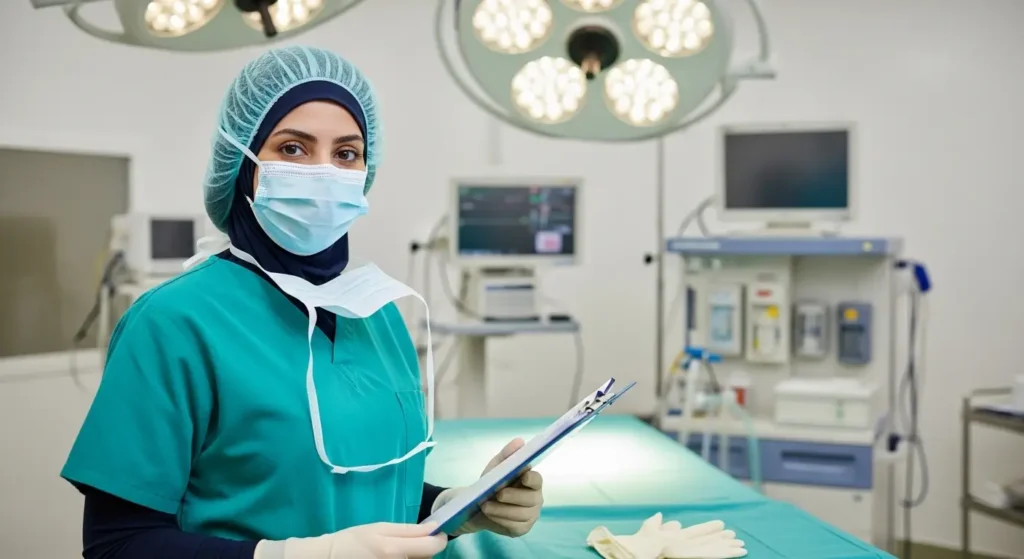
Rhinoplasty in Morocco is safe when performed by a qualified surgeon in an authorized facility. These are the non-negotiable checks before you book.
Surgeon Credentials to Verify
- CNOM registration: The surgeon must be listed with the Conseil National de l’Ordre des Médecins du Maroc. This is the minimum legal requirement to practice medicine in Morocco.
- Board certification: Look specifically for certification in Chirurgie Plastique, Reconstructrice et Esthétique.
- Rhinoplasty-specific experience: At least 5 years of post-fellowship practice focused on rhinoplasty.
- Professional society membership: Membership in the Société Marocaine de Chirurgie Plastique is a positive indicator.
- Foreign training credential: Training in France, the USA, or the UAE is a good sign — though not mandatory.
Clinic Accreditation
| Accreditation Level | What It Means |
|---|---|
| Ministry of Health authorization | Minimum legal requirement for any private surgical clinic in Morocco |
| JCI (Joint Commission International) | International gold standard — very few Moroccan clinics hold this; a strong trust signal if present |
Ask to see the clinic’s authorization certificate during your consultation. Any reputable clinic will provide it without hesitation.
Safety Information: What Is Normal vs. What Is a Red Flag
Normal post-operative experiences:
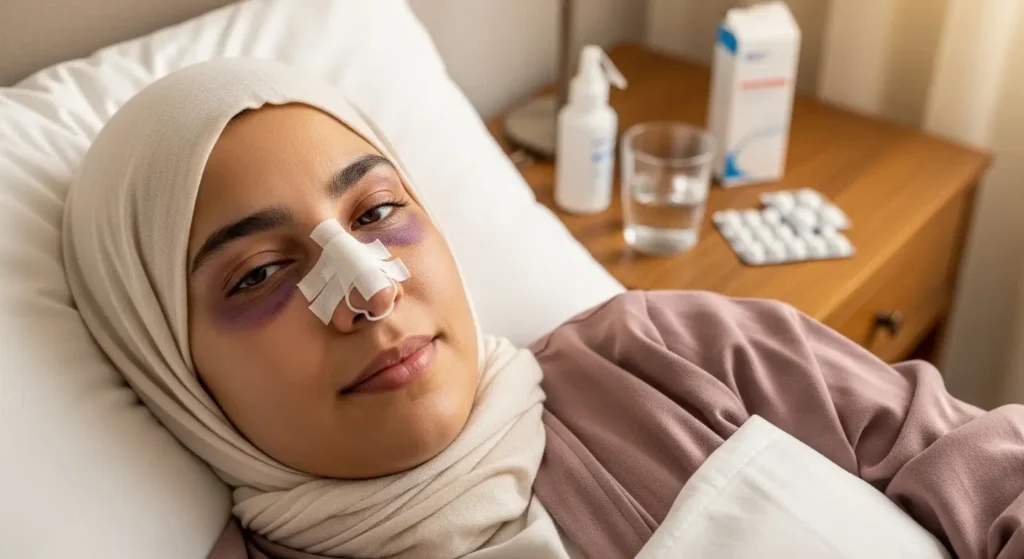
- Bruising around the eyes (days 1–10)
- Significant swelling (weeks 1–8)
- Numbness at the nasal tip (months 1–3)
- Breathing through the mouth for the first week
Contact your surgeon immediately if you experience:
- Difficulty breathing that worsens rather than improves
- Excessive or uncontrolled bleeding
- Fever above 38.5°C
- Signs of infection at the incision site (unusual redness, discharge, increasing pain)
Important: The final result of your rhinoplasty is not fully visible until 12 months post-operation. Residual swelling — particularly at the tip — takes time to fully resolve.
How to Evaluate Before-and-After Photos
- Ask to see results from patients with a similar nasal profile to yours (same ethnicity, same original concern).
- Request a minimum of 10–15 documented cases relevant to your situation.
- Be cautious of clinics showing only extreme transformations — a skilled rhinoplasty surgeon produces natural, proportionate results, not dramatic ones.
6. Surgical vs. Non-Surgical Rhinoplasty: Which Is Right for You?
If you are exploring nose plastic surgery cost in Morocco, it is worth understanding both options before committing.
| Factor | Surgical Rhinoplasty | Medical Rhinoplasty (Filler) |
|---|---|---|
| Cost | 18,000 – 35,000 MAD | 3,000 – 8,000 MAD |
| Result duration | Permanent | 12–18 months |
| Downtime | 10–14 days minimum | None |
| Anesthesia required | Yes (general or sedation) | No |
| Can reduce nose size | Yes | No |
| Reversible | No | Partially (dissolved with enzyme) |
| Best for | Significant structural change | Minor corrections, hump camouflage |
Points to Keep in Mind
- Non-surgical rhinoplasty is rising in popularity in Morocco, particularly among younger patients influenced by social media. It is a valid option — but only for the right case.
- The main risk of filler rhinoplasty is vascular occlusion (a rare but serious complication). Only accept this treatment from a medically licensed injector — not an aesthetic technician or beauty therapist.
- Some patients use filler rhinoplasty as a temporary measure while they save for surgery. This is a reasonable approach, but confirm that the filler has fully dissolved before proceeding with surgery.
7. Recovery: What to Expect Week by Week
Understanding the recovery timeline helps you plan your leave, prepare your family, and set realistic expectations.
Week 1
| Day | What Happens |
|---|---|
| Day 1–2 | In-clinic observation; significant swelling and bruising around the eyes; breathing through the mouth |
| Day 3–5 | Peak bruising (black eyes are completely normal); keep the head elevated at all times; avoid bending or lifting anything |
| Day 7 | Splint and sutures removed at your first post-op appointment |
Weeks 2–3
- Bruising largely faded; swelling still significant
- You can return to sedentary desk work
- No glasses on the nose bridge, no strenuous exercise, no swimming
- Avoid direct sun exposure on the nose
Month 1–3
- The nose shape becomes increasingly visible as swelling reduces
- Some residual swelling at the tip is completely normal at this stage
- Light exercise can be resumed (no contact sports)
- Continue avoiding glasses resting on the nose bridge
Month 6
- Approximately 80% of the final result is visible
- Most patients feel comfortable socially and professionally
Month 12
- Final result: all swelling has resolved
- This is the reference point for deciding whether revision is needed — not earlier
8. Financing and Payment Options
Nose plastic surgery cost in Morocco does not have to be paid as a single lump sum. Several options exist to make it more manageable.
Clinic Instalment Plans
- Many Moroccan private clinics offer in-house payment plans across 2 to 4 instalments.
- A typical structure: 50% deposit at booking confirmation, the remaining balance on the day of surgery or at the first post-op visit.
- Ask your clinic directly: “Est-ce que vous proposez un paiement en plusieurs fois ?”
Bank Medical Credit Options
| Bank | Product |
|---|---|
| Attijariwafa Bank | Consumer credit applicable to medical expenses |
| CIH Bank | Health-focused personal financing products |
| Banque Populaire | Standard personal loan options |
Typical terms: 12 to 36 months repayment, with annual interest rates ranging from 8% to 14%. Compare at least two offers before signing.
CNSS and AMO Coverage: What Is and Is Not Covered
| Procedure | Coverage |
|---|---|
| Purely cosmetic rhinoplasty | Not covered by CNSS or AMO |
| Septoplasty (functional, breathing correction) | May be partially covered if medically documented and indicated |
If your case involves a genuine functional issue (deviated septum, breathing obstruction), ask your surgeon to document the medical indication. This can support a partial reimbursement claim through your social insurance.
Smart Budgeting Strategy
- Begin consultations at least 6 months before your target surgery date.
- Use this period to compare 2–3 surgeons on credentials, portfolio, and price.
- Finalize your budget with a full written quote — including all additional costs listed in Section 4.
- Avoid choosing the cheapest option without verifying credentials. Revision rhinoplasty costs significantly more than doing it right the first time.
9. The Consultation Process: What to Expect and What to Ask
A thorough consultation is your most important tool for evaluating whether a surgeon and clinic are right for you.
What Happens at the First Consultation
- Medical history review: Allergies, previous surgeries, current medications, skin or blood conditions
- Physical examination: The surgeon assesses nasal structure, skin thickness, and cartilage quality
- Goals discussion: You explain what you want to change — bring reference photos, but understand that results depend on your anatomy
- Imaging simulation (offered by some clinics): A morphed photo gives a rough idea of expected results. Treat it as a visual aid, not a guaranteed outcome.
- Surgeon’s recommendation: Technique, realistic outcomes, and full recovery requirements
7 Questions to Ask Every Surgeon
- How many rhinoplasties do you perform per year?
- What technique do you recommend for my anatomy, and why?
- What is included and excluded in the quoted price?
- How many follow-up appointments are included?
- What is your policy if I am not satisfied with the result?
- What complications have you encountered, and how were they managed?
- Can I see before-and-after photos of patients with a nasal profile similar to mine?
Red Flags: Walk Away If You See These
- The surgeon dismisses your questions or rushes through the consultation
- You receive a price quote without any physical examination
- You are pressured to book and pay a deposit on the same day as the consultation
- There is no written surgical plan or informed consent form
- The before-and-after photos shown are clearly stock images or cannot be verified as real patients
10. Nose Plastic Surgery Cost by City in Morocco
The city where you choose to have your procedure directly affects both price and the range of specialists available.
Casablanca
- Price range for full rhinoplasty: 22,000 – 38,000 MAD
- Highest concentration of board-certified plastic surgeons in Morocco
- Most competitive market — gives you the widest choice of surgeons to compare
- Key clinic neighborhoods: Maarif, Gauthier, Ain Diab, Anfa
Rabat
- Price range: 20,000 – 33,000 MAD
- Strong academic medical culture linked to the university hospital (CHU Ibn Sina)
- A solid mix of public-sector-trained and private-practice specialists
Marrakech
- Price range: 18,000 – 35,000 MAD (wide variance)
- Growing medical tourism destination — some clinics specifically cater to international patients
- Caution: Tourist-facing clinics may charge a foreign-patient premium. Always compare quotes from at least two clinics.
- Verify that clinic staff can communicate in your preferred language
Fès, Tanger, Agadir
- Price range: 15,000 – 25,000 MAD
- Fewer specialist options — complex cases may require traveling to Casablanca or Rabat
- Suitable for patients with straightforward needs and a trusted local surgeon referral
11. Frequently Asked Questions
How much does nose plastic surgery cost in Morocco on average?
A full surgical rhinoplasty in Morocco costs between 18,000 and 35,000 MAD depending on the surgeon’s experience, clinic tier, and case complexity. Non-surgical rhinoplasty (filler) costs 3,000 to 8,000 MAD per session.
Is rhinoplasty covered by health insurance in Morocco (CNSS or AMO)?
Cosmetic rhinoplasty is not reimbursed by CNSS or AMO. However, septoplasty for functional breathing correction may be partially covered if medically justified with proper documentation from your surgeon.
How long is recovery after rhinoplasty in Morocco?
Most patients return to desk work after 10 to 14 days. Bruising is largely gone by week 3. The final result is only fully visible at 12 months, once all residual swelling has resolved.
Is it safe to have rhinoplasty in Morocco?
Yes — when performed by a board-certified plastic surgeon in a Ministry of Health authorized clinic. Always verify the surgeon’s CNOM registration and ask to see the clinic’s authorization certificate before booking.
How much cheaper is rhinoplasty in Morocco compared to France?
Typically 50 to 65% less expensive. A procedure priced at €5,500 in France (approximately 60,000 MAD) would cost between 22,000 and 28,000 MAD in Morocco for equivalent quality — even after accounting for travel costs.
Can I pay for rhinoplasty in instalments in Morocco?
Yes. Many clinics offer 2 to 4 instalment payment plans. Bank medical credit options are also available through Attijariwafa Bank, CIH Bank, and Banque Populaire, typically over 12 to 36 months.
What is the difference between open and closed rhinoplasty?
Closed rhinoplasty leaves all incisions inside the nostrils — no visible external scar, shorter recovery. Open rhinoplasty adds a small incision under the nose tip to give the surgeon greater access — preferred for complex reshaping cases. Your surgeon will recommend the appropriate technique based on your anatomy.
How do I choose the right surgeon for rhinoplasty in Morocco?
Verify CNOM registration, board certification in plastic surgery, and at least 5 years of rhinoplasty-specific experience. Review before-and-after photos of patients with a similar nasal profile. Consult at least 2–3 surgeons before making a final decision — and never choose based on price alone.
What are the most common mistakes patients make when budgeting for rhinoplasty in Morocco?
The three most common mistakes are: accepting a quote that excludes the anesthesiologist fee, not budgeting for pre-op tests and post-op medications, and choosing the cheapest option without verifying credentials — which often leads to revision rhinoplasty and higher total cost in the end.
Can I fly back to Europe shortly after rhinoplasty in Morocco?
No. You should wait a minimum of 2 weeks before any air travel. Cabin pressure changes and altitude can affect post-operative swelling and healing. Always get written clearance from your surgeon before flying.
Key Takeaways
Before you make any decision about nose plastic surgery cost in Morocco, keep these points in mind:
- Get an itemized written quote — surgeon fee, anesthesiologist, OR, hospitalization, and follow-ups should all be listed separately.
- Budget an additional 3,000–5,000 MAD beyond the surgery fee for pre-op tests and post-op supplies.
- Morocco offers savings of 50–65% compared to France and Belgium — with many surgeons sharing the same training background.
- Never choose based on the lowest price. Revision rhinoplasty is more expensive, more complex, and more stressful than getting it right the first time.
- Consult 2–3 surgeons before committing. A quality surgeon will welcome your questions — not rush you out the door.