

You’ve been injured in an accident, or someone you care about needs urgent trauma care. Your first concern is their health—but the second worry hits immediately: how much will Traumatology Price in Morocco? Without clear pricing information, you’re left anxious about unexpected medical bills, choosing between public and private hospitals, and wondering if your insurance will cover the expenses.
This complete guide provides actual traumatology prices across Morocco—from initial consultations to complex surgeries—in both public and private healthcare facilities. You’ll find real numbers in Moroccan Dirhams, understand what insurance covers, and learn where to find quality trauma care that fits your budget.
By the end of this article, you’ll know exactly what to expect when seeking trauma treatment, how to minimize costs through proper insurance use, and which hospitals offer the best value for orthopedic and emergency trauma services.
Table of Contents
Understanding Traumatology Services in Morocco
What Is Traumatology?
Traumatology is the medical specialty focused on treating injuries caused by accidents, falls, sports, or violence. In Morocco, traumatology departments handle:
- Bone fractures (simple and compound)
- Joint dislocations (shoulder, knee, hip)
- Ligament and tendon tears (ACL, rotator cuff)
- Head trauma requiring neurosurgical intervention
- Spinal injuries from accidents
- Multiple trauma from road accidents
Unlike general orthopedics (which includes planned joint replacements and chronic conditions), traumatology focuses specifically on emergency and acute injury care. Most major hospitals in Morocco have dedicated trauma departments operating 24/7.
Morocco’s Two-Tier Healthcare System
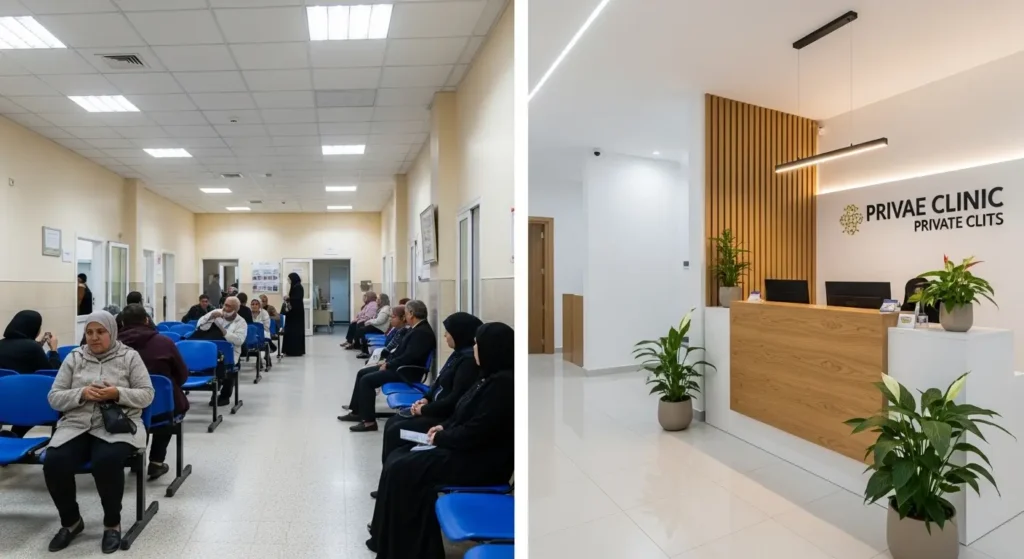
Understanding Morocco’s healthcare structure helps you make smart decisions about where to seek treatment:
Public Hospitals (CHU – Centre Hospitalier Universitaire):
- Government-funded and heavily subsidized
- Significantly lower costs for patients
- Longer waiting times for non-emergency procedures
- Quality varies but major teaching hospitals offer excellent care
- Priority for RAMED beneficiaries and emergency cases
Private Clinics and Hospitals:
- Higher costs but faster access to specialists
- Modern facilities and equipment
- More comfortable accommodations (private rooms, better meals)
- Direct billing with many insurance companies
- Popular with those who have comprehensive insurance
This two-tier system means you have choices based on urgency, budget, and insurance coverage. Neither option is inherently “better”—the right choice depends on your specific situation.
Traumatology Price in Morocco
Public Hospital Consultation Fees
When you visit a public hospital’s trauma or orthopedic department, consultation costs remain remarkably affordable:
- Emergency department visit: 10-50 MAD
- Specialist consultation: 30-100 MAD
- Follow-up appointments: 20-80 MAD
Major public hospitals offering trauma services include:
- CHU Ibn Rochd (Casablanca)
- Hôpital des Spécialités (Rabat)
- CHU Mohammed VI (Marrakech)
- CHU Hassan II (Fes)
The low cost makes public hospitals accessible to most Moroccans. However, be prepared for waiting times, especially for non-urgent consultations. Emergency cases receive immediate attention regardless of payment ability.
Private Clinic Consultation Prices
Private healthcare facilities charge substantially more but offer immediate access:
- Initial traumatology consultation: 300-800 MAD
- Emergency room evaluation: 500-1,500 MAD
- Follow-up visits: 200-500 MAD
- After-hours/weekend premium: Additional 20-30%
The higher cost buys you:
- Same-day or next-day appointments
- More time with the specialist
- Modern diagnostic equipment on-site
- Comfortable waiting areas
- Faster processing and paperwork
What’s Included in the Consultation
Whether public or private, your traumatology consultation typically includes:
- Complete physical examination of the injured area
- Review of your medical history
- Initial diagnosis and injury assessment
- Treatment plan recommendation (surgery, casting, physical therapy)
- Prescription for medications or imaging tests
Important: Medications, X-rays, and other diagnostic tests are billed separately. Always ask for a complete cost breakdown before proceeding with recommended tests.
Traumatology Surgery Costs by Injury Type
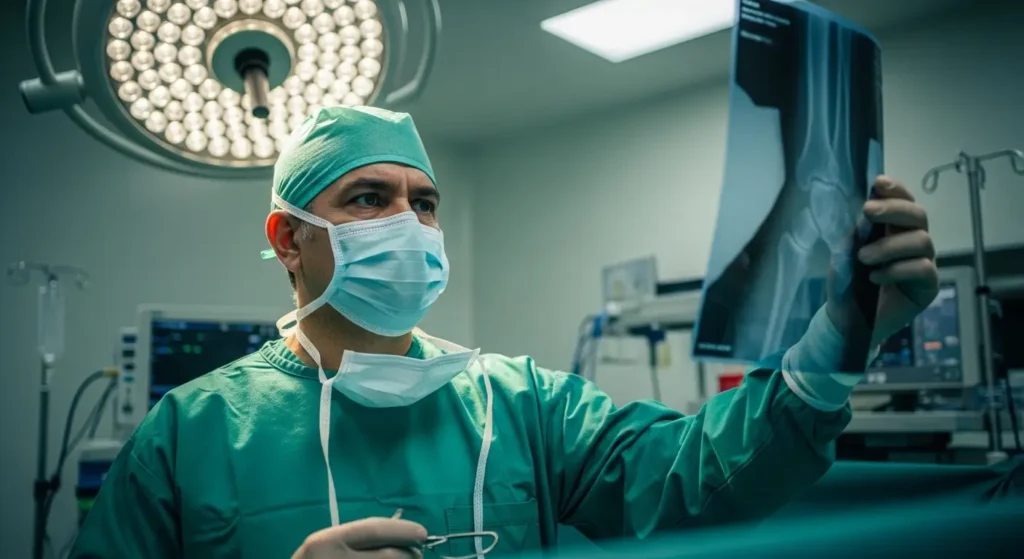
The cost of trauma surgery varies dramatically based on injury complexity, hospital choice, and whether implants are needed. Here’s what you can expect:
Comprehensive Surgery Price Comparison
| Injury Type | Public Hospital | Private Clinic | With Insurance (Est.) |
|---|---|---|---|
| Simple fracture repair | 2,000-5,000 MAD | 8,000-20,000 MAD | 1,000-5,000 MAD |
| Compound fracture | 5,000-15,000 MAD | 20,000-50,000 MAD | 3,000-15,000 MAD |
| ACL reconstruction | 8,000-20,000 MAD | 30,000-80,000 MAD | 5,000-25,000 MAD |
| Hip replacement (trauma) | 15,000-40,000 MAD | 60,000-150,000 MAD | 10,000-40,000 MAD |
| Spinal surgery | 20,000-60,000 MAD | 80,000-200,000 MAD | 15,000-60,000 MAD |
| Hand/wrist surgery | 3,000-8,000 MAD | 12,000-35,000 MAD | 2,000-10,000 MAD |
| Shoulder reconstruction | 6,000-18,000 MAD | 25,000-70,000 MAD | 4,000-20,000 MAD |
Simple Fracture Treatment
Closed Fractures (bone hasn’t broken through skin):
For straightforward breaks that can be set without surgery:
- Closed reduction and casting: 1,500-5,000 MAD (public) / 5,000-15,000 MAD (private)
- Includes: Emergency room care, X-rays, fracture reduction, cast application, pain medication
- Recovery time: 6-8 weeks in cast
- Follow-up visits: 2-3 appointments to monitor healing
Open Reduction with Internal Fixation (ORIF):
When surgery is needed to align bones with plates and screws:
- Public hospital: 5,000-15,000 MAD
- Private clinic: 20,000-50,000 MAD
- Includes: Surgery, anesthesia, implants (plates/screws), 2-3 day hospital stay
- Not always included: High-grade titanium implants (may cost additional 3,000-10,000 MAD)
Common simple fractures: wrist (Colles’ fracture), ankle, collarbone, single rib.
Compound Fracture Costs
Compound (open) fractures are more complex because the bone has pierced the skin, creating infection risk and requiring more intensive treatment:
Treatment components:
- Emergency wound cleaning and debridement
- Multiple surgical procedures (often 2-3 operations)
- Infection prevention protocols
- External fixation devices or extensive internal hardware
- Extended hospital stay (5-10 days)
Total average costs:
- Public hospitals: 8,000-25,000 MAD
- Private facilities: 30,000-80,000 MAD
- With complications: Can exceed 100,000 MAD in private care
Road traffic accidents often cause compound fractures of the tibia/fibula (lower leg), which represent some of the most common trauma surgeries in Morocco.
Ligament and Joint Surgery
ACL (Anterior Cruciate Ligament) Reconstruction:
One of the most common sports injuries requiring surgery:
- Public hospital: 8,000-20,000 MAD
- Private clinic: 30,000-80,000 MAD
- Surgery duration: 1-2 hours
- Hospital stay: 1-2 days
- Recovery: 6-9 months until full return to sports
The cost includes arthroscopic surgery, graft material (often from your own hamstring), and initial physical therapy guidance. However, the extensive outpatient physical therapy needed adds 8,000-15,000 MAD over several months.
Meniscus Repair:
- Public: 5,000-12,000 MAD
- Private: 18,000-45,000 MAD
- Faster recovery (6-12 weeks) than ACL
Shoulder Dislocation/Rotator Cuff Repair:
- Public: 6,000-18,000 MAD
- Private: 25,000-70,000 MAD
- Common in sports and falls
Head and Spinal Trauma
These represent the most serious and expensive trauma cases:
Traumatic Brain Injury Treatment:
- Initial CT scan: 800-3,000 MAD
- Neurosurgery consultation: 500-1,200 MAD
- Cranial surgery (if needed): 25,000-80,000 MAD (public) / 100,000-300,000 MAD (private)
- ICU care: 3,000-10,000 MAD per day
Spinal Injuries:
- Spinal stabilization surgery: 20,000-60,000 MAD (public) / 80,000-200,000 MAD (private)
- Vertebral fusion with hardware: Higher end of range
- Long-term rehabilitation: Additional 15,000-50,000 MAD
These complex cases absolutely require verification of insurance coverage before proceeding with elective aspects, though emergency stabilization happens regardless of payment ability.
Diagnostic Imaging and Testing Costs
Before and during treatment, you’ll need various diagnostic tests:
X-Ray Prices
Public hospitals:
- Single view: 50-100 MAD
- Multiple views (2-3 angles): 100-200 MAD
- Emergency X-ray: 80-150 MAD
Private clinics:
- Single view: 200-350 MAD
- Multiple views: 350-600 MAD
- Digital X-rays with CD: 400-700 MAD
Most fractures require 2-3 X-ray views to properly assess the injury. Follow-up X-rays during healing add to total costs.
CT Scan and MRI
CT (Computed Tomography) Scan:
- Public hospital: 500-1,200 MAD
- Private clinic: 1,500-3,500 MAD
- Essential for head trauma, complex fractures, pre-surgical planning
MRI (Magnetic Resonance Imaging):
- Public hospital: 1,500-2,500 MAD
- Private clinic: 2,500-5,000 MAD
- Used for ligament tears, spinal injuries, soft tissue damage
Wait times for MRI in public hospitals can extend 1-4 weeks for non-urgent cases, while private facilities often schedule within 24-48 hours.
Laboratory Tests
Pre-surgical and monitoring blood work:
- Basic blood panel: 100-300 MAD
- Complete pre-surgery screening: 300-1,000 MAD
- Blood typing and cross-match: 150-400 MAD
- Infection markers (CRP, white blood count): 200-500 MAD
Most insurance plans cover 70-80% of medically necessary diagnostic tests.
Hospital Stay and Additional Costs
How Much Is a Hospital Bed Per Day?
Public Hospital Ward:
- Shared room (4-6 beds): 100-300 MAD/day
- Semi-private (2 beds): 300-500 MAD/day
- Includes basic nursing care, meals, and monitoring
Private Hospital Rooms:
- Shared room: 800-1,500 MAD/day
- Private room: 1,500-3,000 MAD/day
- Suite/VIP room: 3,000-6,000 MAD/day
- Includes upgraded meals, private bathroom, TV, Wi-Fi
Intensive Care Unit (ICU):
- Public ICU: 1,500-3,000 MAD/day
- Private ICU: 5,000-15,000 MAD/day
- Necessary for severe trauma, major surgeries, complications
For a typical 3-day hospital stay after trauma surgery:
- Public: 300-1,500 MAD total
- Private: 4,500-18,000 MAD total
What’s Included in Hospital Fees
Your daily room rate typically covers:
Basic nursing care:
- Vital signs monitoring
- Medication administration
- Wound care and dressing changes
- Assistance with mobility
Meals:
- Public: Basic Moroccan meals (adequate nutrition, limited choice)
- Private: Menu selection, dietary accommodations
Standard supplies:
- Bed linens
- Basic hygiene items
- Bedpans, urinals
- Call button/nursing communication
Extra Costs to Budget For
Many expenses get billed separately from your room rate:
Specialized medications:
- Pain management: 200-1,000 MAD
- Antibiotics for infection prevention: 300-2,000 MAD
- Blood thinners post-surgery: 500-3,000 MAD
- Total medication costs: 500-5,000 MAD depending on injury
Medical supplies and implants:
- Surgical plates and screws: 3,000-20,000 MAD
- Joint implants (hip, knee): 15,000-60,000 MAD
- External fixation devices: 5,000-15,000 MAD
- Surgical mesh and materials: 1,000-10,000 MAD
Blood transfusions:
- Per unit of blood: 300-800 MAD
- Trauma patients may need 1-4 units
Physical therapy during hospitalization:
- Per session: 150-500 MAD
- Typical stay: 2-5 sessions
Important: Always clarify what’s included in your quoted price versus billed separately. “Implants not included” can add 10,000-50,000 MAD to your final bill.
Traumatology Prices by Moroccan City
Healthcare costs vary significantly across Morocco’s regions:
Casablanca Trauma Care Costs
As Morocco’s economic capital, Casablanca has the highest medical costs but also the most options:
Major trauma facilities:
- CHU Ibn Rochd: Premier public teaching hospital, excellent trauma department
- Clinique Badr: Respected private facility, moderate-to-high pricing
- Clinique Internationale Marrakech (Casablanca location): High-end private care
- Clinique Chifa: Mid-range private option
Looking for a specialist? Find the best traumatologist in Casablanca near you.
Typical pricing:
- Private consultation: 400-800 MAD
- Emergency room visit: 800-1,500 MAD
- Simple fracture surgery (private): 15,000-35,000 MAD
- Complex trauma surgery (private): 40,000-120,000 MAD
Casablanca offers the advantage of numerous specialist choices and 24/7 trauma care availability, but you’ll pay premium prices at private facilities.
Rabat Traumatology Pricing
Morocco’s capital offers excellent public healthcare and competitive private options. If you need to book an appointment, you can find a traumatologist in Rabat here.
Key facilities:
- Hôpital des Spécialités: Government hospital with modern trauma center
- Hôpital Militaire d’Instruction Mohammed V: Primarily for military/government employees, excellent care
- Clinique Al Madina: Well-regarded private option with fair pricing
- Clinique Agdal: Mid-range private care
Typical pricing:
- Private consultation: 350-700 MAD (10-15% less than Casablanca)
- Emergency surgery (private): 12,000-30,000 MAD
- Complex procedures: 35,000-100,000 MAD
Rabat benefits from government hospital infrastructure serving the capital’s administration, often resulting in shorter wait times at public facilities compared to other cities.
Marrakech Trauma Centers
Marrakech’s medical tourism industry creates competitive pricing:
Popular facilities:
- CHU Mohammed VI: Modern public teaching hospital
- Polyclinique du Sud: Value-oriented private clinic
- Clinique Al Madina Marrakech: Quality private care
- International Clinic Marrakech: Caters to tourists and expats
Typical pricing:
- Private consultation: 300-650 MAD
- Trauma surgery (private): 10,000-28,000 MAD
- Complex cases: 30,000-90,000 MAD
Some facilities offer package pricing for medical tourists, which can benefit locals as well. The competitive environment keeps private prices somewhat lower than Casablanca.
Tangier, Fes, and Other Cities
- Growing medical infrastructure
- Private consultation: 300-600 MAD
- 20-25% lower costs than Casablanca
- Limited specialist availability for complex trauma
Fes:
- CHU Hassan II offers excellent public care
- Traditional city with growing private sector
- Private consultation: 250-550 MAD
- Good value for standard trauma care
Agadir:
- Tourism-driven healthcare infrastructure
- Moderate pricing between Marrakech and Casablanca
- Strong private sector presence
Smaller cities (Meknes, Oujda, Kenitra):
- Primarily public hospital-dependent
- Private consultation: 200-500 MAD
- May require transfer to larger cities for complex cases
General rule: Expect 20-40% lower costs outside major urban centers, but verify specialist availability before committing to treatment locally.
Insurance Coverage for Traumatology in Morocco

Does CNOPS Cover Traumatology?
CNOPS (Caisse Nationale des Organismes de Prévoyance Sociale) serves public sector employees and typically provides the most comprehensive coverage:
Coverage rate:
- 70-80% of approved costs for traumatology services
- Some procedures covered at 90% (life-threatening trauma)
- Certain implants covered at 100%
What’s covered:
- Consultation with orthopedic/trauma specialists
- Emergency room treatment
- Surgical procedures (fracture repair, ligament reconstruction)
- Hospital accommodation (standard rooms)
- Medically necessary diagnostic imaging
- Prescription medications related to trauma care
- Physical therapy (limited sessions)
What’s NOT covered:
- Private room upgrades (covered room rate applied)
- Non-essential comfort items
- Experimental treatments
- Cosmetic scar revision
- Premium implant materials (coverage for standard only)
Reimbursement process:
- Get treatment at any facility (contracted facilities preferred)
- Collect all documents:
- Detailed invoice (facture détaillée)
- Medical reports and surgical notes
- Prescription receipts
- Imaging reports
- Submit to CNOPS within 3 months of treatment
- Wait 2-4 weeks for reimbursement via bank transfer
Pre-authorization requirement:
- Emergency trauma: No pre-authorization needed
- Elective surgery (planned ligament repair): Pre-authorization required
- Submit medical justification and cost estimate
Pro tip: CNOPS covers more at “conventionné” (contracted) facilities. Check the CNOPS website for contracted hospitals in your city before choosing where to receive non-emergency care.
CNSS Traumatology Benefits
CNSS (Caisse Nationale de Sécurité Sociale) covers private sector employees:
Coverage details:
- 70% coverage after meeting annual deductible
- Deductible: Typically 500-1,000 MAD per year
- Annual maximum: Varies by salary but usually 30,000-80,000 MAD
Emergency care provision:
- Full coverage for stabilization at contracted facilities
- No prior authorization needed for true emergencies
- Direct billing available at major hospitals
Required documents:
- Accident declaration (déclaration d’accident): Must file within 48 hours of injury
- Medical certificate from treating physician
- All invoices and receipts
- Attestation from employer (for workplace accidents)
Reimbursement timeline:
- 3-6 weeks on average for complete claims
- Workplace accident claims processed faster (10-15 days)
Important: CNSS provides higher coverage (90-100%) for workplace accidents specifically. Always declare work-related injuries properly to access full benefits.
Private Insurance Plans
Private insurance offers the most comprehensive coverage:
Coverage ranges:
- Basic plans: 80% coverage
- Premium plans: 90-100% coverage
- Some plans: 100% at network hospitals, 80% out-of-network
Annual limits:
- Entry-level plans: 50,000-100,000 MAD
- Mid-tier plans: 150,000-300,000 MAD
- Premium plans: 500,000-1,000,000 MAD or unlimited
Deductibles:
- Low: 500-1,000 MAD per year
- Moderate: 2,000-3,000 MAD per year
- High-deductible plans: 5,000-10,000 MAD (lower premiums)
Popular insurers in Morocco:
- Saham Assurance: Widely accepted, good network
- Wafa Assurance: Comprehensive coverage options
- AXA Morocco: International standards, premium pricing
- Atlanta: Growing network, competitive rates
- RMA Watanya: Strong in major cities
Direct billing advantage: Most private insurance companies have direct billing agreements with major private hospitals. This means:
- You pay only your copayment/deductible at checkout
- Insurance pays the hospital directly
- No cash flow burden while waiting for reimbursement
How to Maximize Your Insurance Coverage
Before treatment:
- Verify hospital is “conventionné” (contracted): Coverage rates often 10-20% higher at network facilities
- Get pre-authorization for planned procedures:
- Call your insurance company
- Submit medical justification
- Get written approval before surgery
- Failure to pre-authorize can reduce coverage by 20-30%
- Understand your coverage limits:
- Check annual maximum
- Know deductible status
- Confirm specific procedure coverage
During treatment:
- Keep ALL receipts and documents:
- Itemized invoices
- Prescription receipts
- Pharmacy bills
- Medical reports
- Imaging results on CD/USB
- Request detailed invoices (factures détaillées):
- Generic receipts often rejected
- Need procedure codes and itemization
- Ask before leaving hospital
After treatment:
- File claims promptly:
- Submit within 30-90 days (check your policy)
- Incomplete claims cause major delays
- Include all supporting documents
- Appeal denied claims:
- Request written denial reason
- Gather additional medical justification
- Resubmit with doctor’s letter explaining necessity
- 30-40% of initial denials get approved on appeal
Money-saving tips:
- Use generic medications when available (same coverage, lower out-of-pocket)
- Schedule non-urgent procedures during low-deductible periods
- Confirm physical therapy session limits before starting treatment
- Compare costs even within network (prices vary significantly)
What If You Don’t Have Insurance?
Emergency Care Without Insurance
Moroccan law guarantees emergency medical care regardless of payment ability:
Your legal rights:
- All hospitals (public and private) must stabilize life-threatening conditions
- “Stabilization” means addressing immediate risks: stopping bleeding, setting fractures to prevent complications, emergency surgery
- Cannot be refused treatment due to inability to pay
- Payment discussion happens AFTER stabilization
Public hospital emergency departments:
- Most accessible option without insurance
- Quality trauma care at teaching hospitals (CHU)
- Costs remain manageable for most Moroccans
- Social services available to discuss payment
Private hospital emergency:
- Required to stabilize you first
- Will request payment guarantee after stabilization
- May transfer you to public hospital for ongoing care if you cannot pay
- More aggressive about payment than public facilities
Important: “Emergency” has a specific medical definition. Non-urgent issues (old injuries, chronic pain) don’t qualify for mandatory free stabilization.
Payment Plans and Financial Assistance
Public hospital payment plans:
Most public hospitals offer flexible payment:
- Arrangements through social services department (service social)
- Monthly payment plans: 6-24 months typical
- Interest-free installments
- Payment amounts based on income assessment
How to apply:
- Meet with hospital social worker (assistant social)
- Provide income documentation (pay slips, attestations)
- Explain financial situation honestly
- Negotiate realistic monthly payment
Private hospital payment options:
- Payment plans available: Usually 3-12 months
- May charge interest (3-8% annually)
- Often require credit card or bank guarantee
- Down payment typically required (20-30% of total)
Financial assistance programs:
RAMED (Régime d’Assistance Médicale):
- Government medical assistance for low-income citizens
- Free or highly subsidized care at public hospitals
- Covers traumatology fully
- Application through local commune
- Income limits apply (varies by family size)
Hospital charity funds:
- Most major hospitals have assistance funds
- Cover partial or full costs for indigent patients
- Application through social services
- Documentation of financial hardship required
NGO and charity support:
- Associations Marocaines (various medical charities)
- Religious charity funds (Zakat committees)
- International aid organizations for severe cases
- Community fundraising (increasingly common via social media)
Lowest-Cost Trauma Care Options
CHU (Centre Hospitalier Universitaire) teaching hospitals:
- Best value in Moroccan healthcare
- Modern equipment and specialists
- Training residents under expert supervision
- Same quality as private but 70-90% cheaper
- Major cities: Casablanca (Ibn Rochd), Rabat, Marrakech, Fes
Regional public hospitals:
- Adequate for straightforward trauma
- Limited specialist availability
- Very low costs
- May transfer complex cases to CHU
Medical mission programs:
- Occasional free surgical missions
- Focus on specific conditions
- Schedule varies by organization
- Check with major hospitals for upcoming missions
Cross-border options for northern Morocco:
- Ceuta/Melilla (Spanish territories): Emergency care available
- EU emergency standards
- Language barrier (Spanish required)
- Costs higher than Moroccan public but lower than Moroccan private
- Useful for trauma happening near border
Hidden Costs You Need to Know About
Medical Supplies and Implants
This is where hospital bills can shock patients:
Orthopedic hardware:
- Plates and screws (basic steel): 3,000-8,000 MAD
- Plates and screws (titanium): 8,000-20,000 MAD
- Intramedullary rods (for long bone fractures): 5,000-15,000 MAD
- External fixation devices: 8,000-25,000 MAD
Joint implants:
- Hip replacement components: 15,000-40,000 MAD (public) / 30,000-80,000 MAD (private premium brands)
- Knee replacement: 20,000-50,000 MAD
- Shoulder implants: 15,000-35,000 MAD
Surgical consumables:
- Surgical mesh: 1,000-5,000 MAD
- Specialized sutures: 500-3,000 MAD
- Bone graft materials: 2,000-10,000 MAD
- Surgical drains and dressings: 300-1,500 MAD
Critical warning: Many hospitals quote surgery prices “without implants” or “implants charged separately.” A 15,000 MAD surgery quote can become 35,000 MAD with necessary hardware. Always ask: “Does this price include all implants and materials?”
Insurance coverage: Most plans cover standard implants at 70-80% but may not cover premium brands. Generic vs. brand-name implants can differ by 10,000-30,000 MAD.
Anesthesia Fees
Anesthesiologists typically bill separately:
General anesthesia:
- 2,000-5,000 MAD (public hospital)
- 4,000-10,000 MAD (private facility)
- Longer surgeries cost more
Regional/spinal anesthesia:
- 1,000-3,000 MAD (public)
- 2,500-6,000 MAD (private)
- Used for lower body procedures
Pre-anesthesia consultation:
- Required for planned surgery
- 300-800 MAD separate charge
- Includes pre-operative assessment
Monitoring and recovery:
- Post-anesthesia care unit (PACU)
- 500-2,000 MAD
- Sometimes bundled, sometimes separate
Many patients don’t realize anesthesia adds 2,000-10,000 MAD to their total bill. Budget accordingly.
Post-Surgery Recovery Costs
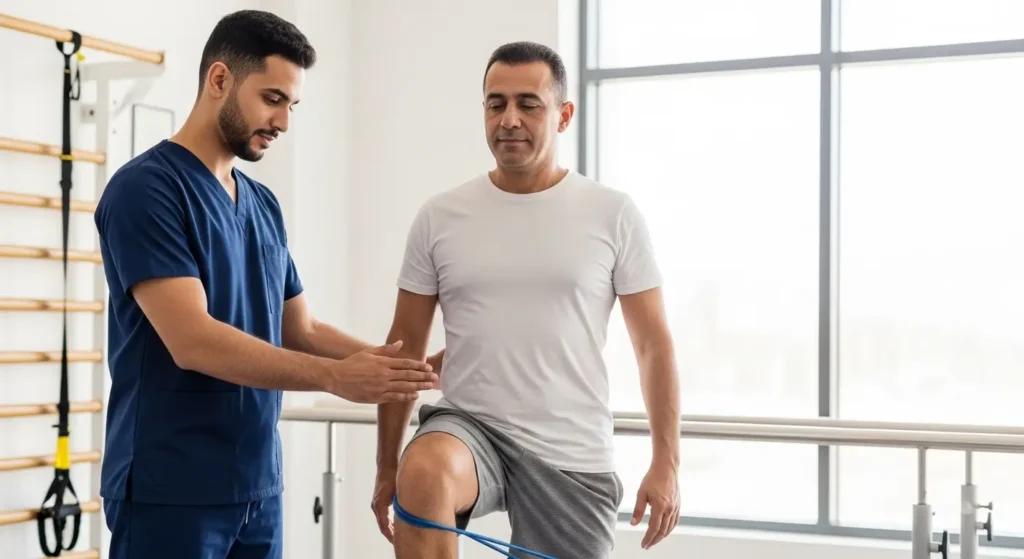
Treatment doesn’t end when you leave the hospital:
Physical therapy:
- Per session: 200-600 MAD (private PT clinics)
- Public hospital PT: 50-150 MAD per session
- Typical course: 10-30 sessions over 2-6 months
- Total PT cost: 2,000-18,000 MAD
Insurance typically covers 10-20 sessions; additional sessions are out-of-pocket.
Medical equipment rental:
- Wheelchairs: 150-300 MAD per month
- Crutches: 50-200 MAD per month (or purchase 200-500 MAD)
- Walking boot/brace: 300-1,200 MAD purchase
- Hospital bed (for home): 400-800 MAD per month
Home healthcare:
- Nurse visits for wound care: 150-400 MAD per visit
- Daily dressing changes: May need 10-20 visits
- Catheter care, drain management: 200-500 MAD per visit
Ongoing medications:
- Pain management (1-3 months): 200-800 MAD per month
- Blood thinners (to prevent clots): 300-1,000 MAD per month
- Anti-inflammatories: 100-400 MAD per month
- Total medication costs post-discharge: 600-2,500 MAD monthly
Follow-up imaging:
- X-rays to monitor healing: 200-500 MAD each (need 2-4 over recovery)
- CT or MRI if complications: 1,500-5,000 MAD
Lost income:
- Recovery time: 6 weeks to 6 months depending on injury
- Consider lost wages in your financial planning
- Workplace accident cases may provide salary continuation
Total hidden costs can add 5,000-25,000 MAD to your initial surgery and hospitalization expenses.
How to Get Accurate Price Estimates Before Treatment

Questions to Ask Your Hospital
Before committing to treatment, get clarity:
Essential questions:
- “What is the TOTAL cost including all fees?”
- Don’t accept vague ranges
- Ask for written estimate
- “Are implants and surgical supplies included?”
- This is the biggest gotcha
- If not included, ask for implant cost estimate
- “What does my insurance cover for this procedure?”
- Many hospitals verify coverage for you
- Get pre-authorization confirmation
- “Is there a deposit required?”
- Private hospitals often require 30-50% upfront
- Public hospitals typically payment after discharge
- “What payment options do you offer?”
- Payment plans available?
- Credit cards accepted?
- Bank transfer or cash only?
- “What happens if complications occur?”
- Additional surgery costs?
- Extended ICU stay pricing?
- “Does this include anesthesia?”
- Often billed separately
- Can add 2,000-10,000 MAD
- “How many days hospital stay are included?”
- Additional days cost extra
- What’s the daily rate?
Hospitals with Transparent Pricing
Public hospitals:
- Required by law to post fee schedules (grilles tarifaires)
- Usually displayed in administration office
- Ask for printed price list for common procedures
- Most transparent pricing in Moroccan healthcare
Private clinics offering transparency:
- Request written estimate (devis médical)
- Reputable facilities provide detailed breakdowns
- Compare at least 2-3 private facilities
Red flags:
- Refusing to provide written estimates
- Vague “we’ll see what insurance covers” responses
- Pressure to commit without seeing costs
- Significantly lower quotes than competitors (may have hidden fees)
Online resources:
- Some private hospitals list basic pricing on websites
- Medical tourism sites often have transparent pricing
- Facebook groups and forums share experiences
Getting Written Cost Breakdowns
Request a “devis détaillé” (detailed estimate):
Should include:
- Consultation fees
- Surgeon fees
- Anesthesia costs
- Operating room charges
- Hospital stay (number of days × daily rate)
- Implants and surgical materials (itemized)
- Nursing care
- Medications during hospitalization
- Diagnostic tests (X-rays, blood work)
Validity period:
- Estimates typically valid 30-90 days
- Prices may increase after expiration
- Get dated, signed document
How to compare estimates:
- Create spreadsheet with line-by-line comparison
- Note what’s included vs. excluded
- Calculate worst-case scenario (complications, extended stay)
- Factor in insurance coverage differences
Negotiation opportunities:
- Cash payment discounts (5-10% at some private clinics)
- Package deals for surgery + PT + follow-ups
- Seasonal promotions (rare but exist)
- Group/family insurance plan advantages
Best Value Traumatology Hospitals in Morocco
Top Public Hospitals for Trauma Care
CHU Ibn Rochd (Casablanca)
- Morocco’s premier public teaching hospital
- Excellent trauma and orthopedic departments
- 24/7 emergency trauma center
- Modern equipment and experienced surgeons
- Average fracture surgery: 5,000-15,000 MAD
- Wait times: Emergency immediate, elective surgery 2-8 weeks
Hôpital des Spécialités (Rabat)
- Government hospital serving capital region
- Strong orthopedic residency program
- Quality care with moderate wait times
- Average costs: 4,000-12,000 MAD for standard trauma surgery
- Priority for government employees (CNOPS)
CHU Mohammed VI (Marrakech)
- Newer facility with modern infrastructure
- Growing reputation for orthopedic care
- Serves southern Morocco region
- Competitive with northern hospitals
- Average costs similar to Rabat
CHU Hassan II (Fes)
- Historic teaching hospital
- Solid trauma department
- Serves central and eastern regions
- Lower costs than coastal cities
- Good option for standard trauma cases
Why choose public teaching hospitals:
- 70-90% cheaper than private
- Access to subspecialists
- Research-driven care improvements
- No financial motivation for unnecessary procedures
Affordable Private Clinics
Clinique Al Madina (Rabat)
- Well-regarded mid-tier private option
- Fair pricing compared to luxury clinics
- Experienced orthopedic surgeons
- Average trauma surgery: 15,000-40,000 MAD
- Good insurance relationships (direct billing)
Polyclinique du Sud (Marrakech)
- Value-oriented private care
- Transparent pricing
- Popular with middle-class Moroccans
- Average costs: 12,000-35,000 MAD
- English and French-speaking staff
Clinique Internationale (Casablanca)
- Mid-to-upper range pricing
- Modern facilities
- Good reputation for orthopedics
- Average surgery: 20,000-50,000 MAD
- Worth the premium for complex cases
Clinique Agdal (Rabat)
- Moderate private pricing
- Convenient location
- Decent quality-to-cost ratio
- Average trauma surgery: 18,000-45,000 MAD
Selection criteria for private clinics:
- Check surgeon credentials (board certification)
- Read patient reviews (Google, Facebook)
- Verify insurance acceptance
- Visit facility before committing (cleanliness, equipment)
- Ask about infection rates (good clinics track this)
What Makes a Good Trauma Center
Look for these characteristics:
24/7 emergency capability:
- Orthopedic surgeon on-call always
- Operating rooms available anytime
- Emergency imaging (X-ray, CT) round-the-clock
On-site specialists:
- Orthopedic surgeons
- Anesthesiologists
- General surgeons (for multi-trauma)
- Neurosurgeons (for head/spine trauma)
- Radiologists
Modern equipment:
- Digital X-ray and fluoroscopy
- CT scanner
- Operating room with orthopedic equipment
- Arthroscopy capability
Support services:
- Blood bank or rapid access to blood
- ICU beds for complex trauma
- Physical therapy department
- Social services for payment assistance
Quality indicators:
- Low infection rates
- Accreditation or certifications
- Teaching hospital status (resident training = up-to-date protocols)
- Positive patient testimonials
Morocco’s trauma care quality: Major urban hospitals (public and private) offer excellent trauma care that meets international standards. The main difference is comfort, wait times, and cost—not safety or surgical quality.
Common Traumatology Scenarios and Their Costs
Road Traffic Accident
Morocco has one of the highest road accident rates in the region, making this a common scenario:
Typical injuries:
- Multiple fractures (pelvis, legs, arms)
- Head trauma (concussion to severe TBI)
- Internal injuries (liver, spleen, lung)
- Facial fractures
- Spinal injuries
Treatment pathway:
- Emergency ambulance transport: 500-2,000 MAD (often free via Croissant Rouge)
- Emergency room stabilization: 1,000-5,000 MAD
- Diagnostic imaging (CT scans, X-rays): 2,000-8,000 MAD
- Surgery (one or multiple procedures): 15,000-100,000 MAD
- ICU stay (if needed): 3-7 days × 3,000-10,000 MAD/day
- Regular hospital stay: 5-15 days × 500-3,000 MAD/day
- Rehabilitation: 3-12 months of PT
Average total cost:
- Public hospital: 15,000-50,000 MAD
- Private hospital: 50,000-250,000 MAD (severe cases exceed 300,000 MAD)
- With good insurance: 5,000-50,000 MAD out-of-pocket
Timeline: 3-10 days initial hospitalization, 3-12 months total recovery
Insurance considerations:
- Auto insurance may cover medical costs
- Check if “garantie conducteur” (driver guarantee) included
- Third-party liability for passengers
- Coordinate between auto and health insurance
Sports Injury (ACL Tear)
Common among football players, athletes, and active youth:
Diagnosis:
- Initial consultation and examination: 300-800 MAD
- MRI to confirm tear: 2,500-5,000 MAD
- Orthopedic specialist consultation: 400-800 MAD
Treatment options:
Conservative (non-surgical):
- Physical therapy focused: 8,000-15,000 MAD over 6 months
- Activity modification
- Suitable for older patients or low activity levels
Surgical (ACL reconstruction):
- Surgery cost: 8,000-20,000 MAD (public) / 30,000-80,000 MAD (private)
- Hospital stay: 1-2 days
- Anesthesia: 2,000-6,000 MAD
- Post-surgical PT: 10,000-18,000 MAD over 6-9 months
- Follow-up consultations (6-8 visits): 1,500-4,000 MAD
- Follow-up MRI at 6 months: 2,500-5,000 MAD
Total surgical pathway cost:
- Public hospital: 25,000-45,000 MAD
- Private clinic: 50,000-110,000 MAD
- With insurance (70-80% coverage): 10,000-30,000 MAD
Recovery timeline:
- Return to walking: 2-4 weeks
- Return to work (desk job): 2-4 weeks
- Return to sports: 6-9 months
- Full recovery: 9-12 months
Age consideration: Young athletes (under 30) almost always need surgery to return to sports. Older patients may manage conservatively.
Workplace Accident
Common workplace injuries:
- Falls from height (construction)
- Hand/finger trauma (machinery)
- Back injuries (lifting)
- Chemical burns
- Eye injuries
Coverage advantage:
- CNSS provides 90-100% coverage for recognized workplace accidents
- Employer must pay for initial care
- Salary continuation during recovery (70-100% of salary)
Critical steps:
- Immediate: Get first aid at workplace if available
- Within 48 hours: File formal accident declaration (déclaration d’accident de travail) with CNSS
- Hospital: Inform them it’s a workplace accident
- Documentation: Keep all medical reports, receipts, and correspondence
Average costs (before CNSS reimbursement):
- Minor injury (stitches, simple fracture): 3,000-12,000 MAD
- Moderate injury (surgery required): 15,000-50,000 MAD
- Severe injury (multiple surgeries, long recovery): 40,000-150,000 MAD
Out-of-pocket (with CNSS):
- Often ZERO for recognized workplace accidents
- CNSS may cover 100% at contracted facilities
- Disputes can arise if employer challenges accident classification
Recovery compensation:
- Daily allowances during recovery
- Permanent disability benefits if applicable
- Vocational rehabilitation support
Simple Fall with Broken Bone
Most common among elderly (hip fractures) and children (arm fractures):
Typical scenarios:
- Wrist (Colles’ fracture): Common in elderly women
- Ankle fractures: All ages
- Hip fractures: Elderly, often requiring surgery
- Clavicle (collarbone): Children and young adults
Simple wrist fracture (non-displaced):
- Emergency care and X-ray: 200-800 MAD
- Closed reduction and casting: 500-2,000 MAD
- Follow-up X-rays (3-4 visits): 600-2,000 MAD
- Cast removal: 100-300 MAD
- Total: 1,500-5,000 MAD (public) / 5,000-12,000 MAD (private)
- Recovery: 6-8 weeks
Ankle fracture requiring surgery:
- Surgery with plate/screws: 8,000-25,000 MAD (public) / 20,000-60,000 MAD (private)
- Hospital stay (2-3 days): 500-9,000 MAD
- Physical therapy: 3,000-8,000 MAD
- Total: 12,000-40,000 MAD (public) / 30,000-85,000 MAD (private)
- Recovery: 3-4 months
Hip fracture (elderly patient):
- Emergency care and diagnosis: 1,500-5,000 MAD
- Hip surgery (repair or replacement): 25,000-80,000 MAD (public) / 80,000-180,000 MAD (private)
- Extended hospital stay (5-10 days): 2,000-30,000 MAD
- Rehabilitation facility or home care: 5,000-20,000 MAD
- Total: 35,000-120,000 MAD (public) / 100,000-250,000 MAD (private)
- Recovery: 3-6 months
Prevention savings: Hip fracture in elderly costs 10-20x more than wrist fracture. Prevention (bone density screening, home safety modifications) much cheaper than treatment.
Frequently Asked Questions About Traumatology Prices
Do I have to pay upfront at private hospitals?
Private hospitals:
- Yes, typically require a deposit before surgery
- Deposit amount: 30-50% of estimated total cost
- Emergency stabilization happens first, then deposit requested
- Payment methods: Cash, credit card, bank transfer
- Insurance pre-authorization can reduce or eliminate deposit
Public hospitals:
- Generally NO upfront payment required
- Emergency care provided immediately
- Bill presented at discharge
- Payment plans available if needed
Deposit negotiations:
- With insurance pre-authorization, may waive deposit
- Some hospitals accept credit card guarantee instead of cash
- In emergencies, treatment cannot be delayed for payment
Refund policy:
- Deposits higher than final bill: Refunded within 7-30 days
- Keep all receipts for insurance claims
Can I negotiate traumatology prices in Morocco?
Public hospitals:
- Fixed government-set rates
- NO negotiation possible on service fees
- Social services can help arrange payment plans
- RAMED application for low-income coverage
Private clinics:
- Some flexibility, especially for:
- Cash payment (5-10% discount possible)
- Multiple family members
- Package deals (surgery + PT + follow-ups)
- Elective procedures during slow periods
- Less negotiation for emergency care
- Established prices for insurance contracts (usually non-negotiable)
Negotiation tips:
- Ask: “Do you offer any discounts for cash payment?”
- Request itemized estimate and question high-cost items
- Compare with competitor prices and mention them
- Be respectful—aggressive haggling doesn’t work well
- Better success with administrative staff than doctors
Reality check: Expect 5-15% savings maximum through negotiation. Major savings come from choosing public over private, not negotiating private prices.
What happens if I can’t afford the treatment?
Immediate options:
- Go to public hospital:
- Lowest-cost option available
- Emergency care regardless of payment ability
- Payment arrangements after treatment
- Apply for RAMED:
- Free/subsidized public healthcare for low-income
- Emergency enrollment possible
- Covers essential trauma care
- Hospital financial assistance:
- Meet with social services (service social)
- Explain financial situation with documentation
- Partial cost waiver possible
- Payment plans based on income
- Family support:
- Moroccan culture emphasizes family responsibility
- Extended family often contributes
- Community fundraising increasingly common
- Charity organizations:
- Zakat funds at mosques
- Medical assistance associations
- International aid organizations (for severe cases)
Long-term options:
- Negotiate extended payment plans (12-24 months)
- Seek employment assistance programs
- Crowdfunding via social media (growing trend)
What you should NOT do:
- Avoid treatment (complications cost more)
- Hide at home with serious injury
- Use unqualified “healers” for fractures
Legal protection: Moroccan law prohibits refusing emergency care based on inability to pay. Your right to stabilizing treatment is protected.
Is traumatology covered under RAMED?
Yes, RAMED (Régime d’Assistance Médicale) covers traumatology:
Coverage includes:
- Emergency trauma care
- Consultations with orthopedic specialists
- Diagnostic imaging (X-rays, CT scans)
- Surgical interventions for fractures and injuries
- Hospital stays in public facilities
- Essential medications
- Post-operative care
Coverage at: Public hospitals only (CHU, regional hospitals)
Cost to patient: Free or minimal fees (10-50 MAD for some services)
Eligibility:
- Moroccan citizens and legal residents
- Income below threshold (varies by family size, roughly under 3,500 MAD/month for family of 4)
- Not covered by other insurance (CNOPS, CNSS, private)
How to enroll:
- Apply at local commune with income documentation
- Processing time: 2-4 weeks typically
- Valid for one year, renewable
Emergency without RAMED:
- Public hospitals provide emergency care regardless
- Can apply for RAMED retroactively for ongoing treatment
- Social services assist with enrollment
Limitations:
- Public facilities only (cannot use at private clinics)
- Standard materials/implants (not premium options)
- May experience longer wait times for elective procedures
How long does insurance reimbursement take?
CNOPS (Public sector insurance):
- Timeline: 2-4 weeks for straightforward claims
- Conditions: Complete documentation, contracted facility
- Delays: Missing documents extend to 6-8 weeks
CNSS (Private sector insurance):
- Timeline: 3-6 weeks on average
- Workplace accidents: 10-15 days (faster processing)
- Complications: Incomplete paperwork delays 4-8 weeks
Private insurance:
- Timeline: 1-3 weeks with complete documentation
- Direct billing: Immediate (no reimbursement wait)
- Appeals: 2-6 weeks additional for disputed claims
Factors affecting speed:
Fast reimbursement (7-14 days):
- Digital submission (if available)
- Complete documentation first time
- Standard procedures at contracted facilities
- Pre-authorized treatment
Slow reimbursement (6-12 weeks):
- Missing receipts or medical reports
- Non-contracted facility requiring review
- Complex cases needing medical evaluation
- Peak processing times (after holidays)
Required documents for fastest processing:
- Detailed invoice (facture détaillée) with procedure codes
- Medical reports and discharge summary
- All prescription receipts with pharmacy stamps
- Diagnostic imaging reports
- Proof of payment (stamped receipts)
- Claim form completely filled out
Pro tip: Submit claims in person when possible—catch errors immediately rather than waiting for rejection letter.
Should I go to public or private for trauma care?
This depends on your situation:
Choose PUBLIC if:
✓ Cost is your primary concern (70-90% cheaper) ✓ You have time for non-emergency procedures (wait times 2-8 weeks) ✓ You have RAMED or limited insurance coverage ✓ Your injury is straightforward (simple fractures, standard procedures) ✓ You’re comfortable in shared hospital rooms ✓ You trust teaching hospital quality (often excellent)
Best for: Simple fractures, standard orthopedic surgeries, patients with RAMED, budget-conscious families
Choose PRIVATE if:
✓ You need immediate treatment for non-emergency procedure ✓ You have comprehensive insurance with good coverage ✓ Your injury is complex requiring subspecialist expertise ✓ You value comfort, privacy, and shorter wait times ✓ You can afford the 3-10x higher costs ✓ Language preference (more English-speaking staff)
Best for: Complex trauma, ligament reconstruction, multiple injuries, patients with private insurance, those who can afford premium care
Reality check: Quality of care (especially for trauma) is comparable. Major public teaching hospitals (CHU) often have MORE experience with severe trauma than private clinics because they see higher volumes. The main differences are:
- Wait times: Private much faster for elective procedures
- Comfort: Private offers better accommodation
- Cost: Public dramatically cheaper
Emergency situations: Quality of emergency trauma care is excellent at both major public and private facilities. Choose based on proximity and insurance network.
Hybrid approach:
- Emergency care at nearest quality facility (public or private)
- Transfer to preferred facility after stabilization if desired
- Use public for surgery, private for comfortable recovery
- Get second opinions across both sectors
Are traumatology prices higher on weekends?
Public hospitals:
- Same fixed rates 24/7
- No weekend or night surcharges
- Government-regulated pricing doesn’t vary by time
Private clinics:
- May charge emergency premium: 10-30% more
- Weekend surgery fees sometimes higher
- Night shift (10 PM – 6 AM) can add premium
- Holiday surcharges possible
Factors affecting weekend pricing:
Surgeon availability:
- On-call surgeons may charge premium
- Preferred surgeon may not be available
- Junior surgeons (cheaper) more common on weekends at teaching hospitals
Operating room costs:
- Weekend staffing premiums passed to patients
- Emergency OR access vs. scheduled OR (emergency usually costs more)
Money-saving strategies:
- For non-urgent procedures:
- Schedule weekdays to avoid premiums
- Morning surgeries often cheaper than evening
- For true emergencies:
- Time doesn’t matter—get care immediately
- Costs similar regardless of day/time
- Public hospitals:
- No price variation, so weekend is fine
Reality: Weekend premium at private facilities typically adds 1,500-5,000 MAD to total bill—significant but shouldn’t delay necessary care.
Insurance coverage: Most insurance covers weekend care at same rate as weekday, so you won’t pay more out-of-pocket if well-insured.
5 Common Mistakes That Increase Your Trauma Care Costs
Mistake #1: Not Checking Insurance Coverage First
The problem: Many patients rush to the nearest private hospital in an emergency, then discover their insurance doesn’t cover out-of-network facilities—reducing reimbursement from 80% to 50% or even zero.
Real cost impact:
- 30,000 MAD private surgery with in-network coverage: 6,000 MAD out-of-pocket
- Same surgery out-of-network: 15,000-30,000 MAD out-of-pocket
The solution:
- Know your insurance network BEFORE an emergency happens
- Save contracted hospital addresses in your phone
- Call insurance hotline immediately after emergency stabilization
- Transfer to network hospital if safe and practical
- Get written pre-authorization for planned procedures
Emergency exception: In life-threatening situations, go to the nearest hospital. Insurance typically covers true emergencies at any facility, then you can transfer.
Mistake #2: Accepting All Recommended Tests
The problem: Some facilities over-prescribe diagnostic tests, especially for insured patients. Not all imaging and lab work is medically necessary.
Examples of over-testing:
- MRI when X-ray sufficient for diagnosis
- CT scan repeated unnecessarily
- Excessive blood work panels
- Multiple specialist consultations when one is adequate
Cost impact: Unnecessary tests add 2,000-8,000 MAD to your bill with no medical benefit.
The solution: Ask these questions:
- “Is this test essential for my treatment?”
- “What will you do differently based on results?”
- “Are there less expensive alternatives?”
- “Does my insurance cover this test?”
Trust your doctor, but question:
- Second specialist opinion when first was clear
- Repeat imaging within days without new symptoms
- Tests “just to be thorough” rather than diagnostic necessity
Mistake #3: Not Getting Written Estimates
The problem: Accepting verbal cost estimates leads to surprise bills. “Around 20,000 MAD” becomes 35,000 MAD when implants, anesthesia, and extras are added.
Real example:
- Verbal quote: “Surgery about 15,000 MAD”
- Final bill: 32,000 MAD (implants 8,000 + anesthesia 4,000 + extended stay 5,000)
The solution:
- Always request “devis écrit” (written estimate)
- Demand itemized breakdown
- Ask specifically: “What’s NOT included in this price?”
- Get estimates from 2-3 facilities to compare
- Confirm insurance coverage in writing
Red flag: Facilities refusing written estimates are hiding something. Choose transparent providers.
Mistake #4: Ignoring Public Hospital Options
The problem: Many Moroccans assume only private clinics offer quality care and never consider excellent public alternatives.
Reality:
- CHU teaching hospitals have MORE trauma experience
- Modern equipment at major public facilities
- Same or better surgical outcomes for standard procedures
- Board-certified, experienced surgeons
Cost impact: Choosing private by default costs 20,000-100,000 MAD more than public option for same quality.
The solution:
- Research public hospital trauma departments in your city
- Read reviews and ask for recommendations
- Visit CHU to see facilities before emergency happens
- Consider public for surgery, private for recovery if cost is concern
- Don’t let bias against public healthcare cost you unnecessarily
When private IS worth the premium:
- Complex specialized procedures
- Need for immediate scheduling (can’t wait 4-6 weeks)
- Preference for private room and comfort
- Elderly patients who benefit from extra attention
Mistake #5: Delaying Treatment to Save Money
The problem: Putting off medical care because of cost concerns often leads to:
- Complications requiring more expensive treatment
- Emergency surgery instead of planned procedure
- Longer recovery times
- Permanent damage from delayed care
Examples:
- Untreated fracture: Heals incorrectly, needs costly corrective surgery (40,000+ MAD) vs. immediate treatment (8,000 MAD)
- Delayed ACL surgery: Causes additional meniscus damage, arthritis begins, more complex surgery needed
- Ignored pain: Small stress fracture becomes complete break requiring surgery
The solution:
- Seek care immediately for injuries
- Use public hospitals if cost is concern (don’t avoid treatment entirely)
- Negotiate payment plans AFTER getting necessary care
- Remember: Complications always cost more than timely treatment
Financial reality: A 15,000 MAD surgery today prevents a 50,000 MAD surgery in six months. Early treatment is the best cost-saving strategy.
Your Rights as a Trauma Patient in Morocco
Right to Emergency Care
Moroccan law guarantees specific protections:
Legal guarantee:
- All hospitals (public and private) must stabilize life-threatening and limb-threatening conditions
- Cannot refuse treatment based on inability to pay
- Stabilization must happen before any payment discussion
- Transferring unstabilized patients is illegal (except to higher-level care)
What “stabilization” means:
- Stopping life-threatening bleeding
- Setting fractures to prevent permanent damage
- Emergency surgery for internal injuries
- Treatment of shock or respiratory compromise
- Pain management to humane levels
What stabilization does NOT include:
- Non-urgent procedures
- Elective surgery for old injuries
- Comfort care beyond medical necessity
- Private room accommodation
Your action steps:
- If refused emergency care, ask to speak with hospital administration
- Mention legal obligation to stabilize
- Contact Ministry of Health hotline if rights violated
- File complaint with medical ombudsman after situation resolved
Right to Price Transparency
You have the right to:
- Written estimate (devis) before elective procedures
- Itemized bill after treatment showing all charges
- Explanation of charges you don’t understand
- Copy of your medical file and treatment records
How to exercise this right:
- Request “devis détaillé” before agreeing to treatment
- Ask for explanation of any charge that seems unclear
- Refuse to pay disputed charges until resolved
- Request meeting with billing department
Public hospitals:
- Must post fee schedules (grilles tarifaires)
- Available in administration office
- Fixed government rates
Private clinics:
- Required to provide estimate when requested
- Must honor quoted prices (within reason—complications may increase)
Right to Choose Your Hospital
For non-emergency situations:
- You can choose any hospital or clinic
- Not required to use nearest facility
- Can switch providers after initial consultation
- Insurance may limit choices to network providers
Emergency transfers:
- After stabilization, you can request transfer to preferred facility
- Receiving hospital must accept if they have capacity
- Ambulance transfer costs: 500-3,000 MAD
- Insurance may cover transfer if medically necessary
Second opinions:
- You have absolute right to seek second opinions
- Can take medical records and imaging to another provider
- Good practice for expensive surgeries (over 50,000 MAD)
Insurance considerations:
- Check network restrictions
- Out-of-network care may have reduced coverage
- Emergency care usually covered anywhere
How to File a Billing Complaint
Step 1: Hospital administration
- Request meeting with billing department
- Bring itemized bill and supporting documents
- Explain disputed charges clearly
- Request written response
Step 2: Hospital director
- If billing department doesn’t resolve, escalate
- Write formal letter to hospital director
- Keep copies of all correspondence
Step 3: Ministry of Health
- File complaint via online portal or regional office
- Include documentation: bills, medical reports, correspondence
- Complaint form available at health delegation offices
Step 4: Consumer protection
- Contact Consumer Protection Association (Association de Protection du Consommateur)
- They mediate disputes with healthcare providers
- Free service for Moroccan citizens
Step 5: Medical ombudsman
- For serious disputes or malpractice concerns
- Independent review of case
- Can recommend disciplinary action against providers
Step 6: Legal action
- Small claims court for billing disputes under 20,000 MAD
- Civil court for larger amounts or malpractice
- Consult lawyer specializing in medical law
Documentation to keep:
- All receipts (payment and service)
- Medical reports and discharge summary
- Written estimates vs. final bills
- Correspondence with hospital
- Names and dates of conversations
Realistic outcomes:
- Billing errors often corrected when pointed out
- 10-30% reduction possible for disputed charges
- Full resolution takes 2-6 months typically
Conclusion
Traumatology treatment in Morocco offers a wide range of pricing—from 2,000 MAD for simple fracture care in public hospitals to 200,000 MAD for complex trauma procedures in premium private facilities. The dramatic price variation means your choices significantly impact your financial outcome.
Key takeaways for managing traumatology costs:
Before an emergency:
- Understand your insurance coverage and network hospitals
- Know the location of quality public and private trauma centers
- Keep emergency fund of 5,000-10,000 MAD for medical deposits
- Apply for RAMED if you qualify (low-income medical assistance)
During treatment:
- Public hospitals provide excellent trauma care at 70-90% lower cost
- Always request written estimates (devis détaillé) before procedures
- Question unnecessary tests and ask about alternatives
- Verify insurance coverage before choosing facility
After treatment:
- Budget for hidden costs: physical therapy (2,000-15,000 MAD), medical equipment, follow-up imaging
- File insurance claims promptly with complete documentation
- Negotiate payment plans if needed rather than avoiding care
Financial protection:
- Comprehensive insurance (CNOPS, CNSS, or private) reduces costs by 70-100%
- Emergency care is guaranteed by law regardless of ability to pay
- Payment arrangements available at all public hospitals
- RAMED provides free coverage for eligible low-income Moroccans
Quality matters more than cost: When trauma happens, your priority must be receiving appropriate medical care. Morocco’s healthcare system—both public and private sectors—provides accessible, quality trauma services. Major teaching hospitals (CHU) offer world-class emergency care at affordable prices. Private facilities provide comfort and convenience for those who can afford it.
Don’t delay seeking treatment due to cost concerns. Complications from delayed care always cost more—both financially and in terms of your long-term health outcomes. Public hospitals stand ready to provide excellent care, and payment arrangements can always be negotiated after your health is secured.
Need Immediate Trauma Care?
In an emergency:
- Call emergency services: 150 (SAMU) or 15 (Civil Protection)
- Go to nearest trauma center immediately
- Don’t delay for cost concerns—stabilization is legally guaranteed
For non-emergency trauma:
- Get consultation within 24-48 hours of injury
- Compare pricing between public and private options
- Verify insurance coverage before scheduling surgery
Public trauma centers (CHU hospitals):
- Casablanca: CHU Ibn Rochd – 0522 48 20 20
- Rabat: Hôpital des Spécialités – 0537 68 14 01
- Marrakech: CHU Mohammed VI – 0524 43 74 84
- Fes: CHU Hassan II – 0535 61 91 14
Insurance support:
- CNOPS: 0537 27 27 40
- CNSS: 0522 44 43 45
- Private insurance: Check your insurance card for emergency hotline
Remember: Your health is irreplaceable. The Moroccan healthcare system offers quality trauma care at every price point. Make informed decisions, understand your insurance, and seek care when you need it. With the knowledge in this guide, you’re prepared to navigate traumatology costs while protecting both your health and your finances.