
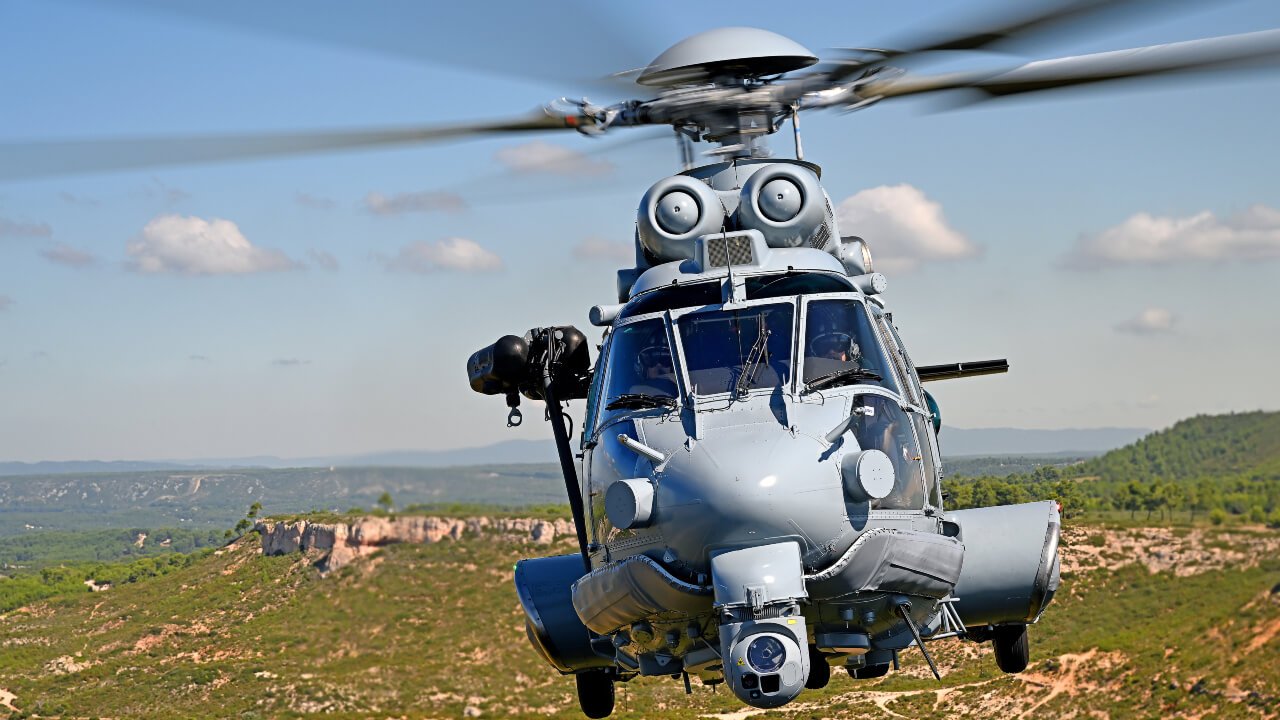
According to the official statement published by Airbus, Morocco has signed a major strategic deal to acquire 10 H225M helicopters, a highly versatile and high-performance aircraft recognized worldwide. This raises several key questions: why did Morocco choose this particular model? What are the military, economic, and industrial impacts of this acquisition?
This article provides a comprehensive and structured analysis to shed light on the strategic dimensions of this major defense investment.
1. Why Is Morocco Modernizing Its Air Fleet?
1.1 An aging fleet requiring urgent renewal
For more than four decades, the Royal Moroccan Air Force (RMAF) has operated Puma helicopters—platforms that are now outdated compared with modern operational demands. The country needs new, advanced helicopters capable of combat search and rescue (CSAR), special operations support, and tactical airlift.
1.2 Strengthening Morocco’s overall defense capabilities
The acquisition of the H225M will allow Morocco to significantly enhance its operational readiness. The aircraft is designed to perform effectively in high-risk scenarios, including nighttime missions, evacuations in hostile environments, and direct support operations.
2. The Technical Strengths of Airbus’s H225M
2.1 Advanced operational capabilities and equipment
The H225M stands out thanks to its cutting-edge equipment, including:
- Dual hoist for demanding rescue operations,
- High-intensity searchlight,
- Safran Euroflir 410 electro-optical system,
- Compatibility with door-mounted weapon systems,
- Electronic warfare protection suite.
These features make the H225M suitable for the most complex and sensitive missions.
2.2 Proven reliability worldwide
More than 360 H225/H225M helicopters are currently in service globally, having accumulated nearly 980,000 flight hours. Their performance with elite air forces has solidified the model’s reputation for reliability and resilience.
3. The Strategic Dimensions of the Morocco–Airbus Agreement
3.1 A significant increase in military power
The H225M will expand Morocco’s capabilities in combat rescue, troop support, and rapid deployment. This improvement could strengthen Morocco’s strategic position and contribute to maintaining regional stability.
3.2 A major industrial impact: a future MRO center in Morocco
The agreement includes the establishment of a maintenance, repair, and overhaul (MRO) center supported by Airbus.
This facility will:
- Enable fast and cost-efficient maintenance,
- Reduce dependence on foreign service providers,
- Train and upskill Moroccan aviation technicians,
- Position Morocco as a regional maintenance hub for West Africa.
3.3 Economic and diplomatic benefits
This significant investment not only enhances Morocco’s air capabilities but also deepens its strategic ties with major European aerospace players. It reinforces Morocco’s rising role as a central defense and aviation actor in North Africa.
4. Challenges and Opportunities of the New Fleet
4.1 Challenges to consider
- Advanced training required for pilots and technicians,
- High operating and maintenance costs,
- Increased need for cybersecurity protections due to connected systems.
4.2 Promising opportunities
- Development of a local aerospace ecosystem,
- Improved national technical expertise,
- Long-term modernization of the RMAF,
- Enhanced capacity for military and civilian emergency response.
5. Deployment Timeline and Next Steps
The agreement was officially announced on November 18, 2025, during the Dubai Airshow.
Deliveries are expected to begin in the coming years, with gradual integration into RMAF operational units.
The new MRO center is expected to become fully operational afterward, serving both Morocco’s fleet and potentially those of regional partners.
Conclusion
Morocco’s acquisition of 10 Airbus H225M helicopters marks a defining moment in its military modernization strategy. This deal not only boosts the operational capabilities of the Royal Moroccan Air Force but also lays the foundation for long-term industrial and technological development.
The move solidifies Morocco’s position as an emerging aviation leader in Africa.
If you found this analysis helpful, feel free to share it or comment: what key capability should Morocco prioritize next in its defense modernization roadmap?