
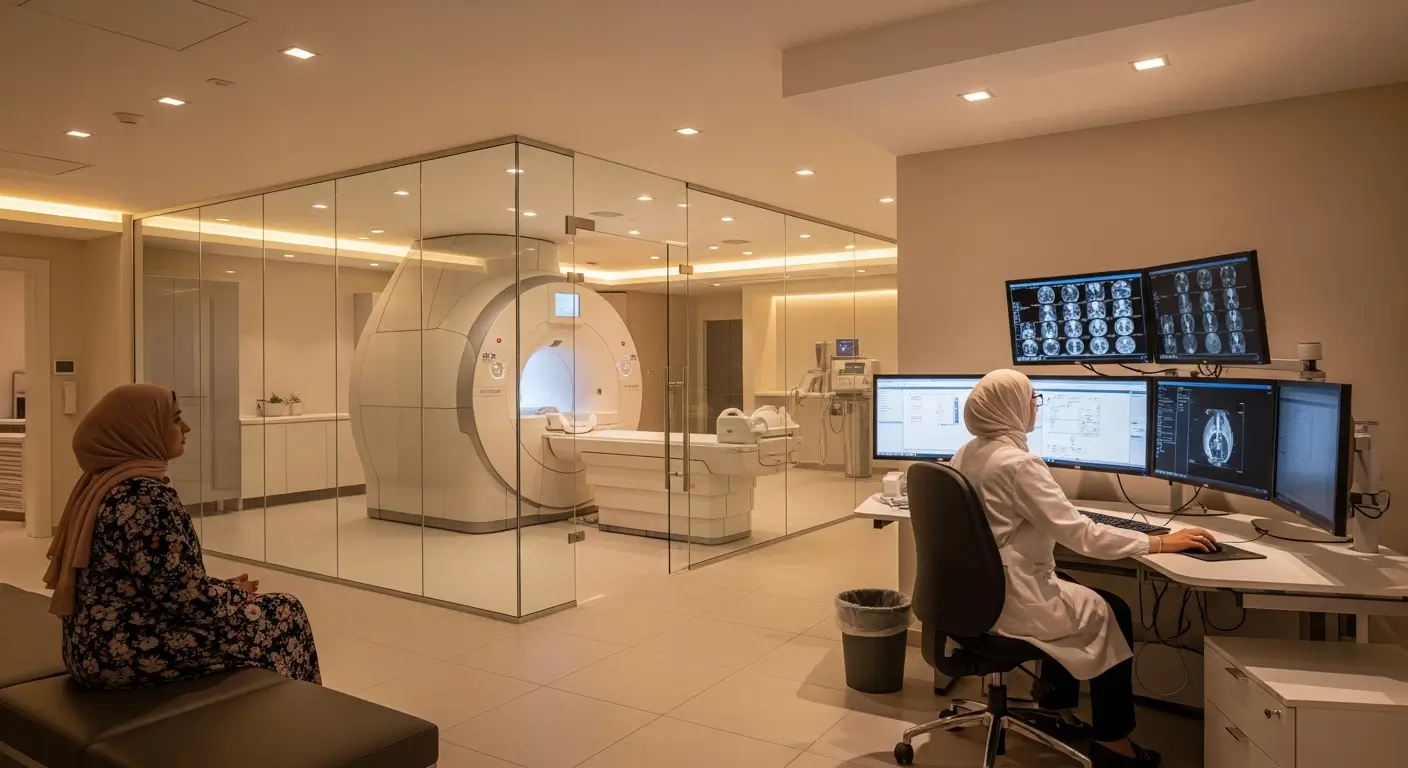
If you’re searching for radiology prices in Morocco, you’re likely wondering how much you’ll actually pay for an X-ray, ultrasound, CT scan, or MRI. The answer depends on several factors: whether you choose public or private facilities, your insurance coverage, and which city you’re in.
Here’s the reality: radiology prices in Morocco range from as low as 50 DH for a basic X-ray in the public sector to over 3,500 DH for complex MRI scans in private centers. But your out-of-pocket cost is often much less if you have insurance coverage through CNSS, CNOPS, or a private mutuelle.
In this guide, you’ll find actual prices for every type of radiology exam, understand how insurance reimbursement works, discover money-saving strategies, and learn exactly what to expect when booking your appointment.
Table of Contents
Quick Price Overview: What You’ll Pay for Radiology in Morocco
Let’s start with the numbers you came here for. Here’s what radiology exams typically cost across Morocco:
| Exam Type | Public Sector | Private Sector | Insurance Coverage |
|---|---|---|---|
| X-Ray (Radiographie) | 50-150 DH | 100-300 DH | 70-80% of TNR |
| Ultrasound (Échographie) | 150-250 DH | 200-400 DH | 70-80% of TNR |
| CT Scan (Scanner) | 600-1,000 DH | 900-1,800 DH | 70-80% of TNR |
| MRI (IRM) | 800-1,500 DH | 1,500-3,500 DH | 70-80% of TNR |
Understanding the Price Variations
X-Ray (Radiographie) Pricing:
- Simple chest X-ray: 50-150 DH (public), 100-200 DH (private)
- Dental X-ray: 80-200 DH
- Spine or joint X-rays: 100-300 DH
- Multiple views add 50-100 DH per additional angle
Ultrasound (Échographie) Costs:
- Abdominal ultrasound: 150-300 DH
- Pelvic ultrasound: 180-350 DH
- Pregnancy ultrasound: 200-450 DH
- 3D/4D pregnancy scan: 500-800 DH
- Thyroid or breast ultrasound: 200-400 DH
CT Scanner Pricing:
- Brain/head scan: 900-1,600 DH
- Chest scan: 800-1,400 DH
- Abdominal scan: 1,000-1,800 DH
- With contrast agent: Add 200-500 DH
MRI (IRM) Costs:
- Brain MRI: 1,500-3,000 DH
- Spine MRI: 1,600-3,200 DH
- Joint MRI (knee, shoulder): 1,400-2,800 DH
- Full-body MRI: 3,000-3,500 DH
The most expensive radiology exams are specialized MRIs performed on advanced 3T equipment in premium private centers, which can reach the upper end of these ranges.
Public vs Private Radiology: Which Should You Choose?
The choice between public and private radiology centers significantly impacts what you’ll pay. Here’s what medical professionals who work in both sectors want you to know.
Public Sector Radiology Centers
What You Save: Public facilities charge 50-70% less than private centers for the same exams. A brain MRI that costs 2,500 DH privately might be just 900 DH at a public hospital.
Advantages:
- Dramatically lower upfront costs
- Same diagnostic quality and medical standards
- Better insurance coverage ratios
- Qualified radiologists with extensive experience
- Often equipped with modern equipment in major cities
The Trade-offs:
- Waiting times of 1-4 weeks for non-urgent cases
- Limited appointment availability
- Crowded waiting areas
- Older equipment at some regional facilities
- Less flexibility with scheduling
Private Sector Radiology Centers
What You Pay For: Private centers typically charge 2-3 times more than public facilities, but many patients choose them anyway for specific reasons.
Advantages:
- Quick appointments (usually within 2-7 days)
- Modern equipment including 3T MRI scanners
- Comfortable waiting areas
- Flexible scheduling including evenings and weekends
- Faster results turnaround
- Better customer service experience
The Costs:
- Higher out-of-pocket expenses
- Insurance covers smaller percentage of total cost
- Additional fees more common
Expert Recommendation: When to Choose Each Option
Choose Public Sector When:
- Your case is not medically urgent
- You have strong insurance coverage
- Budget is your primary concern
- You’re getting routine follow-up scans
- Waiting 2-4 weeks is acceptable
Choose Private Sector When:
- You need urgent diagnostic results
- A second opinion is required quickly
- Your doctor recommends specific advanced equipment
- Time and convenience are priorities
- You have comprehensive mutuelle coverage
Dr. Rachid Benali, a radiologist with 15 years of experience in both sectors, notes: “For most standard diagnostic needs, public sector equipment and expertise are excellent. However, complex neurological cases or subtle joint injuries often benefit from the latest 3T MRI technology found primarily in private centers.”
Understanding TNR (Tarification Nationale de Référence)
This is where many Moroccans get confused about radiology costs. Understanding TNR is essential to knowing what you’ll actually pay out of pocket.
What TNR Means for Your Wallet
The Tarification Nationale de Référence (TNR) is the government-established reference price for medical procedures. Insurance companies base their reimbursement on TNR rates, not on what centers actually charge.
Here’s the critical point: most radiology centers charge significantly more than the TNR rate.
Real-World Example: Brain MRI Pricing Breakdown
Let’s walk through what you’d actually pay:
Scenario: Brain MRI at a private center
- Center’s actual price: 2,000 DH
- TNR reference rate: 800 DH
- Your CNSS insurance covers: 70% of TNR = 560 DH
- You pay out of pocket: 1,440 DH
Same MRI at a public hospital:
- Actual price: 900 DH
- TNR reference rate: 800 DH
- CNSS covers: 70% of TNR = 560 DH
- You pay out of pocket: 340 DH
The difference? Over 1,000 DH in your pocket just by choosing the public sector.
Why Centers Charge Above TNR
“Dépassements d’honoraires” (price markups above TNR) exist because:
- TNR rates haven’t kept pace with equipment costs
- Modern scanners and MRI machines cost millions of dirhams
- Maintenance and specialized technicians are expensive
- Private centers offer premium services and comfort
Finding Centers Closer to TNR Rates
Conventionné centers (those with contracts with insurance providers) typically charge closer to TNR rates. Always ask if a center is conventionné with your specific insurance before booking.
Some strategies:
- Request your insurance company’s list of conventionné partners
- Call multiple centers and ask for their rates versus TNR
- Public hospitals generally stay closest to TNR
- University teaching hospitals often offer competitive pricing
Insurance Coverage for Radiology: Complete Breakdown
Understanding your insurance coverage is crucial for budgeting radiology costs. Here’s exactly what each major insurance system covers.
CNSS (Caisse Nationale de Sécurité Sociale) Coverage
Standard Reimbursement Rates: CNSS typically covers 70-80% of the TNR rate for radiology exams, depending on the specific procedure and whether it’s ambulatory or hospital-based care.
| Exam Type | TNR Rate | CNSS Coverage (70%) | Your Minimum Cost |
|---|---|---|---|
| Basic X-Ray | 100 DH | 70 DH | 30 DH + markup |
| Ultrasound | 200 DH | 140 DH | 60 DH + markup |
| CT Scan | 600 DH | 420 DH | 180 DH + markup |
| MRI | 800 DH | 560 DH | 240 DH + markup |
Critical Requirements for CNSS Reimbursement:
- Must use a conventionné center for optimal coverage
- Valid prescription (ordonnance) from a licensed doctor
- Submit claim within 90 days of the exam
- Keep all original documents: prescription, report, receipt
Documents You Need:
- Original medical prescription
- Radiology report from the center
- Detailed payment receipt (facture)
- CNSS insurance card
- National ID card (CIN)
Processing Timeline: Most CNSS reimbursements take 2-4 weeks from submission to receiving payment in your account.
CNOPS (Caisse Nationale des Organismes de Prévoyance Sociale) Coverage
Better Coverage Rates: CNOPS generally offers slightly better reimbursement at 80-90% of TNR, making it advantageous for government employees and their families.
Key Advantages Over CNSS:
- Higher percentage coverage (typically 80% vs 70%)
- Faster reimbursement processing (1-3 weeks average)
- Wider network of conventionné centers
- More streamlined claims process through online portal
Coverage Example: For a 1,500 DH private MRI (TNR: 800 DH):
- CNOPS pays: 80% of 800 DH = 640 DH
- You pay: 860 DH out of pocket
AMO Tadamon (RAMED) Coverage
For Those with Financial Constraints: AMO Tadamon provides nearly complete coverage for radiology in public facilities, making essential diagnostic imaging accessible to low-income families.
Coverage Details:
- Public sector radiology: Fully covered or minimal co-pay (10-20 DH)
- Private sector: Limited or no coverage
- No out-of-pocket costs for most essential scans
- Requires valid RAMED card and prescription
Limitations: AMO Tadamon beneficiaries may face longer waiting times in public facilities and have limited access to private centers.
Private Insurance (Mutuelle) Coverage
Filling the Gaps: Complementary private insurance (mutuelle) can cover the dépassements d’honoraires that CNSS or CNOPS don’t cover.
What a Good Mutuelle Covers:
- The gap between TNR and actual center prices
- Premium services at private centers
- Faster access to appointments
- Sometimes covers 80-100% of total costs
Example with Mutuelle: Same 1,500 DH MRI scenario:
- CNSS covers: 560 DH
- Mutuelle covers: 700 DH of the remaining 940 DH
- You pay: 240 DH
Many employers provide mutuelle coverage as part of benefits packages, significantly reducing radiology costs for employees.
No Insurance: Self-Pay Options
Full Out-of-Pocket Pricing: Without insurance, you pay the complete center price. However, some centers offer:
- Self-pay discounts (5-10% off)
- Payment plans for expensive scans (MRI, CT)
- Package deals for multiple exams
Negotiation Tips:
- Always ask if there’s a self-pay rate
- Inquire about payment plans upfront
- Some centers offer discounts for immediate cash payment
- Compare prices at multiple facilities
Radiology Prices Across Major Moroccan Cities
Location significantly impacts what you’ll pay for radiology services. Here’s a city-by-city breakdown based on current market rates.
Casablanca Radiology Pricing
As Morocco’s economic capital, Casablanca has the highest concentration of private radiology centers and the most competitive market.
Average Price Ranges:
- X-Ray: 100-250 DH
- Ultrasound: 200-350 DH
- CT Scan: 1,000-1,600 DH
- MRI: 1,800-3,000 DH
Market Characteristics:
- Widest selection of centers (50+ private facilities)
- Most advanced equipment including 3T MRI scanners
- High competition keeps some prices reasonable
- Premium centers in Maarif and Anfa charge upper ranges
- Budget options exist in neighborhoods like Hay Mohammadi
Casablanca Tip: The concentration of centers means you can easily call 4-5 facilities in an hour to compare prices. Differences of 30-40% for the same exam are common.
Rabat Radiology Costs
The capital offers excellent options with strong public hospital infrastructure and numerous CNOPS-conventionné centers.
Average Price Ranges:
- X-Ray: 100-250 DH
- Ultrasound: 200-350 DH
- CT Scan: 900-1,500 DH
- MRI: 1,700-2,800 DH
Notable Features:
- Excellent public hospital system (Hôpitaux Ibn Sina)
- High concentration of CNOPS-serving centers
- University teaching hospitals offer good value
- Less variation in pricing than Casablaba
- Government employee benefits widely accepted
Tangier Radiology Pricing
Northern Morocco’s major city offers increasingly competitive pricing with recent private sector growth.
Average Price Ranges:
- X-Ray: 80-200 DH
- Ultrasound: 180-320 DH
- CT Scan: 800-1,400 DH
- MRI: 1,600-2,600 DH
Market Dynamics:
- Generally 10-20% lower than Casablanca
- Growing private sector with modern equipment
- Some residents compare prices with Spanish facilities across the strait
- Newer centers offering competitive launch pricing
- Strong public hospital at Mohammed V
Marrakech Radiology Costs
The tourist hub has a two-tier market: premium centers for tourists and standard local facilities.
Average Price Ranges:
- X-Ray: 90-220 DH
- Ultrasound: 190-340 DH
- CT Scan: 900-1,500 DH
- MRI: 1,700-2,800 DH
Tourist Premium Alert: Centers in Guéliz and near major hotels often charge 30-50% more. Local residents should seek facilities in residential neighborhoods like Daoudiate or use the excellent public university hospital.
Fes, Agadir, and Regional Cities
Fes: Similar pricing to Rabat with strong university hospital system. MRIs range 1,600-2,700 DH in private sector.
Agadir: Slightly higher than inland cities due to tourist influence. MRIs: 1,700-2,900 DH.
Smaller Cities (Kenitra, Oujda, Tetouan): Generally 15-25% lower than Casablanca. Limited private options but good public facilities. MRIs: 1,500-2,500 DH in private centers.
Step-by-Step: Getting Your Radiology Exam in Morocco
Knowing the process helps you avoid surprises and ensures smooth reimbursement. Here’s exactly how to navigate the system.
Step 1: Obtain Your Medical Prescription
Legal Requirement: In Morocco, all radiology exams require a prescription (ordonnance) from a licensed doctor. You cannot book a scan without one.
What Must Be on the Prescription:
- Your full name and date of birth
- Specific exam requested (type and body part)
- Clinical indication (why the exam is needed)
- Doctor’s signature and stamp
- Doctor’s INPE number
- Date of prescription
Prescription Validity: Prescriptions are typically valid for 3-6 months, though urgent cases should be scanned within weeks.
Step 2: Research and Choose Your Center
Key Questions to Ask When Calling Centers:
- “What is your total price for [specific exam]?”
- Get the complete price including all fees
- Ask if contrast agent is extra
- “Are you conventionné with [your insurance]?”
- Critical for maximizing reimbursement
- Affects your out-of-pocket cost significantly
- “What is your current waiting time?”
- Can range from same-day to 4+ weeks
- Compare urgency needs with availability
- “What equipment do you use?”
- For MRI: 1.5T vs 3T makes a difference for some diagnoses
- For CT: Number of slices affects image quality
- “Is the CD/USB copy of images included?”
- Some charge extra (50-150 DH)
- You’ll want images for your medical records
Price Comparison Strategy: Call at least 3 centers before deciding. Document:
- Total price quoted
- Waiting time
- Equipment specifications
- Insurance acceptance
- Additional fees
Step 3: Book Your Appointment
Information You’ll Need to Provide:
- Full name as on ID card
- Date of birth
- Phone number
- Insurance information (if applicable)
- Brief description of symptoms or reason for scan
Documents to Bring on Appointment Day:
- Original prescription from doctor
- National ID card (CIN) or passport
- Insurance card (CNSS, CNOPS, or mutuelle)
- Previous radiology results if relevant
- Payment method (cash or card – call ahead to confirm)
Preparation Instructions: The center will tell you if you need to:
- Fast before the exam (common for abdominal scans)
- Drink water beforehand (some ultrasounds)
- Avoid metal jewelry (MRI)
- Stop certain medications temporarily
Step 4: The Day of Your Exam
Arrival: Arrive 15-30 minutes before your scheduled time for:
- Registration and paperwork
- Insurance verification
- Payment (some centers require payment before scan)
- Final preparation instructions
During the Exam:
- Most radiology exams are painless
- X-rays take 5-10 minutes
- Ultrasounds: 15-30 minutes
- CT scans: 10-20 minutes
- MRI scans: 30-60 minutes
What to Expect: The technician will position you correctly and may ask you to hold your breath or stay very still. For CT and some MRI scans, an IV contrast agent might be administered.
Step 5: Receiving Your Results
Timeline for Results:
- X-rays: Often same day or within 24 hours
- Ultrasounds: Usually same day
- CT scans: 1-3 days typically
- MRI scans: 2-5 days for complex cases
How Results Are Delivered:
- Written radiologist report (compte rendu)
- Digital images on CD or USB
- Some centers offer online portal access
- Physical film (increasingly rare)
Understanding Your Report: The radiologist’s report describes findings. Your referring doctor interprets what this means for your treatment. Don’t panic if you see medical terms – wait to discuss with your doctor.
Step 6: Filing for Insurance Reimbursement
Immediate Actions: Within 1-2 days of receiving your results:
- Organize your documents:
- Original prescription
- Radiology report
- Itemized receipt (facture détaillée)
- Insurance forms (if required)
- Submit to your insurance:
- CNSS: Through nearest CNSS office or online portal
- CNOPS: Via online platform (faster) or office
- Mutuelle: According to provider’s process
- Track your claim:
- Keep copies of everything submitted
- Note your claim reference number
- Check status online or via phone
Reimbursement Timeline:
- CNOPS: 1-3 weeks typically
- CNSS: 2-4 weeks on average
- Mutuelle: 2-6 weeks depending on provider
If Your Claim Is Denied:
- Verify all documents were complete
- Check that center was conventionné
- Ensure prescription was valid
- Contact insurance to understand reason
- File appeal if appropriate (within 30 days usually)
Money-Saving Strategies for Radiology in Morocco
Medical professionals and insurance experts share these proven strategies to reduce your radiology costs.
1. Always Get Multiple Price Quotes
Why This Matters: Prices for identical exams vary 30-50% between centers in the same city. A brain MRI might be 1,800 DH at one center and 2,700 DH at another just 2 kilometers away.
How to Do It Efficiently:
- Create a simple spreadsheet
- Call 4-5 centers in one session (takes about 30 minutes)
- Ask for “total price including all fees”
- Document everything: center name, price, waiting time, equipment
Real Savings: One Casablanca patient saved 800 DH on a spine MRI by calling 6 centers instead of booking at the first one her doctor mentioned.
2. Prioritize Conventionné Centers
The Financial Impact: Centers under convention with your insurance provider charge closer to TNR rates and process reimbursement more smoothly.
How to Find Them:
- Request the official list from your insurance
- Ask the center directly: “Êtes-vous conventionné avec [CNSS/CNOPS]?”
- Check your insurance provider’s online directory
- Your doctor’s office often has lists
Example Savings: Non-conventionné center: 2,200 DH MRI, you pay 1,640 DH out-of-pocket Conventionné center: 1,600 DH MRI, you pay 1,040 DH out-of-pocket Savings: 600 DH
3. Consider Public Sector for Non-Urgent Cases
Massive Cost Reduction: If your medical situation isn’t urgent and you can wait 2-4 weeks, public hospitals offer 50-70% savings.
Best Public Facilities:
- Major university hospitals in Casablanca, Rabat, Fes
- Regional hospital centers in provincial capitals
- Specialized public radiology centers
When Public Makes Sense:
- Routine follow-up scans
- Monitoring of chronic conditions
- Preventive screening
- Non-emergency diagnostic work
When to Pay for Private:
- Acute symptoms needing quick diagnosis
- Second opinions for serious conditions
- When your doctor recommends specific advanced equipment
4. Ask About Package Deals
Multi-Exam Discounts: If you need multiple scans, some centers offer 10-20% discounts when booked together.
Examples:
- Full spine study (cervical + thoracic + lumbar MRI): 15% discount
- Complete abdominal workup (ultrasound + CT): Package pricing
- Pre-surgical protocol (multiple views): Bundled rate
Family Discounts: Some centers offer reduced rates when multiple family members book appointments.
5. Timing Can Affect Price
Off-Peak Opportunities:
- Weekday morning slots sometimes discounted
- End-of-month promotional periods at some centers
- Slower summer months (July-August) may have special rates
When to Book: Call during the last week of the month when some private centers run promotions to meet targets.
6. Clarify What’s Included in Quoted Prices
Hidden Costs to Ask About:
Contrast Agents (Produit de Contraste):
- Adds 200-500 DH to CT or MRI scans
- Not always included in initial quote
- Always ask: “Is contrast included if needed?”
Image Copies:
- CD/USB of your images: Sometimes free, sometimes 50-150 DH
- Digital delivery via email: Usually free
- Physical films: Mostly outdated, but some charge 100+ DH
Additional Views:
- Standard X-ray includes 1-2 views
- Extra angles: 50-100 DH each
- Ask how many views are included
Radiologist Interpretation:
- Usually included, but verify
- Second-opinion reading: 200-400 DH extra
7. Negotiate Payment Plans for Expensive Scans
For MRI and Complex CT Scans: Many private centers offer payment plans for scans over 1,500 DH.
Typical Terms:
- 30-50% upfront
- Remainder in 2-3 monthly installments
- Often interest-free
- May require post-dated checks
How to Request: Simply ask: “Do you offer payment plans?” Most centers accommodate this but don’t advertise it publicly.
8. Explore University Teaching Hospitals
Quality at Lower Prices: University hospitals (CHU) offer:
- Modern equipment
- Competitive pricing (between public and private)
- Supervision by experienced professors
- Training environment but high standards
Major CHU Locations:
- CHU Ibn Rochd (Casablanca)
- CHU Ibn Sina (Rabat)
- CHU Hassan II (Fes)
Typical Savings: MRI at CHU: 1,200-1,800 DH vs 2,500+ DH at premium private centers
9. Maximize Your Mutuelle Coverage
Understanding Your Policy: Read your mutuelle contract to know:
- What percentage of dépassements d’honoraires it covers
- Annual limits for radiology
- Preferred provider networks
- Pre-authorization requirements
Strategic Use:
- Save mutuelle coverage for expensive scans (MRI, specialized CT)
- Use standard insurance for basic X-rays
- Check if mutuelle covers faster than base insurance
Example Optimization: Patient with CNSS + mutuelle:
- Uses public sector for routine ultrasound (minimal cost)
- Reserves mutuelle for urgent private MRI (mutuelle covers dépassement)
- Stays within annual limits for when truly needed
10. Keep Impeccable Documentation
Why This Saves Money: Proper documentation ensures:
- Smooth insurance reimbursement
- No denied claims requiring repeated scans
- Ability to dispute charges if needed
- Complete medical record for future reference
What to Keep:
- Original prescription (make copies)
- All receipts and invoices
- Radiology reports
- Insurance claim confirmations
- Correspondence with insurance
Organization Tip: Create a health folder (physical or digital) with sections for prescriptions, results, insurance claims, and receipts. This saves time and prevents costly mistakes.
Additional Costs Beyond Base Radiology Prices
Understanding extra fees helps you budget accurately and avoid surprises at the center.
Contrast Agents (Produit de Contraste)
When Required:
- Most CT scans for soft tissue imaging
- Many MRI scans for enhanced detail
- Specialized ultrasounds (rare)
Cost Range:
- 200-500 DH additional
- Varies by type and quantity needed
- IV administration included or separate (ask)
Important Questions:
- “Will my scan require contrast?”
- “Is contrast included in your quoted price?”
- “Can the scan be done without contrast?” (Sometimes possible, discuss with doctor)
Insurance Coverage: Most insurance covers contrast as part of the exam, but reimbursement is still based on TNR, so you may pay the markup.
Multiple Views and Angles
Standard vs Additional Imaging:
- Basic X-ray typically includes 1-2 standard views
- Additional angles: +50-100 DH each
- Your doctor’s prescription usually specifies how many views
When Extra Views Are Needed: Your radiologist may recommend additional views during the exam if:
- Initial images are unclear
- Additional angles would clarify diagnosis
- Standard protocol requires multiple perspectives
Your Rights: Ask why additional views are necessary before agreeing. Most are legitimate medical needs, but you should understand the reasoning.
Digital Image Copies
CD/USB Copies:
- Many centers include one free copy
- Additional copies: 50-150 DH
- Contains DICOM files (medical imaging format)
Digital Delivery Options:
- Email transfer: Often free
- Cloud upload: Some modern centers offer this free
- WhatsApp for simple images: Sometimes available
Why You Want Copies:
- For your personal medical records
- To share with specialists
- For second opinions
- When changing doctors
Pro Tip: Always request your images digitally. Future doctors will want to compare with new scans, and having your own copy saves time and potentially money from repeat imaging.
Rush and Emergency Services
Same-Day Urgent Scans: When medical urgency requires immediate imaging:
- Premium charges: +30-50% above standard rates
- Public ER radiology: Included in emergency fees
- Private emergency: Separate pricing structure
After-Hours and Weekend Pricing:
- Evening appointments (after 6 PM): +20-40% markup
- Weekend scans: +30-50% premium
- Holiday imaging: Up to double standard rates
When Worth the Cost:
- Suspected stroke or brain injury
- Acute abdominal emergencies
- Serious trauma
- When doctor specifically requests urgent imaging
When Not Necessary: Chronic pain, routine follow-ups, and non-acute conditions rarely justify emergency pricing. Discuss timing with your doctor.
Second Opinion Radiology Reports
When You Want Another Expert’s View:
- Complex findings on initial report
- Before major surgery decisions
- Conflicting information from your doctor
- Peace of mind for serious diagnoses
Cost: 200-400 DH for a qualified radiologist to review your existing images and provide a second interpretation.
Insurance Coverage: Some policies cover second opinions, especially before surgery. Check your mutuelle terms.
Translation Services
Standard Language: Radiology reports in Morocco are typically in French, sometimes with Arabic summaries.
English Translation:
- Professional medical translation: 100-300 DH
- Needed for international treatment
- Foreign insurance claims
- Medical tourism documentation
When Required:
- Seeking treatment abroad
- Immigration medical requirements
- International insurance reimbursement
- Consultations with non-French-speaking specialists
Special Situations: Pregnancy, Pediatric, and Emergency Radiology
Different life situations require specific considerations for radiology pricing and access.
Pregnancy Ultrasound Pricing
First Trimester (Dating Scan):
- Public: 150-250 DH
- Private: 200-350 DH
- Purpose: Confirm pregnancy, check dates, detect multiples
Second Trimester (Morphology Scan – 20 weeks):
- Public: 200-300 DH
- Private: 300-450 DH
- Most detailed scan checking baby’s development
Third Trimester (Growth Scans):
- Public: 180-280 DH
- Private: 250-400 DH
- Monitor baby’s growth and position
3D/4D Ultrasounds:
- Private only: 500-800 DH
- Not medically necessary but popular for bonding
- Creates realistic images and videos of baby
Insurance Coverage for Pregnancy:
- CNSS: Covers standard obstetric ultrasounds
- CNOPS: Usually better pregnancy coverage
- Number of covered scans varies (typically 3-4)
- 3D/4D scans rarely covered
Package Deals: Many private centers offer pregnancy ultrasound packages covering all recommended scans at discounted total prices (700-1,200 DH for complete pregnancy monitoring).
Pediatric Radiology Considerations
Pricing: Generally similar to adult scans, though some centers charge slightly less for children.
Special Requirements:
- Specialized centers with pediatric experience preferred
- Lower radiation protocols essential
- Child-friendly environment reduces anxiety
- Sedation sometimes needed for MRI (younger children)
Sedation Costs: When required for MRI or CT in young children:
- Sedation procedure: 500-1,000 DH additional
- Anesthesiologist fee: Usually included
- Monitoring and recovery: Included
- Public hospitals often waive sedation fees
Insurance Coverage: Pediatric radiology is covered under standard insurance rates. Sedation may require pre-authorization.
Choosing the Right Center: For children, prioritize:
- Pediatric radiology experience
- Child-friendly staff and environment
- Modern equipment (lower radiation doses)
- Price considerations secondary to quality for children
Emergency Radiology Access and Costs
Public Hospital Emergency Departments:
- Radiology included in emergency consultation fee
- Urgent X-rays, CT scans available 24/7
- No separate radiology charges in most cases
- Waiting time depends on severity triage
Private Emergency Radiology:
- Available at major private hospitals
- Separate charges: Emergency fee + radiology cost
- Premium pricing: 150-200% of standard rates
- Faster access than public ERs typically
What Constitutes Emergency Radiology:
- Trauma from accidents
- Suspected stroke or brain hemorrhage
- Acute abdominal pain (appendicitis, etc.)
- Chest pain or difficulty breathing
- Severe headaches with neurological symptoms
Insurance Coverage for Emergencies: Most insurance provides better coverage for genuine emergencies:
- Higher reimbursement percentages
- Expedited claims processing
- Pre-authorization often waived for true emergencies
- Full emergency protocol coverage
Cost Comparison:
- Public ER radiology: Minimal or no extra cost beyond ER fee
- Private ER CT scan: 1,500-2,500 DH (vs 900-1,800 DH normally)
- Private ER MRI: 2,500-4,000 DH (vs 1,500-3,500 DH normally)
Expert Advice: Dr. Amina Khalil, emergency radiologist: “For life-threatening situations, don’t hesitate due to cost concerns. Public hospital ERs provide excellent emergency imaging at minimal cost. For less urgent issues presented as emergencies, you’ll pay premium rates unnecessarily.”
Screening vs Diagnostic Radiology
Screening Scans (Preventive):
- Done when you have no symptoms
- Looking for early disease detection
- Examples: Mammography screening, bone density scans
- Sometimes offered at discounted rates
Diagnostic Scans (Symptomatic):
- Performed because of specific symptoms
- Investigating known or suspected problems
- Standard pricing applies
- Better insurance coverage typically
Insurance Differences:
- Preventive screening: May have limits on frequency
- Diagnostic imaging: Usually better coverage
- Some insurances cover annual screening mammograms fully
Follow-Up Radiology Scans
Monitoring Known Conditions: When you need repeat scans to monitor treatment progress or disease progression, some centers offer advantages.
Follow-Up Discounts:
- 10-20% reduction for repeat scans at same center
- Comparison with previous images included
- Established patient pricing
How to Request: Mention when booking: “This is a follow-up to compare with my previous scan from [date].” Many centers automatically offer reduced rates.
Medical Advantages: Using the same center for follow-ups allows:
- Direct comparison with previous images
- Consistency in imaging technique
- Radiologist familiar with your case
- Easier to spot changes over time
Common Questions About Radiology Prices in Morocco
Do I always need a prescription for radiology?
Yes, legally you must have a valid medical prescription from a licensed doctor for all radiology exams in Morocco. Centers cannot perform scans without one, regardless of whether you’re paying privately or using insurance.
The prescription must specify:
- Exact exam needed
- Body part to be scanned
- Clinical reason for the exam
- Doctor’s credentials and signature
Can I use an old prescription?
No, prescriptions typically expire after 3-6 months. For insurance reimbursement, the prescription date should be relatively recent to the exam date. If you have an old prescription for a recurring condition, you’ll need your doctor to write a new one.
What if I’m not satisfied with the scan quality?
You have several options:
- Request the radiologist review the images with you
- Ask for a repeat scan if images are technically inadequate (centers usually do this free)
- Seek a second opinion at another center
- File a complaint with the center director
Quality issues are rare at reputable centers, but don’t hesitate to advocate for clear, diagnostic images.
Can I get radiology without insurance?
Absolutely. Many Moroccans pay entirely out-of-pocket for radiology. You simply pay the full center price. Some advantages:
- No restrictions on which centers you can use
- No waiting for insurance authorization
- Some centers offer self-pay discounts (5-10%)
- Immediate access without insurance paperwork
How long are radiology results valid?
This depends on your medical condition and what’s being monitored:
- Fast-changing conditions: Scans valid only days to weeks
- Pre-surgical planning: Usually require scans within 1-3 months
- Chronic stable conditions: Previous scans may be valid for months
- Your doctor determines validity based on clinical need
For insurance or surgical purposes, always ask how recent scans need to be.
Can I choose which radiologist interprets my scan?
At most centers, radiologists are assigned based on scheduling and specialization. However:
- Private centers may accommodate requests for specific radiologists
- You can specify if you want a specialist (neuroradiologist, etc.)
- Second opinions let you choose a different radiologist
- Public hospitals typically assign based on availability
What happens if my insurance claim is denied?
First, understand why:
- Contact your insurance to get the specific reason
- Common causes: Incomplete documentation, non-conventionné center, expired prescription
Then take action:
- Gather any missing documents
- Resubmit with corrections
- File an appeal if you believe it should be covered
- Consult your employer’s HR if job-related insurance
You typically have 30-60 days to appeal a denial.
Are payment plans available for expensive scans?
Yes, many private radiology centers offer payment plans for MRI and complex CT scans costing over 1,500 DH:
- Typical split: 30-50% upfront, remainder over 2-3 months
- Usually interest-free
- May require post-dated checks or bank guarantee
- Ask when booking: “Avez-vous des facilités de paiement?”
Don’t assume this isn’t available—many centers accommodate but don’t advertise it.
Red Flags: When to Question Radiology Pricing
Being an informed patient means recognizing when pricing seems unfair or suspicious. Here’s what to watch for.
Warning Signs of Overpricing
Prices Significantly Above Market Rates: If a center quotes 50-100% higher than others for the same exam without clear justification (newest equipment, subspecialist reading, etc.), question why.
Example:
- Market rate for brain MRI: 1,800-2,500 DH
- Red flag quote: 4,000 DH without explanation
- Action: Ask what justifies the premium, or choose another center
Hidden Fees Not Disclosed Upfront: Reputable centers provide complete pricing including all standard fees. Be wary of:
- Contrast agents “forgotten” in initial quote
- CD copy charges not mentioned
- “Administrative fees” appearing on final bill
- Unexpected “interpretation fees”
Pressure Tactics: Legitimate centers don’t use:
- “Book now or price goes up” urgency
- Refusing to provide written quotes
- Discouraging you from comparing prices
- Claiming their facility is “the only one with proper equipment”
Unclear Insurance Policies: Red flags include:
- Refusing to clarify conventionné status
- Vague answers about reimbursement cooperation
- Unwillingness to provide detailed receipts for insurance
- Claiming “insurance doesn’t matter here”
Verify Center Legitimacy and Quality
Before Booking, Check:
1. Ministry of Health Authorization:
- All legal radiology centers have MOH authorization numbers
- Ask to see their license
- Verify equipment is registered and inspected
2. Equipment Age and Type:
- Modern MRI: 1.5T or 3T (3T is newer/better for complex cases)
- CT scanners: Multi-slice (16, 64, 128+ slices) are better
- Equipment should be well-maintained and clean
3. Radiologist Qualifications:
- Board-certified radiologists (radiologue diplômé)
- Subspecialty training for complex cases
- Good centers display radiologist credentials
4. Patient Reviews:
- Check Google reviews and Facebook ratings
- Ask friends and family for experiences
- Healthcare Facebook groups often share recommendations
- Look for patterns in complaints or praise
5. Cleanliness and Professionalism:
- Well-maintained waiting areas
- Professional, helpful staff
- Clean examination rooms
- Organized administrative processes
Your Patient Rights in Radiology Centers
You Have the Right To:
Price Transparency:
- Clear, written price quotes before booking
- Itemized bills showing all charges
- Explanation of any additional fees
- Insurance reimbursement cooperation
Quality Care:
- Qualified, licensed radiologists
- Properly functioning, safe equipment
- Respect for your dignity and privacy
- Clear explanation of procedures
Your Medical Information:
- Copies of all your images and reports
- Explanation of findings (though detailed interpretation comes from your doctor)
- Your complete radiology history
- Correction of errors in your records
Insurance Rights:
- Accurate, complete documentation for claims
- Cooperation from center with insurance inquiries
- Detailed receipts (factures) meeting insurance requirements
- Honest representation of conventionné status
Complaint Mechanisms: If you experience problems:
- Speak with the center director first
- Contact your insurance company if relevant
- File complaints with Ministry of Health
- Report to consumer protection (if fraud suspected)
- Seek legal advice for serious violations
When “Too Cheap” Is Also a Red Flag
Suspiciously Low Pricing: While we all want savings, prices far below market rates can indicate:
- Outdated or poorly maintained equipment
- Unqualified or unsupervised technicians
- Unlicensed facility
- Corner-cutting on safety protocols
Example: If market rate for MRI is 1,500-3,000 DH and you find one for 600 DH, investigate thoroughly:
- What equipment are they using?
- Who will interpret your scan?
- Are they properly licensed?
- Why is the price so different?
Public hospitals’ lower pricing is legitimate because they’re government-subsidized. But private centers with prices too far below competitors warrant scrutiny.
Making Smart Radiology Decisions: Your Action Plan
You now have comprehensive information about radiology prices in Morocco. Here’s how to put it into action when you need imaging.
Your Step-by-Step Decision Framework
Step 1: Assess Your Situation
- How urgent is your need? (Emergency, soon, or can wait)
- What’s your insurance coverage? (CNSS, CNOPS, mutuelle, none)
- What’s your budget? (Public vs private affordability)
- What exam do you need? (Complexity affects decisions)
Step 2: Get Your Prescription
- See your doctor and obtain proper prescription
- Ensure prescription includes all required information
- Clarify any special requirements (contrast, specific views)
- Ask your doctor if they recommend specific centers
Step 3: Research Your Options
- List 4-6 centers (mix of public, private, conventionné)
- Call each for pricing quotes
- Ask about wait times
- Verify insurance acceptance
- Inquire about equipment specifications
Step 4: Calculate Your Real Out-of-Pocket Cost Use this formula:
For insured patients:
- Center’s total price: _____ DH
- TNR rate for this exam: _____ DH (ask insurance)
- Insurance coverage: _____ % of TNR = _____ DH
- Mutuelle coverage (if any): _____ DH
- Your out-of-pocket = Price – Insurance – Mutuelle
Step 5: Make Your Decision Consider the balance of:
- Cost you’ll actually pay
- Waiting time vs urgency
- Equipment quality for your specific need
- Convenience and location
- Center reputation
Step 6: Book and Prepare
- Make appointment at chosen center
- Mark calendar with preparation requirements
- Gather all necessary documents
- Plan transportation and timing
Step 7: Follow Through
- Attend appointment with all documents
- Get copies of images and report
- File insurance claim immediately
- Keep organized records
Quick Reference: When to Choose What
Choose Public Sector When: ✓ Non-urgent medical situations ✓ Budget is primary concern ✓ You can wait 2-4 weeks ✓ Standard imaging is sufficient ✓ You have good insurance coverage
Choose Private Sector When: ✓ Urgency requires quick diagnosis ✓ Specific advanced equipment needed ✓ Convenience and comfort matter ✓ Your mutuelle covers dépassements ✓ Doctor recommends specialized facility
Choose Premium Private Centers When: ✓ Complex diagnostic challenges ✓ Subspecialist radiologist needed (neuroradiology, etc.) ✓ Latest technology specifically required ✓ Second opinion on serious findings ✓ Cost is secondary to quality
Final Expert Perspective
Dr. Hassan Amrani, radiologist with 20 years experience across public and private sectors, offers this guidance:
“Most patients don’t need the most expensive center for routine imaging. A well-maintained 1.5T MRI at a public hospital provides excellent diagnostic quality for the majority of cases. Reserve premium private facilities for complex situations where the latest technology and subspecialist expertise truly make a clinical difference.
That said, don’t sacrifice necessary medical care solely due to cost. If you need urgent imaging and can’t afford private rates, public emergency departments provide life-saving radiology regardless of ability to pay. Morocco’s healthcare system, while imperfect, offers pathways for everyone to access essential diagnostic imaging.”
Key Takeaways to Remember
About Pricing:
- Radiology prices vary 50-300% across Morocco
- Public sector saves 50-70% compared to private
- Location, urgency, and equipment affect costs
- Always get multiple quotes before booking
About Insurance:
- Reimbursement based on TNR, not actual prices
- CNSS covers 70-80%, CNOPS covers 80-90% of TNR
- Conventionné centers crucial for maximizing coverage
- Mutuelle can fill the gaps between TNR and actual costs
About Quality:
- Price doesn’t always equal quality
- Public hospitals have qualified radiologists
- Equipment specifications matter for complex cases
- Verify center licensing and equipment
About Your Rights:
- Price transparency is your right
- You own your medical images
- Insurance documentation must be provided
- Complaint mechanisms exist for problems
Taking Action Today
If you need radiology soon:
- Get your prescription this week
- Call 3-5 centers tomorrow for quotes
- Calculate your real out-of-pocket costs
- Book the best option for your situation
- Organize your documents for insurance
If you’re planning ahead:
- Understand your insurance coverage now
- Research conventionné centers in your city
- Keep prescription current if ongoing monitoring
- Budget for potential out-of-pocket costs
- Build relationship with quality center for continuity
Additional Resources for Morocco Radiology Patients
Helpful Contacts and Information
CNSS Information:
- National Helpline: 080 2000 232
- Online Portal: www.cnss.ma
- Mobile App: “DAMANETII” for claim tracking
- Office Locations: Find your regional office for in-person help
CNOPS Services:
- Helpline: 0537 278 551
- Online Platform: www.cnops.org.ma
- Mobile App: Available for iOS and Android
- Digital Services: Claims tracking and reimbursement status
Ministry of Health:
- Healthcare Facility Directory: Lists licensed radiology centers
- Patient Rights Information: Know your protections
- Complaint Procedures: How to report problems
- Health Insurance Information: AMO Tadamon and RAMED details
Patient Advocacy Organizations: Several consumer protection organizations in Morocco can assist with healthcare disputes and questions about patient rights.
Online Communities and Support
Facebook Groups: Moroccan healthcare Facebook groups share experiences, recommend centers, and provide peer support. Search for “Santé Maroc” or city-specific health groups.
Forums: Online forums discussing healthcare in Morocco offer crowdsourced pricing information and center recommendations.
Keeping This Information Current
Radiology pricing and insurance policies change periodically. For the most current information:
- Check insurance provider websites for latest TNR rates
- Call centers directly for current pricing
- Verify conventionné status before each appointment
- Join online communities for real-time updates
When This Guide Was Last Updated: This comprehensive guide reflects radiology pricing and practices in Morocco as of January 2026. While core information remains stable, specific prices may fluctuate 5-15% annually, and insurance policies occasionally change.
For urgent, specific questions about your situation, always:
- Consult your doctor
- Contact your insurance provider directly
- Verify current pricing with specific centers
- Seek professional medical and insurance advice
Your Health Matters Most
While this guide focuses extensively on costs and logistics, never forget the primary purpose of radiology: your health and well-being.
A delayed diagnosis due to price shopping on urgent symptoms can cost far more than money. Conversely, overpaying for unnecessary premium services diverts resources from other health and family needs.
The informed approach balances cost consciousness with medical appropriateness. Use this guide to make smart financial decisions about radiology, but always prioritize getting the right scan, at the right time, with appropriate quality, for your specific medical situation.
Your doctor remains your primary guide for medical decisions. Use this information to have informed conversations about options, ask better questions, and navigate the practical aspects of accessing radiology in Morocco’s healthcare system.
Remember: The cheapest scan that provides poor diagnostic images helps no one. The most expensive scan you can’t afford doesn’t get done. The right choice balances quality, cost, urgency, and your personal situation.
Make informed decisions, advocate for yourself, keep good records, and don’t hesitate to ask questions until you understand both the medical and financial aspects of your radiology care.
Best of health to you and your family.
This guide is for informational purposes and should not replace professional medical or financial advice. Always consult with qualified healthcare providers and insurance professionals for your specific situation.