

Are you searching for a nephrologist in Morocco but worried about the cost? Whether you’re dealing with kidney problems, need dialysis, or require specialized kidney care, understanding Nephrologist Price in Morocco is crucial before making an appointment. Many Moroccans delay essential kidney treatment simply because they don’t know what to expect financially—and this delay can make conditions worse and more expensive to treat.
The good news? Kidney care in Morocco is more accessible than many people think. From affordable public hospitals to insurance coverage options, there are solutions for different budgets. This comprehensive guide breaks down nephrologist prices across Morocco, from consultation fees to dialysis costs, insurance coverage, and where to find affordable care.
By the end of this article, you’ll know exactly what nephrologists cost in your city, how to reduce expenses, and where to get quality care within your budget. Let’s help you make informed decisions about your kidney health without financial surprises.
Table of Contents
How Much Does a Nephrologist Consultation Cost in Morocco?
The cost of seeing a nephrologist in Morocco varies significantly depending on whether you choose public or private care, your location, and the specialist’s experience.
Private Clinic Consultation Fees
Private nephrologists typically charge higher fees but offer shorter waiting times and more flexible scheduling. Here’s what to expect:
Initial Consultation:
- Budget private clinics: 300-500 MAD
- Mid-range specialists: 500-700 MAD
- Premium specialists in major cities: 800-1,200 MAD
- Highly specialized or foreign-trained: Up to 1,500 MAD
Follow-up Visits:
- Standard follow-up: 200-400 MAD
- Quick check-up or prescription renewal: 150-300 MAD
- Complex case reviews: 400-600 MAD
Most private nephrologists require payment at the time of service, though many accept insurance reimbursement with proper documentation.
Public Hospital Consultation Fees
Public hospitals offer significantly lower prices, making specialized kidney care accessible to more Moroccans:
CHU (Teaching Hospitals):
- First consultation: 50-150 MAD
- Follow-up visits: 30-80 MAD
- Emergency nephrology services: 100-200 MAD
Regional Public Hospitals:
- Initial visit: 30-100 MAD
- Follow-up appointments: 20-60 MAD
For RAMED Cardholders:
- Free or minimal administrative fees (10-20 MAD)
- Full coverage for consultations and basic tests
- No payment for emergency care
Price Comparison by City
Nephrologist consultation fees vary across Moroccan cities. Here’s a quick comparison:
| City | Public Hospital | Private Clinic (Mid-Range) | Private Clinic (Premium) |
|---|---|---|---|
| Casablanca | 50-150 MAD | 400-700 MAD | 800-1,200 MAD |
| Rabat | 50-150 MAD | 400-650 MAD | 700-1,000 MAD |
| Marrakech | 40-120 MAD | 350-600 MAD | 700-1,000 MAD |
| Tangier | 40-130 MAD | 350-650 MAD | 700-1,100 MAD |
| Fes | 35-100 MAD | 300-550 MAD | 600-900 MAD |
| Agadir | 40-110 MAD | 350-600 MAD | 650-950 MAD |
| Meknes | 30-90 MAD | 300-500 MAD | 550-800 MAD |
What’s Included in the Consultation Price?
Understanding what you’re paying for helps avoid surprises:
Typically Included:
- Physical examination and medical history review
- Blood pressure measurement
- Basic symptom assessment
- Treatment plan discussion
- Prescription (if needed)
Usually Extra Costs:
- Blood tests (50-300 MAD depending on tests)
- Urine analysis (30-100 MAD)
- Ultrasound or imaging (200-600 MAD)
- Specialized diagnostic tests
- Medications
Pro tip: Always ask upfront what’s included in the consultation fee and what will cost extra. This prevents billing surprises later.
Does Insurance Cover Nephrologist Visits in Morocco?
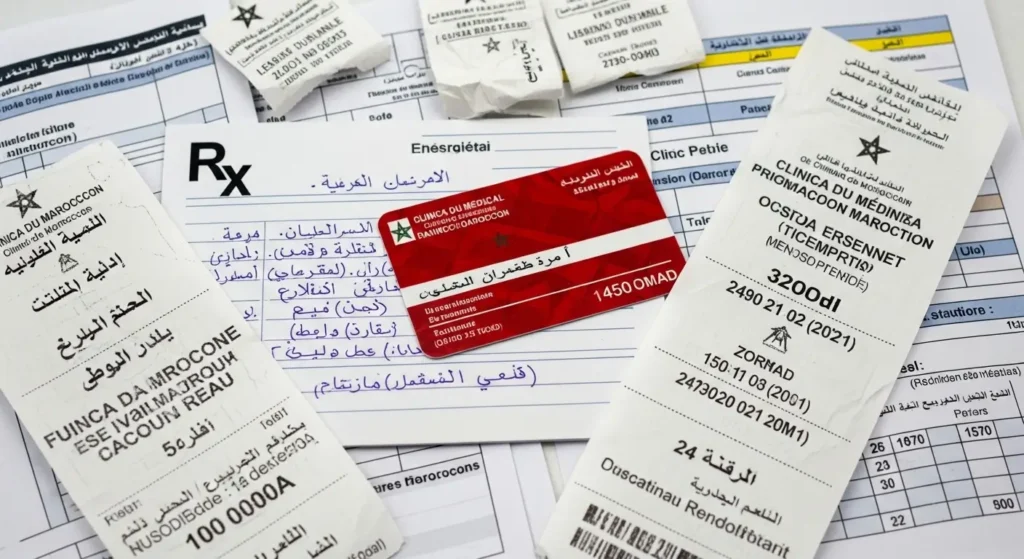
Insurance can significantly reduce your out-of-pocket costs for nephrology care. Here’s how different insurance systems work in Morocco.
CNSS Coverage for Nephrology Services
The CNSS (Caisse Nationale de Sécurité Sociale) provides coverage for employees in the private sector and their families.
Coverage Rates:
- Public sector care: Up to 90% reimbursement
- Private sector care (with convention): 70-80% reimbursement
- Private sector care (without convention): Limited to public sector tariffs
- Long-term diseases (including chronic kidney disease): 100% coverage once approved
How to Get Reimbursed:
- Get a referral from your general practitioner
- Keep all receipts and medical reports
- Submit reimbursement form within 3 months
- Provide prescription copies and payment proof
- Receive reimbursement in 2-6 weeks
What’s Covered:
- Initial and follow-up consultations
- Prescribed medications (on approved list)
- Diagnostic tests ordered by nephrologist
- Dialysis treatments (100% coverage)
- Kidney transplant procedures
Important: For chronic kidney disease, request “ALD” (Affection de Longue Durée) status for 100% coverage of related treatments.
AMO (Assurance Maladie Obligatoire) Coverage
AMO covers both public and private sector workers, with similar benefits to CNSS.
Reimbursement Structure:
- Public hospitals: 90% coverage
- Private clinics with convention: 70% coverage
- Medications: 70-90% depending on category
- Chronic kidney disease: 100% with ALD status
Pre-Authorization Requirements:
- Major procedures require prior approval
- Dialysis needs authorization form
- Kidney biopsy requires pre-authorization
- Emergency care can be authorized retroactively
Documents Needed:
- AMO card
- Medical prescription
- Detailed invoice (facture)
- Treatment report from doctor
- Referral letter for specialists
RAMED (Medical Assistance Program)
RAMED provides free or heavily subsidized healthcare for low-income Moroccans.
Who Qualifies:
- Families earning below poverty threshold
- Vulnerable populations
- Must renew registration annually
Covered Nephrology Services:
- All consultations at public hospitals (free)
- Diagnostic tests and lab work (free)
- Dialysis at public centers (free)
- Essential medications (free)
- Hospitalization (free)
Limitations:
- Only valid at public healthcare facilities
- Some advanced treatments may have waiting lists
- Private care not covered
- Must use designated public hospitals
Where RAMED is Accepted: All CHU hospitals and regional public hospitals accept RAMED. Major nephrology centers include:
- CHU Ibn Rochd (Casablanca)
- CHU Ibn Sina (Rabat)
- CHU Mohammed VI (Marrakech)
- CHU Hassan II (Fes)
Private Insurance Options
Private insurance can supplement public coverage or provide comprehensive care.
Types of Coverage:
- Complementary insurance: Covers gaps in CNSS/AMO
- Comprehensive plans: Full coverage including private care
- International plans: Worldwide coverage including Morocco
Typical Benefits:
- Higher reimbursement rates (80-100%)
- Access to private specialists
- No waiting periods for urgent care
- Direct billing arrangements
- Coverage for advanced treatments
Annual Premiums:
- Basic plans: 3,000-6,000 MAD/year
- Mid-range coverage: 6,000-12,000 MAD/year
- Premium plans: 12,000-25,000+ MAD/year
Popular Providers:
- Wafa Assurance
- AXA Assurance Maroc
- Atlanta Assurance
- Saham Assurance
- RMA Watanya
Nephrologist Price in Morocco
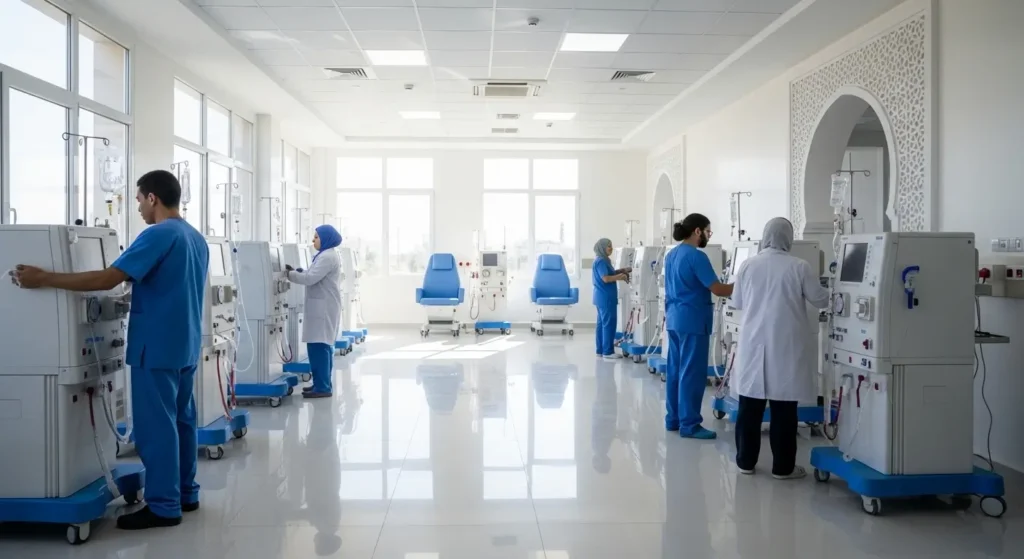
Dialysis is often the most significant ongoing expense for kidney patients. Understanding the costs and coverage options is essential for financial planning.
Hemodialysis Session Prices
Hemodialysis is the most common form of dialysis in Morocco, typically required three times per week.
Public Hospital Dialysis Centers:
- Per session cost: 100-300 MAD
- Monthly cost (12 sessions): 1,200-3,600 MAD
- With insurance/RAMED: Usually free or minimal co-pay
- Emergency dialysis: 200-400 MAD
Private Dialysis Clinics:
- Standard session: 500-800 MAD
- Premium facilities: 900-1,200 MAD
- Monthly cost (12 sessions): 6,000-14,400 MAD
- After insurance reimbursement: 0-3,000 MAD monthly
What’s Included in Session Price:
- Dialysis machine use (3-4 hours)
- Dialyzer (artificial kidney filter)
- Dialysate solution
- Nursing care and monitoring
- Basic medications during session
Additional Monthly Costs:
- EPO injections (anemia treatment): 500-1,500 MAD
- Phosphate binders: 300-800 MAD
- Blood pressure medications: 200-500 MAD
- Vitamins and supplements: 150-400 MAD
- Regular blood tests: 300-600 MAD
Peritoneal Dialysis Costs
Peritoneal dialysis allows home treatment, offering more flexibility but different cost structures.
Setup Costs:
- Catheter insertion procedure: 3,000-8,000 MAD
- Training sessions: Usually included or 500-1,000 MAD
- Initial equipment: Often provided by dialysis center
Monthly Supply Costs:
- Dialysis solution bags: 2,000-4,000 MAD
- Sterile supplies: 500-1,000 MAD
- Equipment maintenance: 200-500 MAD
- Total monthly: 2,700-5,500 MAD
Insurance Coverage:
- CNSS/AMO: Usually 100% with ALD status
- RAMED: Fully covered at public facilities
- Private insurance: Check specific policy terms
Advantages:
- Can be done at home (more convenient)
- No travel to dialysis center 3x weekly
- More flexible schedule
- Often better quality of life
Disadvantages:
- Requires dedicated space at home
- Need training and discipline
- Risk of peritonitis if not sterile
- Not suitable for everyone
Long-Term Dialysis Financial Planning
Dialysis is typically a lifelong need until transplant, so planning is crucial.
Annual Cost Estimates (Without Insurance):
- Public hospital hemodialysis: 14,400-43,200 MAD
- Private hemodialysis: 72,000-172,800 MAD
- Peritoneal dialysis: 32,400-66,000 MAD
With Full Insurance Coverage:
- Out-of-pocket: 0-6,000 MAD annually
- Medications not covered: 2,000-8,000 MAD
- Transportation costs: 1,200-3,600 MAD
- Total: 3,200-17,600 MAD annually
Financial Assistance Options:
- Government Programs: Apply for ALD status for 100% coverage
- Patient Associations: AMIP provides support and advocacy
- Hospital Social Services: Many hospitals have financial counselors
- Charitable Organizations: Some NGOs help with medication costs
- Payment Plans: Negotiate installment payments with private centers
Where to Find Affordable Dialysis Centers
Finding quality, affordable dialysis care is critical for long-term treatment success.
Recommended Public Dialysis Centers:
Casablanca:
- CHU Ibn Rochd – Nephrology Department
- Hôpital Moulay Youssef
- Centre d’Hémodialyse Ain Sebaa
Rabat:
- CHU Ibn Sina – Dialysis Unit
- Hôpital Avicenne
- Centre Mohammed VI de Dialyse
Marrakech:
- CHU Mohammed VI
- Hôpital Ibn Tofail
Fes:
- CHU Hassan II
Budget-Friendly Private Options:
- Association-run dialysis centers (subsidized rates)
- University hospital private wings (lower than fully private)
- Group dialysis centers with multiple locations
What to Look For:
- Experienced nursing staff
- Clean, well-maintained facilities
- Modern dialysis machines
- Accreditation or quality certifications
- Good patient reviews
- Convenient location and hours
- Insurance acceptance
Nephrology Diagnostic Tests and Their Prices
Proper diagnosis requires various tests. Knowing the costs helps you budget and find affordable options.
Blood Tests for Kidney Function
These are the most common tests nephrologists order:
Basic Kidney Function Panel:
- Serum creatinine: 50-150 MAD
- Blood urea nitrogen (BUN): 40-120 MAD
- Glomerular Filtration Rate (GFR): Often calculated, no extra charge
- Complete kidney panel: 150-300 MAD
Comprehensive Metabolic Panel:
- Includes kidney function + electrolytes: 200-400 MAD
- Sodium, potassium, chloride, bicarbonate
- Glucose and calcium levels
- Public labs: 80-200 MAD
Additional Blood Tests:
- Complete blood count (CBC): 50-150 MAD
- Hemoglobin A1C (diabetes): 80-200 MAD
- Parathyroid hormone (PTH): 200-400 MAD
- Vitamin D levels: 150-300 MAD
- Phosphorus and calcium: 40-100 MAD each
Where to Get Blood Tests:
- Public hospital labs: Cheapest option (30-50% less)
- Private lab chains: Biolab, Labomac, Biotech (mid-range)
- Private clinics: Most expensive but convenient
- At-home collection: Available for 50-100 MAD extra
Imaging and Scans
Imaging helps visualize kidney structure and problems:
Kidney Ultrasound:
- Public hospitals: 200-400 MAD
- Private radiology centers: 400-600 MAD
- Premium facilities: 600-800 MAD
- Includes: Both kidneys, bladder, prostate (men)
CT Scan of Kidneys:
- Without contrast: 800-1,500 MAD
- With IV contrast: 1,200-2,000 MAD
- Public hospitals: 400-1,000 MAD
- Preparation: Fasting may be required
MRI (Magnetic Resonance Imaging):
- Kidney MRI: 1,500-3,500 MAD
- With contrast: 2,000-4,000 MAD
- Public facilities: 800-2,000 MAD
- More detailed than CT but takes longer
Nuclear Medicine Scans:
- DMSA scan (kidney structure): 1,000-2,000 MAD
- MAG3 scan (kidney function): 1,200-2,500 MAD
- Available at major teaching hospitals
X-rays:
- KUB (Kidney, Ureter, Bladder): 150-400 MAD
- Used for kidney stones
- Quick and inexpensive screening
Specialized Nephrology Tests
For complex diagnoses, additional testing may be necessary:
Kidney Biopsy:
- Public hospital: 2,000-3,500 MAD
- Private facility: 4,000-8,000 MAD
- Includes: Procedure, anesthesia, pathology analysis
- Hospital stay: 6-24 hours (included or 500-1,500 MAD extra)
24-Hour Urine Collection Tests:
- Container provided by lab: Free or 20-50 MAD
- Analysis for protein: 100-250 MAD
- Creatinine clearance: 80-200 MAD
- Complete analysis: 200-400 MAD
Doppler Ultrasound:
- Kidney blood flow study: 400-800 MAD
- Checks for renal artery stenosis
- Non-invasive and painless
Special Urine Tests:
- Microalbuminuria: 80-200 MAD
- Urine protein electrophoresis: 200-400 MAD
- Urine culture: 80-180 MAD
Where to Get Affordable Lab Tests
Smart shopping can save significant money on tests:
Cost-Saving Strategies:
- Use Public Hospital Labs
- 40-60% cheaper than private
- Same quality standards
- Longer wait times for results
- Compare Private Lab Prices
- Prices vary 30-50% between labs
- Check multiple providers
- Some offer package deals
- Ask About Test Packages
- Kidney function packages: 250-500 MAD (saves 20-30%)
- Pre-dialysis panels: 400-700 MAD
- Annual check-up packages
- Insurance Matters
- Verify which labs accept your insurance
- In-network labs save 70-90%
- Get pre-authorization if required
- Timing Can Help
- Some labs offer promotions
- End-of-month discounts possible
- Group family testing discounts
Recommended Affordable Lab Chains:
- Biolab: Good balance of price and quality
- Labomac: Competitive pricing, multiple locations
- Biotech: Fast results, reasonable prices
- Public Hospital Labs: Most affordable, slower
What Does a Kidney Transplant Cost in Morocco?
Kidney transplant is the ultimate treatment for kidney failure. Understanding the full cost is essential for planning.
Pre-Transplant Evaluation Costs
Before surgery, extensive testing ensures you’re a suitable candidate:
Recipient Testing:
- Complete blood work: 1,000-2,000 MAD
- Tissue typing (HLA): 2,000-4,000 MAD
- Cross-matching with donor: 1,500-3,000 MAD
- Cardiac evaluation: 1,500-3,000 MAD
- Chest X-ray and CT: 500-1,500 MAD
- Psychological assessment: 500-1,500 MAD
- Dental clearance: 300-1,000 MAD
- Total recipient evaluation: 7,300-16,000 MAD
Donor Testing:
- Blood work and tissue typing: 1,500-3,000 MAD
- Kidney function tests: 500-1,500 MAD
- CT angiography: 1,500-3,000 MAD
- Chest X-ray and ECG: 300-800 MAD
- Psychological evaluation: 500-1,500 MAD
- Total donor evaluation: 4,300-9,800 MAD
Combined Pre-Transplant Costs: 11,600-25,800 MAD
Kidney Transplant Surgery Costs
The transplant procedure itself is the major expense:
Public Hospital (CHU) Transplant:
- Surgery and hospitalization: 30,000-80,000 MAD
- Surgeon fees: Included in package
- Anesthesiologist: Included
- ICU care (2-3 days): Included
- Regular ward (7-10 days): Included
- Initial immunosuppressants: 3,000-8,000 MAD
- Total: 33,000-88,000 MAD
Private Hospital Transplant:
- Surgery package: 100,000-200,000 MAD
- Top surgeon fees: 30,000-60,000 MAD
- Anesthesia: 10,000-20,000 MAD
- ICU care: 15,000-30,000 MAD
- Private room: 10,000-25,000 MAD
- Medications: 5,000-15,000 MAD
- Total: 170,000-350,000 MAD
Additional Costs:
- Complications or extended stay: 10,000-50,000+ MAD
- Blood products if needed: 2,000-8,000 MAD
- Additional procedures: Variable
Major Transplant Centers:
- CHU Ibn Sina (Rabat)
- CHU Ibn Rochd (Casablanca)
- Hôpital Militaire d’Instruction Mohammed V (Rabat)
- Clinique Badr (Casablanca – Private)
Post-Transplant Medication Costs
Lifelong immunosuppression is required to prevent rejection:
Monthly Medication Costs:
- Tacrolimus (Prograf): 1,500-3,000 MAD
- Mycophenolate (CellCept): 800-1,500 MAD
- Prednisone: 50-150 MAD
- Anti-infection prophylaxis: 300-800 MAD
- Other medications: 200-500 MAD
- Total monthly: 2,850-5,950 MAD
Annual Medication Costs:
- First year (higher doses): 40,000-80,000 MAD
- Subsequent years: 34,000-71,000 MAD
- Generic alternatives: Can reduce by 30-50%
Monitoring Costs (First Year):
- Monthly blood tests: 300-600 MAD x 12 = 3,600-7,200 MAD
- Kidney biopsies (protocol): 2,000-5,000 MAD x 2 = 4,000-10,000 MAD
- Ultrasounds: 400-600 MAD x 3 = 1,200-1,800 MAD
- Doctor visits: 300-700 MAD x 12 = 3,600-8,400 MAD
- Total monitoring: 12,400-27,400 MAD
Total First-Year Post-Transplant: 52,400-107,400 MAD
Insurance Coverage for Transplants
Insurance makes transplants affordable for most Moroccans:
CNSS/AMO Coverage:
- Pre-authorization required
- Surgery coverage: 90-100% at public hospitals
- Medications: 100% with ALD status
- Follow-up care: 90-100% covered
- Out-of-pocket first year: 5,000-20,000 MAD typically
Coverage Process:
- Nephrologist submits request to insurance
- Medical commission reviews case
- Approval takes 2-6 weeks
- Coverage guaranteed once approved
- Direct billing often available
RAMED Coverage:
- Full coverage at public hospitals
- All surgery costs covered
- Medications provided free
- Follow-up care included
- No out-of-pocket expenses
Private Insurance:
- Check policy limits (often 100,000-300,000 MAD cap)
- May cover private hospital transplants
- Medication coverage varies
- Read fine print carefully
Financial Assistance:
- Hospital social services can help
- Payment plans for uncovered costs
- Charitable organizations may assist
- Association support (AMIP)
Nephrologist Prices by Major Moroccan Cities
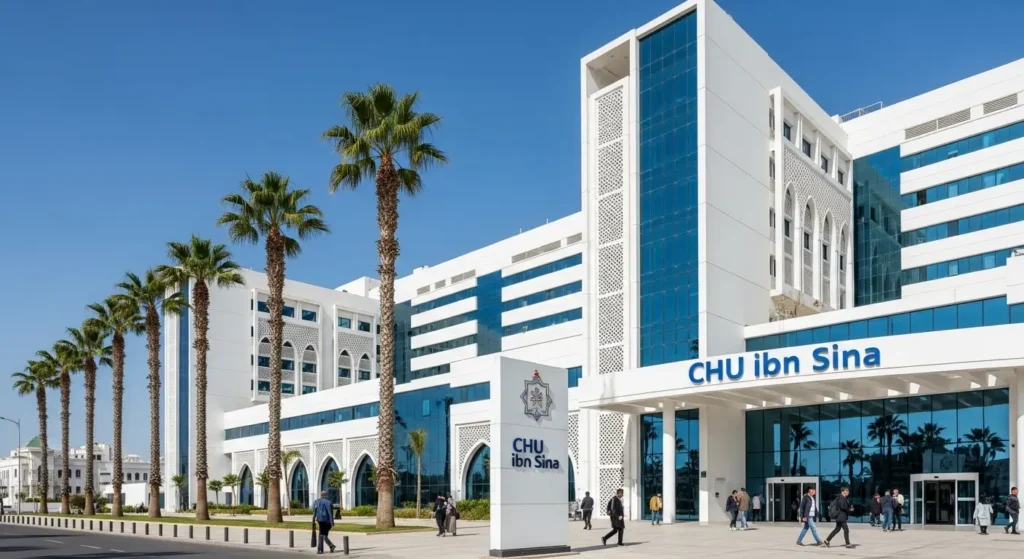
Location significantly impacts healthcare costs. Here’s what to expect in each major city.
Casablanca Nephrologist Prices
As Morocco’s economic capital, Casablanca has the most nephrologists and widest price range.
Public Options:
- CHU Ibn Rochd: 50-150 MAD consultation, excellent nephrology department
- Hôpital Moulay Youssef: 40-120 MAD, good for dialysis
- Hôpital 20 Août: 50-130 MAD
Private Clinics:
- Budget: 300-500 MAD (neighborhoods like Hay Mohammadi, Derb Sultan)
- Mid-range: 500-700 MAD (Maarif, Gauthier)
- Premium: 800-1,200 MAD (Anfa, California)
Dialysis Centers:
- Public: 100-250 MAD/session
- Private: 600-1,000 MAD/session
- Association centers: 200-400 MAD/session
Average Consultation: 300-700 MAD private, 50-150 MAD public
Rabat Nephrologist Costs
The capital offers excellent public healthcare with competitive private options.
Public Hospitals:
- CHU Ibn Sina: 50-150 MAD, premier teaching hospital
- Hôpital Avicenne: 40-120 MAD
- Hôpital El Youssoufi: 40-100 MAD
Private Specialists:
- Standard clinics: 350-600 MAD
- Experienced specialists: 600-900 MAD
- Top-tier: 900-1,100 MAD
Dialysis:
- Public: 100-250 MAD/session
- Private: 500-900 MAD/session
Notable: Rabat has excellent public healthcare infrastructure with shorter wait times than Casablanca.
Average Consultation: 300-650 MAD private, 50-150 MAD public
Marrakech Kidney Specialist Fees
Marrakech combines tourism infrastructure with growing medical facilities.
Public Care:
- CHU Mohammed VI: 40-120 MAD, modern facilities
- Hôpital Ibn Tofail: 35-100 MAD
Private Clinics:
- Local specialists: 300-550 MAD
- Tourist-area clinics: 500-800 MAD
- Premium facilities: 700-1,000 MAD
Medical Tourism Consideration:
- Some clinics cater to tourists (higher prices)
- Local clinics more affordable
- Quality similar across price ranges
Average Consultation: 250-600 MAD private, 40-120 MAD public
Tangier, Fes, Agadir, and Other Cities
Tangier:
- Public: 40-130 MAD (Hôpital Mohammed V)
- Private: 350-650 MAD (standard), 700-1,100 MAD (premium)
- Growing medical infrastructure
- Some European-trained specialists
Find verified nephrologists in Tangier with contact details and specializations
Fes:
- Public: 35-100 MAD (CHU Hassan II)
- Private: 300-550 MAD (standard), 600-900 MAD (experienced)
- Excellent public hospital
- More affordable than coastal cities
Agadir:
- Public: 40-110 MAD (CHU Agadir)
- Private: 350-600 MAD (standard), 650-950 MAD (premium)
- Tourism-oriented facilities
- Modern equipment
Meknes:
- Public: 30-90 MAD
- Private: 300-500 MAD (standard), 550-800 MAD (premium)
- Generally most affordable major city
- Good quality care at lower prices
Smaller Cities (Oujda, Tetouan, Kenitra):
- Public: 30-80 MAD
- Private: 250-500 MAD
- Limited specialists
- May require travel to major cities for complex care
Travel Considerations:
- For major procedures, larger cities often worth the travel
- Transportation costs: 100-500 MAD depending on distance
- Consider quality vs. proximity trade-offs
How to Find an Affordable Nephrologist in Morocco
Smart strategies can significantly reduce your kidney care costs without sacrificing quality.
Using Public Healthcare System
Public hospitals offer the most affordable care path:
How to Access Public Nephrologists:
- Start with Your General Practitioner:
- Visit local health center (50-100 MAD)
- Get referral letter for nephrologist
- Required for CNSS/AMO reimbursement
- Can skip for urgent issues
- Make an Appointment:
- Call CHU appointment line
- Visit in person (often faster)
- Bring ID, insurance card, referral
- Expect 1-4 week wait for routine appointments
- What to Bring:
- Insurance documentation
- Previous medical records
- Recent test results
- List of current medications
- Referral letter
Expected Wait Times:
- Urgent cases: Same day to 3 days
- New patient consultations: 1-4 weeks
- Follow-up appointments: 1-2 weeks
- Emergency care: Immediate
Quality Considerations:
- CHU hospitals have top specialists
- Teaching hospitals offer latest treatments
- Many private doctors also work in public hospitals
- Equipment may be older but functional
Best Public Nephrology Departments:
- CHU Ibn Sina (Rabat) – Considered Morocco’s best
- CHU Ibn Rochd (Casablanca) – Largest capacity
- CHU Mohammed VI (Marrakech) – Modern facilities
- CHU Hassan II (Fes) – Excellent reputation
Budget-Friendly Private Options
Not all private care is expensive. Here’s how to find value:
Mid-Range Private Clinics:
- Look in residential neighborhoods (not business districts)
- Newly established doctors often charge less
- Group practices split overhead costs
- Clinic-based vs. prestigious office locations
Finding Affordable Private Nephrologists:
- Ask your general doctor for recommendations
- Check online directories (Medecin.ma, Doctolib)
- Read patient reviews on Facebook groups
- Visit local pharmacies for referrals
- Contact medical schools for young specialists
Questions to Ask Before Booking:
- What’s the consultation fee?
- What’s included in that price?
- Do you accept my insurance?
- Are payment plans available?
- What are follow-up visit costs?
Red Flags to Avoid:
- Pressure to do unnecessary tests
- Unclear pricing
- No insurance acceptance
- Bad online reviews mentioning overcharging
- Unwillingness to provide receipts
Telemedicine Options
Online consultations can save money and time:
What’s Available:
- Follow-up appointments for stable patients
- Medication adjustments
- Test result reviews
- General kidney health advice
- Prescription renewals
Typical Costs:
- Video consultations: 150-400 MAD
- Phone consultations: 100-300 MAD
- Messaging services: 50-200 MAD
Platforms Offering Telemedicine:
- Doctolib Morocco
- Sehhati
- Individual doctor services
- Some insurance companies offer included telemedicine
When Telemedicine Works:
- Stable chronic kidney disease monitoring
- Medication adjustments
- Discussing test results
- Getting second opinions
- Post-hospitalization follow-up
When In-Person is Necessary:
- First diagnosis
- Acute symptoms
- Physical examinations needed
- Complex treatment changes
- Emergency situations
Savings:
- No transportation costs
- Less time off work
- 30-50% cheaper than in-person
- More convenient scheduling
Medical Tourism Within Morocco
Sometimes traveling to another city saves money:
When It Makes Sense:
- Major procedures (transplant, biopsy)
- Second opinions from top specialists
- Chronic care where you visit occasionally
- Public hospitals in other cities have shorter waits
Cost-Benefit Analysis:
Example: Casablanca to Meknes for Consultation
- Consultation savings: 200-400 MAD
- Travel cost: 150-250 MAD (train or bus)
- Accommodation (if overnight): 200-500 MAD
- Net savings: Minimal for consultation, better for procedures
Example: Private Dialysis in Smaller City
- Monthly savings: 2,000-4,000 MAD
- Relocation considerations: Significant
- Worth it: Only if relocating anyway
Best Scenarios for Medical Tourism:
- One-time procedures (surgery, transplant)
- Accessing top specialists at public hospitals
- Combining with family visits
- CHU hospitals in less expensive cities
Not Worth It For:
- Regular dialysis (3x weekly)
- Frequent follow-ups
- When local care is adequate
- Emergency situations
When Do You Actually Need a Nephrologist?
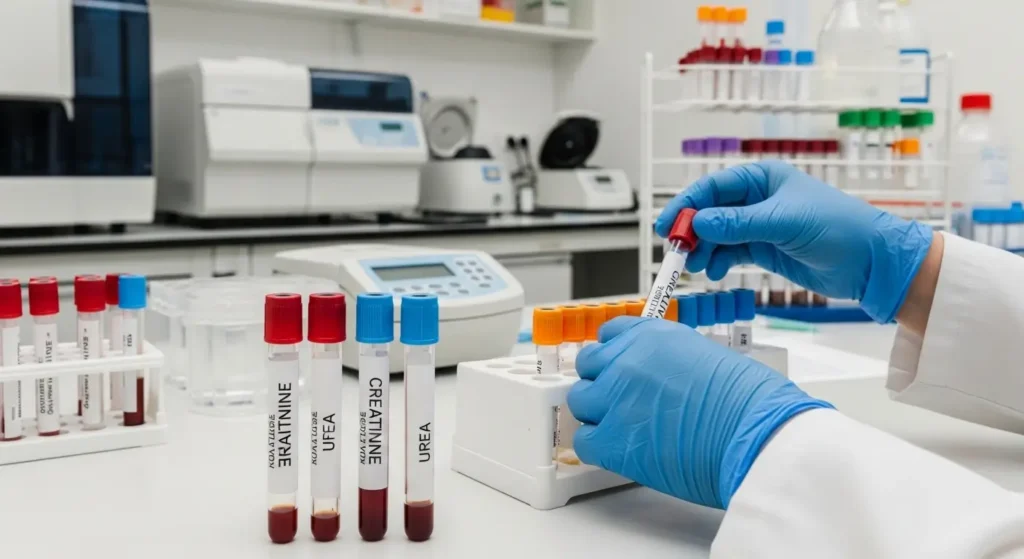
Not every kidney concern requires a specialist. Here’s when to seek nephrology care.
Symptoms That Require a Kidney Specialist
Seek immediate nephrology consultation if you have:
- Changes in urination:
- Blood in urine (visible or microscopic)
- Foamy or bubbly urine (protein sign)
- Decreased urine output
- Difficulty urinating or pain
- Frequent nighttime urination (nocturia)
- Physical symptoms:
- Severe or persistent flank pain
- Swelling in legs, ankles, or face (edema)
- Unexplained fatigue and weakness
- Persistent nausea and vomiting
- Metallic taste in mouth
- Skin itching without rash
- Lab test abnormalities:
- Elevated creatinine levels
- Low GFR (kidney filtration rate)
- Protein in urine (proteinuria)
- Blood in urine (hematuria)
- Abnormal electrolyte levels
- Related conditions:
- Uncontrolled high blood pressure
- Diabetes with kidney involvement
- Recurrent kidney stones
- Family history of kidney disease
- Autoimmune diseases affecting kidneys
Conditions Treated by Nephrologists
Common Kidney Diseases:
- Chronic Kidney Disease (CKD):
- Progressive loss of kidney function
- Requires long-term management
- May eventually need dialysis
- Acute Kidney Injury:
- Sudden kidney function loss
- Often reversible with treatment
- Can be caused by infections, medications, or dehydration
- Glomerulonephritis:
- Inflammation of kidney filters
- Can be acute or chronic
- Causes protein and blood in urine
- Polycystic Kidney Disease:
- Inherited condition with kidney cysts
- Requires specialized monitoring
- May lead to kidney failure
- Kidney Stones (Recurrent):
- Single stone: Usually handled by urologist
- Recurring stones: Nephrologist investigates causes
- Metabolic workup needed
- Electrolyte Imbalances:
- Sodium, potassium problems
- Acid-base disorders
- Calcium and phosphorus abnormalities
- Secondary Kidney Problems:
- Diabetic nephropathy
- Hypertensive kidney disease
- Lupus nephritis
- Drug-induced kidney damage
Can Your General Doctor Handle It?
Start with GP for:
- First-time urinary tract infection
- Mild blood pressure issues
- Single episode of kidney stone
- General health screening
- Routine diabetes management
Benefits of GP First:
- Lower cost (100-300 MAD vs. 300-1,200 MAD)
- Faster appointments
- Can order initial tests
- Provide referral if needed
- Insurance often requires GP referral
When to Skip GP and Go Directly to Nephrologist:
- Acute severe symptoms
- Known chronic kidney disease
- Already diagnosed kidney condition
- Emergency situations
- Insurance doesn’t require referral
Red Flags Requiring Immediate Specialist Care:
- Sudden inability to urinate
- Severe swelling
- Chest pain with kidney symptoms
- Confusion or altered consciousness
- Rapid weight gain with edema
- Dangerously high blood pressure (>180/120)
Cost-Effective Approach:
- See GP first for initial assessment (100-300 MAD)
- Get basic lab tests (200-400 MAD)
- Obtain referral for insurance
- See nephrologist with test results already done
- Total savings: 300-600 MAD vs. direct specialist visit with tests
7 Ways to Reduce Nephrologist Costs in Morocco
Smart strategies can cut your kidney care expenses significantly.

1. Start with Public Hospitals
Why This Saves Money:
- Consultations: 30-150 MAD vs. 300-1,200 MAD private
- Tests: 40-60% cheaper
- Procedures: Up to 80% less expensive
- Medications: Often provided or subsidized
How to Maximize Public Care:
- Register early for appointments
- Bring all required documents
- Use referral system properly
- Apply for RAMED if eligible
- Be patient with wait times
- Attend teaching hospitals (best public care)
Quality Assurance:
- CHU hospitals have top specialists
- Same doctors often work public and private
- Modern treatment protocols followed
- Quality care at lower cost
When Public Makes Most Sense:
- Chronic care requiring frequent visits
- Long-term dialysis treatment
- Major procedures like transplants
- Limited budget situations
- Insurance coverage better at public facilities
2. Maximize Your Insurance Benefits
Understanding Your Coverage:
- Read policy documents thoroughly
- Know reimbursement percentages
- Understand pre-authorization requirements
- Learn which providers are in-network
- Keep track of deductibles and limits
Getting Maximum Reimbursement:
CNSS/AMO Tips:
- Always get proper referrals
- Keep all receipts and invoices
- Submit claims within 3 months
- Apply for ALD status for chronic conditions
- Use approved facilities when possible
Documentation Checklist:
- Original receipts (factures détaillées)
- Medical prescriptions
- Referral letters
- Treatment summaries
- Lab results
- Pharmacy receipts
Common Mistakes to Avoid:
- Not getting pre-authorization for major procedures
- Using non-approved providers
- Missing submission deadlines
- Incomplete documentation
- Not applying for ALD status
Pro Tips:
- Call insurance before expensive tests
- Verify coverage before booking procedures
- Ask doctor to specify medical necessity
- Keep copies of everything
- Follow up on pending claims
3. Ask About Generic Medications
Cost Savings:
- Generics cost 50-80% less than brand names
- Same active ingredients and effectiveness
- Approved by Moroccan health authorities
- Growing availability in pharmacies
Common Kidney Medications with Generics:
| Brand Name | Generic Name | Brand Price | Generic Price | Savings |
|---|---|---|---|---|
| Prograf | Tacrolimus | 2,500 MAD | 800 MAD | 68% |
| CellCept | Mycophenolate | 1,200 MAD | 500 MAD | 58% |
| Norvasc | Amlodipine | 80 MAD | 25 MAD | 69% |
| Zestril | Lisinopril | 60 MAD | 20 MAD | 67% |
How to Get Generic Prescriptions:
- Ask nephrologist to prescribe generics
- Request “allow generic substitution” on prescription
- Ask pharmacist for generic options
- Compare prices at different pharmacies
- Check if insurance prefers generics (lower co-pay)
Quality Concerns:
- Moroccan generics are regulated
- Must meet same standards as originals
- Bioequivalence required for approval
- Safe and effective
When Brand Name Matters:
- Narrow therapeutic index drugs (sometimes)
- Doctor specifically recommends brand
- You’ve had problems with generic
- Generic not available
4. Negotiate Payment Plans
Many Facilities Offer Installments:
- Private clinics often flexible
- Hospital social services can help
- Association-run centers have programs
- Interest-free plans common
How to Negotiate:
- Be honest about financial situation
- Ask early (before treatment)
- Propose realistic payment schedule
- Get agreement in writing
- Make payments on time
What Can Be Paid in Installments:
- Major procedures (transplant, biopsy)
- Expensive diagnostic tests
- Accumulated treatment costs
- Private dialysis sessions
- Medications
Typical Payment Plan Terms:
- Duration: 3-12 months
- Down payment: 20-30% required
- Interest: Usually none or minimal
- Penalties: For missed payments
Example Payment Plan: Kidney biopsy cost: 5,000 MAD
- Down payment: 1,500 MAD
- Monthly: 700 MAD x 5 months
- Total: 5,000 MAD (no interest)
5. Seek NGO and Association Support
Major Organizations Helping Kidney Patients:
AMIP (Association Marocaine des Insuffisants Rénaux et des Transplantés):
- Patient advocacy
- Financial assistance programs
- Support groups
- Treatment guidance
- Contact: Available in major cities
Lalla Salma Foundation:
- Healthcare support
- Focus on serious diseases
- Can help with medication costs
- Apply through social services
Local Kidney Disease Associations:
- City-specific organizations
- Community support
- Fundraising for patients
- Educational programs
What They Can Help With:
- Medication costs
- Transportation to dialysis
- Medical equipment
- Emergency financial assistance
- Navigating healthcare system
- Emotional support
How to Apply:
- Contact organization directly
- Provide medical documentation
- Show financial need
- Complete application forms
- Wait for review (2-8 weeks)
Eligibility:
- Diagnosed kidney disease
- Financial hardship
- Moroccan residency
- Incomplete insurance coverage
6. Consider Group Appointments or Clinics
What Are Group Clinics:
- Multiple patients seen together
- Educational sessions included
- Shared appointment time
- Individual check-ins with doctor
- Lower cost per patient
Cost Savings:
- 30-50% less than individual appointments
- Group education included
- More efficient use of time
- Community support built in
Where to Find Them:
- Teaching hospitals
- Association-run facilities
- Specialized kidney clinics
- Public health centers
Best For:
- Stable chronic kidney disease
- Routine monitoring
- Patient education needs
- Budget-conscious patients
Not Suitable For:
- Complex new diagnoses
- Acute problems
- Need for privacy
- Unstable conditions
7. Preventive Care Saves Money
The Best Investment: Preventing kidney disease or slowing progression costs far less than treating advanced disease.
Key Prevention Strategies:
For High-Risk Patients (Diabetes, Hypertension):
- Annual kidney function screening: 150-300 MAD
- Can prevent dialysis costs: 72,000-172,000 MAD annually
- ROI: 240-1,140x return
Blood Sugar Control (Diabetics):
- Proper medication: 200-500 MAD monthly
- Prevents diabetic kidney disease
- Saves future dialysis costs
Blood Pressure Management:
- Medications: 150-400 MAD monthly
- Prevents hypertensive kidney disease
- Extends kidney function years
Lifestyle Modifications (Free):
- Reduce salt intake
- Maintain healthy weight
- Regular exercise
- Quit smoking
- Limit alcohol
- Stay hydrated
Early Detection Benefits:
- Stage 1-2 kidney disease: Reversible or manageable
- Stage 3: Can slow progression
- Stage 4-5: Dialysis or transplant needed
- Early care costs: 2,000-5,000 MAD annually
- Late-stage care costs: 80,000-200,000 MAD annually
Screening Recommendations:
- Diabetics: Yearly kidney function tests
- Hypertension: Every 1-2 years
- Family history: Every 2-3 years
- Over 60: Every 2 years
- General population: Every 3-5 years
Common Myths About Nephrologist Costs in Morocco
Let’s clear up misconceptions that prevent people from getting needed care.
Myth 1: “Public Hospitals Mean Poor Quality Care”
Reality: Public teaching hospitals often provide the best nephrology care in Morocco.
The Truth:
- CHU hospitals are Morocco’s premier medical institutions
- Top professors and specialists work in public facilities
- Latest research and treatments available
- Many private specialists also practice in public hospitals
- Modern equipment in teaching hospitals
- International accreditation for many departments
Why This Myth Persists:
- Older facilities may look less modern
- Longer wait times
- More patients (busier environment)
- Language barriers sometimes present
Evidence:
- Successful kidney transplants performed primarily at public hospitals
- Complex cases referred to CHU facilities
- Medical students trained at public hospitals (cutting-edge methods)
- Research published from public institutions
Bottom Line: You’re not sacrificing quality by choosing public care—often you’re accessing better expertise at lower cost.
Myth 2: “Insurance Won’t Cover Kidney Treatment”
Reality: Moroccan insurance systems provide extensive kidney disease coverage, especially for chronic conditions.
What’s Actually Covered:
- CNSS/AMO: Up to 100% coverage with ALD status
- Dialysis: Fully covered by most insurance
- Transplants: 90-100% covered at public hospitals
- Medications: 70-100% depending on policy
- Tests and monitoring: Mostly covered
The Confusion Comes From:
- Not knowing about ALD (Affection de Longue Durée) status
- Misunderstanding reimbursement procedures
- Not getting proper pre-authorization
- Using non-approved providers
How to Ensure Coverage:
- Apply for ALD status immediately upon diagnosis
- Get referrals from your GP
- Use approved facilities
- Submit complete documentation
- Follow insurance protocols
Real Example: Dialysis patient with CNSS and ALD status:
- Annual dialysis cost: 150,000 MAD
- Patient’s out-of-pocket: 0-3,000 MAD
- Insurance covers 98%
Myth 3: “Dialysis is Unaffordable for Average Moroccans”
Reality: Morocco has made dialysis accessible through public facilities and insurance coverage.
Access Points:
- Public dialysis centers in every major city
- RAMED covers dialysis completely
- CNSS/AMO provides 100% coverage
- Association-run subsidized centers
- Government programs supporting access
Actual Costs With Insurance:
- RAMED: 0 MAD (free)
- CNSS with ALD: 0-200 MAD monthly
- Private insurance: 0-1,000 MAD monthly
- Without insurance at public facility: 1,200-3,600 MAD monthly
Infrastructure:
- Over 300 dialysis centers nationwide
- Expanding capacity annually
- Public-private partnerships
- Association support networks
The Reality Check: Thousands of Moroccans receive dialysis regularly. While challenging, it’s financially manageable with proper insurance and facility choice.
Myth 4: “More Expensive Doctors Are Always Better”
Reality: Price doesn’t reliably correlate with expertise or outcomes in nephrology care.
What Determines Price:
- Location (premium areas cost more)
- Facility overhead (fancy offices)
- Marketing and reputation
- Years in private practice
- Target clientele
What Determines Quality:
- Medical training and qualifications
- Experience with your specific condition
- Hospital affiliations
- Patient outcomes
- Continuing education
- Board certifications
Examples:
- Young specialist with excellent training: 300-500 MAD
- Experienced doctor in modest clinic: 400-600 MAD
- Same doctor in fancy location: 800-1,200 MAD
- Professor at CHU (public): 50-150 MAD
How to Assess Quality:
- Check medical credentials
- Ask about experience with your condition
- Read patient reviews
- Verify hospital affiliations
- Ask other doctors for opinions
- Look for research publications
Best Approach: Choose based on qualifications and fit, not price tag.
Myth 5: “I Need Cash Upfront for Everything”
Reality: Many healthcare facilities offer flexible payment options and insurance direct billing.
Payment Options Available:
Direct Insurance Billing:
- Many private clinics bill CNSS/AMO directly
- You pay only co-payment
- No upfront full cost needed
- Settlement happens between provider and insurer
Payment Plans:
- Hospitals offer installment arrangements
- Private clinics negotiate terms
- Interest-free options common
- Minimum down payment required
Charitable Programs:
- Hospital social services
- NGO assistance
- Community fundraising
- Zakat funds for medical care
RAMED Benefits:
- No payment at public facilities
- All covered services free
- No bills or claims to file
- Immediate access
Emergency Care:
- Cannot be denied for inability to pay
- Payment arrangements made after stabilization
- Social services help with costs
- No one turned away in crisis
Pro Tip: Always ask about payment options before assuming you need full payment upfront. Most facilities want to help patients access care.
Directory: Finding Nephrologists in Morocco
Here’s practical information for locating nephrologists in major cities.
Casablanca Nephrologists
Public Hospitals:
CHU Ibn Rochd – Service de Néphrologie
- Location: Rue des Hôpitaux, Casablanca
- Consultation: 50-150 MAD
- Phone: 0522-48-20-20
- Services: Full nephrology, dialysis, transplant preparation
- Best for: Complex cases, dialysis, affordable care
Hôpital Moulay Youssef
- Location: Boulevard Brahim Roudani
- Consultation: 40-120 MAD
- Services: Dialysis center, general nephrology
- Best for: Dialysis patients, routine care
Private Clinics (Selection):
For a complete directory of nephrologists in Casablanca with detailed profiles and contact information, visit our comprehensive guide to nephrologists in Casablanca.
Mid-Range Options (400-700 MAD):
- Clinique Badr (multiple locations)
- Clinique Majd
- Polyclinique Amane
- Services: Consultations, outpatient care
Premium Options (800-1,200 MAD):
- Clinique Ain Sebaa
- Clinique Internationale
- Private offices in Anfa/Maarif
- Services: Comprehensive nephrology
Dialysis Centers:
- Centre d’Hémodialyse Ain Sebaa (Association-run, affordable)
- CHU Ibn Rochd Dialysis Unit (Public)
- Multiple private centers (check local listings)
Rabat Nephrologists
Public Hospitals:
CHU Ibn Sina – Service de Néphrologie et Transplantation Rénale
- Location: Avenue Mohamed Belarbi Alaoui
- Consultation: 50-150 MAD
- Phone: 0537-68-38-38
- Services: Premier nephrology center, transplants, research
- Best for: Complex diagnoses, transplants, teaching hospital benefits
Hôpital Avicenne
- Location: Quartier des Hôpitaux
- Consultation: 40-120 MAD
- Services: Nephrology, dialysis
- Best for: General nephrology care
Private Options:
- Multiple private clinics in Agdal, Hay Riad
- Price range: 350-900 MAD
For detailed listings of Rabat nephrologists with patient reviews and booking options, see our complete Rabat nephrologist directory
Marrakech Nephrologists
CHU Mohammed VI
- Location: Avenue Ibn Sina, Amerchich
- Consultation: 40-120 MAD
- Phone: 0524-30-72-72
- Services: Modern nephrology department, dialysis
- Best for: Southern region’s premier facility
Private Clinics:
- Concentrated in Guéliz and Hivernage areas
- Price range: 300-800 MAD
- Tourist-area premiums apply
Other Major Cities
Fes – CHU Hassan II
- Excellent nephrology department
- Consultation: 35-100 MAD
- Known for quality care at low cost
Tangier – Hôpital Mohammed V
- Growing nephrology services
- Consultation: 40-130 MAD
- Increasing private options
Agadir – CHU Agadir
- Modern facilities
- Consultation: 40-110 MAD
- Good balance of quality and cost
How to Find and Choose a Nephrologist
Online Resources:
- Medecin.ma (doctor directory)
- Doctolib Morocco (booking platform)
- Facebook groups (patient recommendations)
- Google Maps reviews
Getting Recommendations:
- Ask your general practitioner
- Consult with pharmacists
- Contact patient associations
- Ask friends/family with kidney issues
What to Check:
- Medical credentials and training
- Years of experience
- Hospital affiliations
- Patient reviews
- Insurance acceptance
- Language spoken (Arabic, French, English)
- Availability and accessibility
First Appointment Checklist:
- Insurance card and ID
- Referral letter (if required)
- Previous medical records
- Recent test results
- List of current medications
- List of questions to ask
- Notebook for taking notes
Questions to Ask First Nephrologist:
- What’s your diagnosis of my condition?
- What treatment options exist?
- What are the costs involved?
- How often will I need follow-ups?
- What tests are necessary?
- What’s the prognosis?
- Should I get a second opinion?
Frequently Asked Questions (FAQ)
How much does a nephrologist visit cost in Morocco?
Nephrologist consultation costs in Morocco range from 30 MAD to 1,200 MAD depending on the facility:
- Public hospitals (CHU): 50-150 MAD for standard consultations
- Regional public hospitals: 30-100 MAD
- Mid-range private clinics: 400-700 MAD
- Premium private specialists: 800-1,200 MAD
- RAMED cardholders: Free or 10-20 MAD administrative fee
Follow-up visits are typically 20-40% less expensive than initial consultations. Public teaching hospitals (CHU) offer the best value for complex cases, while private clinics provide faster access.
Is dialysis free in Morocco?
Dialysis in Morocco is free or heavily subsidized for insured patients:
- RAMED cardholders: Completely free at public dialysis centers
- CNSS/AMO with ALD status: 100% coverage (no patient cost)
- Without insurance at public facilities: 100-300 MAD per session
- Private centers without insurance: 500-1,200 MAD per session
Most Moroccans access dialysis through public centers with full insurance coverage. To get free dialysis, ensure you have active insurance and ALD (Affection de Longue Durée) status approved for chronic kidney disease.
Does CNSS cover nephrology treatment?
Yes, CNSS provides comprehensive coverage for nephrology services:
Coverage rates:
- Public hospitals: 90% reimbursement
- Private providers with convention: 70-80%
- With ALD status (chronic kidney disease): 100% coverage
Covered services:
- Nephrologist consultations
- Dialysis treatments (100%)
- Kidney transplants (90-100%)
- Diagnostic tests
- Prescribed medications
- Hospitalization
To maximize coverage: Get a proper referral, apply for ALD status if you have chronic kidney disease, and keep all receipts for reimbursement claims.
What’s cheaper: public or private nephrologist?
Public nephrologists are significantly cheaper—70-95% less expensive than private care:
Price comparison:
- Public consultation: 30-150 MAD
- Private consultation: 300-1,200 MAD
- Savings: 150-1,050 MAD per visit
Trade-offs:
- Public pros: Lower cost, top specialists, teaching hospitals, insurance coverage
- Public cons: Longer wait times (1-4 weeks), busier environment
- Private pros: Faster appointments, more personal attention, convenient hours
- Private cons: Higher costs, variable quality, insurance may cover less
Best approach: Use public facilities for ongoing chronic care and major procedures. Consider private care for urgent issues or if you can afford the convenience premium.
How much does a kidney transplant cost in Morocco?
Kidney transplant costs in Morocco range from 30,000 MAD to 350,000 MAD:
Public Hospital (CHU):
- Surgery and hospitalization: 30,000-80,000 MAD
- With CNSS/AMO insurance: 3,000-8,000 MAD out-of-pocket
- With RAMED: Free
Private Hospital:
- Total cost: 170,000-350,000 MAD
- With insurance: 17,000-70,000 MAD out-of-pocket
Additional costs:
- Pre-transplant evaluation: 11,600-25,800 MAD
- First-year medications: 40,000-80,000 MAD
- Annual medication (subsequent years): 34,000-71,000 MAD
Insurance coverage: CNSS and AMO cover 90-100% at public hospitals once pre-authorized. Apply for ALD status to ensure maximum coverage for post-transplant care.
Can I get financial help for kidney treatment?
Yes, multiple sources of financial assistance exist for kidney patients in Morocco:
Government Programs:
- RAMED: Free care for low-income Moroccans
- ALD Status: 100% insurance coverage for chronic kidney disease
- Hospital social services: Payment plans and charity care
Patient Associations:
- AMIP: Financial assistance, medication help, advocacy
- Local kidney associations: Community support, fundraising
- Lalla Salma Foundation: Support for serious illnesses
How to apply:
- Contact hospital social services department
- Provide medical documentation proving kidney disease
- Show financial need (income statements)
- Complete assistance application
- Apply to multiple organizations simultaneously
Other options: Community fundraising, Zakat medical funds, NGO programs, and payment installment plans at medical facilities.
Do I need a referral to see a nephrologist?
Whether you need a referral depends on your insurance and the facility:
Referral Required:
- CNSS/AMO insurance reimbursement (must have GP referral)
- Public hospital appointments (usually required)
- Some private insurance plans
No Referral Needed:
- Emergency situations
- Direct private consultations (self-pay)
- RAMED at public hospitals (sometimes)
- Follow-up appointments with established nephrologist
Why get a referral anyway:
- Insurance reimbursement eligibility
- GP can order initial tests (saves money)
- Medical record continuity
- Proper documentation for insurance
Best practice: Even if not required, see your GP first for initial evaluation and referral. This costs 100-300 MAD, saves on specialist fees, and ensures insurance coverage.
Are there payment plans for expensive treatments?
Yes, many Moroccan healthcare facilities offer payment plans for expensive treatments:
Who offers payment plans:
- Private hospitals and clinics
- Some public hospital social services
- Dialysis centers
- Transplant facilities
Typical terms:
- Duration: 3-12 months
- Down payment: 20-30% of total cost
- Monthly installments: Interest-free or low interest
- Written agreement required
What can be financed:
- Major procedures (transplants, biopsies)
- Expensive diagnostic tests
- Accumulated treatment costs
- Private dialysis sessions
- High-cost medications
How to arrange:
- Ask about payment plans before treatment
- Speak with hospital financial counselor
- Provide proof of income and financial situation
- Negotiate realistic payment schedule
- Get agreement in writing
- Make payments consistently on time
Alternative: Some associations and NGOs provide interest-free loans for medical treatment.
How do I choose between public and private care?
Choose based on your priorities, budget, and medical needs:
Choose Public When:
- Budget is primary concern (70-95% savings)
- You have complex or serious kidney disease
- You need dialysis or transplant
- You have time to wait for appointments
- You have RAMED coverage
- Insurance covers more at public facilities
Choose Private When:
- You need immediate consultation
- Convenience and comfort are priorities
- Your condition is straightforward
- You can afford the higher cost
- Your insurance covers private well
- Public wait times are too long
Hybrid Approach (Best for Many):
- Major procedures at public hospitals (cost savings)
- Urgent appointments at private clinics (speed)
- Routine monitoring at public facilities (affordability)
- Specialized tests at private labs (convenience)
Quality consideration: Don’t assume private is better. CHU hospitals often have the most experienced nephrologists and latest treatments.
What should I bring to my first nephrologist appointment?
Bring these essential items to your first nephrology consultation:
Required Documents:
- National ID card (CIN)
- Insurance card (CNSS, AMO, or RAMED)
- Referral letter from your GP
- Recent test results (blood work, urine tests, imaging)
Medical Information:
- List of current medications (with doses)
- Previous medical records
- Hospitalization summaries
- Surgical history
- Family medical history (especially kidney disease)
Practical Items:
- Notebook and pen for notes
- List of questions to ask
- List of symptoms (when they started, severity)
- Previous prescriptions
- Payment method (cash, card, or insurance)
Test Results to Bring (if available):
- Creatinine and GFR results
- Urine analysis reports
- Blood pressure readings
- Diabetes management records
- Any kidney imaging (ultrasound, CT)
Pro tip: Organize documents chronologically and bring copies (keep originals safe). Prepare your questions in advance to make the most of your consultation time.
Conclusion: Making Kidney Care Affordable in Morocco
Finding affordable kidney care in Morocco doesn’t mean compromising on quality. Whether you need a simple consultation, ongoing dialysis, or a kidney transplant, options exist for different budgets.
Key Takeaways:
Cost Ranges to Remember:
- Consultations: 30-150 MAD (public) or 300-1,200 MAD (private)
- Dialysis: 100-300 MAD per session (public) or 500-1,200 MAD (private)
- Transplants: 30,000-80,000 MAD (public) or 170,000-350,000 MAD (private)
Your Action Plan:
- Start with public hospitals for the best value—CHU facilities offer top specialists at affordable prices
- Maximize your insurance by applying for ALD status if you have chronic kidney disease
- Don’t delay treatment due to cost concerns—options like RAMED, payment plans, and association support exist
- Compare prices between cities and facilities—savings can be substantial
- Ask about generics to cut medication costs by 50-80%
Resources for Help:
- Hospital social services for payment assistance
- AMIP (patient association) for support and guidance
- RAMED program for low-income coverage
- Public dialysis centers in every major city
Remember: Quality kidney care is accessible at various price points throughout Morocco. Public teaching hospitals often provide the best combination of expertise and affordability. Don’t let financial concerns prevent you from getting the care you need.
Find a Specialist Near You
Ready to see a nephrologist? Here’s how to get started:
For Immediate Care:
- Visit nearest CHU emergency department
- Call hospital nephrology department for urgent appointments
- Use telemedicine for non-emergency consultations
For Routine Care:
- See your GP first for referral and initial tests
- Book appointment at local CHU or regional hospital
- Compare private options if you prefer faster access
Major Nephrology Centers:
- Casablanca: CHU Ibn Rochd (0522-48-20-20)
- Rabat: CHU Ibn Sina (0537-68-38-38)
- Marrakech: CHU Mohammed VI (0524-30-72-72)
- Fes: CHU Hassan II
Online Booking:
- Medecin.ma
- Doctolib Morocco
- Direct hospital websites
Your kidney health is worth the investment. Start with an affordable public consultation, use your insurance benefits fully, and don’t hesitate to seek help when needed. Morocco’s healthcare system, despite its challenges, makes kidney care accessible to all its citizens.
Take action today—your kidneys will thank you tomorrow.